
Why Every EV Owner Should Know About Level 2 Charging at Home
Level 2 charging at home is the fastest, most convenient way to keep your electric vehicle ready to drive every day — without ever stopping at a public station.
Quick answer: What is Level 2 home charging?
| Feature | Details |
|---|---|
| Power source | 240-volt outlet (like your dryer or range) |
| Charging speed | Adds 25–50 miles of range per hour |
| Charge time | Most EVs fully charged in under 10 hours overnight |
| vs. Level 1 | Up to 9x faster than a standard 120V wall outlet |
| Installation | Requires a dedicated circuit and licensed electrician |
| Cost to install | Varies by home, but federal tax credits can offset up to $1,000 |
About 80% of all EV charging happens at home. That makes sense — your car sits in your garage or driveway every night anyway. Why not use that time to top up?
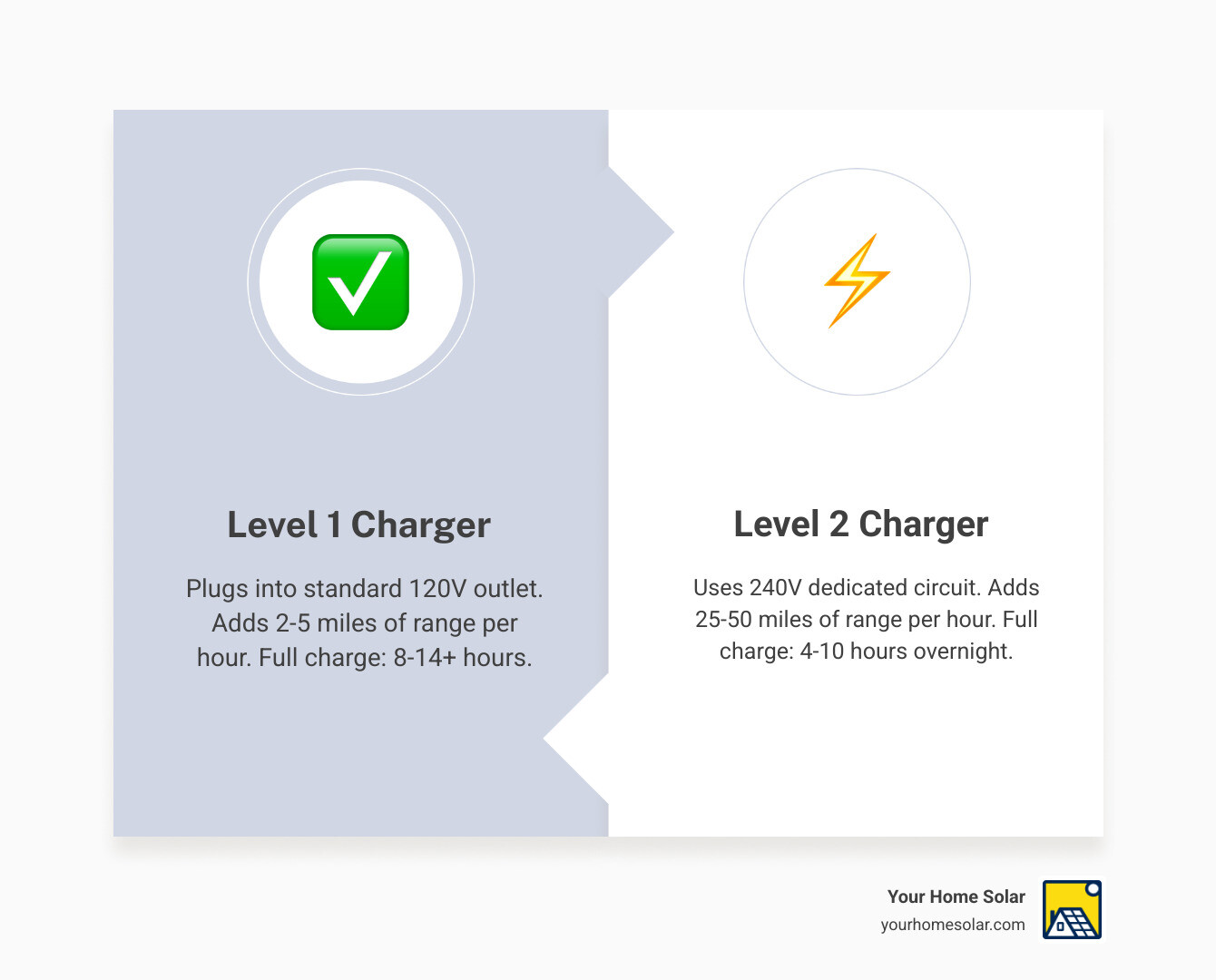
Most EV owners start with the basic charger that comes with their car. That’s a Level 1 charger — it plugs into a regular 120V outlet and works, but slowly. We’re talking 8 to 14 hours for a full charge, or just a few miles of range per hour.
Level 2 charging changes everything. With a 240V setup, you wake up every morning with a full battery — no planning, no detours, no waiting at a public charger.
For East Tennessee homeowners already thinking about energy independence and lower utility bills, adding a Level 2 charger is a natural next step — especially when paired with solar.
I’m Ernie Bussell, founder and CEO of Your Home Solar, East Tennessee’s #1 solar energy contractor, and I’ve helped hundreds of homeowners evaluate whole-home energy systems that include Level 2 charging at home alongside solar and battery storage. In this guide, I’ll walk you through everything you need to know — from costs and installation to choosing the right charger for your EV.
Level 2 charging home word list:
- 240 volt charging station installation
- Trusted EV charger installer
- Residential EV charging solutions
Understanding the Essentials of Level 2 Charging Home
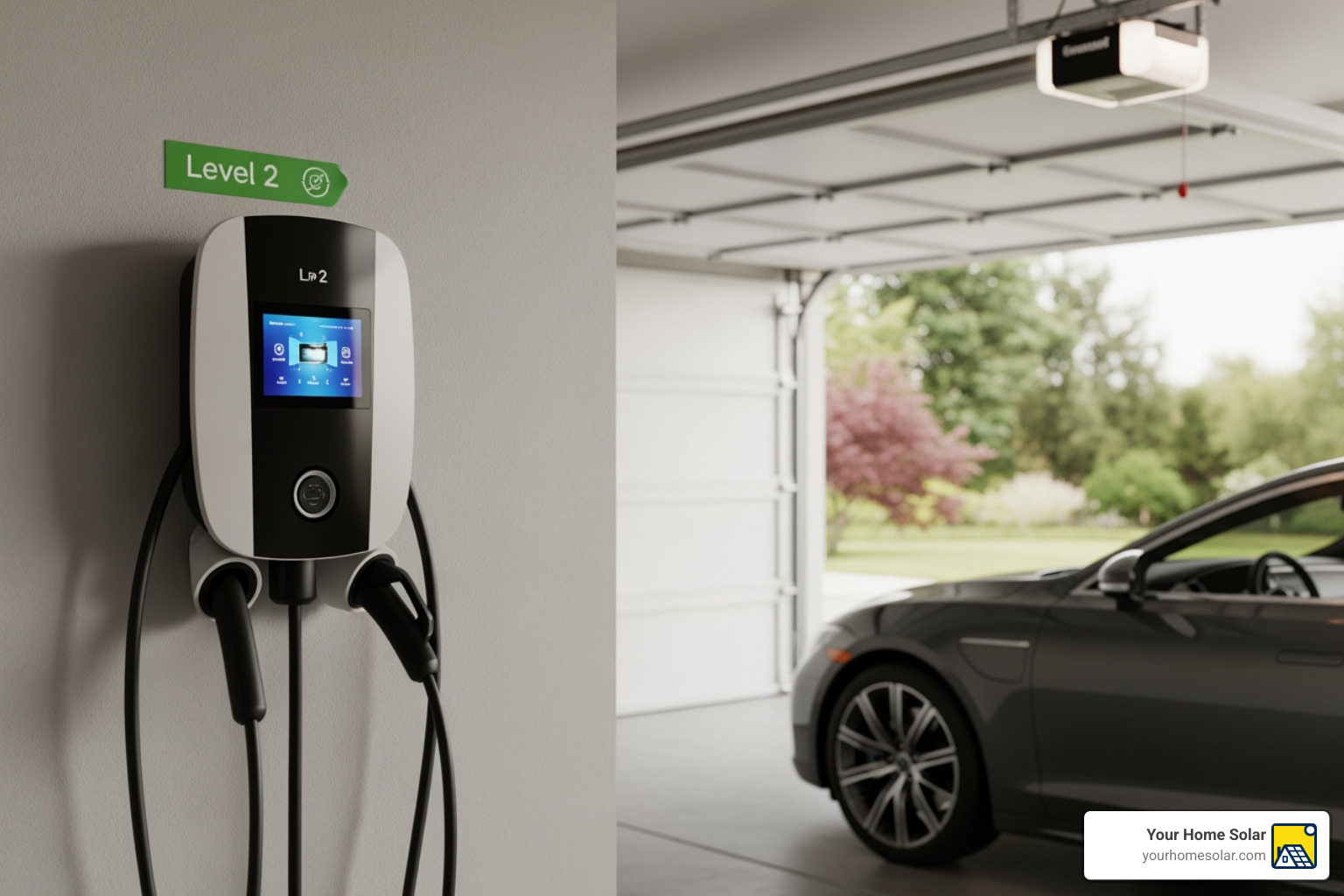
To understand Level 2 charging home setups, we first need to clear up some terminology. When you buy a “charger” for your wall, you are technically buying Electric Vehicle Supply Equipment (EVSE). The actual “charger” that converts AC power from your home into DC power for the battery is located inside your car. The EVSE is the smart bridge that safely connects your home’s electrical grid to your vehicle.
A Level 2 station operates on 240-volt power, which is the same high-voltage service used by heavy appliances like electric clothes dryers or kitchen ranges. Because it draws significantly more power than a standard outlet, the National Electrical Code (NEC) Article 625 treats EV charging as a “continuous load.” This means the circuit must be designed to handle the full power draw for hours at a time without overheating.
If you are just starting your journey, checking out a Level 2 EV Charger Installation: A Complete Homeowner’s Guide is a great way to visualize the physical setup. At Your Home Solar, we often integrate these systems into a broader energy strategy, as explained in The Ultimate Guide To Home Ev Charging.
Comparing Speeds: Level 1 vs. Level 2 Charging Home
The difference in speed between Level 1 and Level 2 is like the difference between a garden hose and a fire hose. While Level 1 might give you 3 to 5 miles of range per hour, a Level 2 station typically delivers 7 to 11 kW of power, translating to 25–50 miles of range for every hour it’s plugged in.
For a standard Battery Electric Vehicle (BEV) with a large battery, a Level 1 charger could take 40 to 50 hours to go from empty to full. With Level 2 charging home equipment, that same car is usually topped off in 6 to 10 hours. Plug-in Hybrids (PHEVs) with smaller batteries can often be fully charged in just 2 to 4 hours.
| Battery Size (kWh) | Level 1 (120V) Time | Level 2 (240V) Time |
|---|---|---|
| 15 kWh (PHEV) | 12-15 Hours | 2-3 Hours |
| 60 kWh (Standard) | 50-60 Hours | 6-8 Hours |
| 100 kWh (Long Range) | 80+ Hours | 10-12 Hours |
Why Home Charging Beats Public Stations
While public DC Fast Chargers (Level 3) are great for road trips, they are expensive and can be hard on your battery if used exclusively. Home charging is the most cost-effective way to fuel your ride. In 2026, with average electricity rates in East Tennessee, you can charge your EV for roughly $0.03 per mile. Compare that to the price of gasoline or the premium rates at public charging hubs, and the savings add up fast.
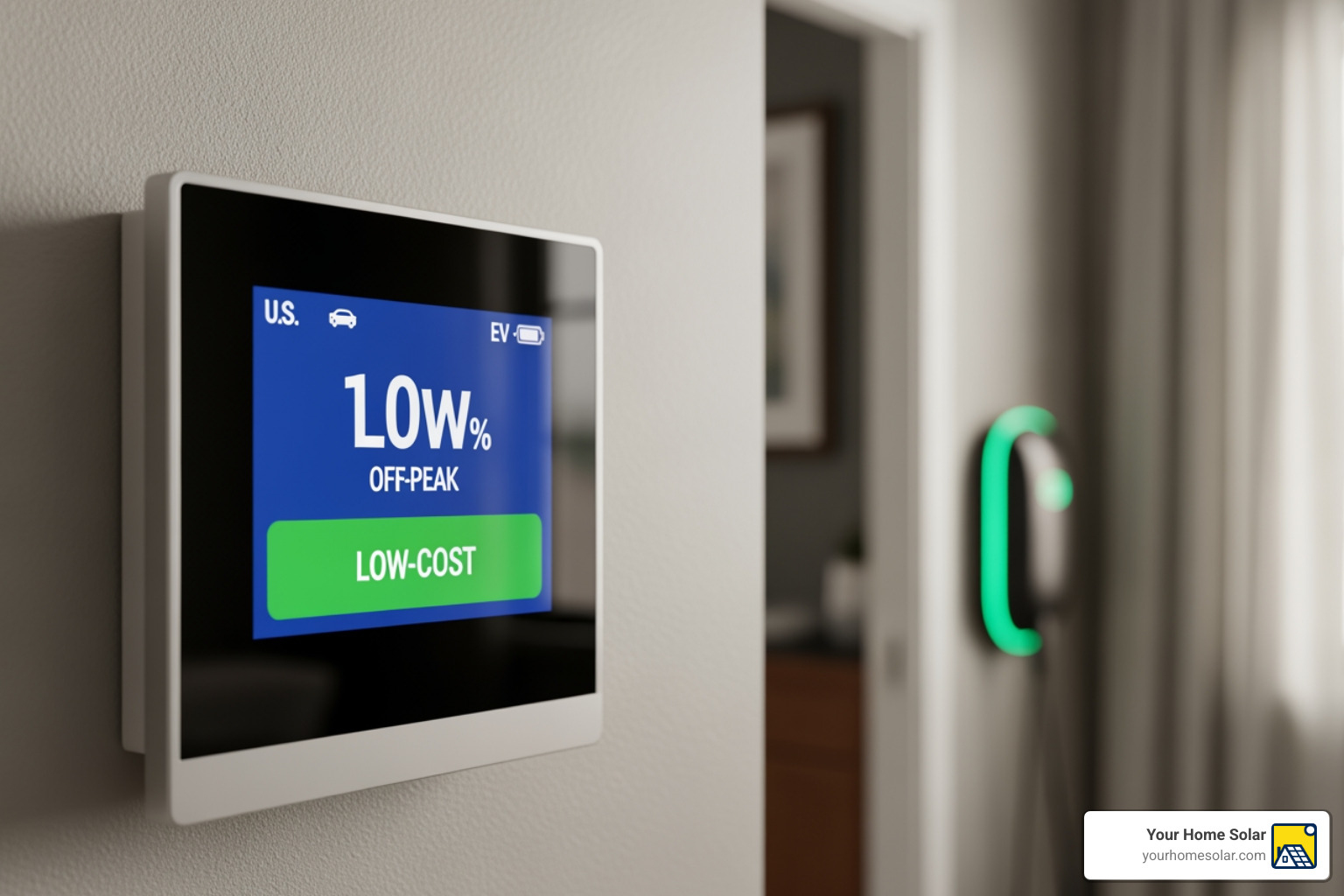
Furthermore, many local utilities offer “time-of-use” rates. By using a smart Level 2 charger to schedule your sessions for the middle of the night, you can take advantage of the lowest possible electricity prices. You can Learn more about home EV charging solutions and how they fit into your monthly budget on our blog.
The Financial Impact: Costs, Incentives, and Property Value
When considering Level 2 charging home installation, you have to look at two main costs: the equipment (the charger itself) and the labor (the electrical work). High-quality Level 2 chargers generally range from $400 to $900 depending on features like Wi-Fi and cable length. Installation costs can vary widely based on how close your electrical panel is to your garage and whether your home needs an upgrade. For a deep dive into these numbers, see our Budgeting For Juice Your Guide To 240V Ev Charging Costs and The Definitive Guide To 240V Ev Charger Installation Cost.
Federal Tax Credits and Local Rebates
The good news is that you don’t have to shoulder the full cost alone. As of May 2026, the federal government offers a tax credit that covers 30% of the cost of the hardware and installation, up to $1,000. Additionally, many local utilities in East Tennessee, such as BrightRidge or Knoxville Utilities Board (KUB), occasionally offer rebates or specialized EV rates to encourage off-peak charging.
Choosing an ENERGY STAR certified charger not only ensures efficiency but is often a requirement for these local incentives. You can Explore available EV charging incentives through our dedicated services page.
Boosting Home Equity with EV Infrastructure
Installing a dedicated charging station is more than just a convenience; it’s a home improvement. Data shows that homes equipped with Level 2 charging home stations can sell for 1.5% to 3.5% more than comparable homes without them. In growing markets like Knoxville or Maryville, this can translate to a $4,000 to $6,000 premium. Buyers in 2026 increasingly view EV readiness as a standard “must-have” feature, similar to high-speed internet. Level Up Your Home Charging With An Ev Charger Installation to ensure your property remains competitive and future-proof.
Technical Requirements and Installation Options
The backbone of your Level 2 charging home setup is a dedicated branch circuit. This means the charger has its own breaker in your electrical panel and doesn’t share power with any other appliances. Typically, you’ll need a 40-amp or 50-amp double-pole breaker to support the continuous load of a high-speed charger. For more technical details on how this is wired, we have a guide on Electrify Your Ride A Deep Dive Into Ev Charger Wiring Schematics.
Hardwired vs. Plug-In Configurations
You have two main choices for how the charger connects to your home:
- Plug-In: The charger uses a NEMA 14-50 or NEMA 6-50 plug (similar to a dryer plug). This allows you to easily remove the charger if you move, but it requires a high-quality, industrial-grade outlet to handle the heat.
- Hardwired: The charger is wired directly into a junction box. This is generally considered safer for outdoor installations and allows for higher power delivery (up to 48 or 50 amps of actual output).
If you’re debating which is right for your garage, check out Diy Or Pro Your 240V Ev Charger Installation Questions Answered. We generally recommend hardwiring for maximum reliability and weatherproofing, especially for our customers in Sevierville or Greeneville who may need to mount their chargers outdoors.
Managing Electrical Capacity and Panel Upgrades
One of the biggest hurdles is home capacity. Approximately 50% of U.S. homes require a full electrical panel upgrade to safely add a Level 2 charger. If your home still has a 100-amp or 125-amp service, adding a 50-amp charger might overload the system when the AC and dryer are running.
However, modern “smart” chargers offer load management. These systems can monitor your home’s total power usage and throttle the EV charging speed if the house is nearing its limit, potentially saving you thousands in panel upgrade costs. This is particularly important as we move toward higher-voltage vehicle architectures; see Future Proofing Your Ev What 800V Charging Means For Your Garage for more on the next generation of tech.
Selecting the Best Level 2 Charging Home Equipment
Choosing the right equipment depends on your vehicle and your lifestyle. Most EVs in North America use the J1772 connector, while Tesla (and increasingly other manufacturers) use the NACS (North American Charging Standard). Many modern chargers, like those from ChargePoint or Lectron, offer interchangeable cables or adapters to ensure compatibility with any vehicle.
When selecting a charger, consider the cable length. A 25-foot cable is usually standard and gives you the flexibility to park in different spots or even reach a second car in the driveway. If you have two EVs, look for “dual” chargers or units that can share a single circuit. Finding the right partner to help you choose is key, which is why we recommend Expert Hands Safe Charges Selecting Your Ev Charger Installation Partner.
Smart Features and Load Management
In 2026, a “dumb” charger is rarely the best choice. Smart Level 2 charging home stations come with Wi-Fi connectivity and dedicated apps that allow you to:
- Schedule Charging: Set your car to charge only when electricity is cheapest.
- Monitor Energy Use: Track exactly how much you are spending on “fuel” each month.
- Receive Notifications: Get an alert if you forgot to plug in or if the charge is complete.
- Remote Control: Start or stop a session from your office or the couch.
These features aren’t just for tech enthusiasts; they are practical tools for saving money and managing your home’s energy footprint. Read more about Smart Ev Charger Installation In Knoxville to see how these features work in real-world Tennessee homes.
Professional Installation and Safety Compliance
While it might be tempting to treat a charger installation as a weekend DIY project, it is highly discouraged. Dealing with 240-volt circuits requires precision. A loose connection or an undersized wire can lead to a fire under the “continuous load” of an EV.
Professional installation involves:
- Site Assessment: Calculating your home’s existing electrical load.
- Permitting: Obtaining the necessary permits from local authorities (like the City of Knoxville or Sullivan County).
- Installation: Running conduit and heavy-gauge wire from the panel to the charger location.
- Inspection: Ensuring the work meets NEC Article 625 standards.
By hiring experts, you ensure your warranty remains valid and your home stays safe. You can Learn about professional EV charger installation or Contact our Knoxville EV installation experts to get a quote tailored to your specific home layout.
Frequently Asked Questions about Level 2 Charging
Can I install a Level 2 charger myself?
Technically, if you are a skilled DIYer, you might be able to run the wire, but we strongly advise against it. EV charging is a high-amperage, continuous load that puts more stress on your home’s wiring than almost any other appliance. Most jurisdictions in East Tennessee require a permit and a licensed electrician to sign off on the work for insurance and safety reasons.
How do I know if my electrical panel can handle an EV charger?
Look at your main breaker (usually at the top of your panel). If it says “200,” you likely have enough room, though a load calculation is still necessary. If it says “100” or “125,” you will likely need a panel upgrade or a smart charger with dynamic load management to avoid tripping your main breaker.
Is it safe to charge my EV outdoors in the rain?
Yes! Quality Level 2 chargers are NEMA 3R or NEMA 4 rated, meaning they are designed to withstand rain, snow, and sleet. The electrical connection between the plug and the car is also designed to be watertight and won’t “live” until the car and charger have successfully communicated that the seal is secure.
Conclusion
Investing in a Level 2 charging home setup is one of the best ways to enhance your EV ownership experience. It saves you time, reduces your fuel costs, and increases the value of your property. Whether you are in Johnson City, Kingsport, or right here in Knoxville, the transition to electric driving is much smoother when you have the right infrastructure in your garage.
At Your Home Solar, we pride ourselves on being more than just installers; we are your partners in home energy. From solar panels that can power your car for free to backup generators that keep your home running during a storm, we provide the expertise needed for a 100% satisfied experience.
Ready to amp up your home? Contact our Knoxville EV installation experts today or dive deeper into our Residential EV charging solutions to see how we can help you lead the charge into the future.