The Best Portable Solar Panels for Home: Quick Picks for 2026
The best portable solar panels for home use right now are:
| Panel | Wattage | Efficiency | Best For |
|---|---|---|---|
| Jackery SolarSaga 200 | 200W | 24.3% | Best overall |
| EcoFlow 400W | 400W | 23%+ | High output |
| Bluetti PV350 | 350W | 23.4% | Fast charging |
| Anker SOLIX PS400 | 400W | 23%+ | Best value 400W |
| Renogy 100W Foldable | 100W | ~22% | Budget pick |
Power outages in East Tennessee don’t come with a warning. One storm, one grid failure, and you’re left without lights, refrigeration, or a way to charge your devices. That’s a real problem — and it’s one that portable solar panels are built to solve.
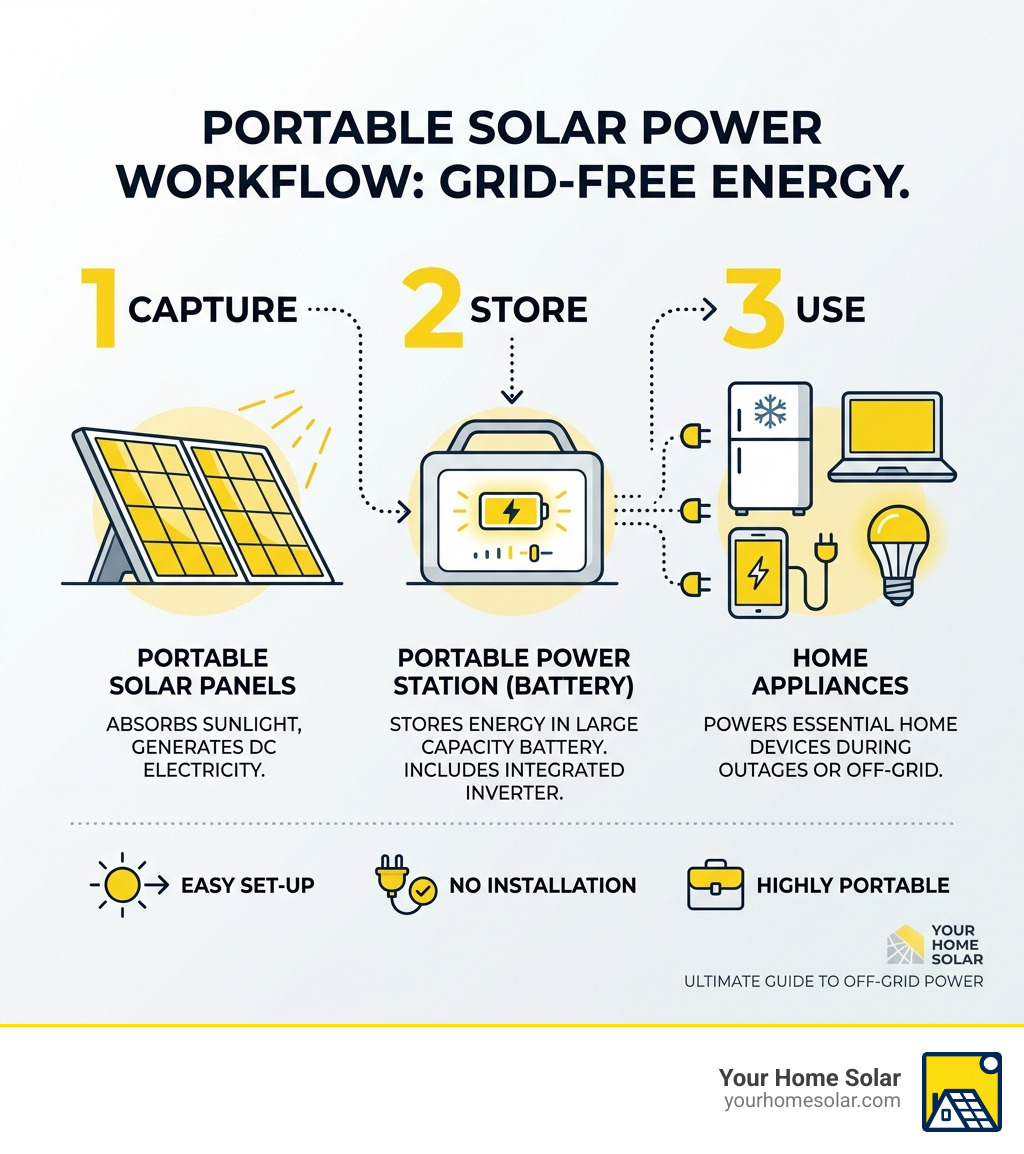
Unlike permanent rooftop systems, portable panels require no installation, no permits, and no contractor. You unfold them, point them at the sun, and plug in your power station. It’s that simple. Whether you need to keep a fridge running, charge phones, or power medical equipment during an outage, the right panel makes it possible.
I’m Ernie Bussell, founder and CEO of Your Home Solar — East Tennessee’s #1 solar energy contractor — and I’ve spent years helping homeowners navigate energy decisions just like this one. In this guide, I’ll walk you through everything I know about choosing the best portable solar panels for home backup, so you can make a confident, informed decision without the pressure.
Related content about best portable solar panels for home:
How Portable Solar Panels Work for Home Backup
When the grid goes down in Knoxville or Sevierville, portable solar panels serve as your personal power plant. But how do they actually turn a sunny afternoon into a cold refrigerator? It all starts with energy conversion. Portable panels are typically made of monocrystalline silicon cells, which are the gold standard for efficiency in small spaces. These cells capture photons from sunlight and convert them into direct current (DC) electricity.
However, you can’t just plug your toaster directly into a solar panel. To make this energy useful for home backup, you pair the panels with a “solar generator” or a portable power station. These units contain a battery (usually Lithium Iron Phosphate or LFP) and an inverter that changes the DC power into the alternating current (AC) power your home appliances need. For a deeper dive into the science, check out our How Solar Panels Work: A Comprehensive Guide.
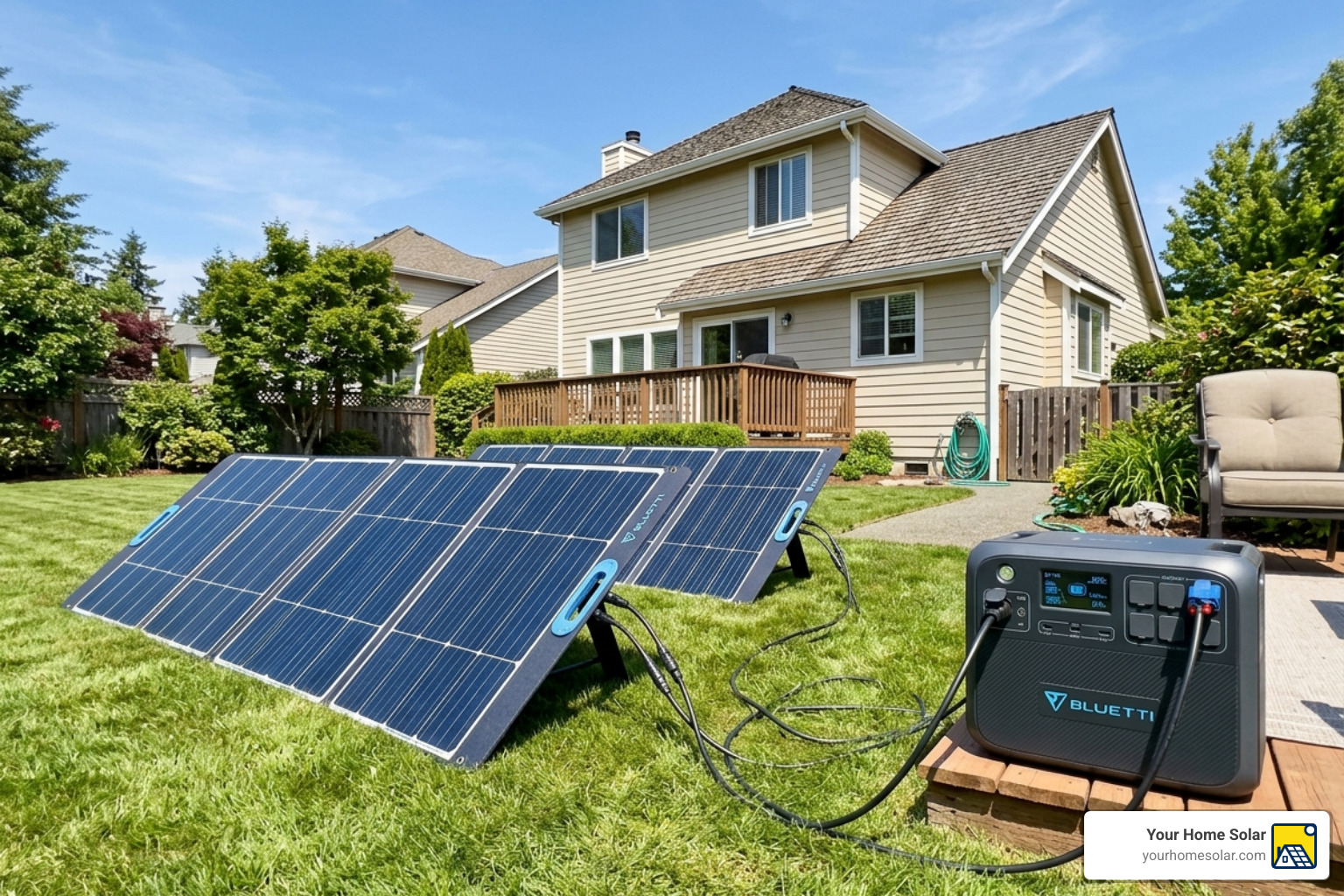
For emergency electricity, the workflow is seamless:
- Deployment: You set the panels in a sunny spot (your driveway or backyard).
- Collection: Sunlight hits the cells and creates a flow of electricity.
- Storage: This energy travels through a cable to your power station, where it’s stored for later use.
- Usage: You plug your essential appliances—like a CPAP machine, laptop, or LED lights—into the power station.
Understanding Solar Panel Durability
Since we live in East Tennessee, we know the weather can be unpredictable. From heavy humidity in Maryville to sudden downpours in the Smokies, your panels need to be tough. Most of the best portable solar panels for home use feature ETFE (Ethylene Tetrafluoroethylene) lamination. This isn’t just a fancy acronym; it’s a durable, UV-resistant coating that protects the cells from the elements while allowing maximum light through.
When shopping, look for an IP68 rating. This means the panel is dust-tight and can survive being submerged in water. While we don’t recommend using them as pool floats, this level of weatherproofing ensures they can handle a rainstorm during a multi-day outage. For more on how long these systems last, read our guide on Solar Panel Durability: How Long Do They Last?.
Key Factors When Choosing the Best Portable Solar Panels for Home
Choosing a panel isn’t just about picking the biggest number on the box. As we approach April 2026, the technology has advanced significantly, and several technical factors will determine how much “real world” power you actually get.
- Wattage: This is the theoretical maximum output. For home backup, we generally recommend at least 200W to 400W. A 100W panel is great for phones, but if you want to keep a small freezer running, you’ll need more muscle.
- Conversion Efficiency: This tells you how much of the sunlight hitting the panel actually becomes electricity. The current industry leaders, like the Jackery SolarSaga 200, hit around 24.3%.
- Weight-per-Watt: If you’re moving panels in and out of storage in your garage, weight matters. Look for panels that offer a high “watts-per-pound” ratio.
- Cell Technology: Modern panels often use N-type cells or TOPCon technology. These are more efficient and handle heat better than older designs.
- Bifacial Design: Some high-end models, like certain EcoFlow units, are bifacial—meaning they have cells on both sides. They can pick up reflected light from the ground, potentially boosting output by up to 25%.
Expert reviews from The Best Portable Solar Panels, Tested and Reviewed emphasize that real-world output is often 70-80% of the rated wattage due to atmospheric conditions.
Real-World Output Comparison (Estimated)
| Rated Wattage | Direct Sun Output | Indirect/Cloudy Output |
|---|---|---|
| 100W | 75W – 85W | 15W – 25W |
| 200W | 150W – 170W | 35W – 50W |
| 400W | 300W – 340W | 70W – 100W |
Top-Rated Models for Home Use in 2026
We’ve kept a close eye on the market, and by 2026, a few heavy hitters have emerged as the best portable solar panels for home applications. These models are frequently cited in The 7 Best Portable Solar Panels for Renewable Power Anywhere for their reliability and performance.
High-Efficiency Performance: Best Portable Solar Panels for Home
If your goal is to charge a large battery bank as fast as possible, efficiency is king.
- Jackery SolarSaga 200: This is a favorite for a reason. Its 24.3% efficiency rating is one of the highest we’ve seen. It’s remarkably easy to set up with built-in kickstands that click into place.
- EcoFlow 400W: This is a powerhouse. It’s designed to pair perfectly with large units like the EcoFlow DELTA Pro 3. It’s a bit heavier (around 35 lbs), but it can generate significant power even on hazy days.
- Bluetti PV350: A solid middle ground, offering 350W of output with 23.4% efficiency. It’s known for being very sturdy, which is great if you have curious pets or kids running around the yard.
When pairing these with batteries, remember to check your “solar input limits.” For instance, an EcoFlow DELTA Pro can handle up to 1,600W of solar, meaning you could daisy-chain four 400W panels to charge the unit in just a few hours of peak sun. Learn more about matching these with the right storage in our guide on Residential Solar Battery Types.
Best Value and Portability: Best Portable Solar Panels for Home
You don’t always need a massive 400W array. Sometimes, “light and fast” is the better strategy for home emergencies.
- Anker SOLIX PS400: This model often offers the best “cost-per-watt” in the 400W category. It’s frequently on sale and provides reliable, fast charging without the premium price tag of some competitors.
- Renogy 200W Foldable: Renogy is a staple in the off-grid community. Their 200W foldable panel is rugged, waterproof, and features a built-in kickstand. It’s a “set it and forget it” kind of panel.
- Luvknit 100W: For those on a strict budget, this 100W panel punches above its weight. It’s incredibly light (around 8 lbs) and can easily be hung from a balcony or propped up on a porch to keep phones and tablets topped off.
Maximizing Your Solar Output and Home Integration
Having the best portable solar panels for home use is only half the battle; you also have to use them correctly. I’ve seen many folks in Tennessee lose out on 30% of their power just because their panels were flat on the ground.
- Optimal Angling: The sun changes position throughout the day. For the best results, your panels should be perpendicular to the sun’s rays. In April, an angle of about 35-45 degrees is usually ideal for our region.
- Cleaning: Dust, pollen (especially during Tennessee springs!), and bird droppings act like a shade. A quick wipe with a damp cloth can significantly boost your output. For more tips, see our Solar Energy Maintenance 101.
- The “Daisy-Chain” Strategy: Many panels allow you to connect them in series or parallel. If your power station supports it, connecting two 200W panels will charge your battery twice as fast as one.
- Transfer Switches: For a more permanent backup feel, you can have a licensed electrician install a transfer switch. This allows you to plug your solar generator into a dedicated inlet, powering specific circuits in your home (like your fridge and living room lights) directly through your home’s wiring.
Portable vs. Traditional Home Solar Installations
It’s important to understand where portable panels fit in the grand scheme of home energy. At Your Home Solar, we specialize in both.
- Portable Systems: These are “plug-and-play.” They are affordable, require zero installation, and you can take them with you if you move. However, they are manual—you have to set them up every time you need them.
- Traditional Installations: These are permanent fixtures on your roof or a ground mount. They are grid-tied, meaning they lower your monthly bill every single day, not just during an outage. They also qualify for significant tax incentives, like the 30% Residential Clean Energy Credit.
If you’re looking for a comprehensive, “set it and forget it” solution, a permanent installation is the way to go. You can explore our Comprehensive Guide to Understanding Solar Panels to see which fits your lifestyle better.
Frequently Asked Questions about Portable Solar
How much power do 400W panels generate in indirect sun?
In indirect sunlight or heavy overcast conditions, a 400W panel will typically generate between 40W and 100W. While this is a significant drop from its peak, it is still enough to “trickle charge” a battery or keep small electronics running over a long period.
Can portable panels power a whole house during an outage?
Generally, no. Portable panels and solar generators are designed for “partial home backup.” They can run essential appliances like your refrigerator, lights, and internet router. Powering a whole house—especially energy-hungry items like central AC or an electric water heater—requires a much larger, permanent solar array and a high-capacity battery system like the EcoFlow DELTA Pro Ultra.
Are portable solar panels fully waterproof for long-term home use?
Most high-quality portable panels are rated IP67 or IP68, meaning they are waterproof. However, they are not designed to be left outside permanently for years. The folding joints and fabric casings can degrade over time when exposed to 24/7 sun and rain. For permanent outdoor use, rigid glass panels are a better choice.
Conclusion
Achieving energy independence doesn’t have to happen all at once. For many homeowners in East Tennessee—from Knoxville to Johnson City—starting with the best portable solar panels for home backup is the perfect “entry point” into renewable energy. It provides immediate peace of mind for the next storm and gives you a taste of what it’s like to generate your own power.
At Your Home Solar, we’re committed to helping our neighbors find the right energy balance. Whether you need a simple portable setup for emergencies or a full-scale rooftop installation to wipe out your electric bill, we have the expertise to make it happen. We pride ourselves on tailored, reliable solutions that keep our community powered, no matter what the grid is doing.
Ready to take the next step toward energy security? Start your journey with Residential Solar Solutions today and let us help you find the perfect fit for your home.