Why Understanding Solar Power Advantages Matters for East Tennessee Homeowners
Solar power advantages include significant financial savings on electricity bills, increased home value, reduced carbon footprint, and energy independence with backup power options. Nearly 4 million American households already generate their own power with solar energy, making it one of the fastest-growing renewable energy sources in the country.
Key Solar Power Advantages:
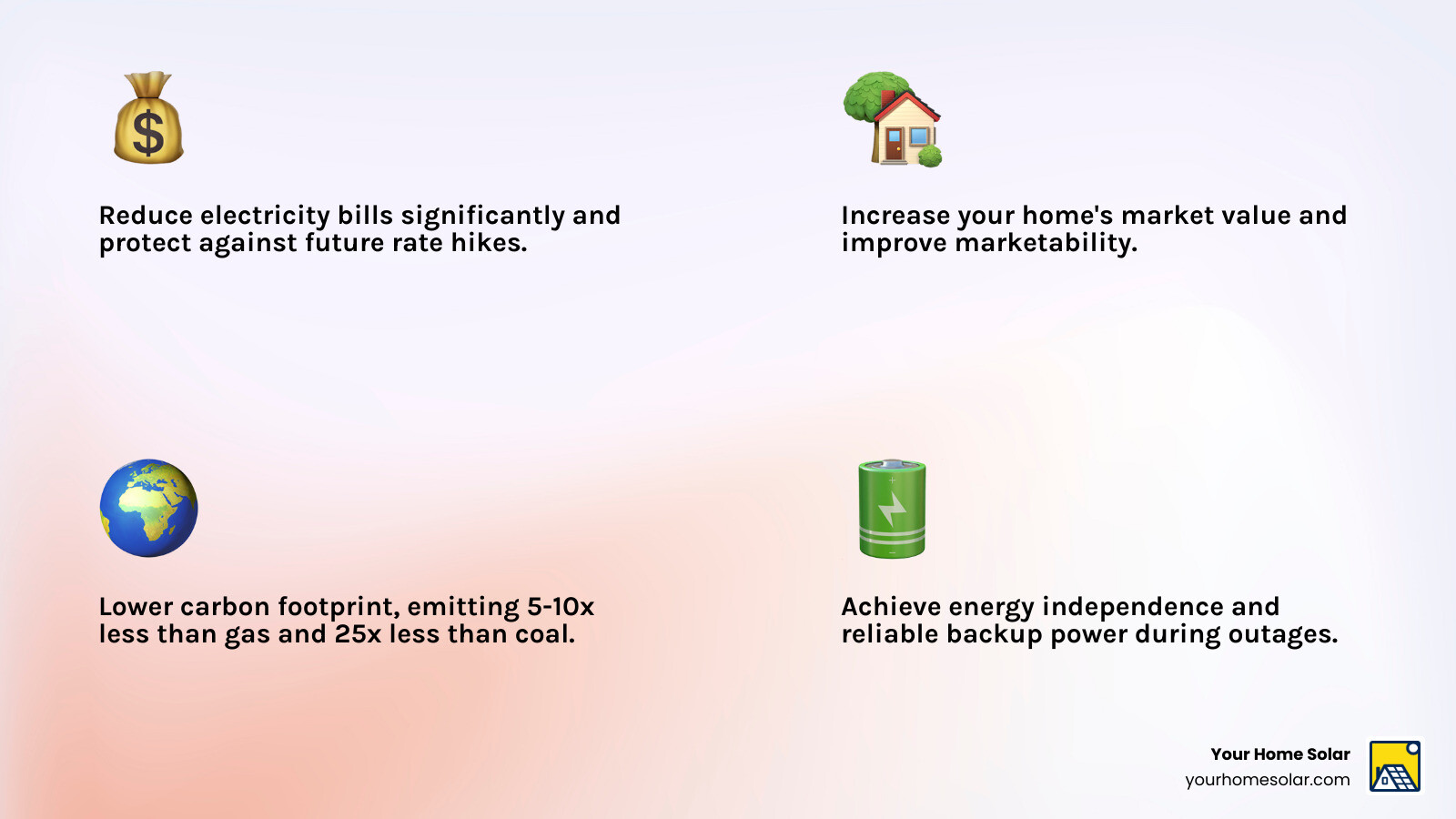
- Financial Benefits – Eliminate or drastically reduce monthly electric bills and protect against utility rate increases
- Home Value – Increase property value and marketability when selling
- Environmental Impact – Produce 5-10x less carbon emissions than natural gas and 25x less than coal
- Energy Independence – Generate your own power and maintain electricity during grid outages with battery storage
- Long-Term Reliability – Solar panels last 25-30+ years with minimal maintenance
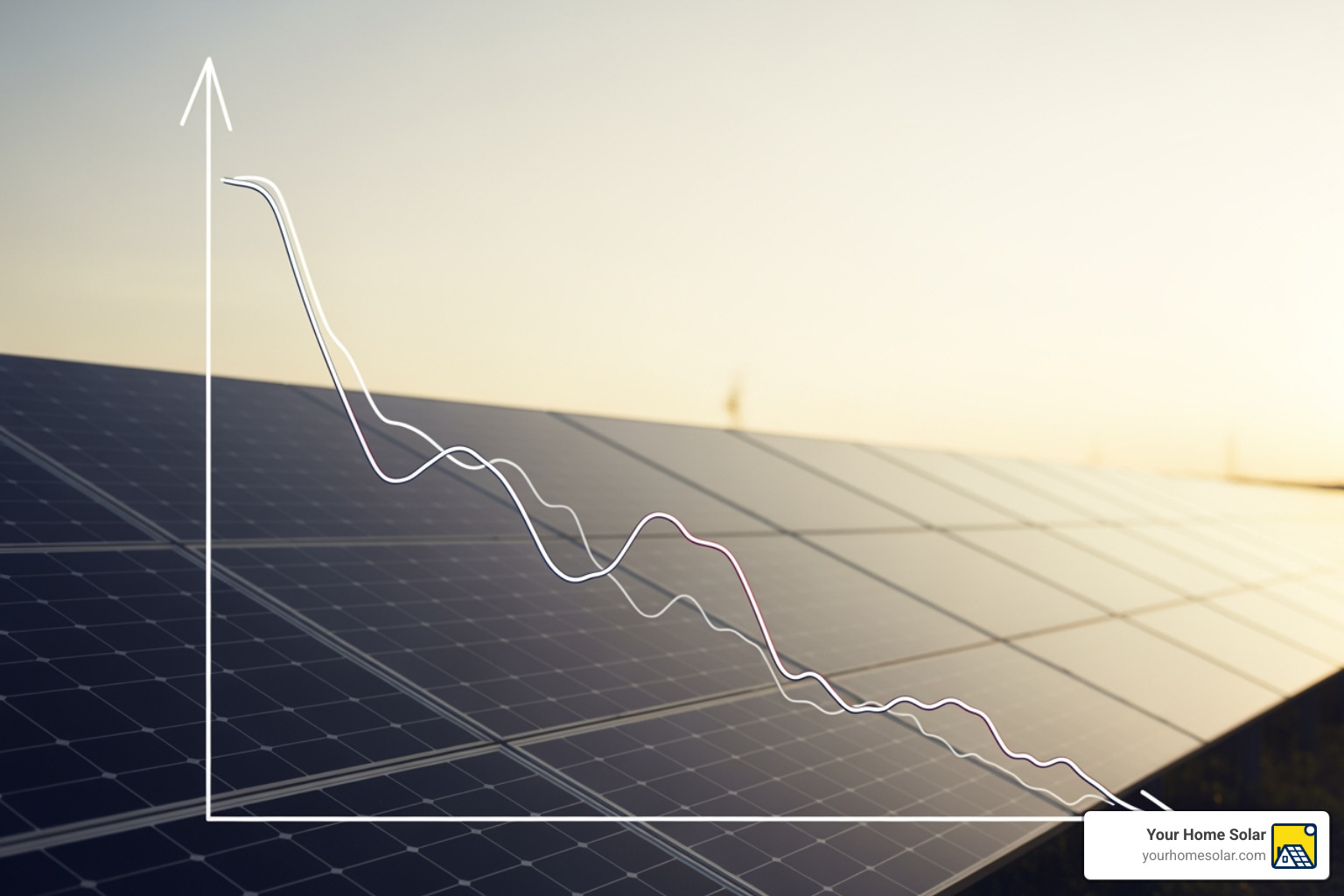
- Declining Costs – Solar electricity costs dropped from $0.417/kWh in 2010 to just $0.043/kWh by 2024
The sun delivers an enormous amount of clean, free energy to Earth every day. In fact, just one hour of sunlight hitting our planet contains enough energy to power the entire world for a full year. This abundant resource is now more affordable and accessible than ever before.
But solar isn’t right for every situation. This guide gives you a balanced, honest look at both the advantages and challenges of residential solar power. You’ll learn how the technology works, what it costs, how it performs in East Tennessee’s climate, and whether it makes sense for your home.
I’m Ernie Bussell, founder and CEO of Your Home Solar, and I’ve spent years helping East Tennessee homeowners understand the real solar power advantages and make confident energy decisions. After leading solar operations for a $40 million-per-year company and founding the #1 solar contractor in our region, I’ve seen how solar transforms homes and budgets when installed correctly.
How Solar Energy Works: From Sunlight to Savings
Have you ever wondered how those sleek panels on a roof can magically power a home? It all comes down to a neat trick of physics called the photovoltaic (PV) effect. Our solar panels are made up of many individual solar cells, typically crafted from silicon. When sunlight hits these cells, it excites electrons, causing them to break free from their atoms and flow, creating an electric current. This direct current (DC) electricity is what the panels produce.
But your home runs on alternating current (AC) electricity. That’s where the inverter comes in, acting as a translator. It takes the DC electricity from your solar panels and converts it into usable AC electricity for your home. Any excess electricity you generate can be sent back to the utility grid, often earning you credits on your bill through net metering programs. It’s a simple, neat system that harnesses the sun’s incredible power – a power so vast that just one hour of sunlight hitting Earth provides more energy than the entire world uses in a year! We explain this process in more detail in our How Solar Panels Work: A Comprehensive Guide.
Different Solar Technologies
When we talk about solar energy for homes, we’re primarily discussing two main types:
- Photovoltaics (PV): This is what most people picture when they think of solar panels. PV systems directly convert sunlight into electricity using the photovoltaic effect we just discussed. These are the systems we specialize in at Your Home Solar, as they are ideal for generating electricity to power your entire home.
- Solar Thermal: While not as common for whole-home electricity generation, solar thermal technology uses sunlight to generate heat. The most common residential application is solar water heating, where special collector panels absorb solar radiation to heat water for your home. While it doesn’t produce electricity, it can significantly reduce your water heating bills.
There are also larger-scale technologies like Concentrated Solar Power (CSP), which uses mirrors to focus sunlight and create steam for turbines, but these are typically for utility-scale power plants, not residential applications. For a deeper dive into the options available for your home, check out our guide on Understanding Different Types of Residential Solar Energy Systems.
The Major Solar Power Advantages
Choosing to go solar for your East Tennessee home comes with a remarkable array of benefits. From boosting your bank account to protecting our beautiful environment, the solar power advantages are compelling. Let’s explore why so many homeowners are making the switch.
Financial Savings: The Most Popular of Solar Power Advantages
Let’s be honest, who doesn’t love saving money? This is often the first, and most compelling, reason homeowners in Knoxville, Maryville, and across East Tennessee consider solar. Once your solar system is installed, you’re generating your own electricity. This means significantly reduced, or even eliminated, monthly electricity bills. Imagine looking at your utility bill and seeing a charge for just the connection fee, rather than hundreds of dollars for consumption!
Beyond immediate savings, solar offers protection from unpredictable utility rate hikes. We’ve all seen our electricity rates creep up over the years. With solar, you lock in your energy costs for decades, giving you financial predictability that traditional energy sources simply can’t match. This makes solar a smart long-term investment, often paying for itself over its lifespan and continuing to generate free electricity for years afterward. Many homeowners find that their monthly solar loan payment is often less than what they were paying their utility company. To understand just how much you could save, read our article on how to Unlock Your Home’s Potential: How Solar Energy Can Save You Money.
Increased Home Value
Think of solar panels as a premium home upgrade, much like a renovated kitchen or a finished basement. They add tangible value to your property. A Berkeley National Laboratory study found that homes with solar photovoltaic panels sell for a premium compared to homes without them. Buyers are increasingly willing to pay more for a home that comes with lower energy bills and a reduced carbon footprint already built-in. This means that installing solar can not only save you money while you live in your home but also provide a significant return on investment when it’s time to sell. It improves your home’s marketability and can help it stand out in a competitive real estate market. Find more about this benefit in our guide on How Solar Energy Can Increase Your Property Value.
Environmental Impact: A Key Reason to Consider Solar Power Advantages
Beyond the financial perks, one of the most profound solar power advantages is its positive environmental impact. Solar energy is a truly renewable resource, meaning it won’t run out as long as the sun shines. Unlike fossil fuels, which release harmful pollutants and greenhouse gases when burned, solar power produces no emissions during operation.
The difference in carbon footprint is stark. Solar panels produce 5 to 10 times less carbon emissions per unit of energy compared to natural gas. When stacked against coal, the contrast is even more dramatic: a coal power plant releases, on average, 25 times more emissions than a solar power system. Even natural gas, considered cleaner than coal, still generates 10 times the emissions of a solar array. By switching to solar, you’re not just saving money; you’re actively reducing your carbon footprint and contributing to cleaner air and a healthier planet for everyone in East Tennessee. Learn more about making a difference with our guide to The Environmental Impact of Solar Energy: Reducing Your Carbon Footprint.
Energy Independence and Reliability

In East Tennessee, we’re no strangers to unexpected power outages, whether from winter storms or summer thunderstorms. One of the most reassuring solar power advantages is the energy independence and reliability it offers, especially when paired with battery storage.
While a standard grid-tied solar system will typically shut down during a blackout for safety reasons, integrating a solar battery system changes the game. With solar-plus-storage, your home can continue to draw power from your batteries when the grid goes down, keeping your lights on, appliances running, and essential systems operational. This gives you true energy sovereignty, reducing your reliance on the centralized utility grid and providing peace of mind during emergencies. We’ve seen entire islands powered by solar and battery storage, demonstrating the incredible potential for localized energy independence. For more on staying powered during outages, explore Why Solar Panels for Homes Are the Best Choices for Emergency Power Backup.
Understanding the Costs and Challenges of Solar
While the solar power advantages are numerous and compelling, it’s equally important to have a clear understanding of the costs and challenges involved. We believe in transparency, so let’s address the realities of investing in solar for your home.
The Evolving Cost of Solar: Is It Affordable?
If you’ve heard that solar is expensive, you’re not wrong – but you might be thinking of a decade ago! The cost of solar energy has plummeted dramatically over time, making it more affordable than ever before. Just a decade ago, an average 6-kilowatt residential solar system could cost $50,000 or more. Today, thanks to incredible advancements and economies of scale, a typical home installation rarely exceeds $20,000.
Consider these impressive statistics:
- The global weighted-average levelized cost of electricity (LCOE) for utility-scale solar PV projects fell from $0.417/kWh in 2010 to just $0.043/kWh by 2024.
- Between 2018 and 2023 alone, the solar PV LCOE almost halved.
- By 2024, solar PV was 41% cheaper than fossil fuel alternatives.
- The International Energy Agency (IEA) confirmed that solar power schemes now offer the cheapest electricity in history.
This steep decline, with prices going down by an annual average of 62%, means that solar is no longer a luxury, but a practical and financially sound investment for many East Tennessee homeowners. We can help you steer the various options in our guide to the Cost and Financing of Solar Systems.
Maximizing Your Investment with Incentives
One of the biggest factors making solar so affordable for homeowners in East Tennessee is the availability of powerful incentives. The most significant is the Federal Residential Clean Energy Credit, which currently offers a 30% tax credit on the cost of your new solar system. This credit is available until January 1, 2033, so now is an excellent time to take advantage of it.
Beyond federal incentives, various state and local programs, as well as net metering policies, can further reduce your upfront costs and maximize your long-term savings. Net metering, where available, allows you to send excess electricity your panels produce back to the grid in exchange for credits on your utility bill, essentially turning your meter backward. We stay up-to-date on all available incentives to ensure our customers get the maximum benefit. To learn more about how these programs can benefit you, check out our guide on Incentives and Tax Credits for Solar Systems.
Key Disadvantages and Modern Solutions
No technology is without its drawbacks, and solar energy is no exception. However, modern advancements are rapidly addressing many of the historical challenges.
- Intermittency: Perhaps the most commonly cited disadvantage is that solar panels only produce electricity when the sun is shining. This means they won’t work at night, and their efficiency can decrease on cloudy days or during storms. This weather dependency was once a significant hurdle.
- Modern Solution: The rapid evolution of battery storage systems has largely overcome this. Batteries store excess energy generated during sunny hours, allowing you to use it at night or during periods of low sunlight, providing continuous power and enhancing energy independence.
- Manufacturing Impact: The production of solar panels and batteries requires energy and raw materials, which can have an environmental footprint. Mining for materials like silicon and lithium, and the energy-intensive manufacturing processes, contribute to emissions.
- Modern Solution: While not entirely emission-free, the lifecycle emissions of solar are still significantly lower than fossil fuels. Plus, the industry is making strides in recycling solar panels and developing more sustainable manufacturing practices to minimize their environmental impact.
We believe in presenting a full picture so you can make an informed decision about the true solar power advantages and any potential drawbacks.
Is Solar Right for Your Home? Key Considerations
Deciding to go solar is a big step, and we want to ensure it’s the right fit for your home and lifestyle in East Tennessee. Several practical factors can influence your system’s performance and cost.
Roof Suitability and Installation
Your roof is the primary canvas for your solar system, so its characteristics are crucial.
- Roof Type: Certain roofing materials make installation easier and more cost-effective. Asphalt shingles, metal, and tiles are generally good candidates. If your roof is made of other materials, installation may be more expensive. It’s also important that your roof is structurally sound and in good condition. We typically recommend addressing any major roof repairs before solar installation, as our solar panels come with 20-year warranties, but most roof warranties are for 10-15 years. If your roof needs work later, the whole system would have to be temporarily removed.
- Roof Angle and Direction: Solar panels perform best when they face south, or as close to south as possible, to capture the maximum amount of sunlight throughout the day. A roof that doesn’t face the sun directly might still be suitable, but it could require more panels to achieve the same energy output. Flat roofs are generally less ideal than angled roofs for optimal sunlight capture.
- Shading: Any significant shading from trees, chimneys, or neighboring buildings can reduce your panels’ efficiency. We conduct a thorough site assessment to identify and mitigate any shading issues to ensure your system performs optimally.
Understanding these factors is key to a successful installation. We cover all these considerations and more in our guide on Preparing Your Home for Solar Installation: What You Need to Know.
Performance in Different Weather and Climates
A common misconception is that solar panels only work on perfectly sunny days. While peak production occurs in full sun, solar panels are quite resilient and perform well in various conditions, including East Tennessee’s changing weather.
- Cloudy Days: Solar panels still generate electricity on cloudy days, albeit at a reduced capacity, because they can capture diffuse sunlight. So, even when the sky is overcast in Knoxville or Johnson City, your system is still working for you.
- Cold Weather: Surprisingly, solar panels can actually be more efficient in colder temperatures, as long as there’s sunlight! Like most electronics, extreme heat can slightly decrease efficiency, while cold, clear days can boost performance.
- Snow: While snow accumulation can temporarily block sunlight and reduce output, modern systems are often designed with angles that allow snow to slide off. Additionally, the panels themselves can generate a small amount of heat that helps melt snow.
The U.S. Department of Energy funds regional test centers to ensure solar systems perform across different climates, confirming their viability in places like East Tennessee, even with our varied seasons. To maximize your system’s efficiency year-round, check out our Seasonal Solar Energy Tips: Maximizing Efficiency Year-Round.
Can’t Install Panels? Explore Solar-Related Solutions
We understand that not every home in East Tennessee is perfectly suited for rooftop solar panel installation right now. Perhaps your roof isn’t ideal, or you’re planning a move in the near future. Does that mean you can’t participate in the clean energy movement or enjoy some of the solar power advantages? Not at all!
Here are some solar-related solutions and steps you can take:
- Improve Home Energy Efficiency: The best way to reduce your energy bill, regardless of whether you have solar, is to consume less energy. Investing in energy-efficient windows, better insulation, and upgrading to energy-efficient appliances can significantly lower your electricity needs. This means that if you do install solar in the future, you might need a smaller, less expensive system.
- Explore Utility Green Power Programs: Many local utility providers offer programs that allow you to support renewable energy generation through your monthly bill, even if you don’t have panels on your roof. While not direct solar ownership, it’s a way to contribute to a greener grid.
- Consider Future Installation: Technology is constantly evolving, and what might not be feasible for your home today could be in the near future. Keep an eye on innovations like more flexible solar materials, improved panel efficiency, and new mounting solutions that could make solar viable for a wider range of roof types and property layouts.
Even if direct panel installation isn’t an option right now, these steps can help you prepare for a brighter, more sustainable energy future. Learn more about solar options for every homeowner on our site.
Frequently Asked Questions about Solar Energy
We hear a lot of questions from homeowners in Johnson City, Kingsport, and across East Tennessee who are curious about solar. Here are some of the most common ones:
How long do solar panels last?
Modern solar panels are incredibly durable and built to last. Most high-quality solar arrays, like the ones we install, are designed to last 30 plus years. In fact, their average durability is about three decades with little to no loss in efficiency. We back this up with 20-year manufacturer warranties on the panels we install, giving you peace of mind for decades to come. Beyond that, solar panels require minimal maintenance, usually just an occasional cleaning to ensure optimal performance. For more details on the longevity of your system, check out our article on Solar Panel Durability: How Long Do They Last?.
Can solar panels power my house during a blackout?
This is a critical question, especially for those seeking energy independence. A standard grid-tied solar system, without a battery, is designed to shut down during a blackout. This is a safety measure to protect utility workers who might be working on power lines. However, this doesn’t mean you’re left in the dark! If you invest in a solar-plus-storage system that includes a battery bank, your home can absolutely be powered during a blackout. The battery stores the excess energy your panels produce, and when the grid goes down, your home seamlessly switches to battery power, keeping your essential appliances running. Learn all about energy storage options in The Ultimate Guide to Solar Batteries and Energy Storage Solutions.
How many solar panels do I need?
The number of solar panels your East Tennessee home needs isn’t a one-size-fits-all answer. It primarily depends on three key factors:
- Your Energy Usage: We start by looking at your historical electricity bills to understand your average monthly kilowatt-hour (kWh) consumption. The more energy you use, the more panels you’ll generally need.
- Available Roof Space: The size and orientation of your roof, as well as any shading, will determine how many panels can be efficiently installed.
- Your Energy Goals: Are you aiming to offset 100% of your electricity bill, or just a significant portion? Do you plan to add an electric vehicle or other high-energy appliances in the future?
We perform a detailed assessment to calculate the optimal system size for your specific needs, ensuring you get the most out of your investment. Get expert tips on this process in our guide on Properly Sizing a Solar System for Your East Tennessee Home: Expert Tips.
Conclusion: Making the Bright Choice for Your Tennessee Home
We’ve explored the many solar power advantages, from significant financial savings and increased home value to a reduced carbon footprint and improved energy independence. We’ve also addressed the evolving costs, the impact of incentives, and how modern solutions are overcoming historical challenges like intermittency.
For homeowners in East Tennessee, the decision to go solar is more compelling than ever. It’s a long-term investment that pays dividends for decades, both in your wallet and for the planet. The future of solar energy is bright, with ongoing innovations in panel efficiency, battery storage, and smart home integration continuously improving its accessibility and performance.
At Your Home Solar, we pride ourselves on being your trusted East Tennessee expert for custom energy solutions. We’re here to help you steer every step of the journey, ensuring a custom, reliable, and rewarding installation. We believe that understanding the true solar power advantages is the first step toward making a brighter choice for your home and our community. Find out why we’re one of the best solar companies in Tennessee and let us help you harness the power of the sun.