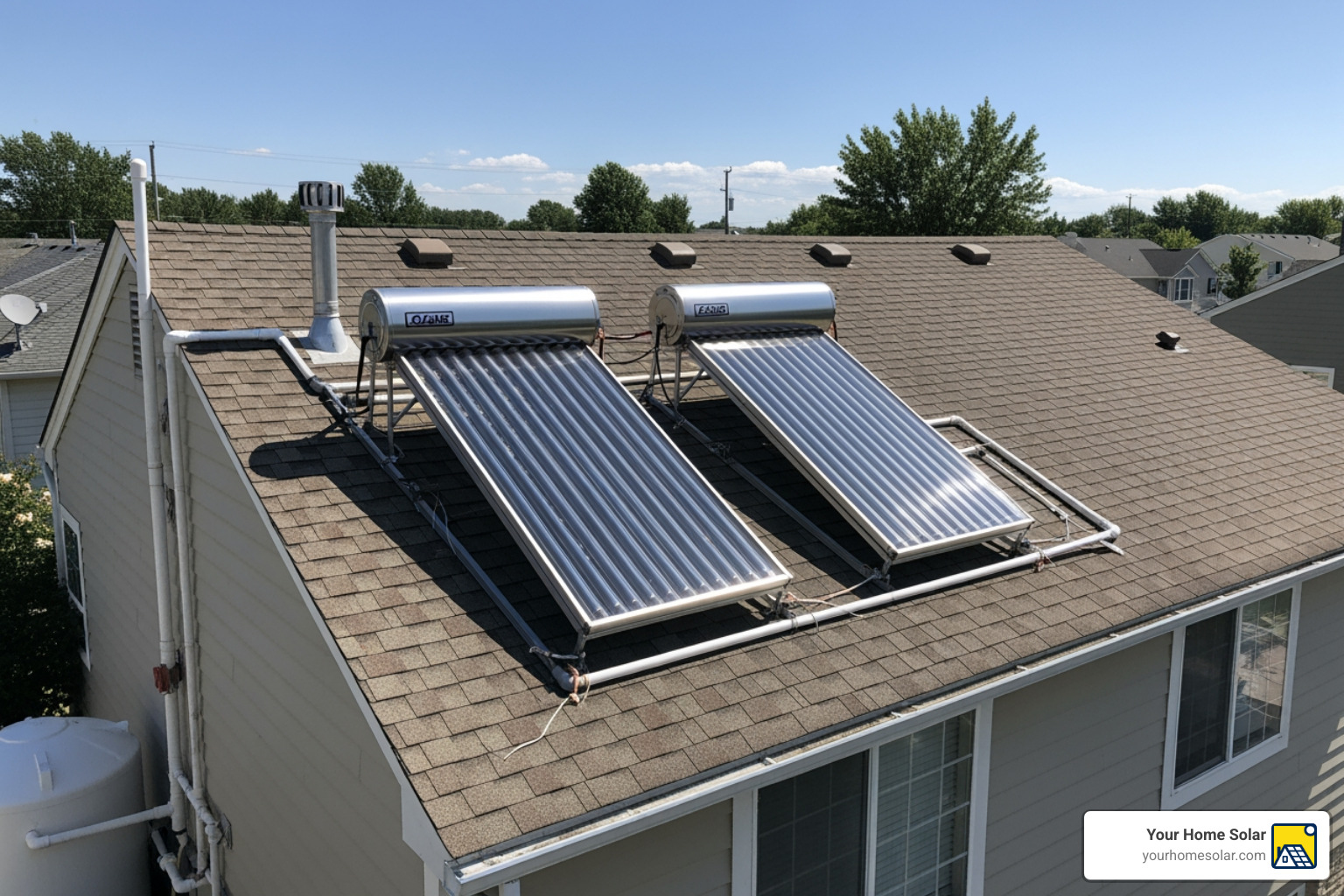
Why Solar Heating Maintenance Keeps Your Investment Running Strong
Solar heating maintenance is the regular care of your solar water heating system to ensure it operates efficiently and lasts longer. Here’s a quick overview:
Key Maintenance Tasks:
- Visual inspections every few months for cracks, leaks, or loose connections
- Cleaning collectors at least twice a year to remove dirt and debris
- Monitoring system performance monthly to catch drops in output
- Checking heat transfer fluid every 3-5 years (for antifreeze systems)
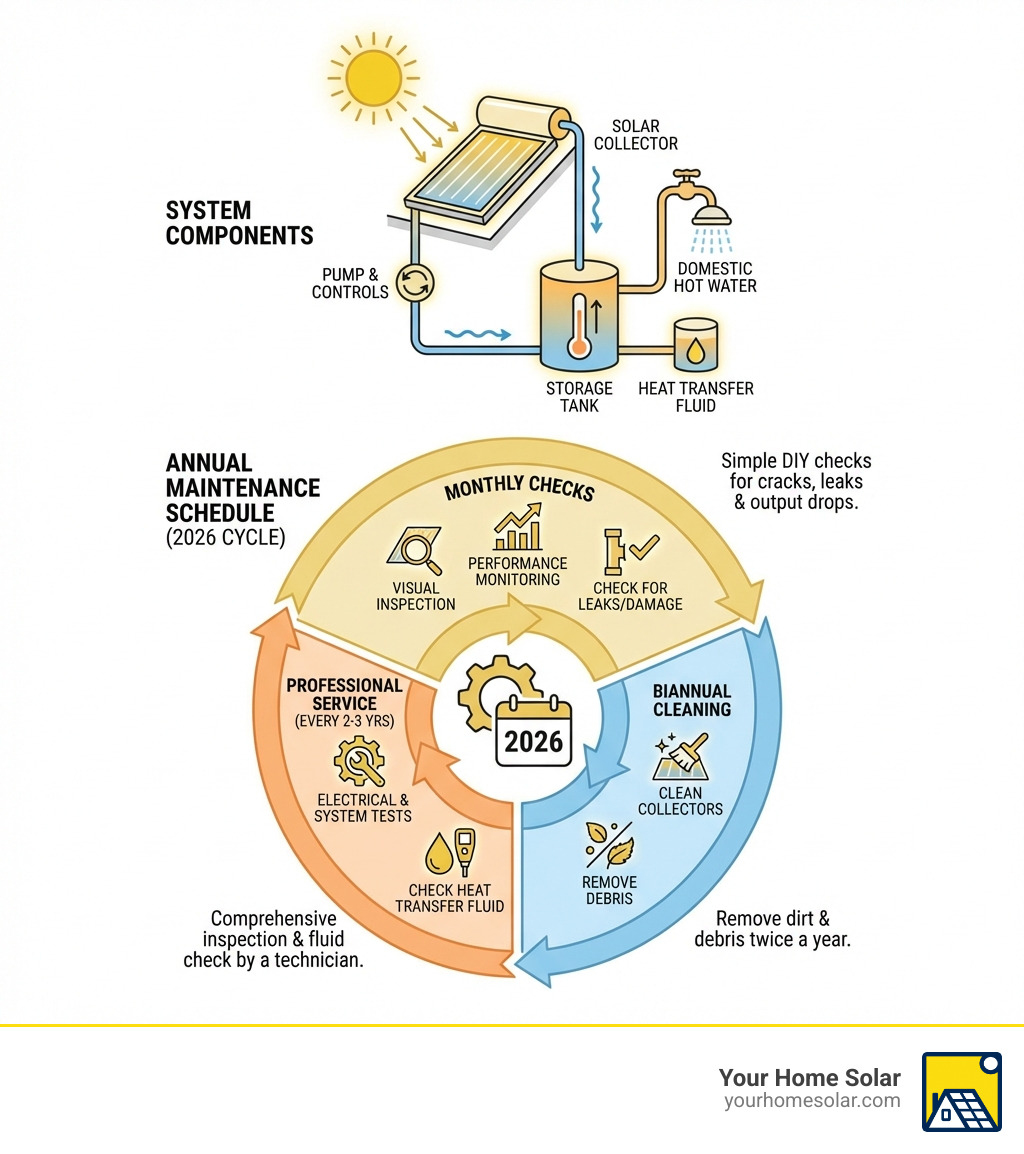
- Professional servicing every 2-3 years for comprehensive checks
- Inspecting pumps, sensors, and controls for proper operation
Expected Results:
- System lifespan of 20-25+ years
- Consistent hot water production
- Lower operating costs
- Early detection of issues before they become expensive repairs
Investing in a solar water heating system for your East Tennessee home is a smart choice for energy independence and lower utility bills. Like any major home system, it needs regular attention to deliver its full potential. While most solar systems require minimal maintenance, the care they do need is essential for protecting your investment and ensuring a reliable supply of hot water.
Much of this maintenance is straightforward and can be handled with simple DIY checks. Regular cleaning, visual inspections, and performance monitoring can prevent most major issues. For more technical work—like testing fluids or electrical connections—professional service every few years keeps everything running safely and efficiently.
I’m Ernie Bussell, founder and CEO of Your Home Solar. I’ve spent years helping East Tennessee homeowners maximize their solar investments with proper solar heating maintenance. Let me walk you through what you need to know to keep your system running strong for decades.
Understanding Your Solar Heater’s Anatomy
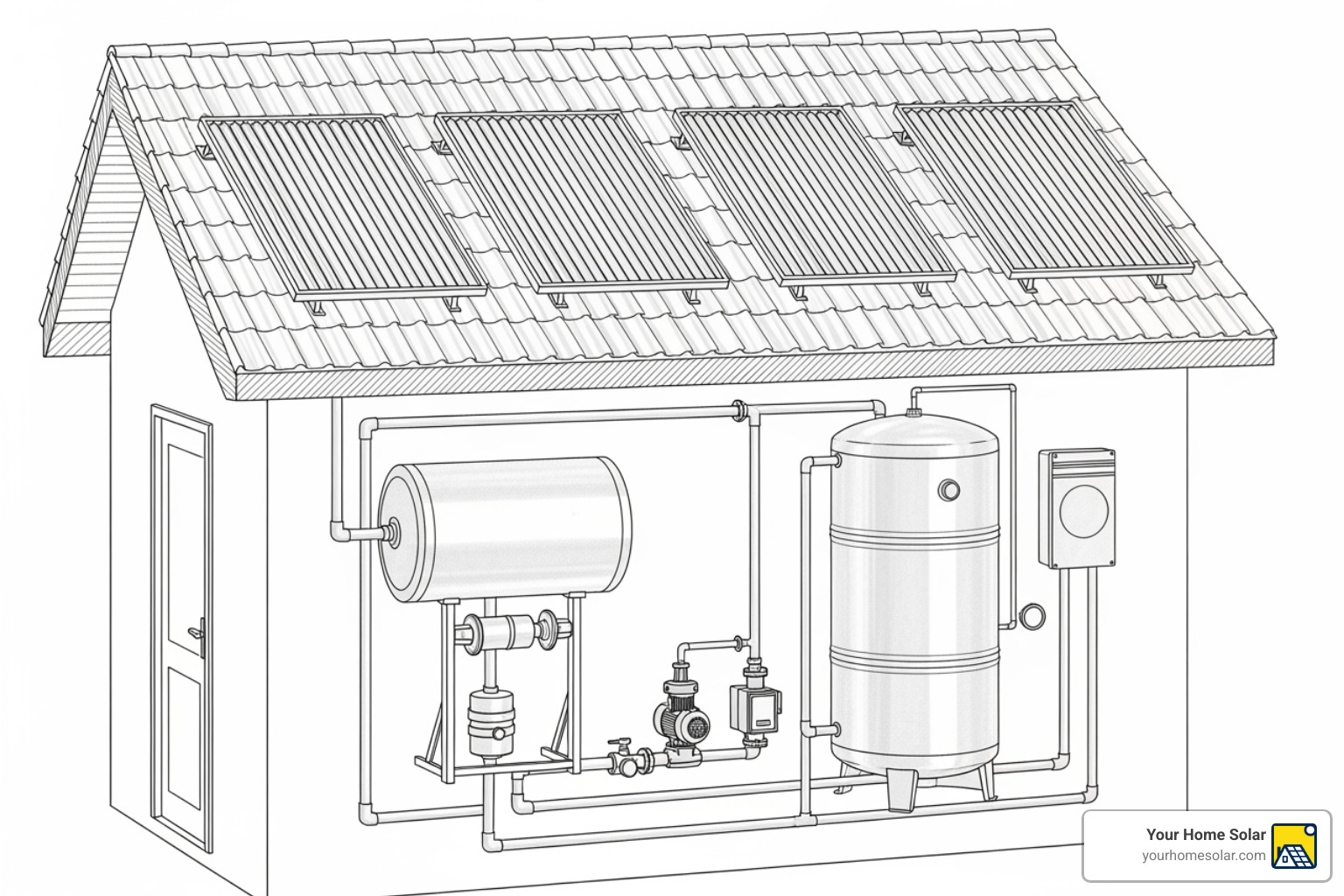
To perform effective solar heating maintenance, it helps to know your system’s components. A typical solar water heating system includes:
- Solar Collectors: Panels on your roof (flat-plate or evacuated tube) that absorb sunlight to heat a fluid.
- Storage Tanks: An insulated tank that stores the hot water produced by the collectors.
- Heat Transfer Fluid: In climates like East Tennessee, an antifreeze solution often circulates through collectors to absorb heat, then transfers it to your water via a heat exchanger.
- Pumps and Blowers: Mechanical parts that circulate the heat transfer fluid (pumps) or air (blowers in air heating systems).
- Control Systems: The system’s “brain” that monitors temperatures and activates pumps or blowers to heat water when solar energy is available.
- Plumbing and Wiring: The network of pipes and wires connecting all the components.
- Support Structure: The framework that mounts the collectors to your roof or a ground array.
Each part requires periodic attention for system efficiency and longevity. For more tips, see our guide on Seasonal Solar Energy Tips: Maximizing Efficiency Year-Round.
Essential Components That Need Your Attention
Your solar heating maintenance efforts should focus on these specific parts:
- Collector Glazing: The glass/plastic cover on collectors. Check for cracks or discoloration that reduce efficiency.
- Storage Tank Sacrificial Anode: A rod in steel tanks that corrodes to prevent the tank from rusting. It needs periodic checks and replacement.
- Pressure Relief Valve: A safety device that prevents excessive pressure. Ensure it operates freely.
- Temperature Sensors: These tell the control system when to activate pumps. Make sure they are securely fastened and reading temperatures correctly.
- Pipe Insulation: Prevents heat loss from pipes. Inspect regularly for damage from weather or pests.
- Roof Penetrations: Where pipes or wiring enter the roof. Maintain sealant to prevent water leaks.
Your Regular Maintenance Schedule: DIY Checks and Inspections
Solar heating systems are low-maintenance, but consistent care is key to a 20-25 year lifespan. Proactive solar heating maintenance prevents costly repairs.
We recommend visual inspections every few months to catch issues early. Many tasks are DIY-friendly, but always prioritize safety. Avoid going on your roof without proper equipment, and call a professional if a task feels unsafe.
Keeping a maintenance log is a smart way to track performance and simplify troubleshooting. For more tips, see our guide on Solar Energy Maintenance 101: Tips for Keeping Your System Running Smoothly.
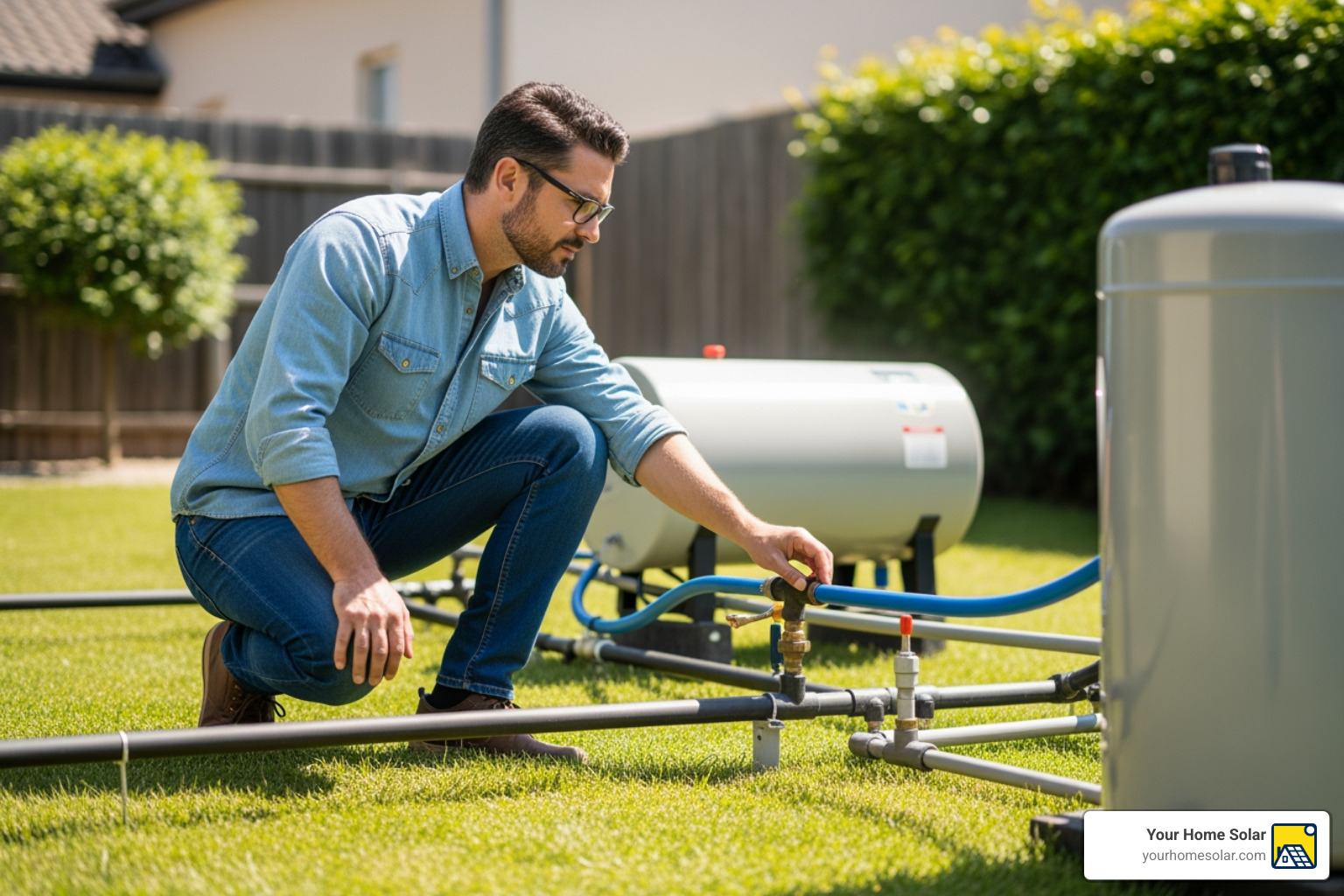
DIY Solar Heating Maintenance Checklist
Here is a DIY solar heating maintenance checklist to keep your system in top shape:
Monthly Checks:
- Visual Inspection: From the ground, look for cracks, heavy soiling, damage, loose wiring, or leaks.
- Listen for Operation: On a sunny day, listen for the pump or blower. Silence could indicate a problem.
- Check for Leaks: Inspect visible pipe connections and valves for drips.
- Monitor System Output: Use your monitoring app or panel to check energy output and spot anomalies.
Annual Checks (or as needed):
- Vegetation Management: Trim any trees or shrubs casting shadows on your collectors, as shading reduces efficiency.
- Clean Collectors: Clean collectors as needed, depending on local conditions.
- Inspect Insulation: Check external pipe and duct insulation for damage and repair or replace it.
- Pest Check: Look for nests or pest activity around collectors and wiring.
- Roof Penetrations: Inspect flashing and sealant around roof penetrations for wear.
For general home maintenance reminders, this Maintenance Checklist is a helpful resource.
Best Practices for Cleaning Solar Collectors
Cleaning collectors is a crucial part of solar heating maintenance. Dirt, dust, and droppings block sunlight and reduce efficiency, especially in dusty or high-traffic areas of East Tennessee.
- Cleaning Frequency: Rain helps, but we recommend cleaning collectors at least once a year, or twice if they are visibly dirty or performance drops.
- Recommended Tools: Use a soft-bristled brush or squeegee, often on a telescopic rod for safety, and a low-pressure garden hose for rinsing.
- Recommended Cleaning Products: For stubborn grime, use a mild, eco-friendly soap mixed with lukewarm water. A final rinse with deionized water can prevent spots if you have hard water.
- Products to Avoid: Never use abrasive brushes or harsh chemicals like dish soap or Windex, as they can scratch the surface and void warranties. Also, avoid spraying hot water on cool panels to prevent thermal shock; clean them in the early morning or evening.
Monitoring Performance and Spotting Trouble
Monitoring performance is the most crucial part of proactive solar heating maintenance. It tells you if everything is running correctly.
- Reading Your Controller: Familiarize yourself with your system’s digital controller, which displays temperatures, status, and error codes.
- Signs of Malfunction:
- Drop in Energy Output: A significant, consistent drop in hot water production is the most obvious sign of a problem. Monitoring apps help track this over time.
- Warning Lights/Error Codes: Don’t ignore warning messages on your control box. Consult your manual or call us for help.
- Unusual Noises: Strange sounds from pumps or blowers can signal a mechanical issue.
- System Not Turning On/Off: If the system doesn’t activate in the sun or runs at night, it could be a sensor malfunction.
- Fluid Leaks: Visible leaks require immediate attention.
A monthly check of your monitoring app can help you identify issues quickly. For more tips, see Maximizing Solar Energy Production: Tips for Optimizing Your Solar Panel System.
Managing Your System’s Environment: Pests and Plants
Your system’s surroundings impact its performance and solar heating maintenance needs.
- Vegetation Management: Shade is the enemy of solar collectors. Annually check for and trim any tree branches or new growth that casts shadows on your panels, as even partial shading drastically reduces efficiency.
- Pest Risks: Other parts of your system are vulnerable to East Tennessee wildlife.
- Birds: Birds may peck at insulation for nesting material or damage wires. Their droppings also reduce collector efficiency.
- Rodents: Squirrels and other rodents can chew through wiring, creating safety hazards and system failures. Nests under panels can block airflow and cause damage.
- Pest Prevention: Installing critter guards (mesh) around your collectors is an effective way to keep animals out. During inspections, look for nests, damaged insulation, or chewed wires and address these issues promptly.
Advanced Solar Heating Maintenance: Tackling Corrosion, Scaling, and Freezing
Advanced solar heating maintenance addresses internal issues like scaling, corrosion, and freeze protection, which are critical for longevity, especially in East Tennessee’s climate.
For a deeper dive, the U.S. Department of Energy offers a guide on Solar Water Heating System Maintenance and Repair .
Preventing Scaling and Corrosion in Your System
Scaling and corrosion are common enemies of water-based heating systems.
- Hard Water Effects (Scaling): Hard water, common in East Tennessee, can cause mineral buildup (scaling) on heat transfer surfaces when heated. This scaling acts as an insulator, reducing efficiency and potentially clogging pipes. To prevent this, use a water softener or have a professional circulate a mild acidic solution through the system every 3-5 years.
- Galvanic Corrosion: This occurs when dissimilar metals (like copper pipes and a steel tank) are in contact with water, causing the steel to corrode. Oxygen entering the system can also cause rust. Prevention includes using bi-metallic connectors, periodically replacing the sacrificial anode rod in steel tanks, and ensuring the system is properly sealed against leaks.
Freeze Protection and Overheating Mitigation
East Tennessee’s cold winters and hot summers make freeze protection and overheating mitigation essential parts of solar heating maintenance.
| Feature | Antifreeze Systems (Closed-Loop) | Drainback Systems (Open-Loop) |
|---|---|---|
| Fluid Type | Propylene glycol (non-toxic) / Water mix | Water (drains when freezing risk) |
| Freeze Protect | Fluid’s low freezing point | Water drains out of collectors and exposed piping |
| Maintenance | Fluid needs periodic replacement (every 3-5 years) | Requires proper slope and air vent for complete drainage |
| Overheating | Fluid can degrade faster, pressure relief valve discharge | Collectors empty, less risk of fluid degradation, but still need PRV |
| Complexity | Higher initial cost, heat exchanger required | Simpler, but requires careful installation for drainage |
- Antifreeze Systems: These use a non-toxic propylene glycol solution. The fluid degrades over time and should be tested and replaced by a technician every 3-5 years.
- Drainback Systems: These use water, which automatically drains from collectors when temperatures approach freezing. For this to work, collectors and piping must be properly sloped to allow complete drainage.
- Overheating Risks: Overheating can occur during sunny periods with low hot water demand, potentially degrading the fluid. Control systems prevent this by shutting off pumps when the tank is hot. Drainback systems also mitigate this risk as collectors empty when not in use. Regular checks of the pressure relief valve are vital.
Checking Pumps, Blowers, and Control Systems
The active components of your system—pumps, blowers, and controls—are critical for efficient operation.
- Pump and Blower Operation: Listen for the pump (liquid systems) or blower (air systems) operating on sunny days. If it’s not running, or runs at night, it indicates a control or mechanical issue.
- Control System Checks: Ensure temperature sensors are securely fastened to the collector and tank. A loose sensor can cause the system to run improperly. The controller should be checked annually to ensure it activates the pump only when collectors are hotter than the tank.
- Heat Transfer Fluid Maintenance: For antifreeze systems, a professional should check the fluid’s pH and freeze point periodically, as it degrades over time and may need replacement.
- Connections and Structures: Regularly check that all plumbing, ductwork, and wiring connections are tight and free of leaks or damage. Also, inspect support structures for tightness and corrosion, and maintain sealant around roof penetrations.
When to Call the Pros: DIY vs. Professional Service
While many solar heating maintenance tasks are DIY-friendly, some require a professional. Knowing the difference is key to your safety and your system’s longevity.
Call a professional for:
- Tasks with Safety Risks: Any work involving ladders, roofs, electrical systems, or cutting large tree limbs should be left to trained professionals.
- Complex Diagnostics: If performance drops significantly or you get persistent error codes that aren’t solved by a simple inspection, it’s time for an expert. Pump failures, sensor malfunctions, and control system issues often require specialized tools.
- Fluid Analysis and Replacement: Testing and replacing antifreeze fluid is a job for a qualified technician.
Regular professional inspections identify issues early, ensure peak efficiency, prolong component life, and maintain warranty compliance. For more on this, see our guide on Easy Maintenance for Residential Solar Systems in East Tennessee – Ernie from Your Home Solar.
Professional Solar Heating Maintenance: What to Expect
We recommend a professional service for your solar heating system every 2 years. This comprehensive check-up goes beyond typical DIY maintenance.
A professional solar heating maintenance service includes:
- Electrical Testing: A licensed electrician tests all equipment and cabling for safety and proper function.
- Plumbing Inspection: A thorough inspection of all plumbing, valves, pumps, and the heat exchanger for leaks and corrosion.
- Fluid Analysis and Replacement: For antifreeze systems, a technician will test the fluid’s pH and freeze point, replacing it if needed (typically every 3-5 years).
- Comprehensive System Check: A full inspection of all components for defects, plus verification of controls, sensors, and safety devices.
- Performance Verification: Professionals can verify your system’s output against expectations and diagnose any issues.
Always get a detailed quote and a final report. Also, review your warranty, as professional maintenance may be required. Understanding your Understanding Residential Solar Warranties in East Tennessee: What’s Covered? is crucial.
Understanding Maintenance and Repair Costs
While solar heating maintenance costs are generally low, it’s good to understand potential expenses. Long warranties on major components help keep overall costs down.
- Service and Repair Costs: A routine professional inspection is an investment in longevity. Repair costs vary by component—a new pump is more expensive than a new sensor. Always get a written estimate before work begins.
- Warranty Coverage: Warranties can significantly reduce out-of-pocket expenses for covered defects, which is another benefit of regular professional checks.
- When to Consider Replacement: For older systems with extensive damage, replacement might be more cost-effective than repair. For more on system lifespan, see Solar Panel Durability: How Long Do They Last?.
Conclusion: Ensuring a Long and Efficient Life for Your System
Investing in a solar heating system for your East Tennessee home is a fantastic decision, providing reliable, renewable energy for years to come. With proper solar heating maintenance, your system can easily last 20 to 25 years or even longer, maximizing your return on investment and ensuring a consistent supply of hot water.
Remember these key takeaways:
- Regular Visual Inspections: Catch problems early.
- Clean Collectors: Ensure maximum sunlight absorption.
- Monitor Performance: Track your system’s health.
- Address Environmental Factors: Keep pests and plants from hindering performance.
- Prevent Internal Issues: Stay ahead of scaling, corrosion, and freezing.
- Professional Care: Schedule periodic expert inspections for complex tasks and peace of mind.
By following these guidelines, you’re not just performing maintenance; you’re actively ensuring the longevity, efficiency, and safety of your solar heating system. At Your Home Solar, we’re committed to helping East Tennessee homeowners harness the power of the sun with confidence. If you have any questions or need professional assistance with your solar heating maintenance, our team of experts is always ready to help.
Ready to ensure your solar heating system is performing at its best? Schedule your professional solar panel maintenance in Knoxville today!