What Does a 180W Solar Panel Actually Cost?
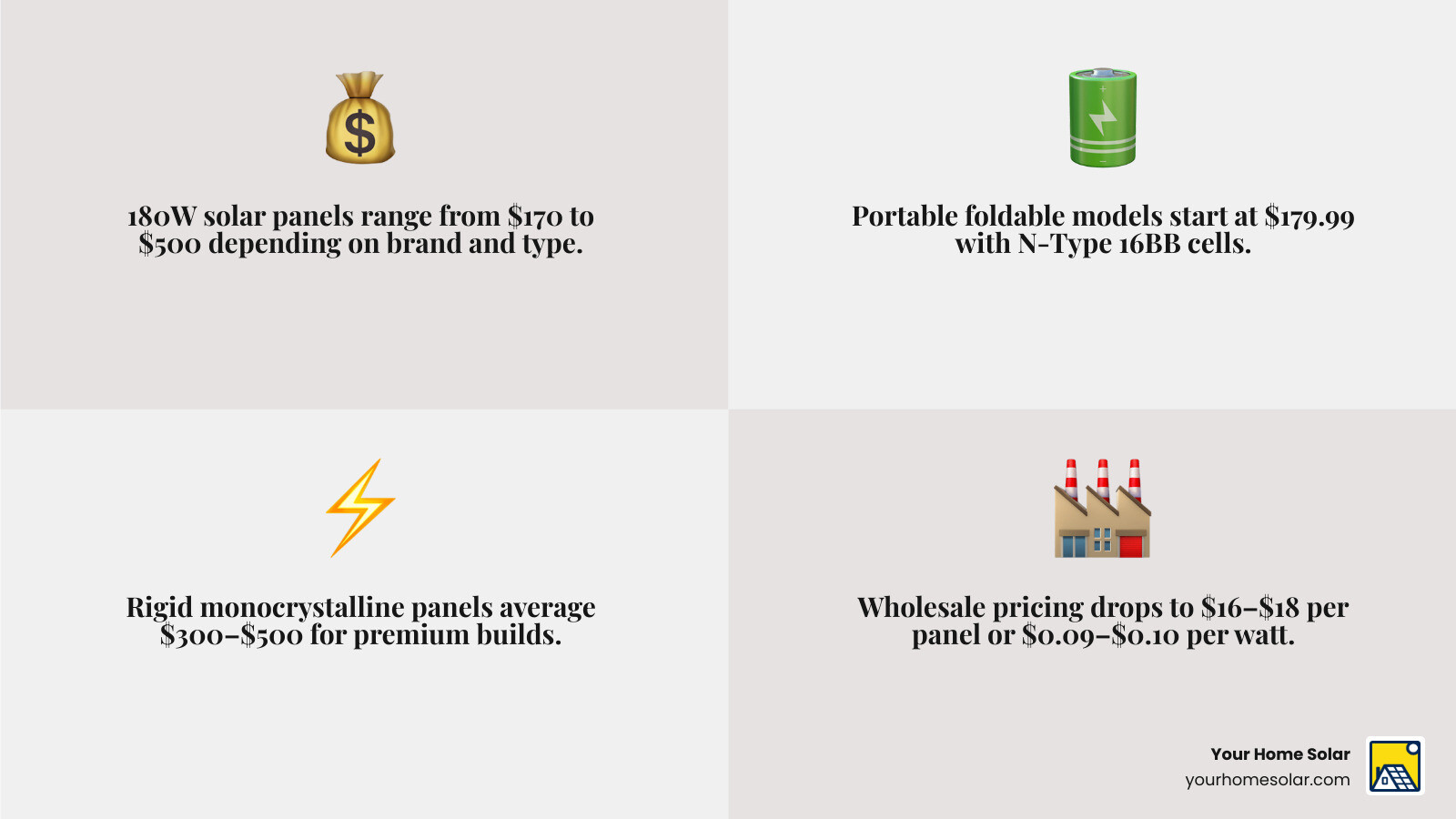
The 180w solar panel price typically falls between $170 and $500, depending on the brand, cell type, and whether the panel is portable or fixed-mount.
Here’s a quick snapshot of current market prices:
| Brand / Model | Type | Price |
|---|---|---|
| Bougerv 180W Mono | Rigid Monocrystalline | $172.99 |
| ZOUPW 180W N-Type 16BB | Portable/Foldable | $179.99 |
| SLD Tech ST-180P-12 | Rigid Monocrystalline | $326.75 |
| REDARC 180W Mono | Rigid Monocrystalline | $502.00 |
| Sunpal 180W Mono (wholesale) | Rigid Monocrystalline | ~$16–$18 per panel |
Wholesale/bulk pricing from manufacturers like Sunpal can drop as low as $0.09–$0.10 per watt.
So if you just need a quick answer: expect to pay $170–$200 for a solid consumer-grade 180W panel, or $300–$500 for a premium or specialty model.
But price alone doesn’t tell the whole story. Cell efficiency, portability, warranty length, and hidden costs like shipping and mounting hardware all affect the real value of what you’re buying. This guide breaks all of that down.
I’m Ernie Bussell, founder of Your Home Solar and East Tennessee’s leading solar contractor, and I’ve spent years helping homeowners cut through the noise on 180w solar panel price and overall system value. Let’s make sure you know exactly what you’re getting before you spend a dime.
Understanding the 180w Solar Panel Price Range in 2024
When we look at the market in 2024, the 180w solar panel price is more accessible than ever, but the range remains wide. Why can you find one panel for $170 and another for $500? It usually comes down to the technology under the glass (or ETFE coating) and the intended use case.
Generally, 180W panels are considered “mid-range” for small-scale applications. They are larger than the 100W “starter” panels often seen on Amazon, but smaller than the 400W+ behemoths we install on residential rooftops in Knoxville or Maryville. This makes them the “Goldilocks” choice for RVs, boats, and small off-grid sheds.
Comparing 180W Panel Types and Average Costs
| Panel Type | Average Price Range | Efficiency | Best For |
|---|---|---|---|
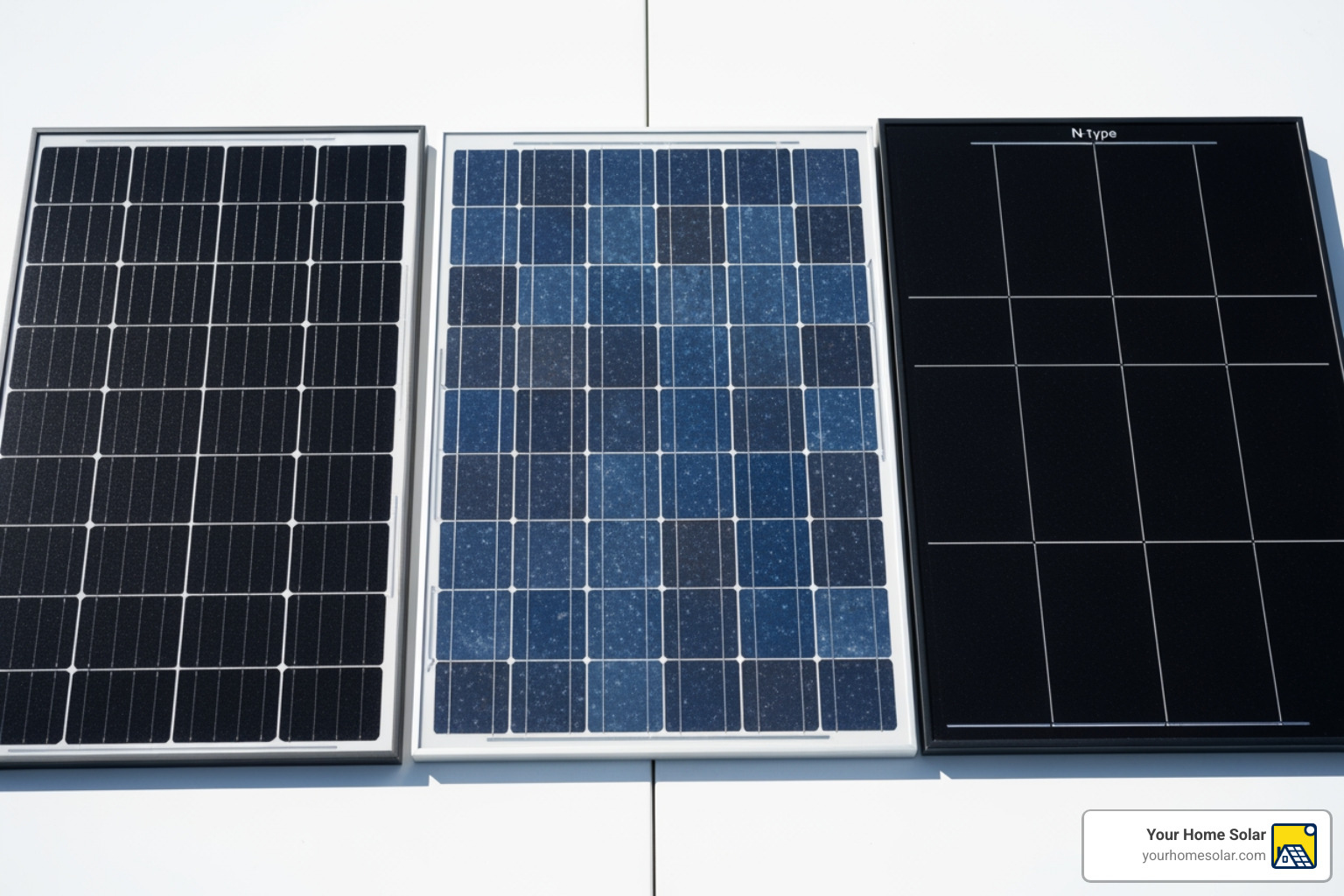
| Monocrystalline (Rigid) | $170 – $350 | 18% – 21% | Permanent RV/Boat installs |
| Polycrystalline (Rigid) | $140 – $200 | 15% – 17% | Budget-conscious fixed setups |
| N-Type Monocrystalline | $180 – $250 | 22% – 25% | High-performance portable use |
| Premium/Industrial | $400 – $550 | 20% + | Harsh environments/Hazardous zones |
For those looking into larger residential systems, understanding individual panel costs is just the first step. You can find more info about solar system costs to see how these smaller units compare to a full-home array.
Comparing Portable vs. Rigid 180w Solar Panel Price Points
One of the biggest factors in the 180w solar panel price is the form factor.
- Rigid Panels: These are the traditional panels with aluminum frames and tempered glass. They are heavy (usually around 24–26 lbs) and designed to be bolted down. Because they use standard manufacturing processes, they are often the most affordable, like the Bougerv model at $172.99.
- Portable/Foldable Panels: These are designed for campers and hikers. They often use ETFE (Ethylene Tetrafluoroethylene) coatings instead of glass to save weight. For example, the 180 Watt Portable Solar Panel N-Type 16BB specifications show a weight of only about 12 lbs—half that of a rigid panel. You pay for this convenience; while some budget brands are competitive, portable setups often carry a premium for their integrated kickstands and carrying cases.
How Efficiency and Cell Type Affect 180w Solar Panel Price
Efficiency isn’t just a buzzword; it determines how much space you need to generate 180 watts.
- N-Type 16BB Technology: This is the current “king” of efficiency. By using 16 busbars (the thin wires on the cell), these panels can reach up to 25% efficiency. This means the panel can be physically smaller while still hitting that 180W mark.
- Standard Monocrystalline: These usually hover around 20–21% efficiency. They are reliable workhorses.
- Low-Light Performance: Higher-priced panels often perform better in the “shoulder” hours (early morning/late evening) or on those cloudy East Tennessee days.
For instance, the Sunpal 180W technical data and project suitability highlights how compact monocrystalline designs are ideal for small PV projects where space is at a premium.
Factors That Influence Your 180W Solar Panel Investment
When we help neighbors in Oak Ridge or Sevierville choose equipment, we remind them that the “sticker price” is only part of the equation. Several quality factors can drive the 180w solar panel price up or down.
- Build Quality: A frame made of heavy-duty anodized aluminum will resist corrosion much better in the humid Tennessee climate than a cheap, thin frame.
- Glass Type: Look for low-iron tempered glass. It’s designed to withstand hail and heavy snow loads (up to 5400 Pa in some models).
- Brand Reputation: Brands like REDARC charge a premium ($502.00) because their units are tested for extreme vibrations and off-road conditions. If you’re mounting a panel on a 4×4 for a trip through the Cherokee National Forest, that durability matters.
- Location-Specific Costs: Costs can vary slightly based on local demand and shipping. You can check solar panel cost data in Oak Ridge, TN to see how regional trends impact pricing.
If the upfront cost feels steep, don’t forget that there are ways to manage the investment. We often point our clients toward more info about solar financing to help make the transition to renewable energy more affordable.
Hidden Costs and Savings: Beyond the Panel Sticker Price
Buying the panel is like buying a car without the tires—it’s not going to get you very far on its own. To get that 180W of power into your batteries, you need a few more things.
- Shipping Fees: These panels are large and fragile. Unless you find a deal with “free shipping” (like many online retailers offer for orders over $150), expect to pay $30–$60 in freight.
- Charge Controllers: You cannot plug a solar panel directly into a battery. You need a controller to regulate the voltage. A decent MPPT controller for a 180W panel will run you another $60–$120.
- Mounting Hardware: Whether it’s Z-brackets for an RV roof or a tilt-mount for a shed, factor in $15–$40 for stainless steel hardware.
- Wiring and Connectors: Most panels come with “MC4” leads, but you may need extension cables to reach your battery bank.
The good news? The state and federal governments want to help you pay for this. Our solar incentives in Tennessee 2026 guide covers the latest local programs. Additionally, the federal Investment Tax Credit (ITC) can often be applied to off-grid systems if they are physically attached to a dwelling. Check out our page on tax credits and incentives for the full breakdown.
Frequently Asked Questions about 180W Solar Panels
How much power does a 180W solar panel actually produce?
In a perfect world (a laboratory), it produces exactly 180 watts. In the real world—say, a sunny afternoon in Knoxville—you can expect between 150W and 182W depending on the panel’s efficiency. Factors like the angle of the sun, dust on the glass, and temperature affect this. Interestingly, solar panels actually lose a bit of efficiency as they get very hot! If you are looking for a professional setup to maximize this output, you might consider an affordable solar installation in Knoxville.
What warranties and certifications should I look for?
Don’t settle for a “tailgate warranty” (where the warranty ends when the seller’s tailgate disappears down the road). Look for:
- 25-Year Linear Power Guarantee: This ensures the panel will still produce at least 80% of its rated power after two and a half decades.
- ISO9001 and CE Certifications: These prove the factory follows international quality standards.
- IP65 or IP68 Junction Box: This means the electrical connections are dust-tight and protected against water. For more on what goes into a professional install, see the solar panel installation cost in Knoxville.
Are 180W panels suitable for home backup use?
On their own, they won’t power your central air conditioning. However, they are perfect for keeping “critical loads” running. A couple of 180W panels can keep your phones charged, run a few LED lights, and keep a small high-efficiency fridge running during a blackout. They are the backbone of many “solar generator” setups used for emergency prep in East Tennessee.
Conclusion
Navigating the 180w solar panel price landscape doesn’t have to be a headache. Whether you’re looking for a budget-friendly Bougerv panel for your camper or a high-end REDARC for a rugged off-road adventure, there is an option that fits your wallet.
At Your Home Solar, we pride ourselves on being the trusted experts for East Tennessee. From the hills of Sullivan County to the streets of Chattanooga, we provide tailored, reliable energy solutions that help our neighbors gain independence from the grid. Whether you need a single panel for a remote cabin or a full-scale residential array with battery backup, we are here to ensure your installation is rewarding and 100% satisfactory.
Ready to take the next step in your solar journey? Check out our Residential solar solutions guide: Cost and Financing or give us a call to discuss how we can power your home with the sun. Let’s make East Tennessee a little brighter, one panel at a time!