Why Understanding Solar Panel Costs Matters for Your Home
Cost of solar panels for a typical residential system in East Tennessee ranges from $15,000 to $40,000 before incentives, or approximately $2.49 to $3.30 per watt. After applying the 30% federal solar tax credit, most homeowners can expect to pay between $10,000 and $28,000 for a complete installation.
Quick Cost Breakdown:
- Average 6 kW System: $10,441 (after federal tax credit)
- Average 8 kW System: $21,900 – $26,400 (before incentives)
- Cost Per Watt: $2.49 – $3.30
- Typical Payback Period: 6-12 years
- Solar Power Cost (25 years): 5.1 cents/kWh
- Utility Power Cost (25 years): 22.2 cents/kWh
If you’re an East Tennessee homeowner weighing the decision to go solar, understanding what drives these costs is crucial. Solar isn’t just a purchase—it’s a long-term financial investment in your home’s energy future. The upfront price tag can feel overwhelming, but the real question isn’t just “how much does it cost?” It’s “what am I actually paying for, and what will I save over time?”
Unlike buying a new appliance, solar panels will serve your home for 25-30 years. That means the quality of your installation, the equipment you choose, and the company you partner with all matter significantly. Energy independence and protection from rising utility rates don’t come from cutting corners—they come from understanding the full picture.
The numbers you see advertised often don’t tell the whole story. Installation costs include far more than just the panels on your roof. Hardware, labor, design, engineering, permitting, and ongoing support all play a role. And while the initial investment is real, so are the incentives, tax credits, and long-term savings that can dramatically reduce your actual cost.
I’m Ernie Bussell, founder and CEO of Your Home Solar, and I’ve spent years helping East Tennessee homeowners steer the true cost of solar panels and make confident energy decisions. My background spans military operations, education, sales, and solar operations management—experience that’s taught me the importance of clarity, process, and doing things right the first time.
Breaking Down the Total Cost of Solar Panels
When we talk about the cost of solar panels, it’s easy to focus solely on the panels themselves. But a complete solar energy system involves many components and services that contribute to the overall price. Think of it like building a house: the lumber is important, but so are the foundation, the plumbing, the electrical work, and the labor to put it all together.
Our research shows that the all-in cost of a home solar panel system in the U.S. typically falls between $2.74 to $3.30 per watt. This comprehensive figure includes everything from the physical hardware to the intricate planning and installation. For an average-sized 8-kilowatt (kW) residential solar system, this translates to a total cost between $21,900 and $26,400 before any incentives are applied. Understanding this full picture helps us appreciate where our investment goes. You can learn more about our comprehensive approach to solar installation by exploring Our Process.
Average Cost of Solar Panels in the U.S.
Nationally, residential solar systems average about $2.58 per watt before incentives. However, when we factor in all aspects—including installation, design, and other critical services—the cost typically ranges from $2.74 to $3.30 per watt. This means that for a common residential system, which can range anywhere from 6 kW to 10 kW, the total upfront investment before incentives often lands between $15,000 and $40,000. For instance, a typical 8-kilowatt system often costs between $21,900 and $26,400. These figures are consistent with benchmarks provided by the U.S. Department of Energy, which you can dig into further at their Solar Photovoltaic System Cost Benchmarks page. While these are national averages, they provide a solid starting point for understanding the investment in East Tennessee.
The Main Components of Your Bill
To truly understand the cost of solar panels, we need to dissect the bill. Our industry research provides a clear breakdown of where our money goes:
-
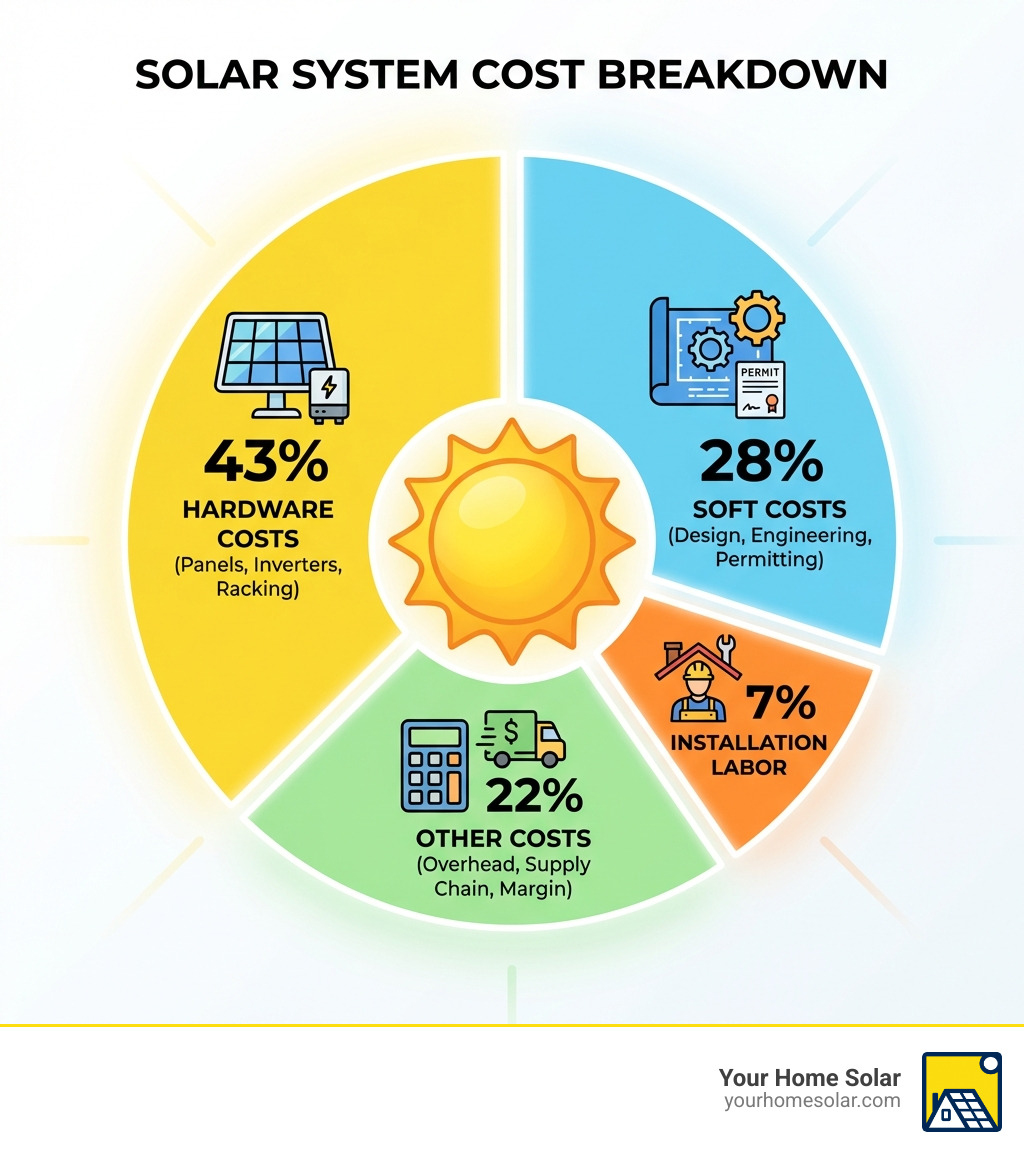
Hardware and Materials (Approximately 43% of total costs): This is what most people initially think of when considering solar. It includes:
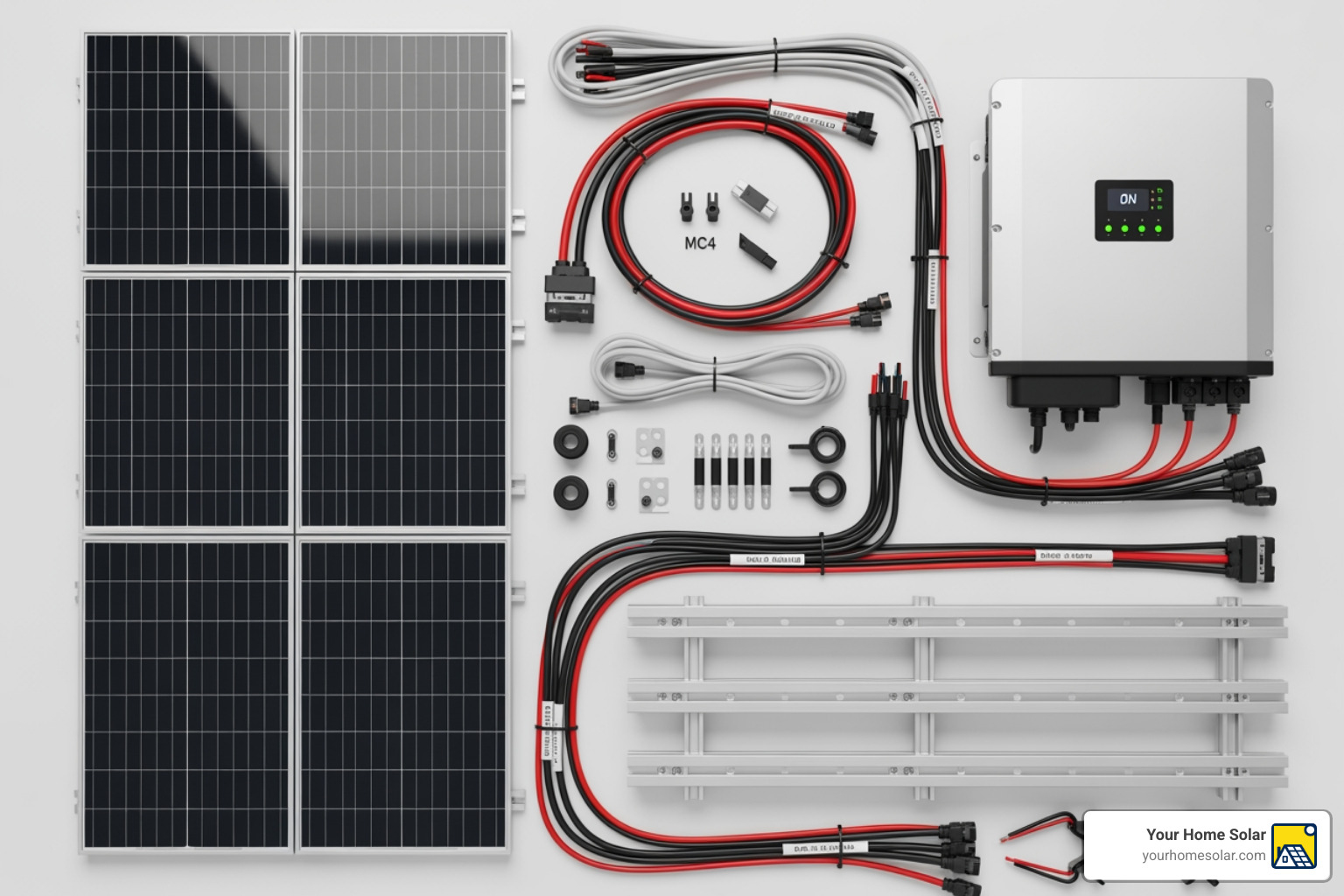
- Solar Panels: The stars of the show, these convert sunlight into electricity. The type and quality of panels significantly impact this portion of the cost.
- Inverters: These critical devices convert the direct current (DC) electricity produced by the panels into alternating current (AC) electricity that our homes use. There are different types, like string inverters and microinverters, each with its own cost and performance implications.
- Racking and Mounting Hardware: This is the system that securely attaches the panels to our roof or ground. It must be robust and durable to withstand East Tennessee’s weather conditions.
- Conduit and Wiring: The electrical pathways that connect all components and bring power safely into our home’s electrical system.
- Monitoring Equipment: Devices that allow us to track our system’s performance, energy production, and consumption in real-time.
-
Soft Costs (Approximately 28% of total costs): Often overlooked, these non-hardware expenses are crucial for a smooth and compliant installation. They cover the essential services that ensure our system is designed correctly, permitted, and connected to the grid:
- Design and Engineering: Creating a customized solar layout that maximizes energy production for our specific roof or property, while adhering to local building codes. This involves site assessments, structural and electrical engineering to ensure safety and efficiency.
- Project Management: Overseeing the entire project from start to finish, coordinating schedules, and managing various teams.
- Permitting and Inspections: Navigating the local regulations and obtaining necessary permits from city and county authorities in East Tennessee. This also includes fees for required inspections to ensure compliance and safety. For instance, permitting fees across the U.S. can range from ~$110-760 per installation, depending on the municipality.
- Interconnection Fees: Costs associated with connecting our new solar system to the local utility grid.
- Customer Acquisition Costs: The expenses associated with sales, marketing, and educating homeowners about solar.
-
Installation Labor (Approximately 7% of total costs): This covers the highly skilled professionals who physically install the solar panels, inverters, racking, and wiring on our property. While it might seem like a small percentage, the expertise of these installers is paramount to the system’s long-term performance and safety.
These percentages highlight that the cost of solar panels is a holistic figure, reflecting not just the technology itself, but the extensive planning, expertise, and labor required to integrate it seamlessly into our homes.
Key Factors That Influence Your Final Price
Understanding the overall breakdown is one thing, but knowing why our specific project might cost more or less than the average is where the real insight lies. Several key factors personalize the cost of solar panels for every East Tennessee homeowner.
System Size and Your Energy Needs
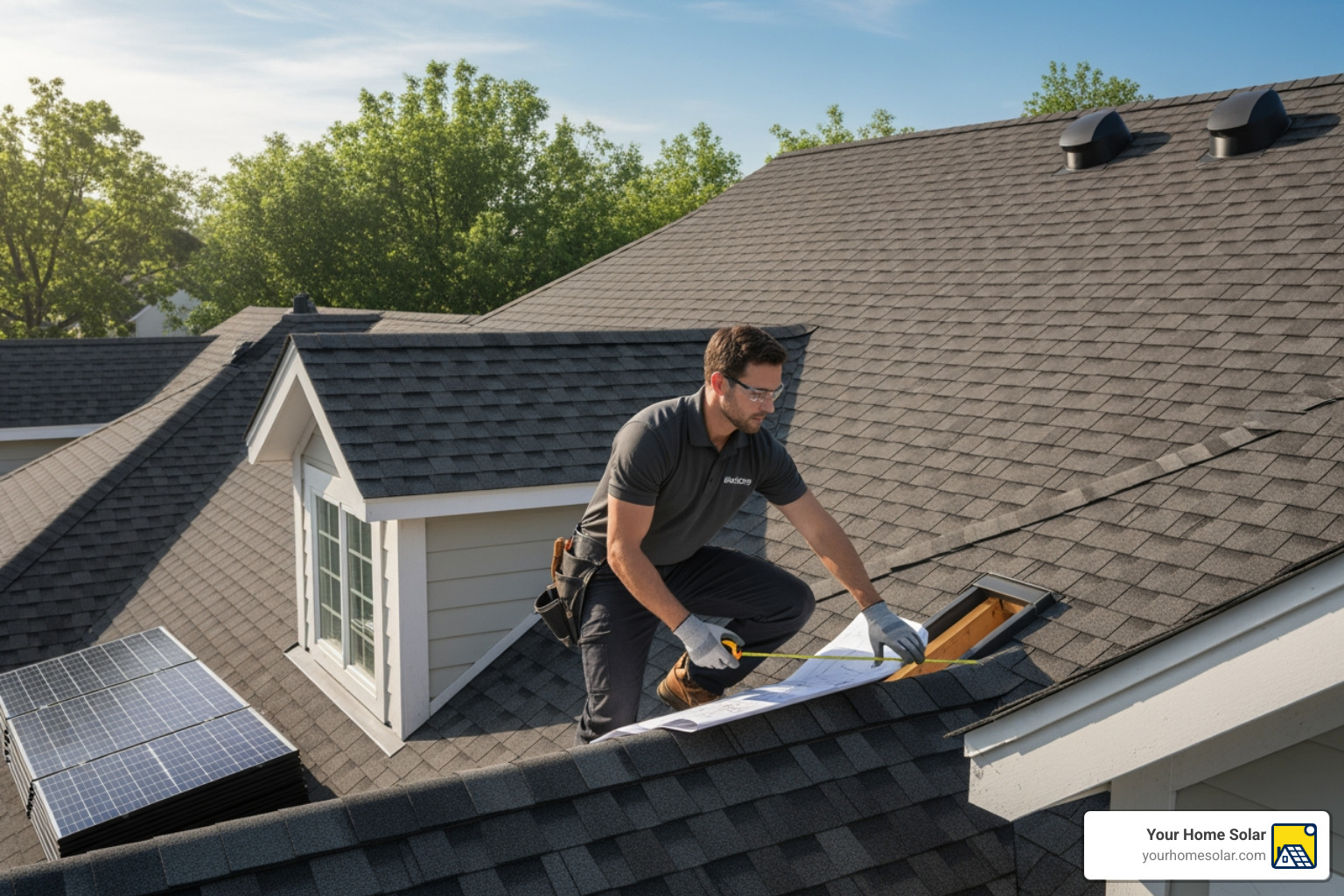
One of the most significant drivers of the cost of solar panels is the system’s size, measured in kilowatts (kW). This is directly related to our household’s energy consumption. If we use a lot of electricity, we’ll need a larger system with more panels to offset our usage, which naturally increases the total cost.
To determine the ideal system size, we’ll look at our past electricity bills to understand our average monthly kilowatt-hour (kWh) usage. We also consider our future energy needs. Are we planning to buy an electric vehicle (EV) or add an EV charger? Do we anticipate expanding our home or adding more power-hungry appliances? These factors influence the initial system design to ensure we’re not just meeting today’s needs, but tomorrow’s too. While larger systems have a higher overall price tag, they often offer a lower cost per watt because of economies of scale.
Equipment Quality and Efficiency
The quality and type of solar panels and inverters we choose also play a crucial role in the upfront cost of solar panels and the system’s long-term performance.
- Panel Types: Monocrystalline (mono) panels are generally more efficient and perform better in low-light conditions compared to older polycrystalline (poly) panels. At Your Home Solar, we often recommend mono panels for their superior performance. Advances like half-cut solar cells are also improving efficiency by reducing energy loss within the panel.
- Efficiency: Solar panel efficiency, which typically ranges between 15% and 20%, determines how much sunlight is converted into electricity. Higher-efficiency panels (closer to 18-20% or even higher) can produce more power from a smaller footprint, which is beneficial if our roof space is limited. While they might have a higher initial price per panel, we might need fewer of them, potentially saving on racking and labor costs.
- Inverter Quality: High-quality inverters are vital for reliable performance. They also come with warranties, which are important for peace of mind.
- Warranties: We always emphasize understanding warranties. A product warranty typically covers physical defects for 10-12 years, while a performance warranty guarantees a certain output level for 25 years. This long-term assurance is a testament to the quality of the equipment. We’ve got a detailed guide to help us understand Solar Panel Warranties Explained.
Investing in higher-quality equipment can lead to better energy production, a longer lifespan, and fewer maintenance issues, ultimately enhancing our return on investment.
Location and Installation Complexity
Our specific location within East Tennessee and the unique characteristics of our home’s roof or property significantly influence the cost of solar panels.
- Geographic Location: While the federal tax credit is universal, local incentives and permitting processes can vary even within East Tennessee. Our proximity to our service areas like Knoxville, Oak Ridge, Maryville, and Johnson City can affect logistical costs.
- Roof Condition and Angle: The age and condition of our roof are critical. If our roof needs repairs or replacement within the next 10-15 years, it’s often more cost-effective to address that before installing solar panels, as removing and reinstalling the system for roof work adds significant expense. The angle and orientation of our roof (south-facing is ideal) also impact how many panels we need and how efficiently they produce power.
- Shading: Any significant shading from trees or nearby buildings can reduce a system’s output, requiring a different design or more panels to compensate.
- Ground Mount vs. Rooftop: While most residential systems are rooftop, some properties might opt for a ground-mounted system if they have ample unshaded land. Ground mounts can sometimes be more accessible for maintenance but might involve additional costs for trenching and structural support.
- Installation Complexity: A simple, unobstructed roof is easier and quicker to install on. Complex roofs with multiple angles, dormers, or difficult access can increase labor time and thus the overall cost of solar panels.
It’s important to assess our home’s suitability for solar. For those with unique challenges, we’ve outlined potential scenarios in Who Are Not Candidates for Solar?. We also have specific insights into Solar Panel Viability in Tennessee, ensuring our solutions are always custom to our local environment.
Financing Your Solar Investment: Options for Homeowners
Once we understand what goes into the cost of solar panels, the next step is figuring out the best way to pay for it. There are generally two main approaches: buying the system outright (either with cash or a loan) or leasing it. Each option has its own financial implications, benefits, and drawbacks, and the best choice depends on our individual financial situation and long-term goals.
| Feature | Buying (Cash or Loan) | Leasing (Solar Lease or PPA) |
|---|---|---|
| Ownership | We own the system | Third-party company owns the system |
| Upfront Cost | High (cash) or Low (loan down payment) | Low or $0 down |
| Incentives | We are eligible for federal/state tax credits | Company claims incentives; we are not eligible |
| Monthly Cost | Loan payment (if financed) or $0 (if cash) | Fixed monthly payment for solar energy/equipment |
| Long-Term Savings | Highest savings, direct offset of utility bill | Savings are typically lower than buying, but immediate |
| Home Value | Increases home value (4% more, sells 20% faster) | Can complicate home sale; may not increase value |
| Maintenance | Our responsibility (or covered by warranty) | Company’s responsibility |
| ROI | High, guaranteed return over time | Lower, primarily energy bill reduction |
The Pros and Cons of Buying
For many East Tennessee homeowners, buying their solar panel system is the preferred route, offering significant long-term benefits.
Pros of Buying:
- Full Ownership: We own the asset, giving us complete control over our energy production and usage.
- Higher ROI: Buying is often compared to an investment with a guaranteed return. Over the system’s lifespan, the energy savings typically far exceed the initial cost of solar panels, leading to a substantial return on investment.
- Increased Home Value: Homes with owned solar panel systems sell for approximately 4% more and sell 20% faster than homes without solar. This is a considerable advantage for our property value. You can read more about this in Why Solar Panels for Home Are a Smart Investment.
- Access to Incentives: As the owner, we are fully eligible for valuable incentives like the federal solar tax credit and any local programs, which can significantly reduce our net cost.
- Maximized Savings: We directly benefit from every kilowatt-hour the system produces, maximizing our energy savings and shielding us from rising utility rates.
Cons of Buying:
- Upfront Cost: Whether paying cash or taking out a loan, buying requires a significant initial investment. If we finance, interest rates can range between three and eight percent, adding to the total cost of solar panels over time.
- Maintenance Responsibility: While solar panels are very low-maintenance, we are responsible for any cleaning (which can improve production by 3-5%) or repairs not covered by warranties.
The Pros and Cons of Financing
Leasing solar panels or entering a Power Purchase Agreement (PPA) can be an attractive option for those who prefer minimal upfront costs.
Pros of Financing/Leasing:
- Lower Upfront Cost: Many leasing options offer $0-down agreements, making solar immediately accessible without a large initial investment.
- Immediate Energy Savings: We can start saving on our electricity bills from day one, often with monthly lease payments that are lower than our previous utility bills.
- No Maintenance Responsibility: The leasing company typically owns and maintains the system, meaning we don’t have to worry about repairs or performance issues.
- Fixed Monthly Payments: Solar leases often come with predictable monthly payments, making budgeting easier.
- Ownership with Loans: If we finance through a solar loan, we still own the system and reap the long-term benefits once the loan is paid off.
Cons of Financing/Leasing:
- No Ownership (Lease/PPA): With a lease or PPA, we don’t own the system. We’re essentially paying for the electricity it produces or renting the equipment.
- No Tax Incentives (Lease/PPA): Because we don’t own the system, we are not eligible to claim the federal solar tax credit or other owner-specific incentives; the leasing company claims these benefits.
- Complications with Home Sale: If we decide to sell our home before the lease term is up, it can complicate the sale. Prospective buyers must agree to take over the lease, or we may need to pay it off, potentially impacting our sale price or timeline.
- Lower Overall Savings: While we get immediate savings, the total lifetime savings from a leased system are generally lower compared to buying, as a portion of the value goes to the leasing company.
- Interest Costs (Loans): Even with a loan, we’ll pay interest, which adds to the overall cost of solar panels over the loan term.
The decision between buying and leasing is a personal one, weighing our financial situation, desire for ownership, and long-term goals. We explore these choices in more detail in our guide on Cost and Financing of Solar Systems.
Maximizing Your Savings: Incentives and Long-Term Value
While the initial cost of solar panels is a significant consideration, it’s crucial to look beyond the sticker price and understand the powerful incentives and long-term financial benefits that make solar a truly smart investment for East Tennessee homeowners. These factors can dramatically reduce our net cost and provide substantial returns over the system’s lifetime.
Government Incentives and Rebates
One of the most impactful ways to reduce the cost of solar panels is through available incentives.
- Federal Solar Tax Credit (Residential Clean Energy Credit): This is the biggest game-changer. The federal government offers a 30% tax credit for all new residential solar panel installations. This means we can claim 30% of the total system cost as a credit on our federal income taxes. This credit is available for systems installed through 2032, making now an excellent time to invest. It’s a dollar-for-dollar reduction in our tax liability, not just a deduction. For a detailed understanding, we recommend visiting the IRS page on the Residential Clean Energy Credit.
- State and Local Incentives: While Tennessee does not offer a statewide income tax credit for solar, our state and local utilities often provide valuable programs, such as net metering. Net metering allows us to send excess electricity generated by our panels back to the grid, earning credits on our utility bill. These programs vary by utility provider (e.g., TVA, Knoxville Utilities Board, etc.) and can significantly impact our long-term savings. We continuously track these opportunities for East Tennessee homeowners. For specific information relevant to our region, check out our guides on Tax Credits & Incentives and Solar Incentives Tennessee 2026 Guide.
These incentives are designed to make solar more accessible and affordable, directly offsetting a substantial portion of the initial cost of solar panels.
Calculating Your Payback Period and ROI
The payback period is the time it takes for our energy savings and incentives to equal the initial investment in our solar system. For most homeowners, this period typically spans from 6 to 12 years. After this point, the electricity our system generates is essentially free, leading to pure savings for the remainder of its 25-30 year lifespan.
To understand the long-term value, let’s compare the levelized cost of power from solar to traditional utility power. Our research indicates that the levelized cost of power from a typical solar system over 25 years can be as low as 5.1 cents/kWh. Compare this to the average cost of utility power, which is projected to be around 22.2 cents/kWh over the same period. This stark difference highlights the incredible long-term savings and return on investment that solar provides, making the initial cost of solar panels a wise financial decision.
Over 25 years, we can potentially avoid tens of thousands of dollars in utility costs, making solar a much better return on investment than many traditional financial vehicles. Find more about how solar can save us money in Unlock Your Home’s Potential: How Solar Energy Can Save You Money.
Understanding the Long-Term Cost of Solar Panels
Once our solar system is installed, the ongoing costs are remarkably low, especially compared to the ever-increasing utility bills we’d otherwise face.
- Maintenance Needs: Solar panels are designed to be durable and require minimal maintenance. The primary task is occasional cleaning to remove dirt, dust, or pollen, especially here in East Tennessee. Our research shows that cleaning panels can improve energy production by 3-5%, so it’s a simple way to maximize our system’s output. Regular rainfall often keeps them sufficiently clean, but we might consider a professional cleaning every few years.
- Potential Repairs: The most common component that might need replacement over the system’s lifespan is the inverter, typically after 10-15 years. However, high-quality inverters often come with long warranties, and the cost of replacement has steadily decreased. Panels themselves are incredibly robust, with a typical Solar Panel Lifespan of 25-30 years or more, often outlasting their performance warranties.
- Monitoring: Most modern systems come with monitoring equipment that allows us to track performance. This helps us identify any issues early, ensuring our system is always running optimally.
When we factor in the minimal long-term costs against the substantial and guaranteed savings, the initial cost of solar panels transforms from an expense into a powerful, profitable investment for our home.
Conclusion
Navigating the cost of solar panels might seem complex at first glance, but as we’ve explored, it’s an investment with clear, quantifiable benefits. The initial price covers not just the panels, but a comprehensive system of hardware, expert design, meticulous engineering, and professional installation—all designed to provide decades of clean, affordable energy for our East Tennessee home.
We’ve seen that while the upfront cost can range from $15,000 to $40,000, powerful incentives like the 30% federal solar tax credit significantly reduce this to a net cost of $10,000 to $28,000 for many homeowners. We’ve also learned that factors like system size, equipment quality, and installation complexity all play a role in tailoring that cost to our specific needs.
More importantly, we’ve highlighted the incredible long-term value: a typical payback period of 6 to 12 years, followed by decades of virtually free electricity. When the levelized cost of solar power is a mere 5.1 cents/kWh compared to the utility’s 22.2 cents/kWh over 25 years, the financial wisdom of going solar becomes undeniably clear. Beyond the savings, we’re investing in energy independence, increasing our home’s value, and contributing to a sustainable future.
At Your Home Solar, we believe in trusted expertise and 100% customer satisfaction. Our goal is to provide custom, reliable, and rewarding installations that empower East Tennessee homeowners like us. For a personalized assessment of our home’s solar potential and a detailed cost breakdown in East Tennessee, explore our Residential Solar Solutions Guide.