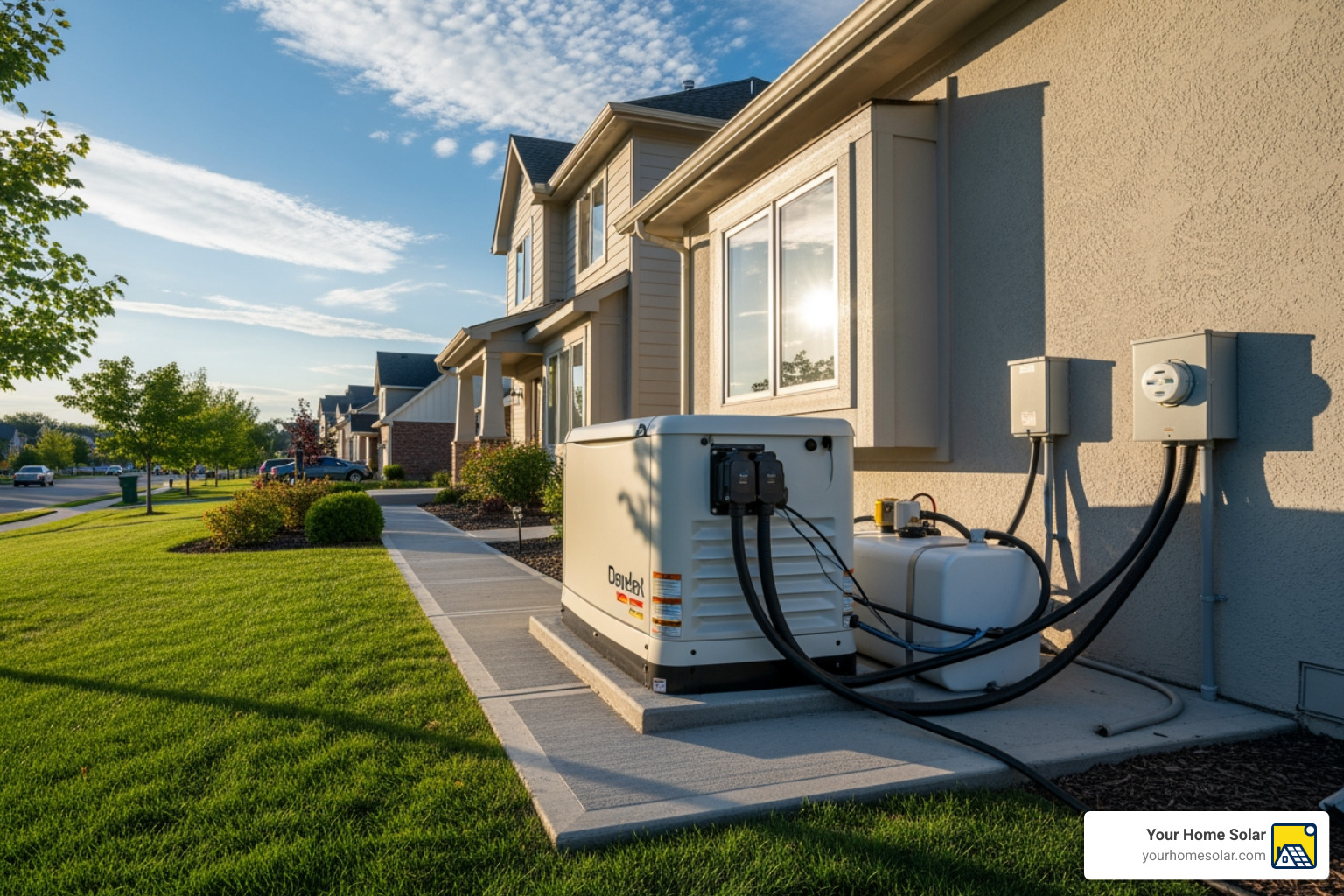
The True Cost of Never Losing Power Again
When you’re thinking about a reliable power backup for your home, the home generator cost is often the first thing on your mind. Here’s a quick overview of what you can expect:
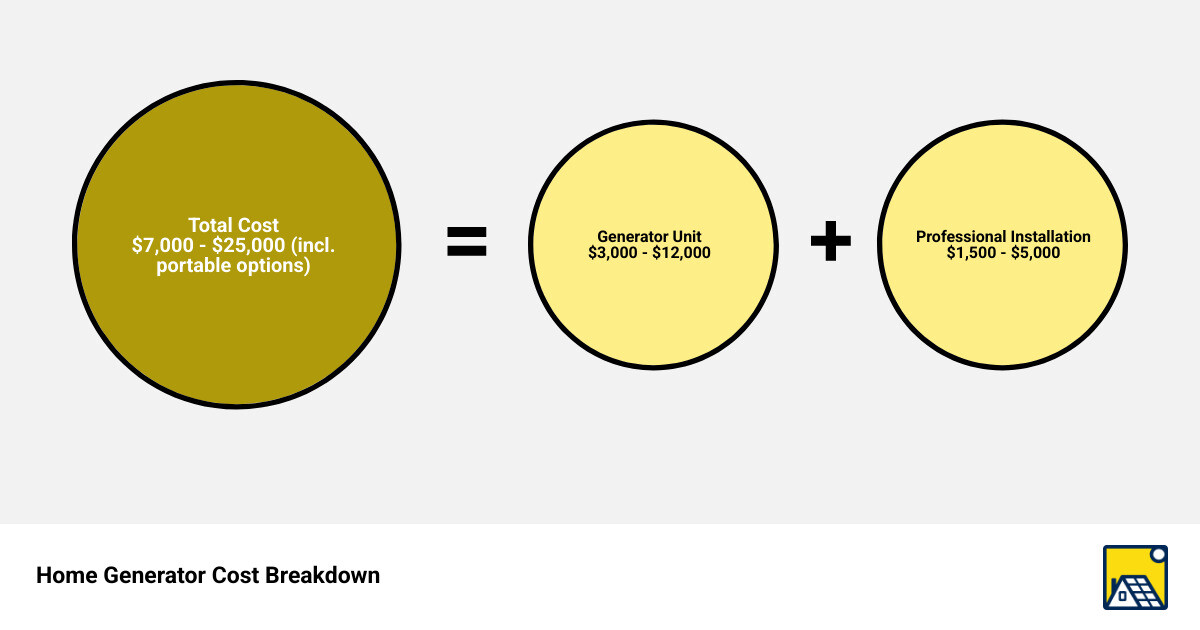
- Average Total Cost: Most homeowners can expect to pay $7,000 to $25,000 for a whole-home generator, including installation.
- Generator Unit Alone: The generator unit itself typically costs $3,000 to $12,000.
- Professional Installation: This crucial part adds another $1,500 to $5,000 to the total cost.
- Portable Generators: A more budget-friendly option, portable units range from $500 to $2,500, not including a transfer switch.
Power outages are more than just a hassle. They can lead to spoiled food, burst pipes, and even put your family’s safety at risk. Understanding the full investment required for a home generator is key to protecting your home and gaining true peace of mind. We’ve all seen how quickly things can change, like during the 2021 Texas winter storm, where power failures contributed to tragic outcomes. For homeowners in East Tennessee, a dependable backup power solution is becoming an essential part of a secure home.
I’m Ernie Bussell, and my journey from the U.S. Navy to founding Your Home Solar has given me deep insights into the true home generator cost and how it fits into a secure energy plan. I’ve helped countless homeowners in East Tennessee make informed decisions about their energy independence, ensuring they understand the investment required for reliable backup power.
Understanding the Total Home Generator Cost
When we talk about the home generator cost, it is helpful to view it as two distinct parts: the hardware (the unit itself) and the professional labor required to make it work safely. While you might see a price tag of $3,000 at a big-box store, that is rarely the final “out-the-door” price for a permanent standby system.
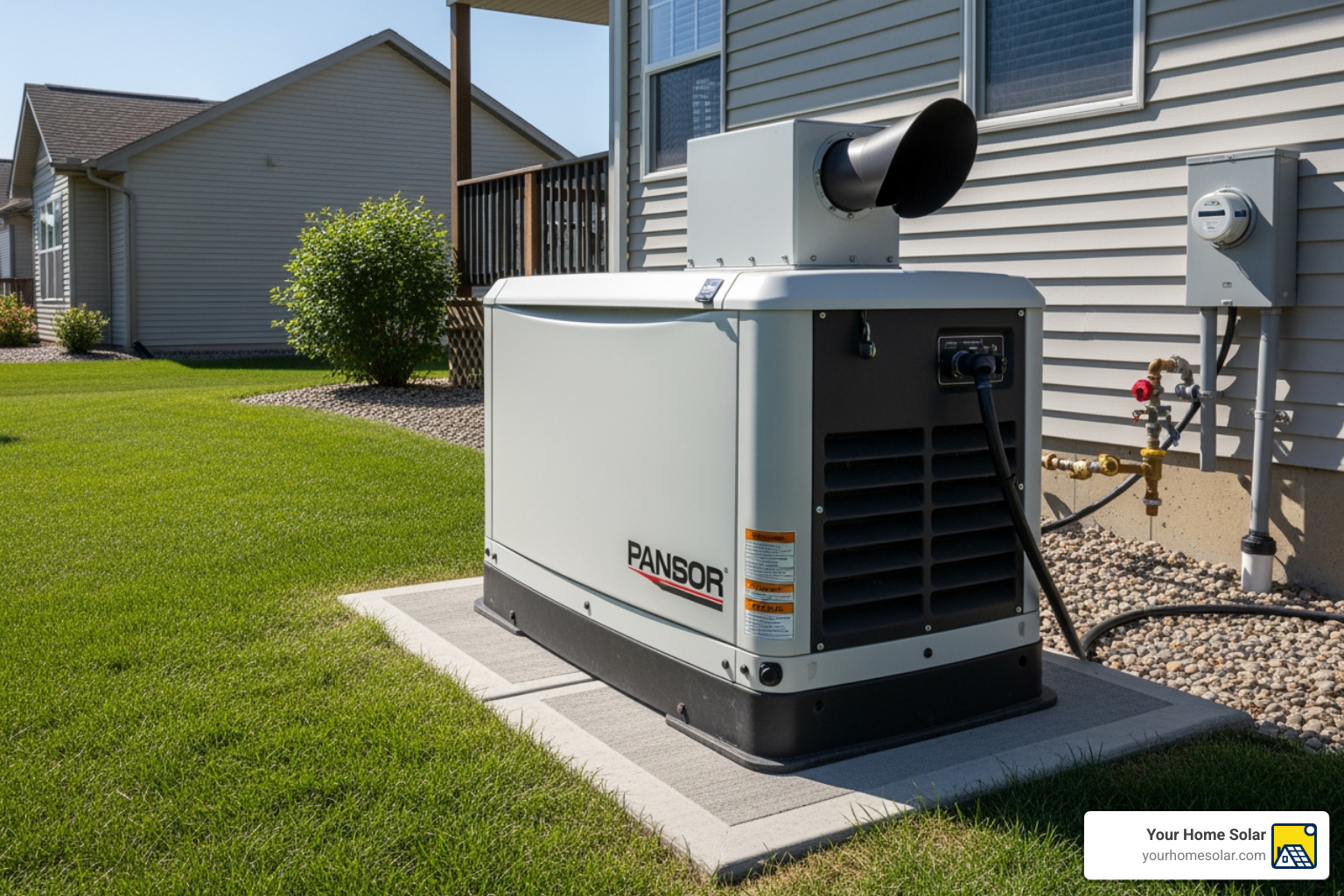
The total investment generally lands between $7,000 and $25,000. Why such a wide range? It comes down to the “all-in” nature of standby power. Unlike a portable unit that you wheel out of the garage, a whole-home standby generator is a permanent fixture, much like a central HVAC unit. It requires a concrete pad, a dedicated fuel line (natural gas or propane), and an automatic transfer switch (ATS) that communicates with your electrical panel.
Data shows that outages are becoming more common, largely due to an aging grid and increasingly severe weather. This trend has shifted the conversation from “if” you’ll need backup power to “when.”
To help you visualize the different tiers of investment, here is a breakdown of the typical costs associated with different generator types:
| Generator Type | Unit Cost | Installation Cost | Total Estimated Cost |
|---|---|---|---|
| Portable (Gasoline) | $500 – $2,500 | $400 – $1,300 (Transfer Switch) | $900 – $3,800 |
| Critical Systems (Standby) | $2,000 – $5,000 | $3,000 – $5,000 | $5,000 – $10,000 |
| Whole-Home (Standby) | $5,000 – $12,000 | $5,000 – $13,000+ | $10,000 – $25,000+ |
Regional Pricing in East Tennessee
For those of us living in Knoxville, Johnson City, or Kingsport, local factors play a significant role in your final bill. In East Tennessee, we typically see total installation costs range between $13,500 and $17,000, with the average falling around $14,500.
Why is our local average slightly higher than some national “low-end” estimates? It often comes down to the complexity of our terrain and the specific utility requirements in our region. When we perform a generator-installation-knoxville, we manage the entire process—from securing permits in Knox or Sullivan County to coordinating with local gas companies for meter upgrades. These administrative steps and local labor rates for licensed electricians and plumbers are baked into that regional average.
Professional Installation and Site Preparation Expenses
If the generator is the “heart” of your backup system, the installation is the “circulatory system” that makes it function. You can expect professional labor and site prep to cost between $1,500 and $5,000 for a standard setup, though complex jobs can go higher.
We cannot overstate the importance of professional installation. Beyond just “making it run,” a pro ensures your home is safe from backfeeding (sending electricity back into the grid), which can be fatal for utility workers. The Texas Department of Health and Human Services reported over 240 deaths during the 2021 winter storm, many of which were related to improper heating and power solutions. Professional installation mitigates these risks.
Key installation expenses include:
- Electrical Labor: Wiring the generator to your home’s main breaker panel.
- Gas Plumbing: Running a dedicated line from your natural gas meter or propane tank.
- Concrete Pad: Providing a level, stable surface that keeps the unit above standing water.
- Permitting: Ensuring the work meets local building codes in areas like Farragut or Maryville.
Essential Components Beyond the Unit
When budgeting for your home generator cost, don’t forget the “extras” that are actually requirements for a standby system.
- Automatic Transfer Switch (ATS): This is the brain of the operation. It senses when utility power drops and tells the generator to start. These typically cost between $600 and $2,500.
- Smart Management Modules (SMMs): If you want a smaller generator to handle a larger home, SMMs help “load shed.” They manage high-draw appliances (like your AC or water heater) so the generator doesn’t overload.
- Battery Kits: Every standby generator needs a starting battery, similar to a car.
- Wireless Monitoring: Most modern units, especially when we handle a generac-generator-installation-in-knoxville, include 4G or Wi-Fi monitoring. This allows you—and us—to see if the unit passes its weekly self-test right from a smartphone.
Sizing and Fuel: Finding the Right Fit for Your Property
The biggest driver of the home generator cost is the size of the unit, measured in kilowatts (kW). According to the US Energy Information Administration, the average American household uses about 30kWh per day, but your peak demand—when the AC, dryer, and oven are all on—is what determines your generator size.
How Capacity and Size Impact Your Home Generator Cost
Generator sizes for residential use typically range from 10kW to 26kW.
- 10kW – 12kW: Great for “essential circuits.” This will keep your lights on, the fridge running, and your Wi-Fi active.
- 14kW – 20kW: This is the “sweet spot” for many 1,500 to 2,500 sq. ft. homes in East Tennessee, often capable of running a central AC unit along with other essentials.
- 22kW – 26kW: These are true “whole-house” units for larger properties (3,000+ sq. ft.) or homes with multiple high-draw luxuries like heated pools or large walk-in freezers.
To get an accurate estimate, we recommend using an online calculator or, better yet, having us perform a load analysis. If you’re looking for a more sustainable approach, you might also consider a generac-solar-battery-installation-in-east-tennessee, which can supplement or even replace traditional fuel-burning generators.
How Fuel Choice Influences Your Home Generator Cost
Your fuel source affects both the upfront installation and the long-term running costs.
- Natural Gas: If you already have natural gas at your home in Oak Ridge or Powell, this is often the most convenient and cost-effective option. While natural gas prices fluctuate, they often hover around or below $3 per MMBtu, making the daily operating cost quite manageable.
- Liquid Propane (LP): For our more rural neighbors in Blount or Sevier County, propane is the standard. You’ll need a large on-site tank (usually 250 to 500 gallons). Propane burns very clean and doesn’t degrade over time, but the tank installation adds $400 to $1,800 to your initial cost.
- Diesel: Less common for residential use due to higher unit costs ($5,000–$18,000) and the need for fuel maintenance, but highly efficient for very large estates.
When deciding, it’s worth comparing solar with traditional gas generators for East Tennessee homes to see which fuel—or lack thereof—best fits your lifestyle and budget.
Long-Term Ownership and ROI: Is It Worth the Investment?
The home generator cost doesn’t end the day the installers leave. Like a car, a generator needs regular maintenance to ensure it starts when the sky turns gray.
Annual maintenance typically costs between $200 and $650. This includes oil changes, filter replacements, and a comprehensive inspection of the transfer switch and battery. While 5.5 hours of outages in 2022 was the national average, many areas in the Tennessee Valley experienced much longer durations due to summer storms and winter freezes.
When the power goes out, running a 20kW generator can cost between $30 and $170 per day in fuel. Natural gas is usually on the lower end ($30–$50), while propane or diesel can climb higher ($80–$170) depending on the load and current market prices.
Home Value and Protection Benefits
Is it worth it? Most experts say yes. A whole-home generator is one of the few home improvements that offers a high “functional ROI.”
- Home Value: Studies suggest a standby generator can increase home resale value by 3% to 5%. In some cases, homeowners see a 150% ROI on the installation cost when it comes time to sell.
- Damage Prevention: A single power outage in winter can lead to burst pipes, costing tens of thousands in water damage. A generator prevents this entirely.
- Food Security: The average refrigerator contains $300–$500 worth of food. One long outage pays for a year of generator maintenance just in saved groceries.
- Longevity: A well-maintained standby generator has a lifespan of 20 to 30 years. When you spread the home generator cost over two or three decades, the “per year” price for peace of mind is remarkably low.
Frequently Asked Questions about Home Generator Costs
Can I install a whole house generator myself to save money?
We strongly advise against it. DIY installation usually voids the manufacturer’s warranty and can lead to significant safety hazards. Standby generators require a permit, a licensed electrician for the high-voltage connections, and often a certified gas plumber. Doing it yourself might save a few thousand upfront, but a single mistake could cost much more in repairs or safety risks.
How much does it cost to run a generator during a 24-hour outage?
For a standard 20kW unit running on natural gas, expect to spend about $30 to $50 per day. If you are using liquid propane, that cost typically jumps to $50 to $100 per day, depending on how many appliances (like your AC) you are running.
What are the most affordable alternatives to a standby generator?
If a full standby system isn’t in the budget, a large portable generator ($500–$2,500) paired with a manual transfer switch ($400–$1,300) is a great middle ground. You’ll have to manually start it and plug it in, but it provides similar protection for your essential appliances. Another growing alternative is a solar battery backup, which uses the sun to keep your lights on without ongoing fuel costs.
Conclusion
Investing in a home generator is about more than just keeping the lights on; it’s about ensuring that your life in East Tennessee continues uninterrupted, no matter what the weather throws at us. From Knoxville to Johnson City, we’ve seen how a sudden outage can turn a comfortable evening into a stressful ordeal. By understanding the true home generator cost—from the initial unit to the professional installation and long-term maintenance—you can make a choice that protects your family for decades.
At Your Home Solar, we pride ourselves on providing tailored, reliable energy solutions. Whether you are looking for a traditional standby generator or interested in how solar can provide a quieter, cleaner backup, we are here to help. Our team lives and works right here in East Tennessee, and we are committed to 100% customer satisfaction.
Ready to stop worrying about the next storm? More info about generator installation services is just a click away. Let us help you find the perfect balance of protection and value for your home.