Why Installing an EV Charger at Home Changes Everything
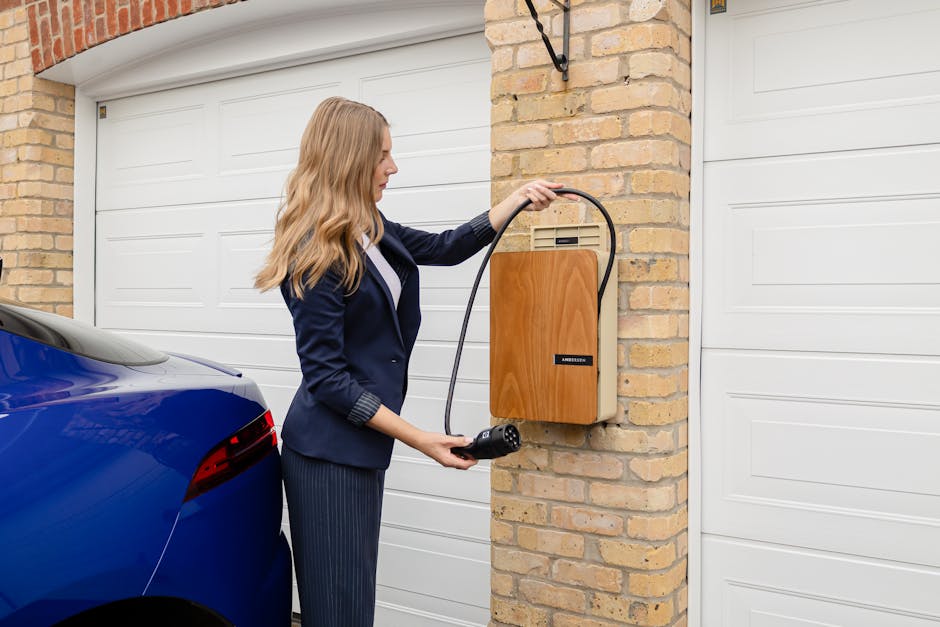
Install electric charger at home and you’ll join the 80% of EV owners who charge primarily at their residence. Here’s what you need to know:
Quick Overview: Home EV Charger Installation
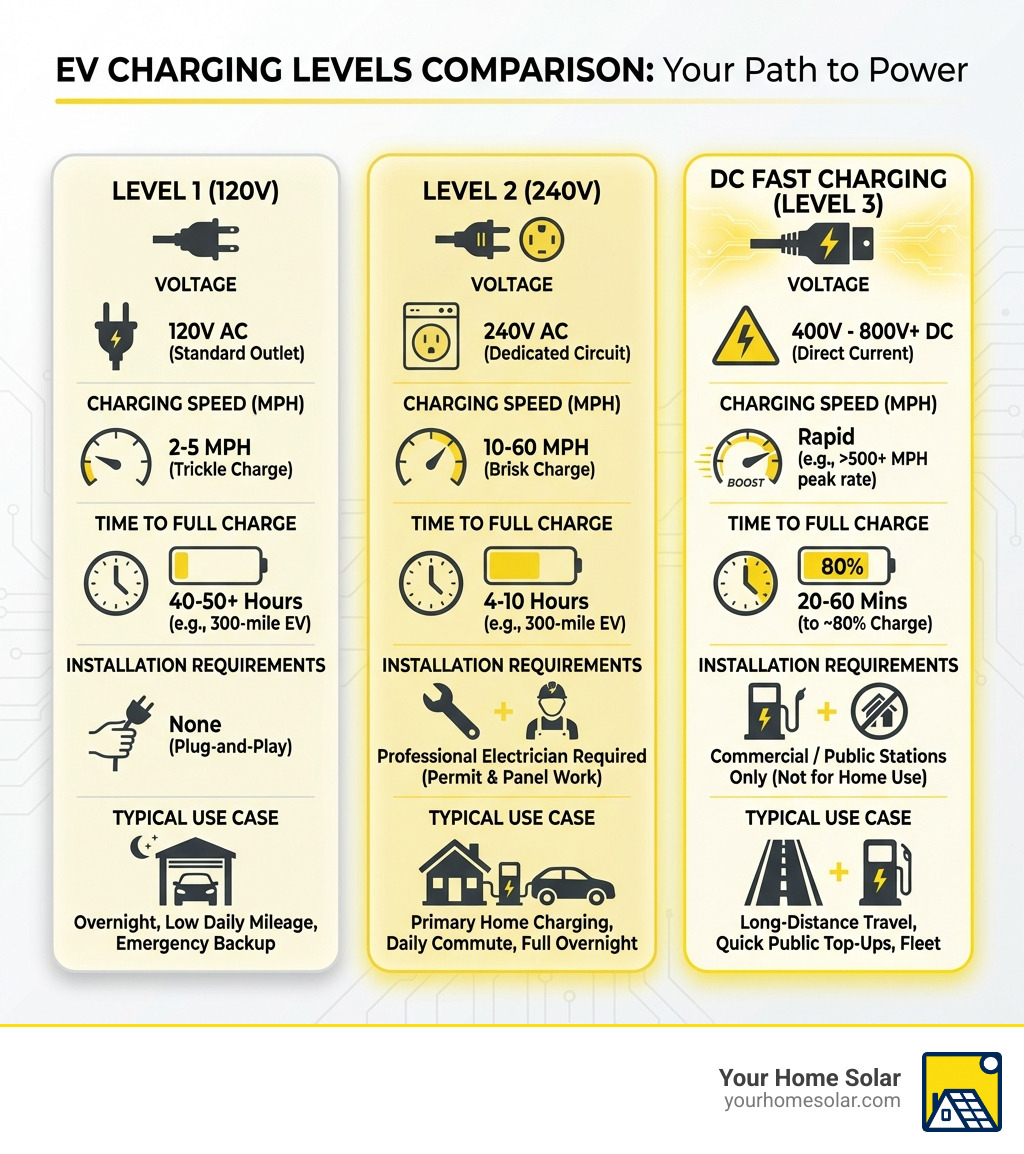
- Level 1 (120V) – Plugs into standard outlet, adds 2-5 miles/hour, no installation needed
- Level 2 (240V) – Requires professional installation, adds 10-60 miles/hour, best for most homes
- Installation Process – Electrical assessment, licensed electrician install, 2-4 hours typical
- Total Cost – $1,300-$4,000 (charger + installation), minus 30% federal tax credit
- Timeline – 3-6 weeks from purchase to completion
As EVs become more common in East Tennessee, homeowners find that relying on portable Level 1 chargers or public stations isn’t sustainable. A Level 2 charger can fully charge your EV in 4-10 hours instead of the 40-50 hours a standard outlet requires.
The convenience is undeniable: plug in at night and your car is ready every morning. No more planning trips around public chargers or waiting for a spot.
But the installation process can feel overwhelming. Questions about electrical work, panel upgrades, costs, and charger choice are common. This guide walks you through every step, from understanding charger levels to budgeting and finding incentives.
I’m Ernie Bussell, CEO of Your Home Solar, East Tennessee’s #1 solar energy contractor. We’ve guided hundreds of local families through installing EV charger systems that fit their needs and homes.
Understanding EV Charger Levels for Home Use
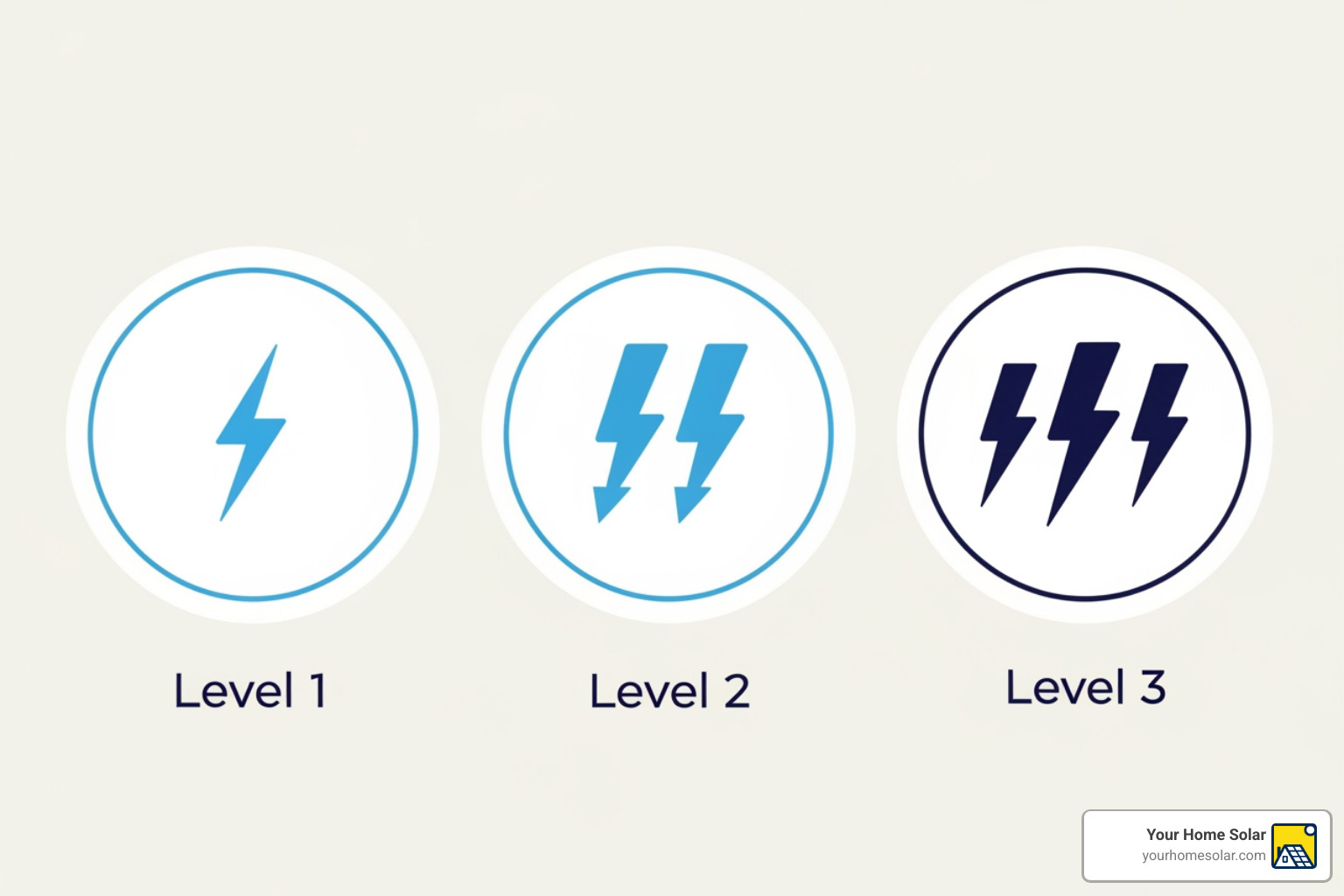
When you decide to install electric charger at home, you’ll encounter “charger levels.” These refer to power output and charging speed, and understanding them is key to choosing the right solution for your East Tennessee home.
Roughly 80% of EV charging happens at home for good reason: it’s convenient, cost-effective, and your station is always available.
Level 1 Chargers: The Basics
Level 1 chargers, or “trickle chargers,” are the slowest option. They plug into a standard 110V/120V household outlet.
- Speed: Provides 2 to 5 miles of range per hour of charging.
- Pros:
- No installation cost: They come with your EV and plug into an existing outlet.
- Portability: You can take them anywhere with a standard outlet.
- Cons:
- Very slow: It can take 40-50 hours to fully charge an EV battery.
- Impractical for daily use: This level is often insufficient for daily commuters.
- Best for: Plug-in hybrids or EV owners with very low daily mileage (under 40 miles) who can charge overnight.
This basic option suits some specific needs.
Level 2 Chargers: The Home Standard
For most EV owners in East Tennessee, a Level 2 charger is the ideal choice. It uses a 240V circuit, like an electric dryer or oven.
- Speed: Provides 12 to 60 miles of range per hour. A 32-amp station adds around 25 miles per hour, while a 50-amp charger can add about 37 miles per hour. This means an empty battery can be restored in 4-10 hours.
- Pros:
- Fast overnight charging: Plug in when you get home and wake up to a full charge.
- Increased efficiency: Level 2 charging is about 10% more efficient than Level 1.
- Ideal balance: Offers a great balance of speed and cost for home installations.
- Cons:
- Requires professional installation: You’ll need a licensed electrician to install a dedicated 240V circuit.
- The ideal choice: For most EV owners, especially those with fully electric vehicles or longer commutes, a Level 2 charger is a wise investment.
Level 3 (DC Fast Charging): The Commercial Powerhouse
Level 3 chargers, or DC Fast Chargers, are the fastest option. Using 480V+ direct current, they’re found at public stations for rapid charging.
- Speed: Extremely fast, adding hundreds of miles of range in under an hour.
- Not for residential installation: Their immense power needs and cost make them unsuitable for home use.
- Pros: Best speed for on-the-go charging.
- Cons:
- High cost and power demand: Prohibitive for residential installation.
- Potential battery degradation: Frequent DC fast charging can degrade EV battery life. Studies suggest battery capacity can degrade significantly after just 40 DCFC cycles. Home Level 2 charging is preferred for daily use to preserve battery health.
Selecting the Right Level 2 Charger for Your Needs
Once you’ve decided on a Level 2 charger for your East Tennessee home, the next step is choosing a specific unit. With so many options, we’re here to help guide you.
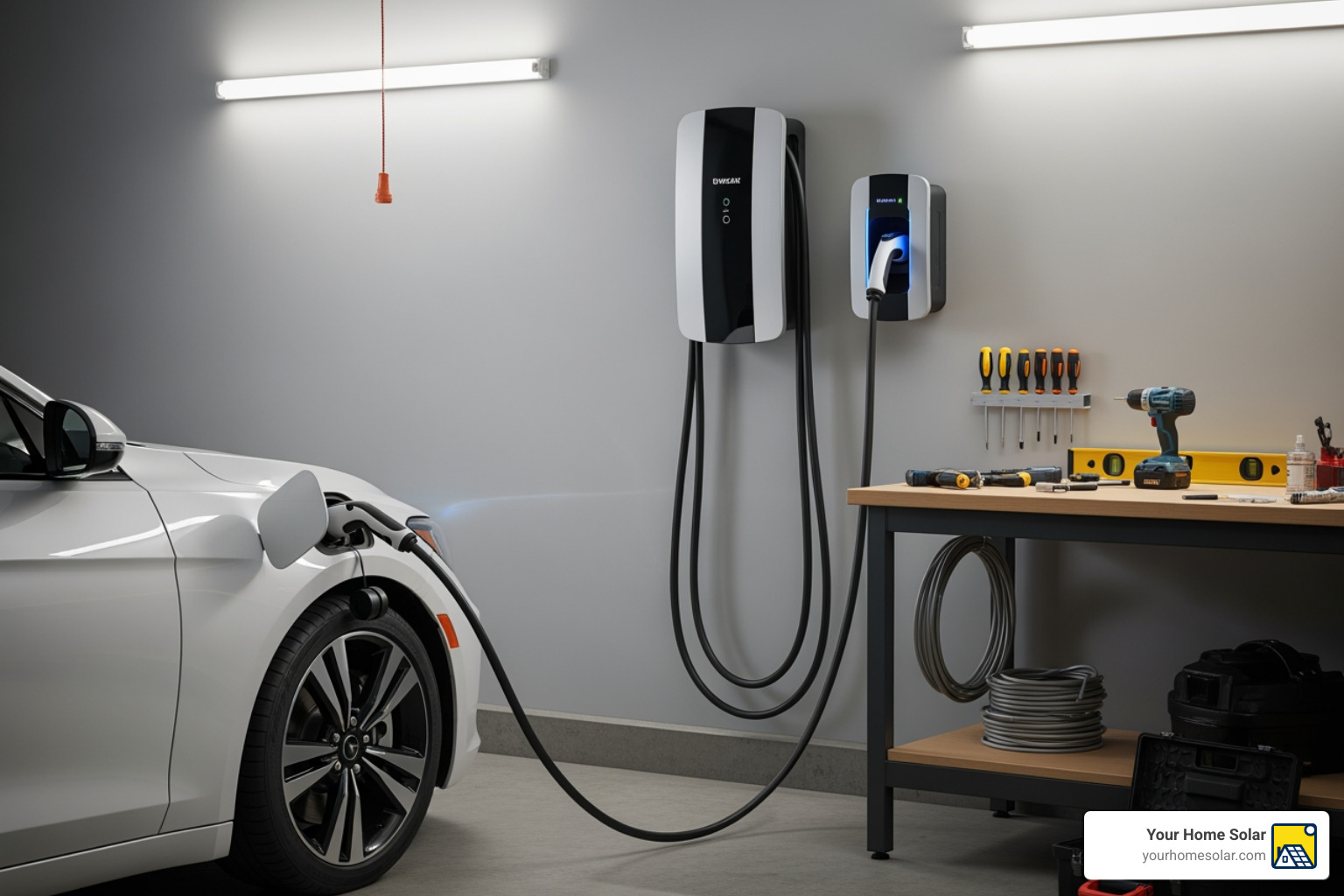
A Level 2 charger offers substantial advantages over public stations or Level 1 chargers. Home charging is more cost-effective and convenient. While you can find public charging stations, you’ll rarely need to with a home charger.
Key Factors Before You Install an Electric Charger
We consider several critical factors to help you choose the best Level 2 EV charger for your home.
- Amperage: This dictates how fast your charger delivers power. A 32-amp station adds around 25 miles of range per hour, while a 50-amp charger adds about 37. Some homes can support 80-amp chargers for even faster speeds. We’ll assess your home’s electrical capacity to determine the maximum safe amperage.
- Charging Speed (Range Per Hour): Related to amperage, this tells you how many miles of range you’ll gain per hour. If you have a longer commute in Knoxville or Maryville, a higher amperage charger might be beneficial.
- Cable Length: Most cables are 20-25 feet. We recommend the longest you can afford (usually 25 feet) for flexibility with future EVs or different parking spots.
- Weatherproofing (NEMA ratings): If installing your charger outdoors in a carport or driveway, weatherproofing is paramount. A NEMA 3 rating resists rain and sleet, while a NEMA 4 rating offers greater watertightness.
- Safety Certifications (UL Listed, ENERGY STAR): Always choose chargers certified by a nationally recognized lab (like UL). ENERGY STAR certified chargers also use 40% less standby energy, saving you money. Not all chargers are safety certified, so it’s important to check.
For more detailed guidance, check out How to Find the Best Home EV Charger.
Smart Chargers vs. Standard Chargers
Smart features are making home charging more convenient and cost-effective.
- Smart Features: These Wi-Fi-enabled chargers connect to a smartphone app, allowing you to schedule charging for off-peak rates, remotely control the session, track costs, and receive software updates.
- Benefits: Smart chargers offer convenience, cost savings, and valuable energy data. That’s why we often recommend a Smart EV Charger Installation in Knoxville for our clients.
- Standard Chargers: These are basic units that simply deliver power. They have a lower upfront cost but lack the advanced features and potential savings of smart chargers.
Hardwired vs. Plug-In Installation
Your Level 2 charger can be connected in two ways:
| Feature | Hardwired Level 2 Charger | Plug-In (NEMA 14-50) Level 2 Charger |
|---|---|---|
| Connection | Directly wired into your home’s electrical system | Plugs into a dedicated 240V NEMA 14-50 outlet |
| Permanence | Permanent installation | Can be unplugged and moved |
| Amperage | Often allows for higher amperages (e.g., 60-80A) | Typically limited to 40A (requiring 50A breaker) |
| Safety | Considered more robust and potentially safer by electricians | Safe when installed correctly, but relies on outlet integrity |
| Flexibility | Less flexible, fixed location | More flexible, can be taken to a new home |
| Installation | Requires a dedicated circuit and direct wiring | Requires a dedicated 240V NEMA 14-50 outlet |
| Cost | Potentially higher installation cost due to direct wiring | Often slightly lower initial installation if outlet is present |
- Hardwired: This connects the charger directly to a dedicated circuit. Electricians often prefer this robust, permanent connection, especially for higher-amperage chargers.
- Plug-in (NEMA 14-50): This uses a NEMA 14-50 outlet, offering portability if you move. However, an existing outlet (like for a dryer) may have a smaller breaker (e.g., 30-amp), limiting your charging speed to 24 amps and not maximizing your EV’s capability.
We typically recommend hardwired installations for optimal safety and performance, but a NEMA 14-50 plug-in can be a good choice depending on your specific needs.
The Professional Process to Install an Electric Charger
Installing an EV charger at home is a smart move, but it’s not a DIY project. The specialized electrical work requires a licensed professional to ensure safety and compliance. The installation process is methodical to ensure your system is safe, efficient, and up to code, which is why professional installation is often legally required. Our experience with EV Charger Installation Knoxville and across East Tennessee gives us deep knowledge of the process.
Step 1: Home Electrical Assessment
Before work begins, a thorough assessment of your home’s electrical system is crucial.
- Evaluating panel capacity: A Level 2 charger needs a dedicated 240V circuit. Your existing master breaker panel must have enough capacity and space for a new double-pole breaker.
- Load calculation: Our electricians perform a detailed load calculation to ensure adding the charger won’t overload your home’s electrical system, preventing tripped breakers and safety hazards.
- Determining need for upgrades: If your panel is older, full, or lacks capacity, an upgrade to a 200-amp panel might be necessary. In some cases, load-shedding equipment can manage power usage and avoid a costly panel upgrade.
Step 2: Hiring a Licensed Electrician
We can’t stress this enough: you need a licensed electrician to install electric charger. Cutting corners can have serious consequences.
- Why DIY is not recommended: Improper wiring is a serious risk, leading to electrical fires, EV damage, and voided warranties. This is not a job for an amateur.
- Code compliance: A licensed electrician understands local building codes across East Tennessee and ensures your installation is compliant, which is essential for safety and future home sales.
- Certified Installers: We partner with certified installers who are experienced in the latest EV charging technologies and safety standards.
Step 3: What to Expect When You Install an Electric Charger
After the assessment, the physical installation begins.
- Choosing a location: We’ll help you decide the best place for your charger, whether in a garage, carport, or driveway, considering cable length and wiring paths. Trenching for wiring to an outdoor location can add to the cost.
- Running conduit: Protective tubing encloses the electrical wires from your panel to the charger.
- Circuit breaker installation: A dedicated 240V circuit with an appropriately sized breaker (e.g., a 50-amp breaker for a 40-amp charger) will be installed.
- Mounting and testing: The unit is securely mounted, and the electrician thoroughly tests the system to ensure it’s working correctly and safely.
- Typical timeline: A standard installation takes an electrician 2-4 hours. The entire process, from assessment to completion, typically takes 3-6 weeks.
Budgeting for Your EV Charger: Costs and Incentives
Understanding the costs to install electric charger at home is essential. We want you to be prepared for the investment.
Here’s a breakdown of potential expenses:
- Charger Unit Cost: Level 2 chargers typically cost between $500 and $900.
- Installation Labor Cost: This is the variable part. A standard installation averages $1,200 nationally but can range from $799 to over $1,999. Costs increase with complex work like long conduit runs or panel upgrades.
- Panel Upgrade Costs: A panel upgrade can be the most expensive part of the installation, adding substantially to the total. Load-shedding equipment can sometimes eliminate this cost.
- Permit Fees: Local jurisdictions in East Tennessee require permits for electrical work, which come with fees.
Permits and Inspections
Permits and inspections for an EV charger installation are critical safety measures, not just bureaucracy.
- Local requirements: Every city and county in East Tennessee has specific electrical codes to ensure safety.
- Electrician’s role: As licensed professionals, we handle the entire permitting process, ensuring all work adheres to local codes.
- Final inspection: After installation, a local inspector verifies the work meets safety and code requirements, which is crucial for peace of mind and insurance.
Available Tax Credits and Rebates
Various incentives can help offset the installation cost.
- Federal incentives: A tax credit of 30% (up to $1,000) is available for qualifying homeowners who purchase and install EV charging equipment. This is in effect through June 30, 2026.
- State and local programs: Many areas in East Tennessee offer rebates for home EV charger installation. We can help you research what’s available in your location.
- Utility company rebates: Check with your local utility provider (like TVA or KUB). Many offer rebates or special time-of-use rates for EV owners.
Frequently Asked Questions About Home EV Charger Installation
Here are answers to common questions from East Tennessee homeowners about EV charger installation.
Is it cheaper to charge an EV at home or at a public station?
Charging at home is significantly more cost-effective.
- Home charging costs less: You pay your residential electricity rate, which is usually much lower than public charging rates that include surcharges.
- Predictable rates: Home charging offers predictable energy rates, especially if you use smart features to charge during off-peak hours.
- Public station costs: Public stations, especially DC fast chargers, are more expensive for regular use. While convenient for long trips, they are not as economical as charging at home. You can find a public charging station here if needed.
Do I need a 200-amp panel for an EV charger?
Not always, but it’s often recommended for faster Level 2 chargers.
- It depends on your home’s load: A Level 2 charger needs a dedicated 240V circuit. If your home has a 100-amp panel or a 200-amp panel that’s already near capacity with other large appliances, you might need an upgrade.
- A load calculation is necessary: A professional assessment is crucial. An electrician performs a load calculation to see if your system can safely support the charger. If not, they’ll provide options like a panel upgrade or installing load-shedding equipment.
How do I choose an ENERGY STAR certified EV charger?
Choosing an ENERGY STAR certified EV charger is simple and beneficial.
- Look for the label: When shopping, look for the blue ENERGY STAR logo. It indicates the product meets strict EPA energy efficiency guidelines.
- Benefits: Certified models use 40% less power in standby mode, saving you money. They must also meet key safety standards, and many include smart features that may qualify you for utility savings.
You can find more information about these efficient products at Electric Vehicle Chargers.
Conclusion
The journey to install electric charger at your East Tennessee home is an investment in convenience, cost savings, and the future. A Level 2 charger transforms the EV ownership experience with fast, reliable charging right where you need it most.
By opting for a home EV charger, you gain:
- Best convenience: Plug in at night and wake up to a full charge.
- Significant cost savings: Home charging is cheaper per kWh than public options, and smart chargers can optimize for off-peak rates.
- Faster charging speeds: A Level 2 unit rapidly replenishes your battery overnight.
However, professional installation is key to open uping these benefits safely. Our team at Your Home Solar brings trusted expertise and a commitment to 100% customer satisfaction to every project. We understand the electrical needs of East Tennessee homes and provide custom, reliable installations that integrate with your home’s energy system.
Take control of your home energy and open up the full potential of your electric vehicle. For comprehensive home energy solutions, including solar, backup generators, and EV chargers, we’re here to help.