Why Understanding Solar Financing Matters for East Tennessee Homeowners
Solar panels financing options make clean energy accessible to homeowners without requiring tens of thousands of dollars upfront. Here are the main ways to pay for your solar system:
- Cash Purchase – Pay the full cost upfront for maximum lifetime savings and immediate ownership
- Solar Loans – Finance your system over 10-25 years with fixed monthly payments while owning the equipment
- Solar Leases – Rent the solar system with a fixed monthly fee and zero upfront cost
- Power Purchase Agreements (PPAs) – Pay only for the electricity the panels produce at a set rate
Each option has different impacts on your upfront costs, long-term savings, tax credit eligibility, and ownership rights.
The average solar system in Tennessee costs around $17,892 before incentives, but the 30% federal tax credit can reduce that to approximately $12,525. Many East Tennessee homeowners worry that solar is out of reach financially, especially when dealing with rising utility bills and concerns about power reliability during storms.
The good news? You don’t need to have $18,000 sitting in your bank account to go solar. The right financing option can actually make your monthly payment lower than your current electric bill, meaning you start saving from day one.
The challenge is understanding which financing path makes the most sense for your specific situation. A cash purchase offers the best return on investment, but a solar loan might provide better short-term cash flow. Leases and PPAs eliminate upfront costs entirely but reduce your long-term savings potential.
I’m Ernie Bussell, founder and CEO of Your Home Solar, and I’ve spent years helping East Tennessee families steer solar panels financing options after leading multi-million dollar solar operations and guiding hundreds of homeowners through their energy decisions. My goal is to cut through the confusion and help you understand exactly what each financing option means for your wallet, your home, and your energy independence.
Understanding the Total Cost of a Solar System
Before we dive into how to pay for solar, understand what you’re actually paying for. The total cost of a solar system isn’t just the panels themselves; it’s a combination of “hard costs” and “soft costs.”
Hard costs are the tangible components of your solar system. This includes the solar panels, which typically range from $1 to $1.50 per watt for monocrystalline panels and $0.70 to $1 per watt for polycrystalline panels. Monocrystalline panels are generally more efficient, while polycrystalline panels are more affordable. Beyond the panels, hard costs also cover the inverters (which convert DC power to AC power for your home), the racking equipment that secures the panels to your roof, and any necessary wiring and electrical components.
Then there are the soft costs. These are the non-equipment expenses that are crucial for a successful installation. Think of labor for installation, permits required by your local East Tennessee municipality, inspection fees, and the detailed system design that ensures your solar array is optimized for your home’s energy needs and sunlight exposure. These soft costs can sometimes make up a significant portion of the total price. Understanding both types of costs helps us determine the necessary financing amount for your project. You can learn More info about our process to see how we manage these details.
How to Assess Your Home’s Solar Needs
Determining the right solar system size and, consequently, its cost, begins with a thorough assessment of your home’s specific needs. We don’t believe in a one-size-fits-all approach, especially here in East Tennessee, where every home and energy consumption pattern is unique.
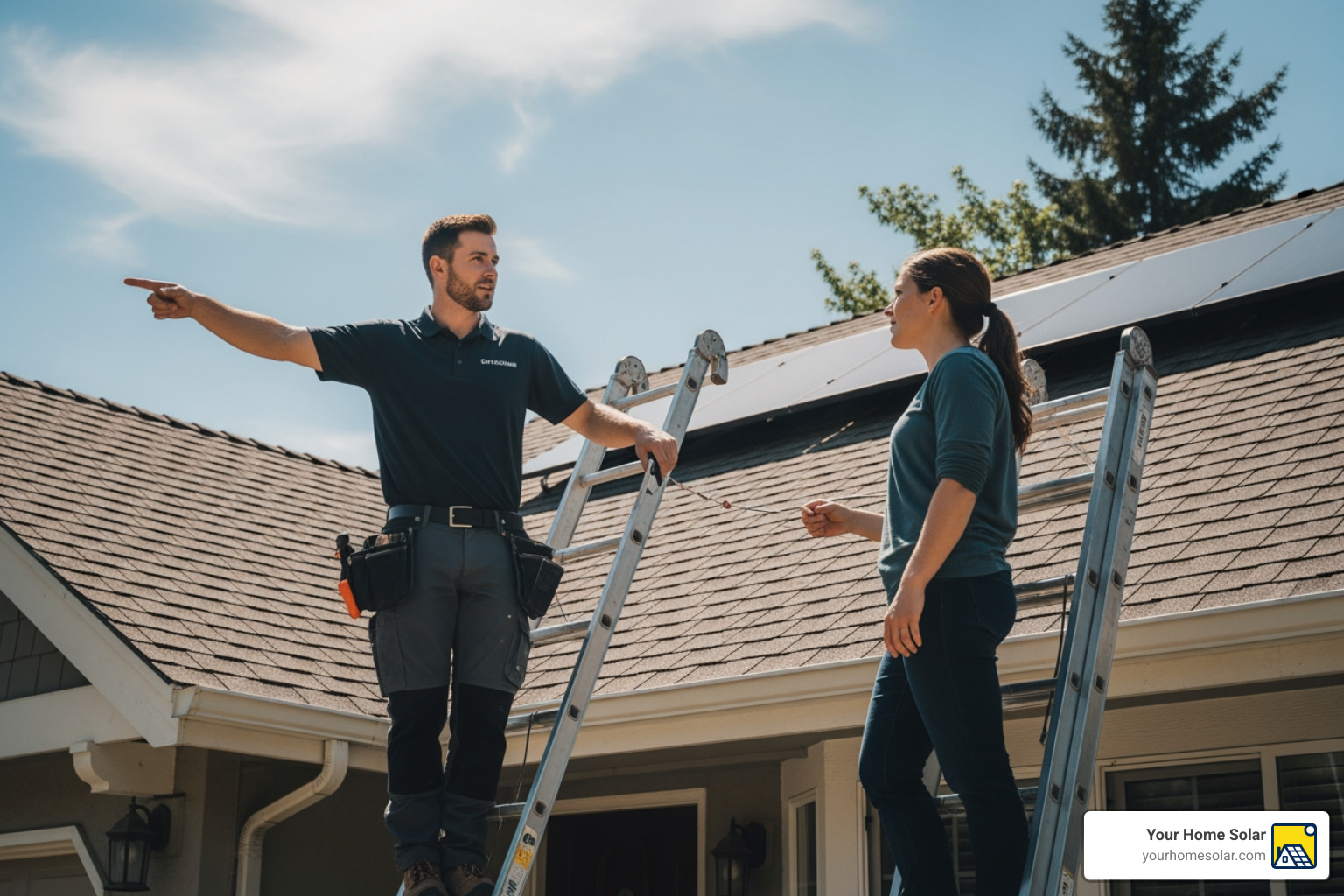
Here’s what goes into assessing your home’s solar needs:
- Energy Consumption Analysis: We look at your past 12 months of electricity bills to understand your average and peak energy usage (kilowatt-hours). This tells us how much power your solar system needs to generate to meet your demands. For instance, an average-sized house typically requires 15 to 25 solar panels to cover its electricity bills fully.
- Roof Condition and Orientation: The age and condition of your roof are critical. If your roof needs repair or replacement soon, it’s often best to do that before installing solar panels. Our panels come with 20-year warranties, and if your roof needs work during that period, the entire system would need to be removed and reinstalled. The direction your roof faces (ideally south-facing for optimal sun exposure) and its slope also play a big role.
- Shading Analysis: We carefully analyze any potential shading from trees, chimneys, or neighboring buildings throughout the day and across seasons. Even partial shading can significantly reduce a panel’s efficiency.
- Local Utility Rates: Understanding your local utility’s electricity rates (e.g., from Knoxville Utilities Board, TVA, or other local providers) helps us calculate your potential savings and the financial viability of a solar installation.
- Space for Battery Storage: If you’re considering battery backup for power outages, we’ll assess available space for the battery bank.
All these factors help us design a system that maximizes power production, minimizes transmission losses, and optimizes inverter load and wire runs. We offer a Free Estimate to help you understand your home’s solar potential without any obligation.
Paying Upfront: The Cash Purchase Advantage
When it comes to solar panels financing options, paying cash for your solar system offers the most straightforward path to maximizing your long-term financial benefits. It’s like buying electricity in bulk, similar to how you might shop at a warehouse club.
With a cash purchase, you avoid all interest payments and loan fees, which can add up significantly over a typical 10-25 year loan term. This means every dollar saved on your electricity bill goes directly into your pocket, leading to the greatest lifetime savings. You achieve full ownership of your system from day one, giving you complete control over your energy production and any future upgrades.
Another significant advantage of paying cash is the ability to directly claim the federal solar tax credit. As we’ll discuss later, this credit can reduce the net cost of your system by 30%. When you own the system outright, you directly receive this tax benefit.
Furthermore, a solar installation can increase your home’s value. When you own the system, that added value is entirely yours, making your East Tennessee home more attractive to potential buyers. For homeowners with available capital, a cash purchase offers the best return on investment and the simplest financial arrangement. Our research shows that the payback period for a cash purchase is typically 6-10 years, after which your electricity generated is essentially free.
Opening up Ownership with Solar Loans
For many East Tennessee homeowners, a cash purchase isn’t feasible, and that’s perfectly okay! Solar panels financing options like loans make going solar accessible without requiring a large upfront investment. A solar loan allows you to own your system over time, much like a home or car loan.
With a solar loan, you make fixed monthly payments, and as you do, you build equity in your solar system. Once the loan is paid off, you own the system outright and continue to enjoy free electricity for the remainder of its long lifespan (typically 25+ years). This approach allows you to start saving on your electricity bills immediately, as monthly loan payments are often designed to be lower than your previous utility bill. It’s a powerful way to achieve energy independence and contribute to a greener future without depleting your savings. We’re here to help you explore Solar Home Energy Financing in East Tennessee that fits your budget.
Specialized solar panels financing options
When considering a loan for your solar system, you’ll encounter several types, each with its own benefits:
- Secured Loans (like Home Equity Loans/HELOCs): If you have sufficient equity in your home, a Home Equity Loan (HELOC) can be a good choice. These loans are secured by your home, often resulting in lower interest rates compared to unsecured options. A HELOC acts like a revolving line of credit, allowing you to borrow funds as needed, up to a certain limit. While HELOCs can offer attractive rates, they do use your home as collateral, which is an important consideration.
- Unsecured Loans (Personal Loans): These are not backed by collateral, making them a simpler option if you prefer not to use your home equity. While interest rates might be slightly higher than secured loans, personal loans offer fixed monthly payments and can be processed quickly.
- Contractor Financing: Many solar installation companies, including us, offer financing options directly through partnerships with lenders. This can streamline the process, allowing for a “one-stop-shop” experience where your solar provider helps you secure financing.
- Combo Loans vs. Reamortizing Loans: These are two common structures for solar loans that interact with the federal tax credit. You can read more about them in depth here: Solar loans: Everything you need to know in 2025.
- Combo Loans: These consist of two parts: a primary loan for the net cost of the system after the federal tax credit, and a “bridge loan” for the amount of the tax credit itself. The idea is that you use your federal tax credit (which you receive after filing your taxes) to pay off the bridge loan. If you don’t pay off the bridge loan, your monthly payments will increase.
- Reamortizing Loans: With this option, your initial loan balance is based on the full contract price of the system. However, it allows for a free, one-time lump sum payment (typically from your federal tax credit) within the first 12-18 months. This payment then “reamortizes” your loan, reducing your remaining balance and your future monthly payments. This offers more flexibility if you’re unsure about your exact tax liability or when you’ll receive your tax credit.
The choice between these specialized options often depends on your comfort level with debt, your home equity, and how you plan to use the federal tax credit.
Typical Loan Terms and Requirements
Understanding the typical loan terms, interest rates, and eligibility requirements is key to navigating solar panels financing options.
- Loan Terms: Solar loans typically range from 10 to 25 years. Shorter terms (e.g., 8-12 years) generally result in higher monthly payments but less interest paid over the life of the loan, leading to greater lifetime savings. Longer terms (e.g., 15-20 years) offer lower monthly payments, making solar more immediately affordable, but you’ll pay more in interest overall. Many homeowners find a 12-year loan to be a good balance between immediate bill reduction and long-term savings.
- Interest Rates: Interest rates for solar loans depend on various factors, including the lender, the loan term, and your creditworthiness.
- Credit Score Requirements: To qualify for a solar loan, lenders typically look for a FICO credit score of 650 or higher. Achieving a score between 680-719 can qualify you for lower interest rates, and the best rates are generally reserved for those with scores of 720 and above.
- Debt-to-Income Ratio (DTI): Lenders also assess your debt-to-income ratio, which is the percentage of your gross monthly income that goes towards debt payments. A DTI below 50% is typically required for solar loan qualification.
- Repayment Periods: Payments usually begin shortly after your system is installed and operational. The impact on your long-term savings can be substantial. For example, if you choose a 20-year loan, your monthly payments might be lower than your current electric bill, providing immediate cash flow benefits. Once the loan is paid off, you essentially enjoy free electricity for the remainder of your system’s lifespan, which can be 25 years or more.
Carefully considering these factors will help you choose a loan structure that aligns with your financial goals and maximizes your long-term return on investment.
Exploring Third-Party solar panels financing options: Leases and PPAs
If you’re eager to go solar but prefer to avoid purchasing the system outright or taking on a loan, third-party solar panels financing options like leases and Power Purchase Agreements (PPAs) might be your solution. These options often come with zero-down payments, making them incredibly accessible.
With leases and PPAs, a third-party company owns, installs, and maintains the solar system on your property. This means you have no upfront investment, and the provider is responsible for all monitoring, maintenance, and repairs throughout the contract term. Your energy costs become predictable, as you either pay a fixed monthly “rent” for the system (lease) or pay a set rate per kilowatt-hour for the electricity it produces (PPA). It’s a hassle-free way to enjoy the benefits of solar without the responsibilities of ownership.
Solar Leases vs. Power Purchase Agreements (PPAs)
While both solar leases and PPAs offer zero-down options and offload maintenance responsibilities, they differ in how you pay for your solar energy:
- Solar Lease Explained: With a solar lease, you essentially “rent” the solar panel system for a fixed monthly fee. This fee is usually lower than your previous electricity bill, providing immediate savings. The leasing company owns the system, and you get to use the clean energy it generates. Lease terms typically range from 15-20 years. At the end of the lease, you usually have options to renew, purchase the system at fair market value, or have it removed.
- PPA Explained: A Power Purchase Agreement (PPA) is a bit different. Instead of paying a fixed monthly rent for the system itself, you pay per kilowatt-hour (kWh) for the electricity the solar panels produce. This rate is usually lower than your utility’s rate, and it’s fixed or has a predictable escalator. So, you’re buying the electricity, not the equipment. Solar Power Purchase Agreements are typically 10 to 25 years in length.
Both leases and PPAs often include escalator clauses, which mean your monthly payment or per-kWh rate might increase by a small percentage (e.g., 2-5%) annually. It’s crucial to understand these clauses as they impact your long-term costs.
Contract Length and Transferability: These agreements typically have long contract lengths (20-25 years). If you decide to sell your East Tennessee home during this period, the lease or PPA contract usually needs to be transferred to the new homeowner. This requires the buyer’s approval and can sometimes complicate the home sale process. While leases and PPAs offer convenience and no upfront costs, because you don’t own the system, you generally don’t qualify for federal tax credits or other ownership-based incentives.
Maximizing Your Investment with Solar Incentives
Going solar is an investment, and like any smart investment, it’s about maximizing your returns. In Tennessee, various incentives and tax credits can significantly reduce the overall cost of your solar system and improve its financial viability. These programs are designed to make clean energy more affordable and accessible to homeowners like you. For more detailed information, check out our Tax Credits & Incentives page.
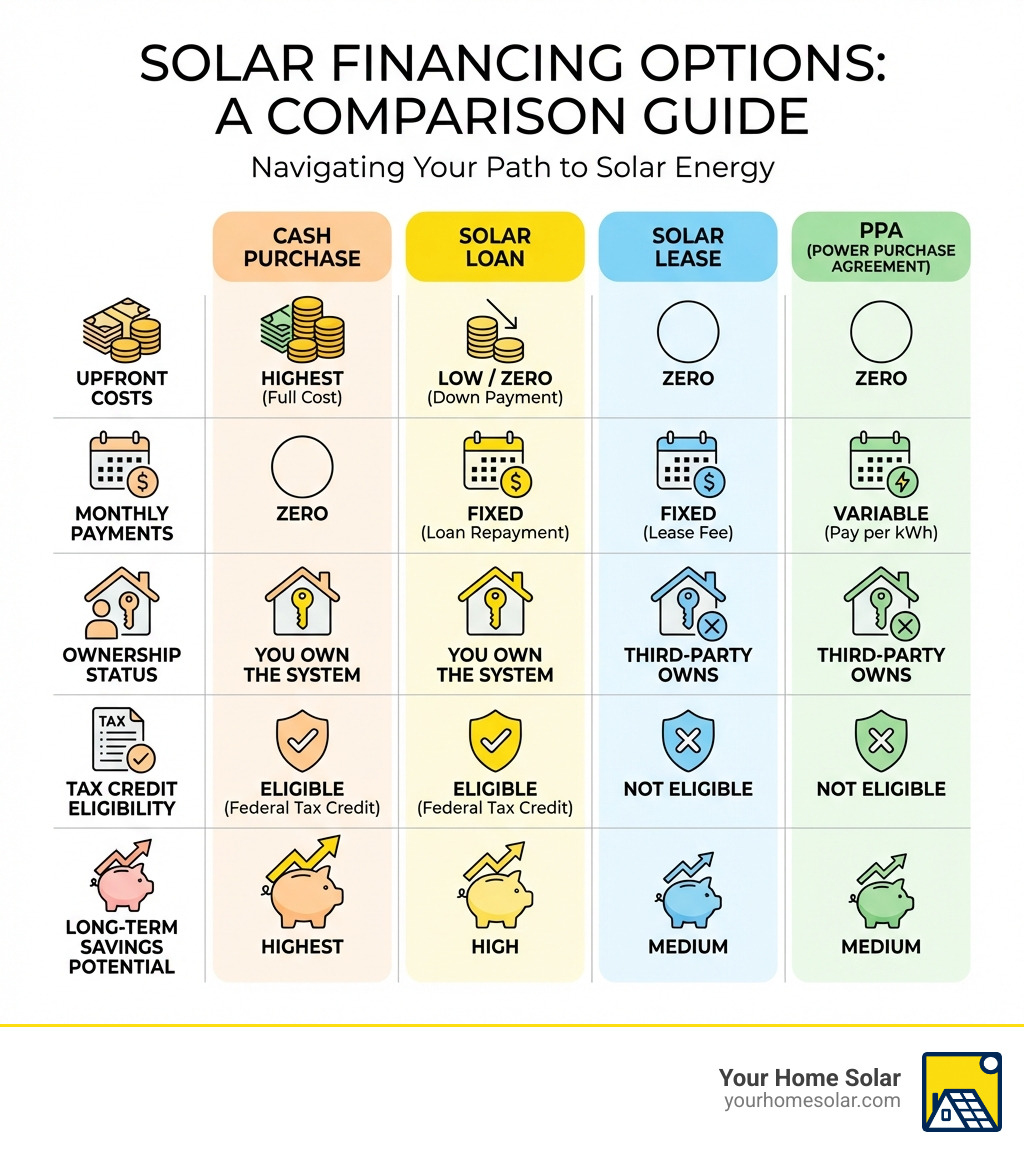
Here’s a quick comparison of how different financing options stack up against key financial factors:
| Feature | Cash Purchase | Solar Loan | Solar Lease/PPA |
|---|---|---|---|
| Upfront Cost | High | Low to None | None |
| Lifetime Savings | Highest | High (after interest) | Moderate |
| Ownership | Yes, from day one | Yes, after loan paid | No (third-party owns) |
| Tax Credit Eligibility | Yes, homeowner claims | Yes, homeowner claims | No (owner claims) |
| Maintenance Responsibility | Homeowner | Homeowner | Third-party provider |
The Federal Solar Tax Credit
The cornerstone of solar incentives for homeowners across the U.S., including here in East Tennessee, is the federal solar tax credit, officially known as the Residential Clean Energy Credit. Thanks to the Inflation Reduction Act, this incredible incentive offers a 30% tax credit for eligible solar expenses. This means if your solar system costs $20,000, you could get $6,000 back as a credit on your federal income taxes.
Here’s what you need to know:
- What it covers: The 30% tax credit applies to the cost of new, qualified clean energy property for your home. This includes the solar panels, inverters, racking, labor costs for installation, and even battery storage systems (if installed with your solar panels).
- How to claim: You claim this credit when you file your federal income taxes. It directly reduces the amount of tax you owe.
- Credit vs. Rebate: It’s important to understand this is a credit, not a rebate. A credit reduces your tax liability dollar-for-dollar. If your credit exceeds your tax liability in a given year, you can usually roll over the unused portion to the next tax year.
- Duration: The 30% credit is available for systems installed through 2032. It then steps down to 26% in 2033 and 22% in 2034.
This tax credit is a powerful financial tool that significantly lowers the net cost of going solar, making it a much more attractive investment for East Tennessee homeowners.
State and Local Incentives in Tennessee
Beyond the federal tax credit, homeowners in Tennessee may also benefit from state and local programs, though these can vary. It’s always a good idea to check for the latest information, as programs can change. For a comprehensive look, our Solar Incentives Tennessee 2026 Guide is an excellent resource. You can also explore the Database of State Incentives for Renewables & Efficiency for a broader view.
Here are some common types of state and local incentives that could impact your solar investment in Tennessee:
- Net Metering: This is a crucial policy that allows you to send any excess electricity your solar panels generate back to the utility grid. In return, you receive credits on your electricity bill, effectively reducing or even eliminating your monthly utility charges. The specifics of net metering policies, including how credits are valued, can vary by utility provider in East Tennessee.
- Property Tax Exemptions: In some areas, the added value of a solar system might be exempt from property tax assessments. This means you get the benefit of increased home value without an increased tax burden.
- Sales Tax Exemptions: Certain states or localities may offer sales tax exemptions for solar equipment, reducing the upfront cost of your installation.
While Tennessee might not have as many direct state-level rebates as some other states, the combination of the federal tax credit and beneficial policies like net metering makes solar a financially sound decision for many in our region. We stay on top of these incentives to ensure you get every benefit you’re eligible for.
Frequently Asked Questions about Solar Financing
Is financing solar panels worth it?
Yes, financing is often worth it as the monthly loan payment can be lower than your current electricity bill, leading to immediate savings. Over the long term, you own an asset that generates free electricity after the loan is paid off. This means you’re investing in your home’s future and energy independence rather than just paying a utility bill.
What credit score do I need for a solar loan?
Most lenders look for a FICO credit score of 650 or higher. A score above 720 will typically qualify you for the best interest rates and terms. Your debt-to-income ratio (DTI) is also an important factor, with lenders generally preferring a DTI below 50%.
Can I sell my house if I have a solar loan or lease?
Yes. With a solar loan, the loan can often be paid off with the proceeds of the home sale, and the system adds value. With a lease or PPA, the contract typically needs to be transferred to the new homeowner, which requires their approval. This transfer process can sometimes add complexity to a home sale, so it’s important to understand the terms of your agreement.
Conclusion
Navigating the landscape of solar panels financing options can seem daunting, but it doesn’t have to be. We’ve explored the main avenues available to East Tennessee homeowners: a cash purchase for maximum long-term savings, various solar loans that allow you to own your system over time, and leases or Power Purchase Agreements (PPAs) that offer zero-down entry into solar.
The right choice for your home is personal, depending on your financial situation, your comfort with upfront investment, and your long-term goals. What’s clear is that going solar is no longer just for the wealthy or the extremely patient. With the right financing, it’s an accessible and rewarding investment for many.
At Your Home Solar, we pride ourselves on our trusted expertise and commitment to 100% customer satisfaction. We’re here to provide trusted guidance every step of the way, helping you understand your options and tailor a solution that makes sense for you and your East Tennessee home. Our goal is to make it simple for you to achieve energy independence and enjoy the benefits of clean, renewable power.
Ready to take the next step? Learn more about the cost and financing of solar systems or contact us for a personalized assessment.