Why Understanding the Cost of Generator Installation Matters
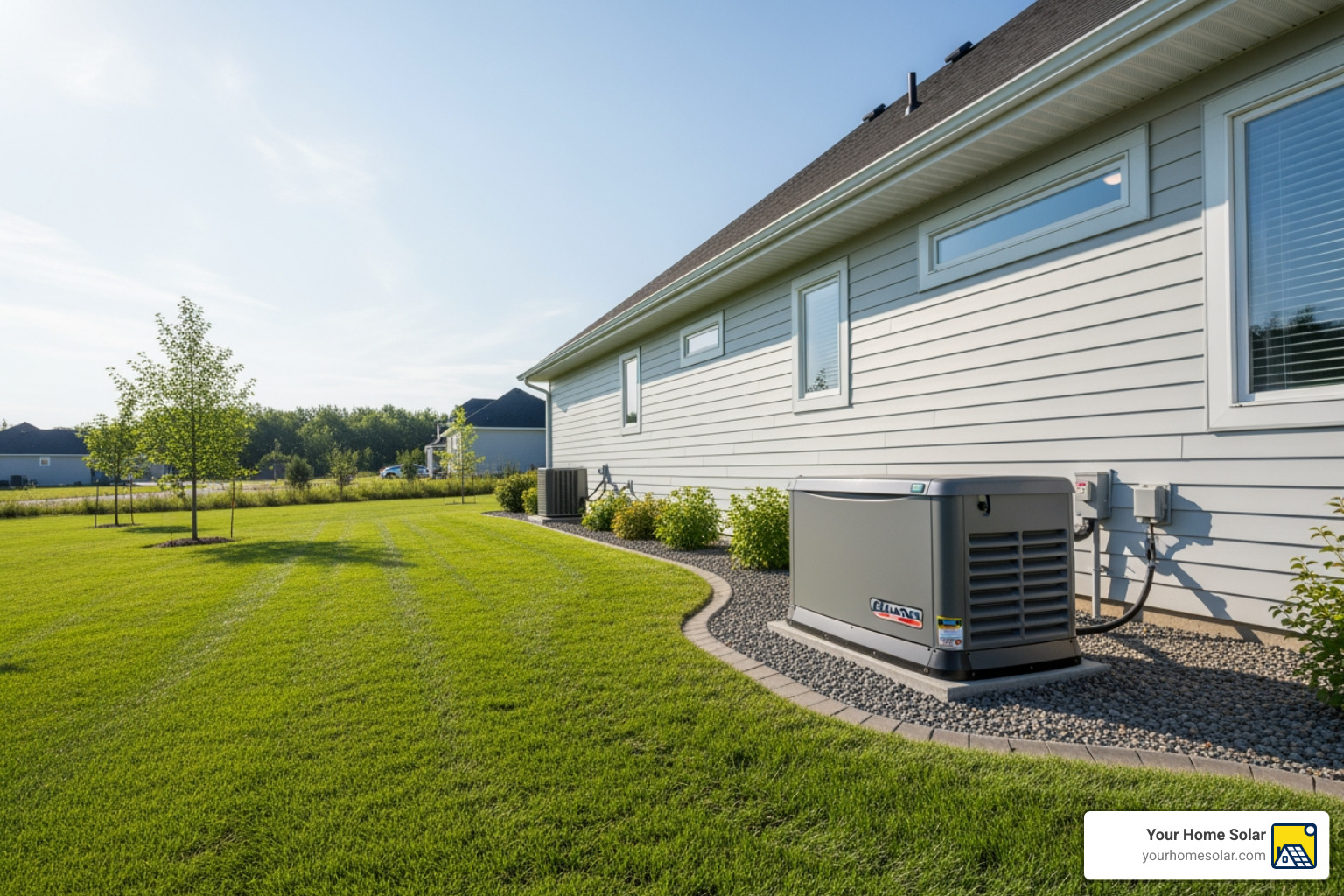
The cost of generator installation typically ranges from $5,000 to $15,000 for a whole-house system in East Tennessee, depending on your home’s size and specific needs. Here’s what you can expect:
Quick Cost Breakdown:
- Generator Unit: $3,000 – $8,000 (varies by power output)
- Automatic Transfer Switch: $600 – $1,200
- Professional Installation: $1,500 – $4,000
- Permits & Inspections: $150 – $500
- Additional Materials: $300 – $2,000
Total Average Investment: Most homeowners spend between $7,000 and $12,500 for a complete, professionally installed system.
If you’ve ever sat in the dark during a storm, watching your refrigerator go warm and your sump pump stay silent, you know that backup power isn’t a luxury—it’s peace of mind. A whole-house generator keeps your family safe, your food fresh, and your home protected when the grid goes down.
But here’s the challenge: generator installation costs vary widely. One homeowner might spend $6,000 while another spends $16,000 for what seems like the same thing. The difference isn’t random—it comes down to your home’s size, your electrical system’s complexity, your fuel source, and dozens of other factors that aren’t always obvious upfront.
That’s why understanding the real numbers matters. When you know what drives the cost, you can budget accurately, avoid surprises, and make smart decisions about protecting your home.
I’m Ernie Bussell, founder of Your Home Solar, and over the past decade I’ve helped hundreds of East Tennessee families steer the cost of generator installation with transparent pricing and honest guidance. My goal is to help you understand exactly what you’re paying for—and why it matters.
Understanding the Average Cost of a Whole House Generator
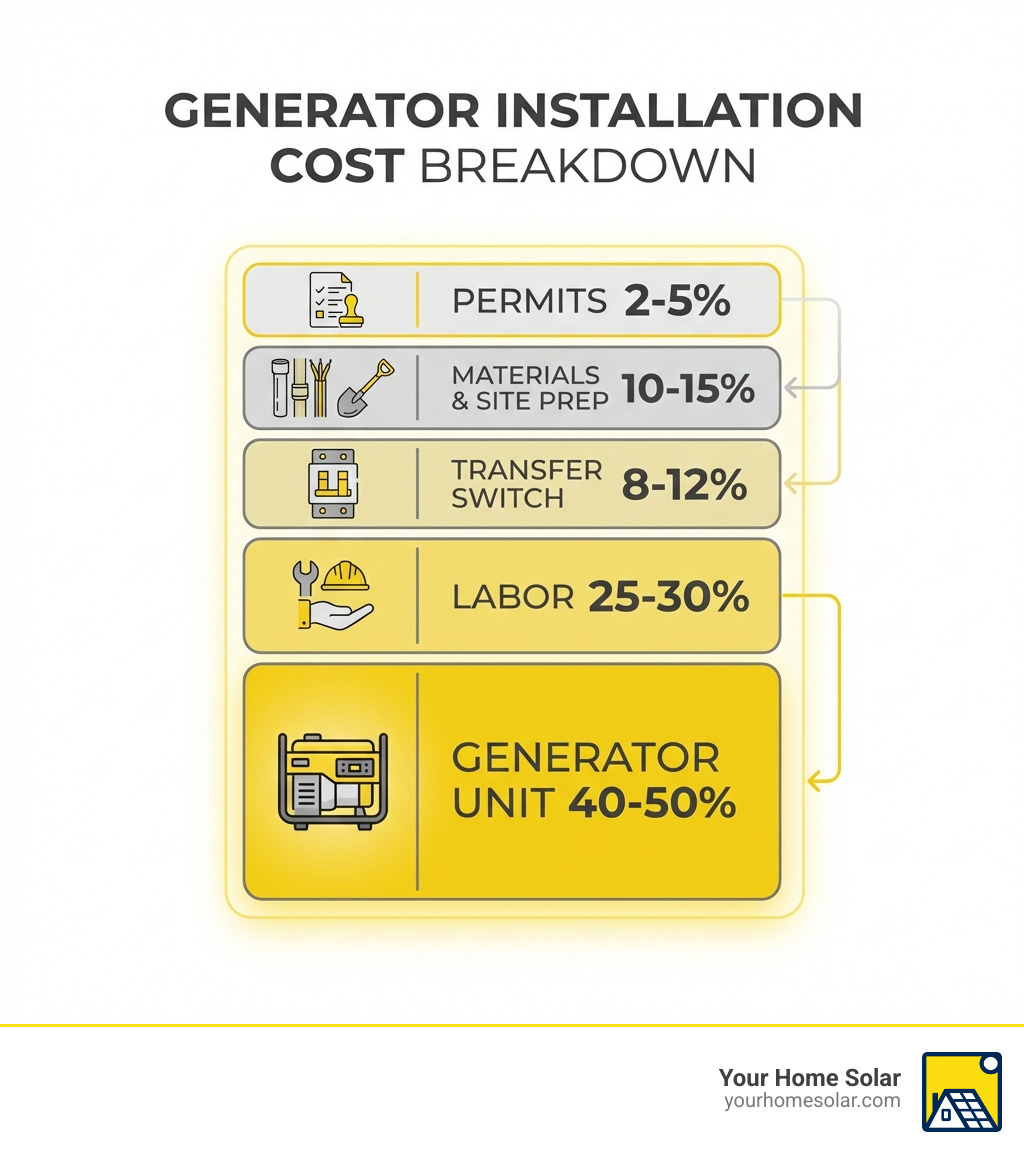
When we talk about the cost of generator installation, we’re looking at a total investment that brings reliable backup power to your home. While the national average for a whole-house generator installation typically falls between $7,000 and $15,000, most homeowners in East Tennessee can expect to spend between $7,000 and $12,500 for a fully installed system. This range accounts for everything from the generator unit itself to the electrical work, permits, and fuel line connections.
At Your Home Solar, we pride ourselves on providing accurate, transparent estimates for our neighbors in Knoxville, Maryville, Johnson City, and across East Tennessee. We know that every home is unique, and so are its power needs. Our comprehensive estimates break down the key components that contribute to the total cost, ensuring you understand exactly where your investment is going. Let’s explore these components.
The Generator Unit: The Heart of Your System

The generator unit itself is often the largest single expense in the cost of generator installation. Think of it as the engine of your home’s backup power system. Its price is primarily determined by its kilowatt (kW) rating, which indicates how much power it can produce. The higher the kW, the more appliances and circuits it can power simultaneously, and generally, the higher the cost.
For a whole-house system, generators typically range from 7 kW to 22 kW or more. Smaller units (up to 5 kW) might cost between $3,500 and $6,000, while medium-sized generators (6 kW – 20 kW) usually fall into the $6,000 to $12,000 range. Larger units (above 20 kW), necessary for bigger homes or those with extensive power demands, can easily exceed $12,000, sometimes reaching $20,000 or more. For example, a popular 22kW generator unit might cost anywhere from $5,000 to $7,000 on its own.
Beyond power output, factors like the brand, engine type (air-cooled versus liquid-cooled), and advanced features can also influence the unit’s price. Liquid-cooled generators, for instance, are often more powerful and durable, but also more expensive. We help you size the perfect unit for your East Tennessee home, balancing your power needs with your budget.
The Automatic Transfer Switch (ATS): Your System’s Brain
The automatic transfer switch (ATS) is an unsung hero in your whole-house generator system. While it might not be as glamorous as the generator itself, it’s absolutely essential for safety and convenience. The ATS typically costs between $600 and $1,200, depending on its size and complexity.
What does it do? This clever device acts as your system’s brain. When it detects a power outage, it seamlessly and automatically switches your home’s electrical load from the utility grid to your generator. When utility power is restored, it switches it back. This means you don’t have to lift a finger—no fumbling in the dark with extension cords, no manually starting the generator.
More importantly, the ATS ensures safety. It prevents “back-feeding” electricity into the utility lines, which could be incredibly dangerous for utility workers trying to restore power. Proper electrical panel integration by a licensed professional is crucial for the ATS to function correctly and safely.
Professional Labor: The Cost of a Safe Installation
This is where the cost of generator installation can vary significantly, ranging from $1,500 to $4,000, and sometimes even higher depending on the complexity of the job. You’re not just paying for someone to drop off a box; you’re investing in the expertise of licensed electricians and, often, plumbers.
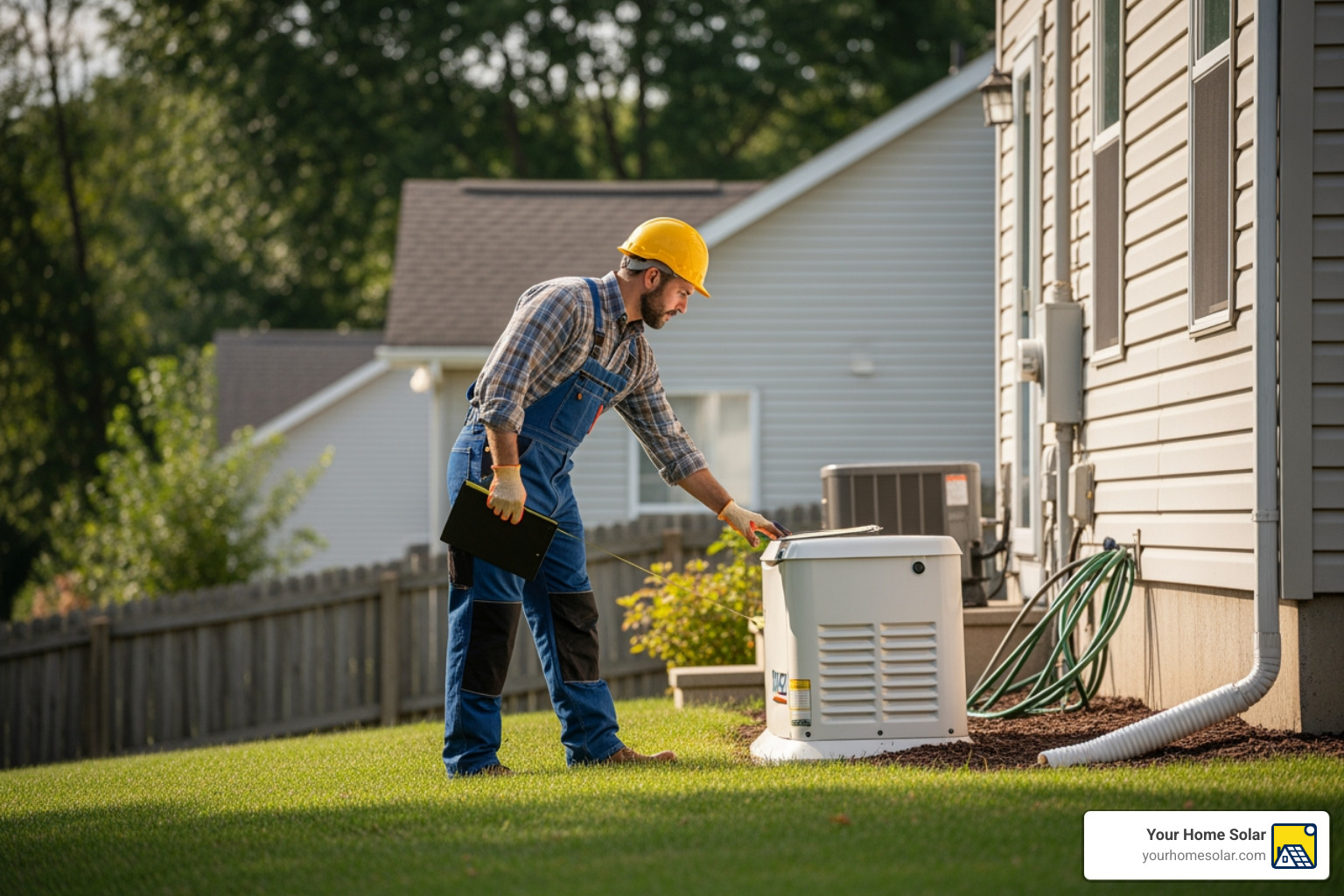
These professionals handle everything from preparing the site and running electrical conduits to connecting your generator to your home’s electrical panel via the ATS, and safely connecting it to your chosen fuel source. Their hourly rates typically range from $75 to $150, and a standard installation can take anywhere from 6 to 10 hours, or much longer for more complex setups.
Why is professional installation non-negotiable? It’s about safety, code compliance, and warranty validity. Generators are powerful machines that interact with your home’s electrical and fuel systems. Improper installation can lead to dangerous electrical hazards, gas leaks, and even void your generator’s warranty. In East Tennessee, our certified technicians ensure every aspect of your installation meets local codes and safety standards, giving you peace of mind that your system will operate reliably when you need it most.
Key Factors That Influence the Total Cost of Generator Installation
The journey to understanding the full cost of generator installation is less about a fixed price tag and more about tailoring a solution to your unique home. Many factors influence the final bill, and that’s why we always recommend a custom estimate based on a thorough site assessment. It’s like building a custom home – you wouldn’t expect a generic price, would you?
From the size of your home to the type of fuel you choose and the specifics of your property, each element plays a role in the overall investment. Let’s explore these variables that contribute to the variability of generator installation costs in East Tennessee.
How home size impacts the cost of generator installation
The size of your home directly influences the generator’s kilowatt (kW) requirements, and consequently, the cost of generator installation. It’s not just about square footage, but also the number of essential appliances and systems you want to power during an outage.
- Smaller Homes (up to 1,500 sq ft): These homes might only need a 7kW to 10kW generator to cover essential circuits like refrigeration, lighting, and a few critical appliances. Installation costs for these smaller units typically range from $5,000 to $7,000.
- Medium to Larger Homes (1,500 – 3,000+ sq ft): For homes in this range, or those wanting to power more than just essentials (think central air conditioning, electric ovens, or multiple large appliances), a 15kW to 22kW generator or larger is usually necessary. The installation costs for these can range from $8,000 to $12,500, often higher for larger units or more complex wiring demands. For example, a home around 2,000 sq ft often requires a 20kW to 24kW generator, with installed costs typically between $7,000 and $15,000.
To accurately determine the right size, we’ll help you list all the appliances and systems you want powered during an outage. You can also use online sizing calculators, but nothing beats a professional assessment to ensure your generator can handle the “starting wattage” (the temporary surge of power an appliance needs to kick on) as well as the “running wattage” for continuous operation.
Fuel Source: Natural Gas vs. Propane
The type of fuel your generator uses significantly affects both the initial cost of generator installation and long-term operating expenses. Most whole-house standby generators in East Tennessee run on either natural gas or propane.
Natural Gas:
- Pros: Connects directly to your home’s existing natural gas line, meaning no need for a separate storage tank or refueling. This makes it a very convenient and often more cost-effective option in areas with natural gas infrastructure.
- Cons: Requires a gas line connection, which can cost between $500 and $2,000 for labor and materials if you need a new line or an upgrade from the meter. Availability is also a factor; not all homes in rural East Tennessee have access to natural gas.
- Installation Impact: Generally lower upfront fuel-related installation costs if a suitable gas line is already present.
Propane:
- Pros: A clean-burning fuel with a high BTU rating, suitable for areas without natural gas. Propane can be stored on your property, offering energy independence.
- Cons: Requires the installation of a storage tank, which can add a significant cost. A 250-gallon tank might cost $500 to $1,500, while a larger 500-gallon tank could be $1,000 to $2,500. Tanks also require refilling, adding an ongoing operational cost.
- Installation Impact: Higher upfront fuel-related installation costs due to tank purchase and installation.
When we assess your home, we’ll discuss the availability and cost-effectiveness of both options, ensuring you choose the best fuel source for your needs and property.
Site Complexity and Location
Where you live and the specifics of your property can also impact the cost of generator installation.
- Accessibility: Is the proposed generator site easily accessible for equipment delivery and installation crews? If we need specialized equipment like a crane to place the unit, or if the site is difficult to reach, labor costs can increase.
- Site Preparation: Standby generators require a stable, level surface, often a concrete pad, to sit on. Preparing the site, including laying a concrete pad, can range from $500 to $2,500. This might also involve some minor landscaping adjustments, adding a few hundred dollars.
- Distance from Utility Meters: The further the generator is from your electrical panel and gas meter, the more wiring and piping will be needed, increasing material and labor costs.
- Local Labor Rates: While we operate across East Tennessee, labor rates can vary slightly between areas like Knoxville, Chattanooga, and Johnson City. We ensure our pricing reflects fair local rates while maintaining our high standards of service.
- HOA Regulations: If you live in a community with a Homeowners Association (HOA), there might be specific rules regarding generator placement, noise levels, or aesthetic requirements. These could influence your choice of unit or installation methods, potentially affecting costs. We’ll help you steer any local regulations to ensure a smooth installation.
Beyond the Sticker Price: Additional and Long-Term Costs
When budgeting for your whole-house generator, it’s crucial to look beyond the initial cost of generator installation. Just like buying a car, there are additional upfront fees and ongoing expenses that contribute to the total cost of ownership. Understanding these “hidden” costs helps you budget more accurately and avoid surprises down the road.
Permits, Inspections, and Electrical Upgrades
These are non-negotiable costs that ensure your generator system is safe, up to code, and properly integrated with your home.
- Permit Fees: Because a whole-home generator ties into your electrical system and natural gas or propane line, local building and safety codes apply. Permits are required to ensure the installation is safe and correct. In East Tennessee, you can generally expect to spend between $150 and $350 total on permits for a whole-home generator installation. This typically includes an Electrical Permit ($50-$150) and a Plumbing/Gas Permit ($50-$200). Skipping these can lead to fines, insurance issues, or problems when selling your home. We handle all the necessary paperwork and coordination for permits and inspections.
- Inspections: After installation, a local inspector will verify that all work meets safety and code requirements. This is usually covered by your permit fees.
- Electrical Panel Upgrades: Sometimes, your existing electrical panel may not be sufficient to handle the new generator’s load or the wiring requirements for the transfer switch. Upgrading your electrical panel can cost anywhere from $1,000 to $3,000, depending on its size and the complexity of the work.
The long-term cost of generator installation: Maintenance and Fuel
Once your generator is installed, the investment continues with ongoing maintenance and fuel costs.
- Annual Maintenance: Just like your car, a generator needs regular tune-ups to ensure it runs reliably when you need it most. Annual maintenance costs typically range from $200 to $400. Many homeowners opt for service contracts, which can range from $300 to $600 per year, covering routine inspections, oil changes, and filter replacements. A well-maintained generator is less prone to unexpected breakdowns and costly repairs, and it significantly extends its lifespan.
- Fuel Consumption: The cost to run your generator depends on its capacity, the load it’s powering, local fuel prices, and how long you need it to run. If you have a propane generator, you’ll need to budget for refills. For natural gas, your utility bill will reflect the usage. During an extended outage, fuel costs can add up, so it’s a factor to consider when choosing your fuel type.
- Repairs: While modern generators are highly reliable, unexpected repairs can sometimes occur. Budgeting for potential emergency repairs is always a good idea, though comprehensive warranties (often 2 to 10 years, sometimes extended) can cover many issues. With proper maintenance, a residential propane backup generator can last at least 12 years, and standby generators can even last 20 years or more.
Tax Incentives and Home Value
While the upfront cost of generator installation is significant, it’s worth considering the long-term financial benefits.
- Home Value: A whole-house generator can significantly improve your home’s value. Potential buyers in East Tennessee often view it as a valuable asset, offering security and continuous functionality during power outages. This added appeal can make your home more attractive and potentially increase its resale value.
- Tax Deductibility: For most homeowners, a generator for personal use is considered a home improvement and is not tax-deductible. However, there are exceptions. If the generator is used to supply backup power for necessary medical equipment or for a home-based business, it may be tax-deductible. We always recommend consulting a tax professional for advice specific to your situation and reviewing official resources like IRS Publication 502, Medical and Dental Expenses.
- Peace of Mind ROI: Beyond monetary value, the peace of mind a generator provides during severe weather events common in East Tennessee (like ice storms or thunderstorms) is invaluable. It protects against food spoilage, burst pipes from freezing temperatures, and the general disruption of daily life, offering a return on investment that’s hard to quantify in dollars alone.
Frequently Asked Questions about Generator Installation Costs
We understand that investing in a whole-house generator comes with many questions. Here are some of the most common inquiries we receive from homeowners in East Tennessee about the cost of generator installation.
How much does a generator for a 2,000 sq. ft. house typically cost?
For a home around 2,000 square feet, we generally recommend a whole-house generator with a capacity of 20 to 24 kW. This size ensures you can power most, if not all, of your essential appliances and systems, including your HVAC, water heater, refrigerator, and lights, without having to make difficult choices during an outage.
The average installed cost for a 20kW to 24kW generator in East Tennessee typically ranges from $7,000 to $15,000. This range accounts for the unit price (a 20kW unit might MSRP around $5,500), the automatic transfer switch, professional labor, site preparation, and permits. Factors like the distance to your fuel source and electrical panel, and any necessary panel upgrades, will fine-tune this estimate. Our team will provide a precise quote after assessing your specific home.
Is a whole-house generator worth the money?
This is a question we hear often, and our answer is almost always a resounding “yes,” especially for homes in East Tennessee. While the cost of generator installation is a significant investment, the value it provides often far outweighs the expense for many households.
Consider these scenarios:
- Frequent Outages: If you live in an area prone to frequent or prolonged power outages due due to severe weather, a whole-house generator is invaluable. It keeps your life running smoothly, preventing disruptions to work, school, and daily routines.
- Protecting Essential Systems: If your home relies on a well pump for water, a sump pump for flood prevention, or medical equipment that needs continuous power, a generator isn’t just a convenience—it’s a necessity. It protects against costly damages (like basement flooding) and ensures health and safety.
- Peace of Mind: For many, the greatest value is the peace of mind knowing that come rain, snow, or high winds, your family will be safe, warm (or cool), and connected. The comfort and security it provides during an emergency are truly priceless.
While the upfront cost may seem high, the long-term benefits in terms of safety, comfort, and protection for your home and family make a whole-house generator a worthwhile investment for many.
What’s the cost difference between a whole-house and a portable generator installation?
The difference in cost of generator installation between a whole-house (standby) generator and a portable generator is substantial, as are their functionalities and benefits.
- Portable Generators:
- Cost: Portable generators typically range from $300 to $2,500 for the unit itself. Installation costs are minimal, often just a few hundred dollars for an inlet box and interlock kit, or sometimes just heavy-duty extension cords. Total installed costs range from $681 to $2,795.
- Functionality: They run on gasoline (or sometimes propane) and must be manually started, refueled, and connected to appliances or a limited number of circuits. They are designed for temporary, essential power for a few items like a refrigerator, lights, and a phone charger.
- When appropriate: A portable generator might be sufficient if you experience infrequent, short outages and only need to power a handful of critical items. They require active management during an outage.
- Whole-House (Standby) Generators:
- Cost: As discussed, standby generators range from $5,000 to $15,000 for a fully installed system, including the unit, automatic transfer switch, and professional labor.
- Functionality: These are permanent installations that automatically detect outages, start themselves, and power your entire home (or a significant portion of it) without any manual intervention. They run on natural gas or propane, providing continuous power for days if needed.
- When appropriate: A standby generator is ideal for homes that experience frequent or prolonged outages, rely on electricity for essential services (well water, sump pumps, medical equipment), or simply want the convenience and security of uninterrupted power.
While a portable generator offers a budget-friendly option for very limited backup needs, it simply cannot compare to the comprehensive, automatic, and hassle-free power solution that a whole-house generator provides. It’s truly a matter of how much peace of mind and convenience you’re looking for during an outage.
Secure Your Peace of Mind with a Professional Installation
Navigating the cost of generator installation might seem daunting, but with the right information and a trusted partner, it becomes a clear path to securing your home’s power future. We’ve seen that the total investment for a whole-house generator in East Tennessee typically falls between $7,000 and $15,000, influenced by the generator’s size, the automatic transfer switch, professional labor, fuel source, site complexity, and additional costs like permits and maintenance.
At Your Home Solar, we believe in transparent pricing and expert service. We understand the unique energy needs of homes in Knoxville, Maryville, Johnson City, and across the beautiful landscapes of East Tennessee. Our team of certified professionals ensures every installation is custom to your specific requirements, adhering to the highest safety and code standards. We handle all the details, from the initial assessment and permitting to the final testing, so you can enjoy reliable backup power without the stress.
Don’t let the fear of the unknown leave you in the dark. A professional assessment is the first step toward understanding the exact cost of generator installation for your home and open uping the long-term value and peace of mind it brings.
Ready to take the next step? Get a professional quote for your Knoxville generator installation today, and let us help you find the perfect backup power solution for your East Tennessee home.