What an 800 Watt Solar Generator Can Do
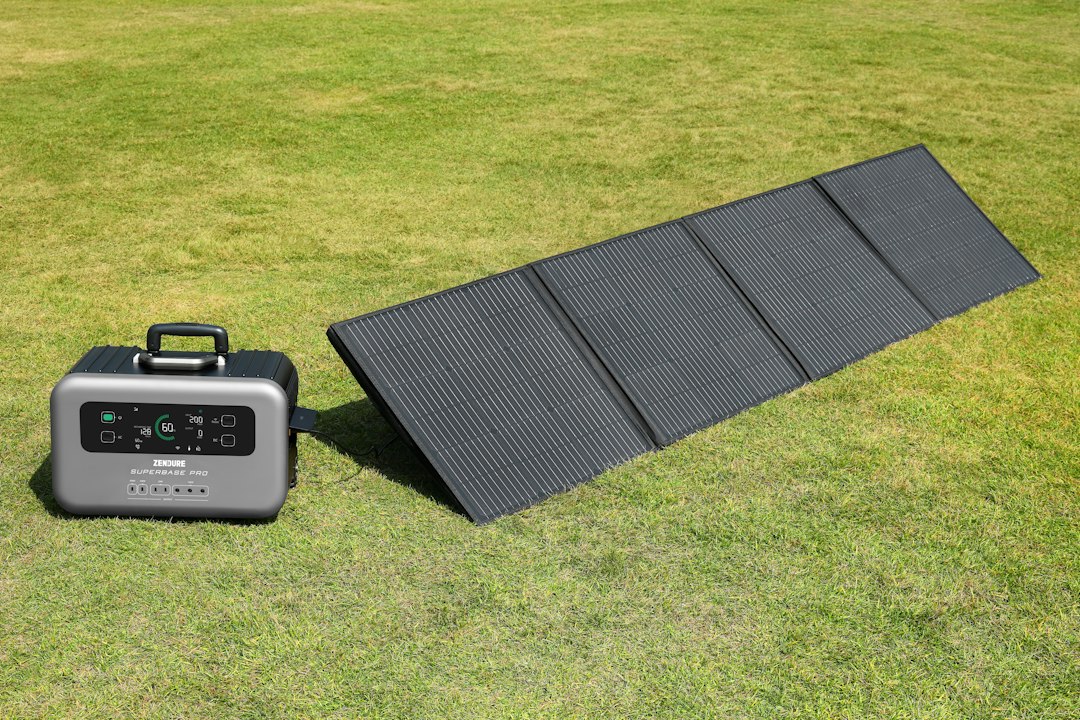
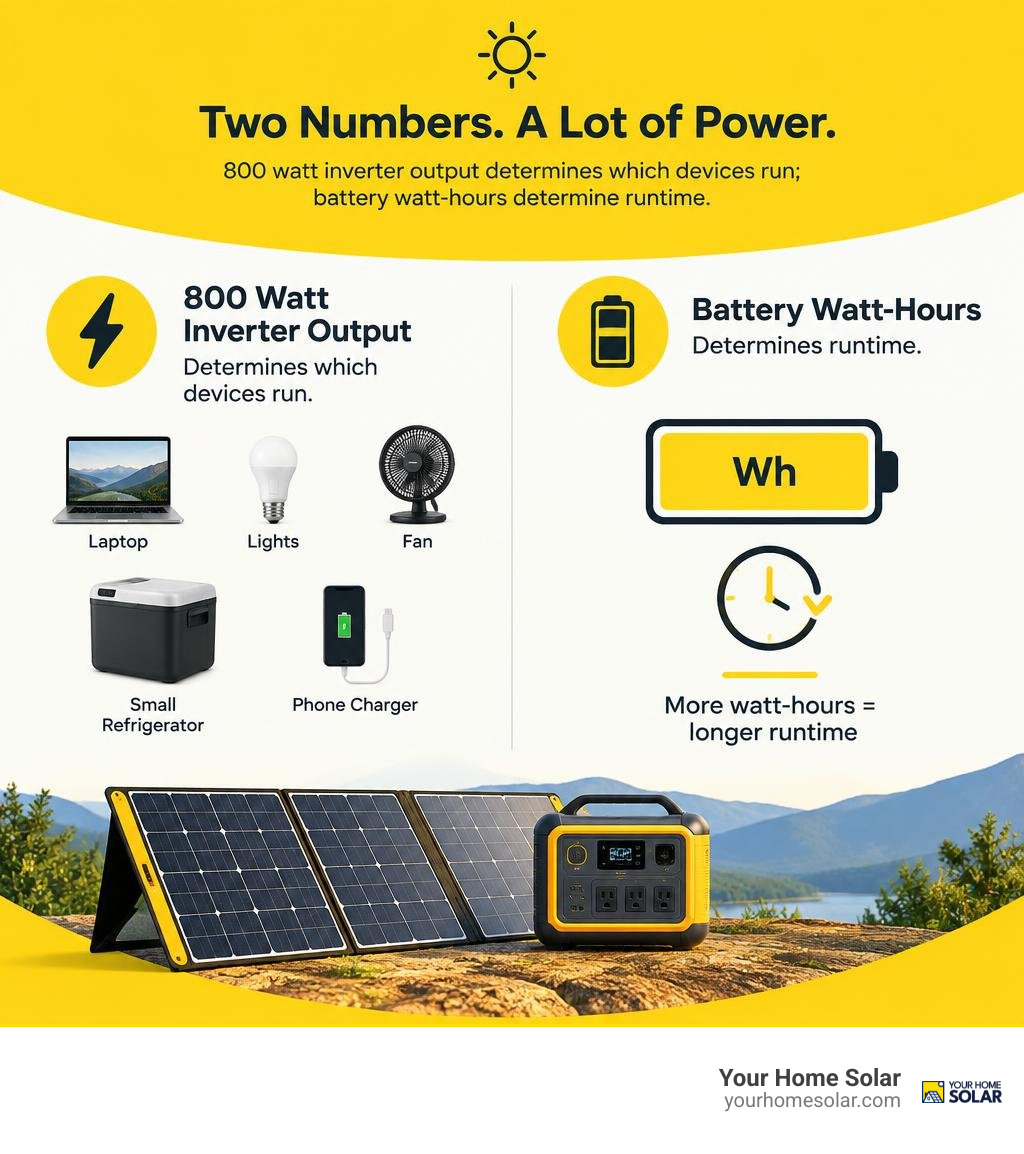
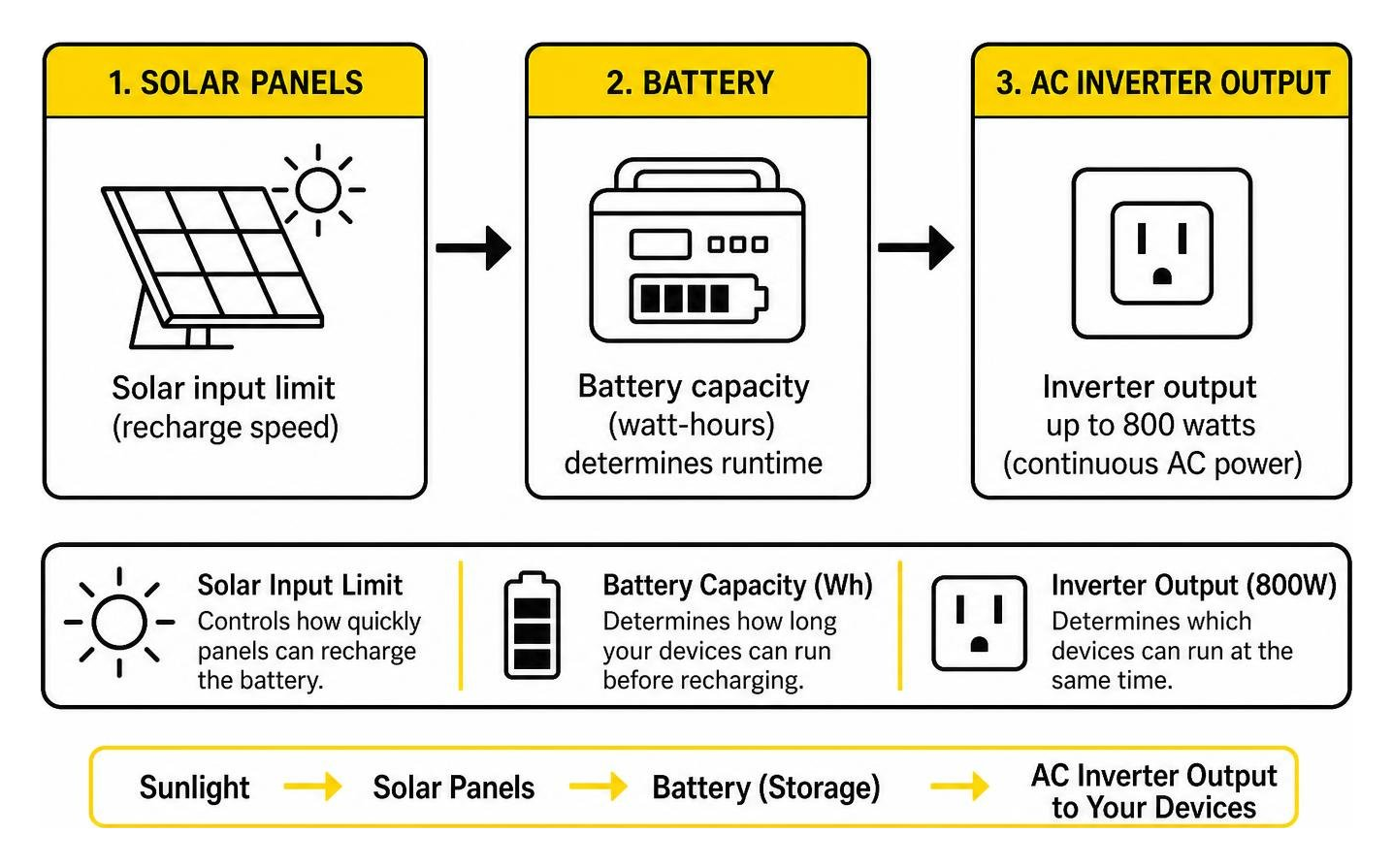
An 800 watt solar generator usually means a power station that can supply up to 800 watts of continuous AC power. It can run many small essentials, such as a laptop, lights, a fan, or some refrigerators. Check three numbers before buying: the inverter’s output for what it can run, the battery’s watt-hours for how long it can run, and the solar input limit for how quickly panels can recharge it. A product described as an 800-watt solar panel kit is different: panels alone cannot store power or run AC appliances.
I’m Ernie Bussell, founder of Your Home Solar in East Tennessee. My work in solar operations and home energy systems helps me explain how to size an 800 watt solar generator for the loads you need to protect.
Simple guide to 800 watt solar generator:
Understanding the 800 Watt Solar Generator: Inverter Output vs. Battery Storage
When you shop for a solar generator, the terminology can quickly get tangled. The key to making a smart investment is separating output power from stored energy capacity.
An inverter rated at 800 watts tells you the maximum continuous flow of electricity the unit can deliver at any single moment. This dictates whether a device will turn on and stay on. Conversely, battery capacity—measured in watt-hours (Wh)—dictates how long that device can operate before the generator needs recharging.
Understanding 120 volt solar generators powering your appliances anywhere starts with recognizing that an 800W inverter is often paired with a battery ranging from 512Wh to 1,024Wh. If you run an 800W load on a 512Wh battery, the battery will deplete in about 35 minutes due to inverter efficiency losses. However, if you run a modest 50W load on that same battery, you can enjoy roughly 8 to 9 hours of uninterrupted runtime.
Modern units utilize pure sine wave inverters. Unlike modified sine wave units that produce choppy electrical waves, pure sine wave power replicates standard household grid electricity. This protects sensitive electronics such as laptops, CPAP motors, and audio equipment from overheating or erratic behavior. For those looking at extended off-grid living, exploring using 800 watts of portable solar to charge house batteries offers great insight into keeping storage systems topped off.
What an 800 Watt Solar Generator Can Actually Power
An 800-watt power station occupies a practical sweet spot for outdoor recreation, tailgating, and essential storm backup. While it will not power an electric range or central HVAC unit, it handles everyday personal electronics, communications gear, and compact cooling systems with ease.
| Appliance / Device | Running Wattage | Startup Surge | Estimated Runtime (512Wh Battery) | Notes |
|---|---|---|---|---|
| Smartphone | 10W–18W | 0W | 25–35 full charges | Best charged via direct USB-C ports |
| Laptop Computer | 45W–65W | 0W | 7–9 hours | Direct DC charging minimizes conversion loss |
| LED Camping/Home Light | 10W | 0W | 40+ hours | Excellent for overnight emergency illumination |
| 12V Portable Car Fridge | 40W–60W | 80W | 12–18 hours | Cycles intermittently once cooled |
| CPAP Machine (No Heater) | 30W–40W | 0W | 10–12 hours | Runs through the night without humidification |
| 50-inch LED Television | 60W–100W | 0W | 4–6 hours | Great for weather updates during outages |
| Cordless Tool Battery Charger | 80W–120W | 150W | 3–4 battery cycles | Keeps essential field drills ready |
| High-Efficiency Refrigerator | 100W–200W | 600W–1,200W | 3–5 hours (active duty) | Dependent on compressor surge compatibility |
Continuous Output, Surge Wattage, and Inverter Limits
Every electrical appliance falls into one of two categories: resistive loads or inductive loads.
Resistive devices, like LED bulbs or simple charging bricks, consume a steady amount of power from the moment you turn them on. Inductive devices, including anything with a motor or compressor (such as a mini-fridge, blender, or power drill), demand a massive spike of energy for a split second to get internal components moving. This initial burst is known as starting current or surge wattage.
An 800W power station typically features a surge ceiling of 1,200W to 1,600W. If an appliance’s startup surge exceeds the inverter’s peak threshold, the unit’s internal protection activates, shutting down the AC output immediately to protect delicate circuits. To maintain long-term reliability and avoid thermal throttling during warm East Tennessee summers, keep your continuous operating load around 600W to 650W.
Solar Panel Array Sizing and Charging Speed for 800W Systems
A solar generator is only as reliable as your ability to replenish its cells. While wall outlets provide rapid AC charging, harvesting sunlight gives you true off-grid independence.
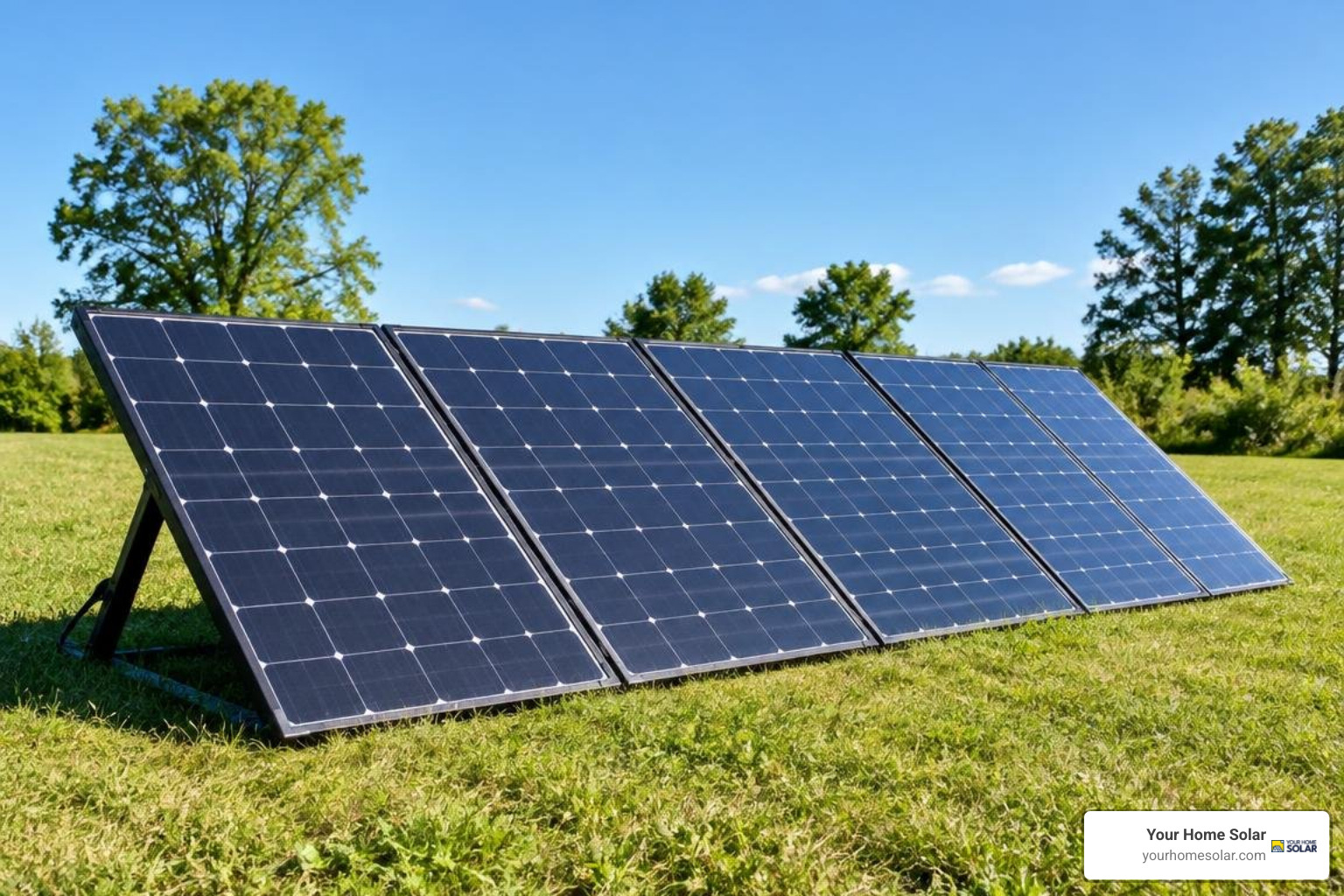
When selecting panels, you must balance solar array wattage with your generator’s built-in charge controller limits. Small-to-medium power stations often accept between 200W and 500W of direct DC solar input, while larger setups can take an entire 800-watt solar panel array. Understanding portable solar panels your ultimate guide to off grid power will ensure you select panels with matching voltage ranges.
Advanced stations use Maximum Power Point Tracking (MPPT) charge controllers. MPPT controllers monitor solar panel output in real time, adjusting voltage and current to squeeze the maximum possible wattage out of your array under changing atmospheric conditions.
Monocrystalline Efficiency and Weather Performance
Modern portable arrays primarily use premium monocrystalline silicon cells. Monocrystalline panels deliver higher conversion efficiency—frequently reaching between 22.4% and 23%—meaning you generate more electricity per square foot of surface area compared to older polycrystalline alternatives.
In real-world settings across Knoxville and Sevier County, solar panels rarely output 100% of their lab-tested nameplate rating. Atmospheric haze, high ambient heat, and minor cloud cover reduce performance. A 200W panel typically yields between 130W and 160W of active power under direct midday sun. You can optimize output by adjusting kickstand angles between 40 and 90 degrees throughout the day to track the sun’s trajectory.
Optimizing Solar Input for an 800-Watt Solar Generator
To connect multiple panels safely, verify both open-circuit voltage (Voc) and short-circuit current (Isc) limits:
- Wiring in Series: Connects the positive terminal of one panel to the negative terminal of the next. This increases voltage while amperage stays constant. Keep total string voltage safely below your power station’s maximum DC input limit.
- Wiring in Parallel: Connects positive-to-positive and negative-to-negative using branch connectors. This increases amperage while maintaining baseline voltage, which is ideal if your station has a lower maximum voltage limit.
- Cables and Connectors: Industry-standard MC4 connectors offer waterproof, secure connections between panels, easily adapting to XT60 or DC inputs with heavy-gauge cabling to minimize line loss.
Sizing Your Power Needs: Calculating Battery Capacity and Runtime
Running out of power unexpectedly is frustrating. Sizing your system accurately requires basic energy arithmetic to prevent surprises during an emergency blackout.
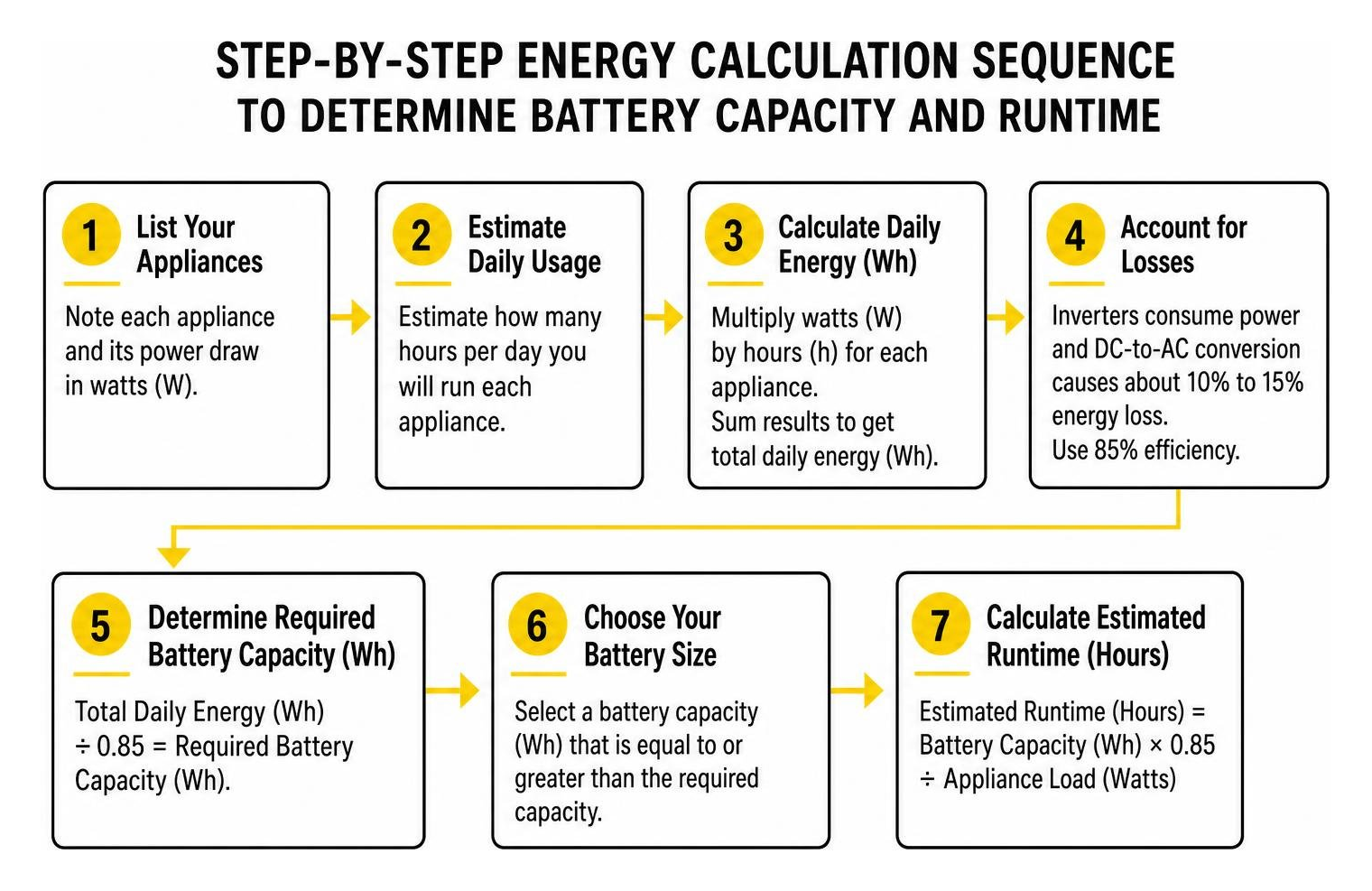
A thorough look at beyond the grid how solar battery banks keep your lights on shows that total capacity is only part of the equation. Inverters consume baseline electricity just to stay powered on (internal self-consumption), and DC-to-AC conversion results in roughly 10% to 15% energy loss as heat.
To calculate realistic runtimes, multiply the battery’s watt-hour rating by 0.85 to account for conversion losses, then divide that number by the appliance’s running wattage. For example, a 512 watt-hour battery powering a 60-watt load would run for roughly 7 to 8 hours.
For deeper information on balancing battery reserves with household loads, consult the federal guidance on battery power for your residential solar electric system.
Estimating Device Watt-Hours and Headroom
- Audit Your Must-Have Appliances: Record the continuous running wattage found on each device’s manufacturer label.
- Account for Duty Cycles: Refrigerators and cooling units cycle on and off; an appliance rated at 150W might only run for 20 minutes per hour once target temperatures are established.
- Incorporate Safety Headroom: Add a 20% to 30% capacity safety cushion to prevent premature battery shutdown.
- Prioritize Native DC Ports: Power phones, mobile hotspots, and laptops through direct USB-C PD or 12V barrel ports to bypass inverter conversion losses entirely.
Battery Chemistry: LiFePO4 vs. Standard Lithium-Ion
Battery chemistry plays a major role in how many years of service your generator provides.
- Lithium Iron Phosphate (LiFePO4 / LFP): The modern gold standard. LiFePO4 cells withstand over 3,000 to 4,000 full charge-and-discharge cycles before dropping to 80% original capacity. That equates to roughly 10 years of consistent daily use. They offer exceptional thermal stability and resist thermal runaway, even in rugged, high-heat environments.
- Standard Lithium-Ion (NMC): While slightly lighter and more compact, traditional NMC batteries generally degrade after 500 to 800 cycles. If you plan to rely on your solar generator for regular camping or annual storm preparedness, LiFePO4 chemistry is the superior investment.
Portability, Durability, and Integration Considerations
An 800W solar generator is easy to move where you need it. Unlike heavy commercial setups, 800W power stations generally weigh between 13 and 17 pounds, making them light enough to carry in one hand.
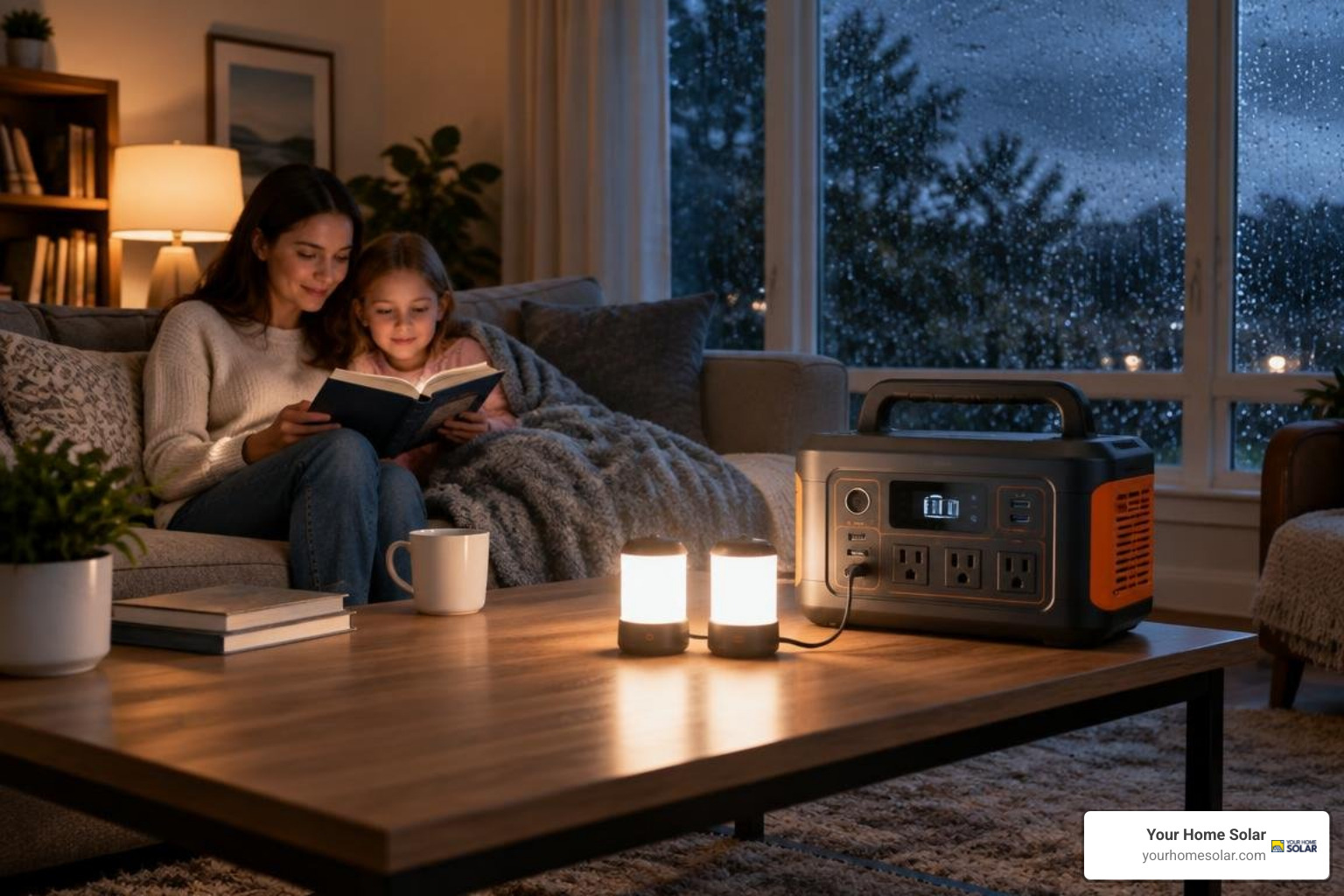
Reviewing our in depth guide to portable solar systems highlights how vital ergonomic handles, drop-resistant enclosures, and compact dimensions are for van life, backyard projects, and camping across the Great Smoky Mountains.
Weatherproofing and Ingress Protection Ratings
Outdoor use exposes hardware to dew, rainfall, and fine dust. When selecting folding panels to pair with your generator:
- Look for solar panel arrays with an IP67 or IP68 waterproof rating, which prevents damage from sudden downpours or heavy moisture.
- Keep the main power station dry. Power stations feature active cooling fans and open ventilation ports, meaning they should be sheltered inside a tent, camper, or vehicle during severe weather.
- Inspect connector pins and rubber seals regularly to prevent corrosion and maintain solid electrical contact.
Off-Grid Integration and Home Backup Compatibility
If your goal is storm resilience, an 800W power station serves as an agile first line of defense. Setting up an emergency home power station allows you to keep routers, mobile devices, and medical gear running when utility lines fail.
Many units offer Uninterruptible Power Supply (UPS) or Emergency Power Supply (EPS) modes with switchover times under 20 milliseconds. By keeping the unit plugged between your wall outlet and critical gear (like a desktop computer or aquarium filter), the generator automatically takes over the load without interrupting operation if the grid cuts out.
For broader home resilience, smaller generators complement whole-home solar and backup generator configurations by handling localized, portable tasks without burning valuable central reserves.
Frequently Asked Questions About 800W Solar Systems
Can an 800W solar generator run a full-size household refrigerator?
Yes, provided the refrigerator is an efficient, modern Energy Star model and its compressor startup surge stays within the generator’s surge capacity (typically 1,200W to 1,600W). However, because a full-sized refrigerator requires intermittent bursts of power throughout the day, a standard 512Wh battery will only sustain it for roughly 3 to 6 hours unless continuously supported by solar charging or supplemental battery packs.
How many solar panels are needed to charge an 800W portable generator?
Most portable power stations in the 800W class have built-in charge controllers that accept between 100W and 200W of direct solar input. Under clear skies, a single 200W foldable panel (or two 100W panels connected in parallel or series) will fully recharge a 512Wh battery in approximately 2.5 to 4 hours.
Can an 800W power station run sensitive medical equipment overnight?
Yes. An 800W unit equipped with a pure sine wave inverter safely powers CPAP machines, oxygen concentrators, and biometric monitors. To maximize runtime overnight, turn off heated humidifiers and heated hose lines, or use a dedicated 12V DC power cord rather than the AC wall plug. This setup easily yields 8 to 12 hours of quiet, emission-free operation.
Conclusion
An 800-watt solar generator offers an ideal balance of portability, affordability, and practical output. It supplies clean, silent electricity for outdoor adventures, field work, and short-term emergency backup. By understanding the distinction between inverter wattage and battery watt-hours, pairing your station with efficient monocrystalline panels, and selecting long-lasting LiFePO4 cells, you can secure dependable power wherever you go.
For homeowners seeking total energy security across East Tennessee—from Maryville and Knoxville to Sevierville and Johnson City—portable generators are an excellent entry point. If you want to expand your independence with whole-home battery backup, rooftop solar, or transfer switches, explore our comprehensive guide to off-grid solar panel systems to discover tailored solutions designed to protect your home through any storm.