Why Backup Power Matters for Tennessee Homeowners
Home generators Tennessee residents rely on provide automatic backup power when severe weather knocks out the grid. If you’re researching backup power options, here’s what you need to know:
Quick Overview: Home Generators in Tennessee
- What they are: Permanently installed systems that automatically restore power during outages
- How they work: Detect power loss, start within seconds, and run on natural gas or propane
- Best for: Whole-home protection during ice storms, summer thunderstorms, and extended outages
- Key brands: Generac, Kohler, and Cummins dominate the Tennessee market
- Typical sizes: 18kW for smaller homes (1,000-2,500 sq ft), 26kW for mid-size homes (2,500-4,000 sq ft), 48kW for larger properties
- Installation timeline: 30-90 days with professional installation required
- Maintenance: Service every 6 months to ensure readiness
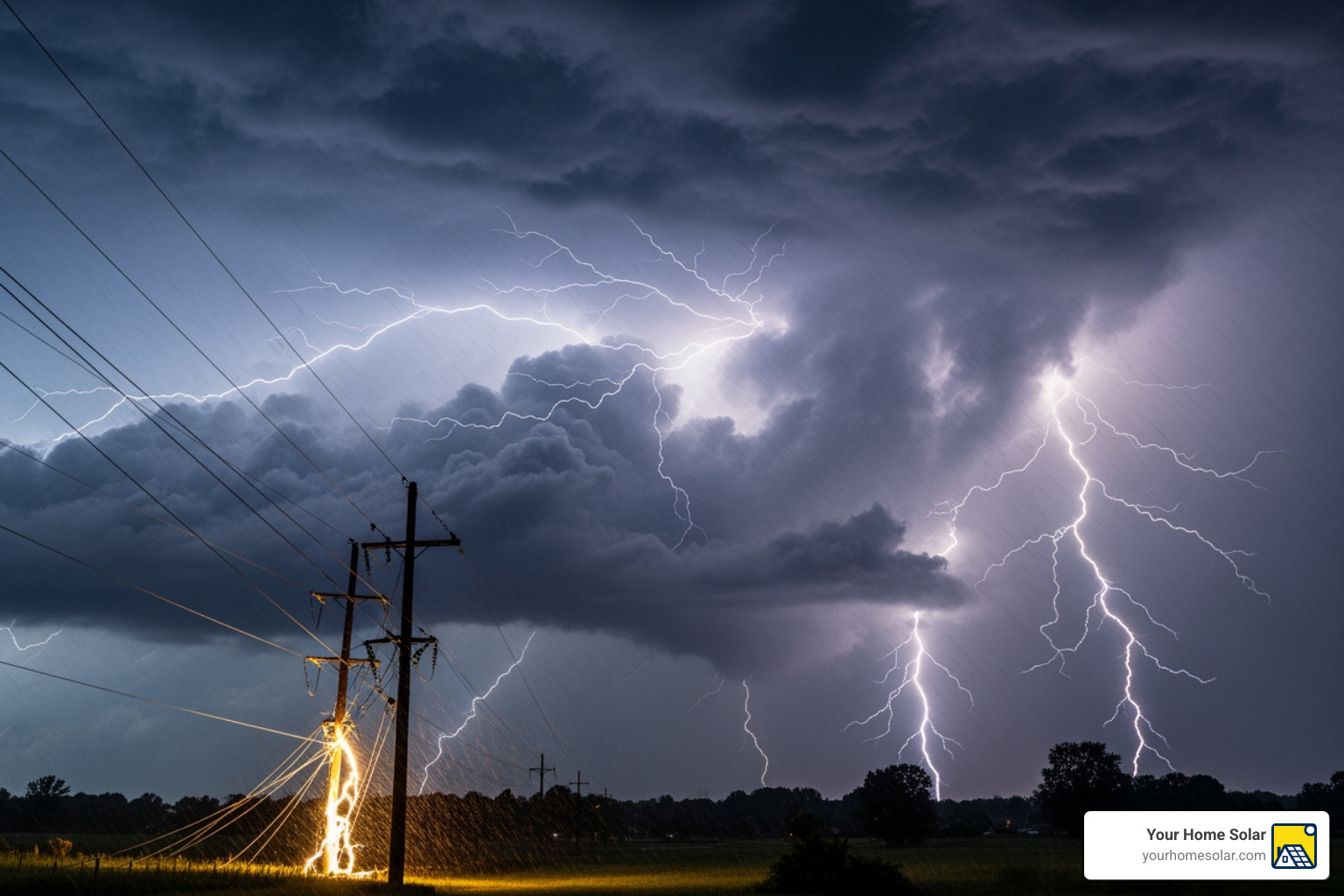
Power outages have become increasingly common in Tennessee. Ice storms can leave homes dark and cold for days. Summer thunderstorms regularly take down power lines. And when the grid fails, families face spoiled food, failed sump pumps, and uncomfortable—sometimes dangerous—conditions.
A standby generator solves this problem by detecting outages instantly and restoring power automatically. Unlike portable units that require manual setup and refueling, these permanently installed systems connect directly to your home’s electrical panel and fuel supply. They sit outside like an air conditioning unit and start working within seconds of detecting a problem.
The typical Tennessee homeowner choosing a backup generator wants to protect essential systems: refrigeration, heating and cooling, well pumps, medical equipment, and security systems. Larger systems can power an entire home as if nothing happened.
I’m Ernie Bussell, founder of Your Home Solar, and I’ve spent years helping East Tennessee homeowners understand their energy options—including backup power solutions like home generators Tennessee families depend on during storms. My background in operations management within the power industry gives me unique insight into what works best for our region’s specific weather challenges and power reliability concerns.
Understanding Home Standby Power Systems
When we talk about home generators Tennessee homeowners can count on, we are usually referring to “standby” units. These aren’t the loud, rattling boxes you see at a construction site or a tailgate. A standby generator is a sophisticated, permanently installed appliance that lives outside your home, much like a central air conditioning unit.

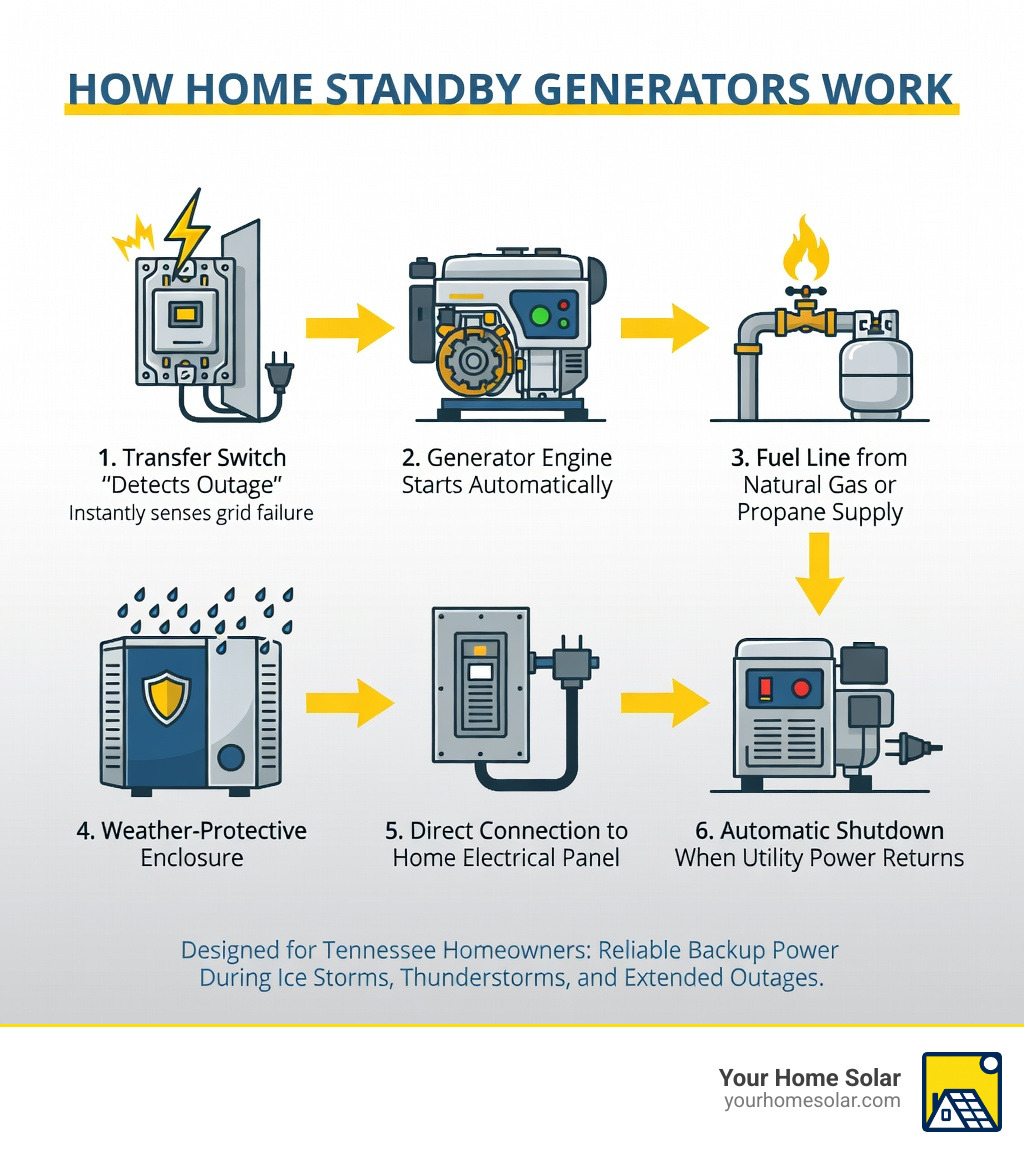
So, how does a home backup generator work? It’s a bit like having a silent sentry guarding your electrical panel. The system is constantly monitoring the utility power coming into your home. When it detects a drop in voltage or a complete blackout, it kicks into gear. Within seconds, the engine starts, and an Automatic Transfer Switch (ATS) safely disconnects your home from the utility grid and connects it to the generator.
This process is entirely automatic. You don’t have to run outside in the rain, pull a starter cord, or mess with messy gasoline cans. How a home backup generator works is designed to be seamless, providing power until the utility company fixes the lines, whether that takes two hours or two weeks.
Key Components of a Standby System
To understand these systems, it helps to know what’s under the hood:
- The Engine: Typically powered by natural gas or liquid propane (LP), these engines are built for durability and can run for extended periods.
- The Alternator: This is the part that actually produces the electricity.
- The Automatic Transfer Switch (ATS): The “brain” of the system that handles the transition between grid power and generator power.
- The Enclosure: A weather-protective, often sound-insulated shell that protects the unit from Tennessee’s humidity and storms.
How Standby Units Differ from Portables
While portable generators are great for camping or small DIY projects, they often fall short during a major Tennessee ice storm. Portable units require you to be home to set them up, they need constant refueling with gasoline, and they often use extension cords that can be a tripping hazard or a fire risk.
In contrast, a standby unit offers a permanent installation and a seamless transition. Because they run on your home’s existing natural gas or propane lines, you never have to worry about running out of fuel in the middle of a blizzard. We often find ourselves Comparing Solar with Traditional Gas Generators for East Tennessee Homes because both offer that “set it and forget it” reliability that portables simply can’t match.
Why Home Generators Tennessee Residents Need Protection
Tennessee is a beautiful place to live, but our weather can be unpredictable. From the Great Smoky Mountains to the valleys of Knoxville and the Tri-Cities, we face a unique set of meteorological challenges that make reliable backup power a necessity rather than a luxury.
The Threat of Ice and Wind
In East Tennessee, winter often brings ice storms. Just a quarter-inch of ice accumulation can weigh down tree limbs and power lines enough to cause widespread outages. When the temperature drops below freezing and the lights go out, your home’s furnace—even if it’s gas-powered—won’t run without electricity to power the blower motor and sensors. Home generators Tennessee residents install ensure that your family stays warm when the grid fails.
Summer isn’t much easier. Intense thunderstorms can roll through the Tennessee Valley, bringing high winds that topple aging utility poles. According to industry data, How a home backup generator helps during outages goes beyond just keeping the lights on; it’s about maintaining your lifestyle and protecting your property.
Critical Home Systems
For many of our neighbors in places like Maryville or Sevierville, a power outage is more than an inconvenience. It can be a crisis:
- Medical Equipment: For those relying on oxygen concentrators or refrigerated medications, power is a lifeline.
- Food Preservation: A single outage can lead to hundreds of dollars in spoiled groceries.
- Sump Pumps: In areas prone to heavy rain, a power outage often means a flooded basement if the sump pump loses power.
- Home Security: Keeping your cameras and alarm systems active provides peace of mind when the neighborhood goes dark.
Sizing and Selecting Your Backup Power System
One of the most common questions we hear is: “What size generator do I actually need?” Sizing is critical. If a generator is too small, it will stall under heavy loads; if it’s too large, you’re paying for capacity you’ll never use.
Sizing Home Generators Tennessee for Your Square Footage
Generator capacity is measured in kilowatts (kW). To determine your needs, you have to decide if you want to power your entire home or just the “essentials.”
| Home Square Footage | Recommended kW Rating | Typical Coverage |
|---|---|---|
| 1,000 – 2,500 sq ft | 18kW | HVAC (up to 5 tons), lights, fridge, security |
| 2,500 – 4,000 sq ft | 26kW | Whole home coverage for most modern homes |
| 4,000+ sq ft | 48kW+ | Large estates, multiple AC units, luxury appliances |
For many residents in Knoxville or Johnson City, a 26kW unit is the “sweet spot.” It provides enough “oomph” to run the air conditioning, the electric oven, and the water heater all at once. If you are looking for a more budget-friendly option, an 18kW system can be configured to power your “power essentials”—the items you absolutely can’t live without.
Choosing the Right Fuel Source
Most home generators Tennessee families choose run on either natural gas or liquid propane (LP).
- Natural Gas: If your home already has a gas line for your stove or furnace, this is usually the most convenient option. It provides an unlimited fuel supply.
- Propane: For our neighbors in more rural parts of Blount or Sevier County who don’t have natural gas service, a large propane tank is the solution. A 22kW generator might burn 2-3 gallons of propane per hour under heavy load, so we recommend having at least a week’s supply on hand.
Getting the fuel line right is a job for the pros. You can find More info about generator installation in Knoxville to see how these connections are safely integrated into your home’s infrastructure.
Professional Installation and Maintenance in Tennessee
Installing a standby generator is not a DIY weekend project. It involves high-voltage electricity, plumbing for gas lines, and local building permits. In Tennessee, local codes are strict to ensure your home doesn’t “backfeed” power into the grid, which could be fatal for utility workers trying to restore power.
The Installation Process
When we handle a Generac Generator Installation in Knoxville, the process typically follows these steps:
- Site Preparation: We level a spot near your gas meter or electrical panel and often pour a concrete pad or use a pre-cast base.
- Placement: The unit is secured to the base.
- Electrical Connection: The Automatic Transfer Switch is installed next to your main breaker panel.
- Fuel Connection: A licensed plumber runs the gas or propane line to the unit.
- Testing: We simulate a power outage to ensure everything triggers exactly as it should.
Safety and Maintenance for Home Generators Tennessee
Once your generator is installed, it needs a little TLC to stay “storm-ready.” Think of it like a car that sits in the garage; you wouldn’t want to drive it across the country without checking the oil first.
- 6-Month Service: Most manufacturers recommend a professional inspection every six months. This includes checking the battery, spark plugs, and air filter.
- Oil Changes: Just like your car, the engine needs fresh oil. Most units require an oil change after every 100-200 hours of run time.
- Battery Health: The battery is what starts the engine. If it’s dead, the generator won’t start when you need it most.
- Warranty: To ensure you’re protected, you should Register your equipment for warranty coverage immediately after installation. Many top brands offer 5 to 10-year warranties that provide incredible peace of mind.
If you ever lose your physical paperwork, you can usually find your Owner’s manual and product support online using your unit’s serial number.
Frequently Asked Questions about Home Generators Tennessee
How much does a whole home generator cost in Tennessee?
The cost varies based on the size of the unit and the complexity of the installation. A basic 13kW system might start around $4,000 for the unit alone, while a fully installed 26kW system can range from $10,000 to $15,000. Many homeowners opt for financing, with payments as low as $125 to $190 per month. Considering that a single major outage can cause thousands in property damage, many see it as a wise investment in their home’s value.
Can I install a standby generator myself?
We strongly advise against it. Between the electrical wiring and the gas plumbing, there are too many variables that can lead to fire, explosion, or carbon monoxide poisoning if handled incorrectly. Furthermore, DIY installation often voids the manufacturer’s warranty and may not meet Tennessee’s local building codes.
How long can a home generator run continuously?
As long as they have fuel and the oil levels are maintained, these units are designed to run for days or even weeks. Most manufacturers recommend shutting the unit down for a few minutes every 24 hours to check the oil level during an extended outage.
Conclusion
At Your Home Solar, we believe that every Tennessee family deserves to feel safe and comfortable in their own sanctuary, regardless of what the weather is doing outside. Whether you are in the heart of Knoxville or the quiet hills of Greene County, we are here to provide the trusted expertise you need for a reliable backup power solution.
While home generators Tennessee residents use are a fantastic solution, they aren’t the only way to protect your home. For some, Why solar panels are a great alternative for emergency power is a better fit, especially when paired with battery storage.
If you’re ready to stop worrying about the next storm cloud on the horizon, we invite you to Find the best solar and backup power solutions in Tennessee and reach out to us for a tailored assessment. We’re proud to serve East Tennessee—from Oak Ridge to Johnson City—ensuring our neighbors are never left in the dark.