Is Installing Solar Power Worth It for Your Home?
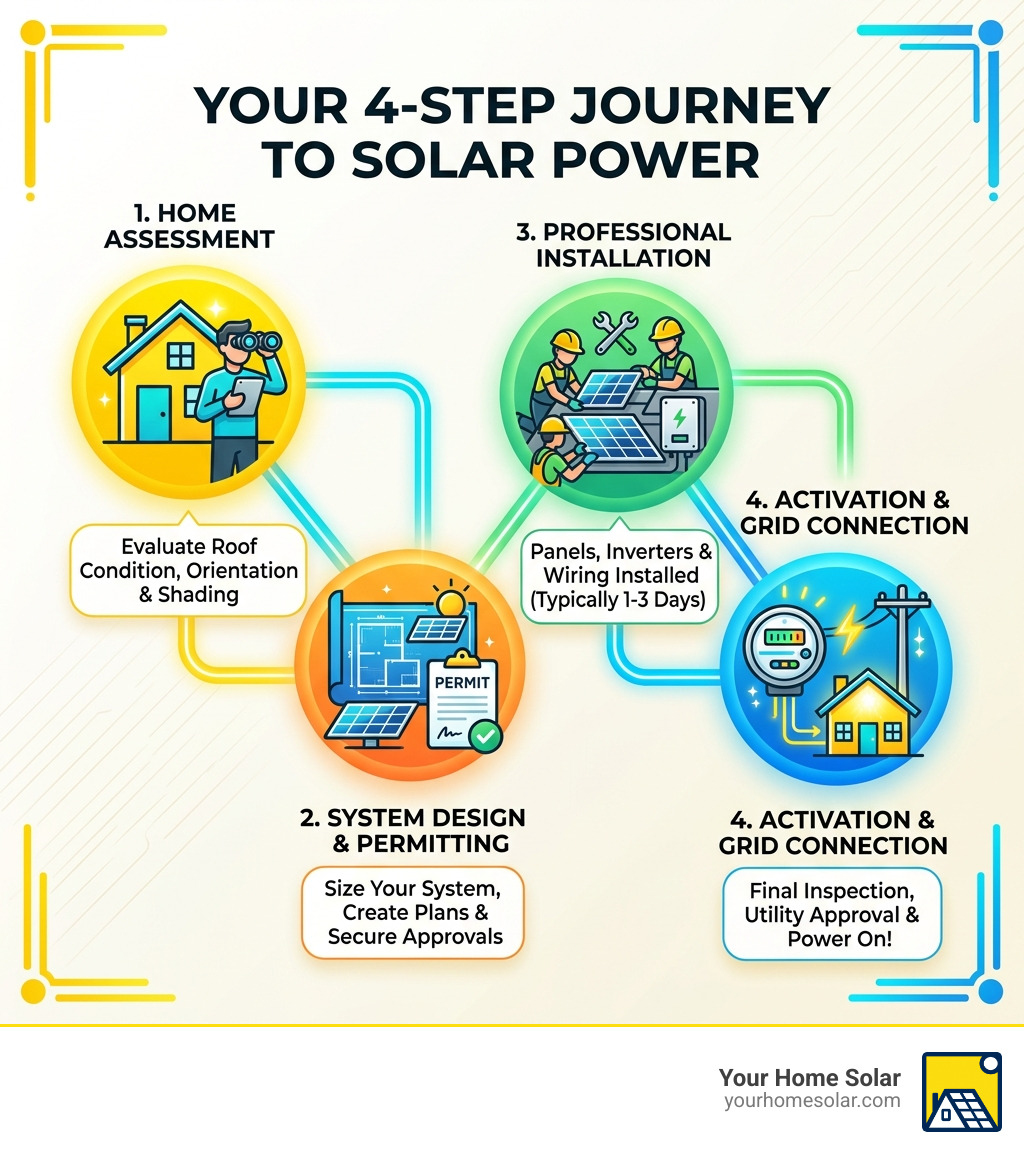
Installing solar power on your home is more straightforward than most people think. Here is a quick overview of what the process involves:
- Evaluate your home – Check roof condition, orientation, and shading
- Size your system – Review your electricity bills to determine how many panels you need
- Choose your financing – Cash, loan, lease, or Power Purchase Agreement (PPA)
- Get permits – Building permit from your city/county plus an interconnection agreement with your utility
- Physical installation – A crew installs your panels, inverters, and wiring (typically 1-3 days)
- Activation – Final inspection and Permission to Operate (PTO) from your utility
The U.S. has now surpassed 5 million solar installations, with 97% on residential rooftops. Millions of American homeowners are already generating their own power daily, cutting their electricity bills and protecting themselves from rising utility rates.
But going solar still raises real questions. How much does it cost? Can you do it yourself? What happens during a power outage? This guide walks you through every step clearly and honestly, so you can make a confident decision.
I’m Ernie Bussell, founder and CEO of Your Home Solar, and my background spans the U.S. Navy, a decade in education, and several years leading operations for a $40 million solar installation company — all experience that directly shapes how I guide homeowners through the decision to install solar power. I’ve built Your Home Solar on one principle: you deserve straight answers, not a sales pitch.
Handy install solar power terms:
Evaluating Your Home for Solar Suitability
Before you start picking out shiny new panels, we need to make sure your home is actually a good candidate. Not every roof is ready for a “solar makeover.” In East Tennessee, from the hills of Sevierville to the neighborhoods of Knoxville, we look at four main factors: roof age, orientation, shading, and local restrictions.
First, let’s talk about your roof’s age. If your roof is more than 10 to 15 years old, or if you know it will need replacing within the next five years, you should handle the roof work first. Installing solar power involves bolting racking systems into your rafters. If you have to take the panels off in three years to replace shingles, you’ll end up paying for the installation twice. We often recommend combining a roof replacement with your solar project to save on labor and ensure everything is watertight from day one.
Next is orientation. In the Northern Hemisphere, south-facing roofs are the “gold standard.” They catch the most direct sunlight throughout the day. However, don’t lose hope if your roof faces east or west; these orientations are still highly viable and can often produce enough energy to make the investment worthwhile. Ideally, your roof should have a tilt between 15 and 40 degrees.
Shading is the silent “solar killer.” Even a small amount of shade from a beautiful oak tree in Maryville or a neighboring building in Johnson City can significantly drop your system’s output. We use professional shading analysis tools to see how the sun moves across your property throughout the year. If your roof is too shaded, we might explore ground-mounted systems, which are common on larger properties in areas like Anderson or Roane County.
Finally, don’t forget about your Homeowners Association (HOA). While many states have “solar rights” laws that limit how much an HOA can restrict you, it’s always best to check your bylaws early. For more detailed help on this stage, check out Properly Sizing a Solar System for Your East Tennessee Home: Expert Tips and the Department of Energy’s guide on Planning a Home Solar Electric System.
Assessing Energy Consumption
To know how much solar you need, we have to know how much “juice” you use. We start by looking at your utility bills from the last 12 months. Why 12 months? Because your energy use in a humid Tennessee July is going to look very different from a chilly January in Kingsport.
We measure this in kilowatt-hours (kWh). Most homeowners aim for “100% offset,” meaning the system produces as much energy as the home consumes over a year. But we also have to look into the future. Are you planning to buy an electric vehicle (EV) in 2027? Are you thinking about switching from a gas furnace to an electric heat pump? These upgrades will increase your energy needs, and it is much easier (and cheaper) to “oversize” your system now than to try and add panels later.
The Financial Landscape of Solar in 2026
As of May 2026, the financial argument for solar has never been stronger. While the technology has improved, the average cost for a residential install solar power project typically falls between $15,000 and $30,000 before incentives.
The biggest “win” for your wallet is the Federal Residential Clean Energy Credit. For systems installed through 2032, you can claim a 30% federal tax credit on the total cost of your system. This isn’t just a deduction; it’s a credit against taxes you owe. If your system costs $25,000, that’s $7,500 back in your pocket. You can learn more about how to navigate these perks at Tax Credits & Incentives.
Another key factor is net metering. This is a billing mechanism where your utility company (like TVA or Knoxville Utilities Board) credits you for the excess electricity your panels send back to the grid. It’s like having a giant “energy bank.” When the sun is shining and you’re at work, your meter spins backward. At night, you use those credits to power your lights.
Comparison of Solar Financing Options in 2026
| Feature | Cash Purchase | Solar Loan | Lease / PPA |
|---|---|---|---|
| Upfront Cost | High | Low to Zero | Zero |
| Ownership | You own it | You own it | Third-party owned |
| Tax Credit | You keep it (30%) | You keep it (30%) | Installer keeps it |
| Maintenance | Homeowner’s responsibility | Homeowner’s responsibility | Installer’s responsibility |
| Total Savings | Highest | High | Moderate |
Long-term ROI and Property Value
Does installing solar power increase your home’s value? The data says yes. Studies show that solar-equipped homes often sell for 5-10% more than non-solar homes. Buyers love the idea of “locked-in” energy costs, especially as utility rates continue to climb.
Over a 25-year period, most homeowners save between $37,000 and $154,000. That’s a massive return on investment that beats most traditional savings accounts. For a deeper dive into local savings, see How to Save Big with Tennessee Solar Incentives.
How to Install Solar Power: The Step-by-Step Process
Once you’ve decided to move forward, the real fun begins. While the physical work only takes a few days, the administrative side requires some patience.
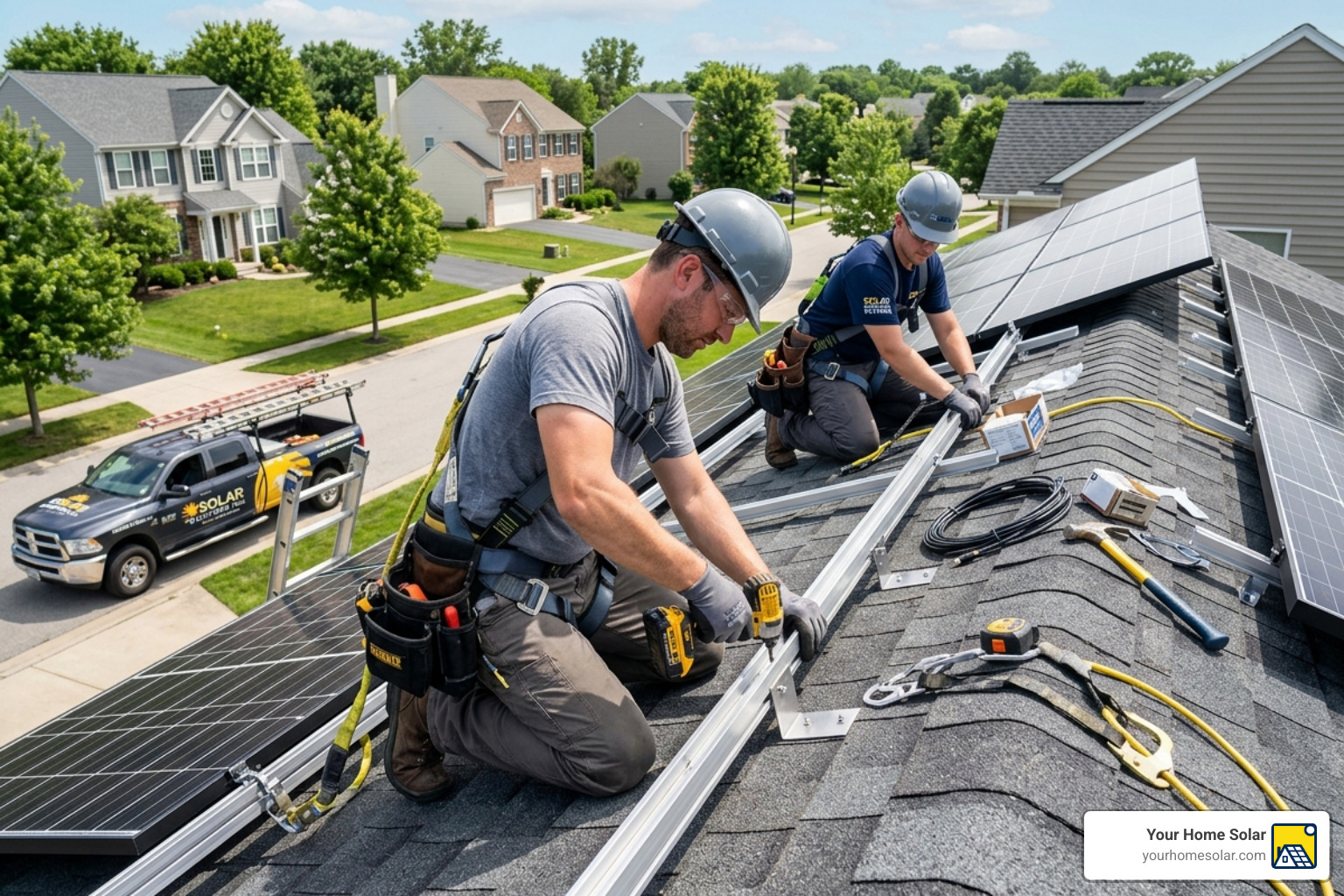
The process kicks off with a professional site assessment. An engineer will visit your home to verify the structural integrity of your roof and the capacity of your electrical panel. They’ll make sure your “gray box” can handle the incoming solar energy. After the assessment, a set of blueprints is created for your specific home.
Once the design is finalized and permits are in hand, we schedule the installation. We deliver the equipment—panels, racking, and inverters—and our crew gets to work. For a more granular look at the timeline, read A Practical Guide to the Solar Installation Process.
Essential Permits to Install Solar Power
You can’t just slap panels on a roof and call it a day; you need permission. This involves two main hurdles:
- Building Permits: Your local Authority Having Jurisdiction (AHJ)—whether that’s the city of Morristown or the Farragut building department—needs to ensure the system meets local safety and structural codes.
- Interconnection Agreement: Your utility company must approve the connection to the grid to ensure your system won’t cause issues for your neighbors’ power.
According to EnergySage, while the physical build is fast, permitting can take anywhere from three weeks to three months depending on how busy your local office is.
Choosing the Right Equipment to Install Solar Power
Not all solar equipment is created equal. In 2026, we primarily use monocrystalline panels because they offer the highest efficiency (often over 23%).
We also have to choose an inverter. While old-school string inverters are cheaper, we often recommend microinverters. These are small devices attached to each panel. This means if one panel is shaded by a stray chimney shadow, the rest of the system keeps pumping out power at 100%.
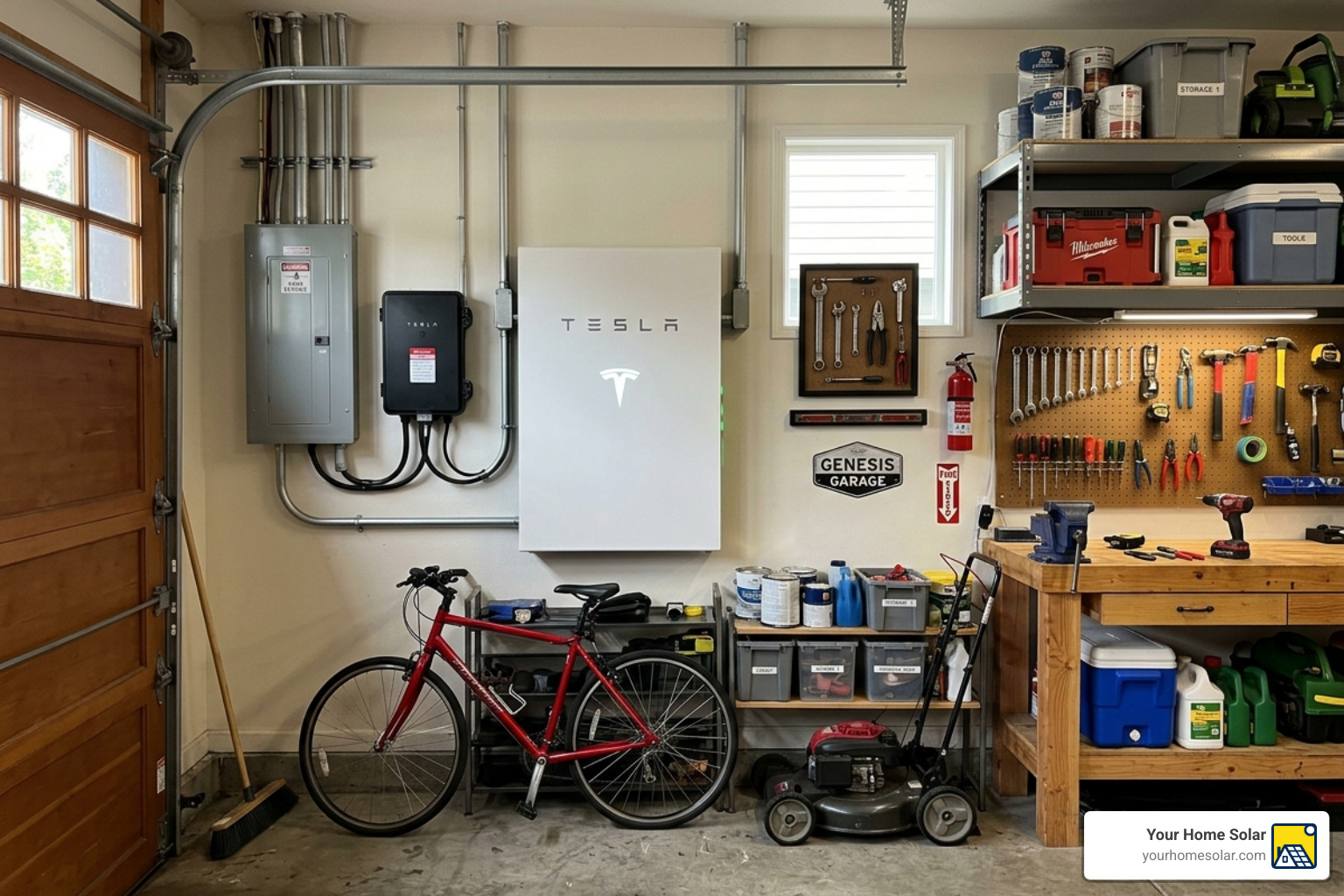
Finally, there’s battery storage. A battery allows you to store your own solar energy for use at night or during an outage. With “Storm Guard” technology, your battery can even track National Weather Service alerts and automatically charge itself to 100% if a big storm is heading toward East Tennessee.
DIY vs. Professional Installation: Risks and Rewards
The “Do It Yourself” spirit is strong in Tennessee, and we get asked all the time: “Can I just install solar power myself?”
The primary draw is the cost. A DIY installation can save you roughly $10,500 on a typical 6 kW system by eliminating labor costs. If you are a master electrician and a roofing expert, it’s a manageable project. However, for most people, the risks far outweigh the rewards.
Solar systems involve high-voltage DC electricity, which is significantly more dangerous than the AC power in your wall outlets. One wrong connection can lead to a fire or arc flash. Furthermore, you’ll be spending a lot of time on your roof, which carries its own set of safety hazards. We’ve seen many “DIY-gone-wrong” stories where homeowners ended up with persistent roof leaks because they didn’t flash the mounting points correctly. To help you spot potential red flags in the industry, check out our guide on Avoiding Solar Scams.
Warranty and Utility Compliance
This is where DIY gets really tricky. Most major solar panel and inverter manufacturers will void your warranty if the equipment isn’t installed by a certified professional. If a panel fails in year five, you’re on the hook for the full replacement cost.
Additionally, many local power companies in East Tennessee are very strict. If they find a system has been self-installed without the proper certifications, they may refuse to grant you an interconnection agreement or even disconnect your home from the grid for safety reasons.
When you hire a professional, you’re looking for NABCEP (North American Board of Certified Energy Practitioners) certification. Specifically, the PVIP (PV Installation Professional) tag is the gold standard. It ensures the person on your roof knows exactly how to meet the National Electrical Code. You can learn more about what to look for in our article Don’t Get Burned: How to Spot and Select Professional Solar Installers.
Post-Installation: Maintenance and Monitoring
Once the panels are up, you don’t just forget about them. Modern systems come with sophisticated monitoring apps. You can pull up your smartphone and see exactly how much energy your roof is producing in real-time. It’s actually quite addictive—you’ll find yourself checking it every time the sun comes out!
Maintenance is generally low, but not zero. While Tennessee rain does a decent job of rinsing off dust, you should periodically check for bird droppings or heavy pollen buildup. When cleaning, never use harsh chemicals or a pressure washer. We recommend using deionized water and a soft brush to prevent spotting and protect the glass coating.
System Activation and PTO
The day the crew finishes the physical installation is exciting, but you can’t flip the switch just yet. You have to wait for “PTO”—Permission to Operate.
After the build, your local city inspector and the utility company will perform a final walkthrough. They want to ensure the “kill switch” (the PV disconnect) works correctly so that utility workers are safe if they have to work on the lines nearby. This process typically takes 30 to 45 days. Once you get that golden email from the utility, you can officially start generating your own clean power.
Frequently Asked Questions about Solar Installation
Will my solar panels work during a power outage?
Standard grid-tied solar systems will not work during a power outage. This is a safety feature called “anti-islanding.” It prevents your panels from sending electricity back onto a downed line where a utility worker might be making repairs. If you want power during a blackout, you must install a battery backup system.
How long does the entire installation process take?
While the physical crew is only on your roof for 1 to 3 days, the entire journey—from your first consultation to flipping the switch—usually averages between three weeks and three months. Most of that time is spent waiting on paperwork, permits, and utility approvals.
Does solar installation require a new roof?
Not necessarily, but it’s about timing. If your roof is within 5 years of needing a replacement, we strongly recommend doing it before or during the solar install. Solar panels are designed to last 25 to 30 years; you want the roof underneath them to last just as long.
Conclusion
Installing solar power is one of the most rewarding upgrades you can make to your home. It provides energy security, increases your property value, and lets you take control of your monthly expenses. In East Tennessee, we have the perfect mix of sunshine and community support to make solar a “no-brainer” for many families.
At Your Home Solar, we pride ourselves on being your local experts. We don’t just sell panels; we design comprehensive energy solutions tailored to the unique needs of homes in Knoxville, Oak Ridge, and across the Tennessee Valley. Whether you’re interested in a simple grid-tied system or a complex off-grid setup with battery backups, we’re here to ensure you get a reliable, high-performing installation.
Ready to see if your home is a fit? Check out our Residential Solar Solutions Guide or contact us today for a free estimate. Let’s start your journey toward energy independence together.