Why a 240 Volt Charging Station Installation Makes Sense for East Tennessee Homeowners
240 volt charging station installation is the process of adding a dedicated Level 2 charging station to your home, allowing you to charge your electric vehicle 3-7 times faster than a standard 120V outlet. Here’s what you need to know:
Quick Installation Overview:
- Electrical Assessment – Verify your panel has capacity for a 40-50 amp circuit
- Choose Your Charger – Select between hardwired (7.2-11.5 kW) or plug-in (NEMA 14-50) options
- Hire a Licensed Electrician – Required for safe installation and code compliance
- Obtain Permits – Most jurisdictions require electrical permits and final inspection
- Installation Cost – Expect $1,500-$3,000 total (hardware + installation)
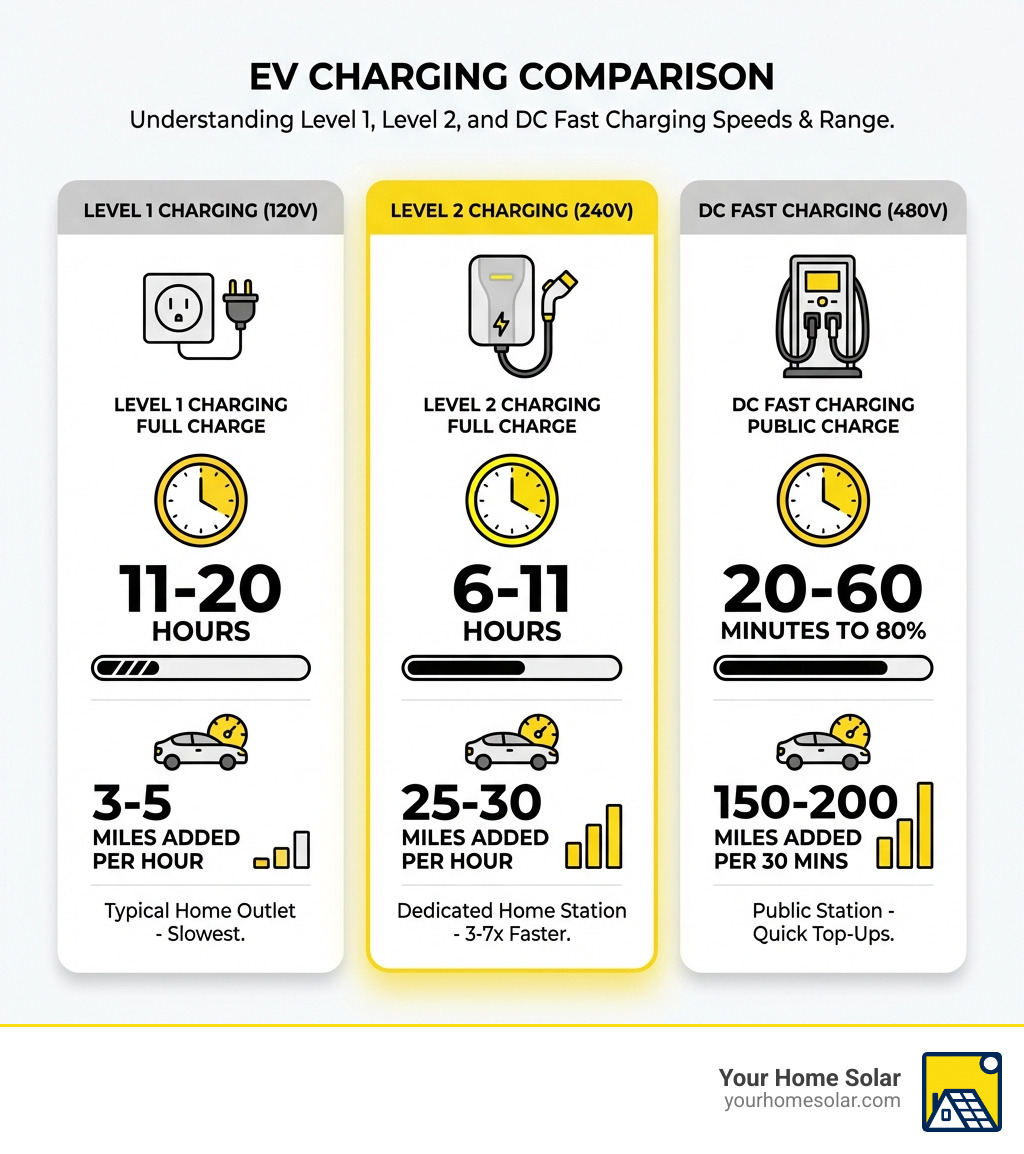
- Charging Time – Full charge in 6-11 hours vs. 11-20+ hours with Level 1
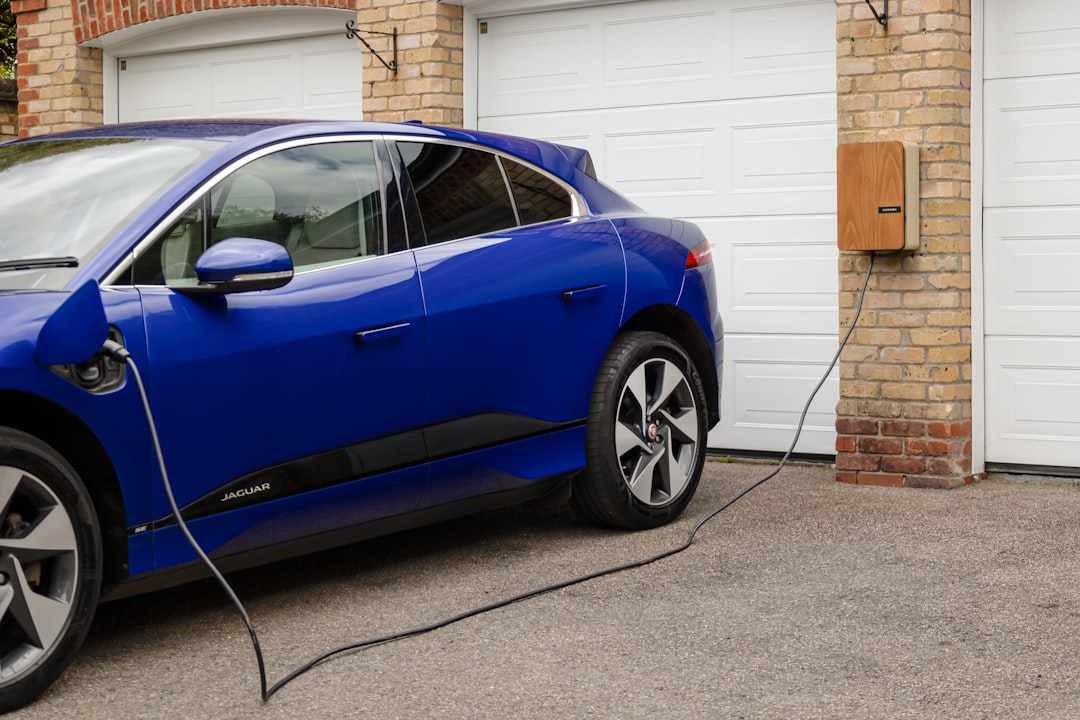
Most EV owners choose a 240 volt charging station installation because it transforms the charging experience. Like charging your phone overnight, you simply plug in when you get home and wake up to a fully charged vehicle. The typical 7.2 kW (30 amp) home charging station delivers enough power to add about 25-30 miles of range per hour of charging—plenty for the average daily drive of 55 kilometers.
The installation requires a dedicated 240-volt circuit, similar to what powers your electric dryer or oven. Your electrical panel must have sufficient capacity, typically requiring a 40-50 amp circuit breaker and #8 or #6 AWG copper wiring. If your panel is at full capacity, you’ll need either a load management device (charge controller) or a panel upgrade before installation can proceed.
I’m Ernie Bussell, CEO of Your Home Solar and East Tennessee’s trusted energy solutions expert. Through our work installing complete home energy systems, I’ve guided hundreds of homeowners through the 240 volt charging station installation process, ensuring safe, code-compliant setups that integrate seamlessly with solar power and backup systems. Whether you’re considering a DIY approach or professional installation, this guide will walk you through everything you need to know to make the right decision for your home.
Pre-Installation Planning: What to Know Before You Start
Before we dive into the nuts and bolts of a 240 volt charging station installation, a little planning goes a long way. Think of it as mapping out your road trip before you hit the highway—it ensures a smoother journey! We’ll help you steer the electrical labyrinth, select the perfect charger, and understand the financial landscape.
Key Factors for Your Home’s 240 volt charging station installation
The heart of any successful 240 volt charging station installation is your home’s electrical system. This isn’t a job for guesswork; it requires a thorough understanding of your electrical panel’s capabilities.
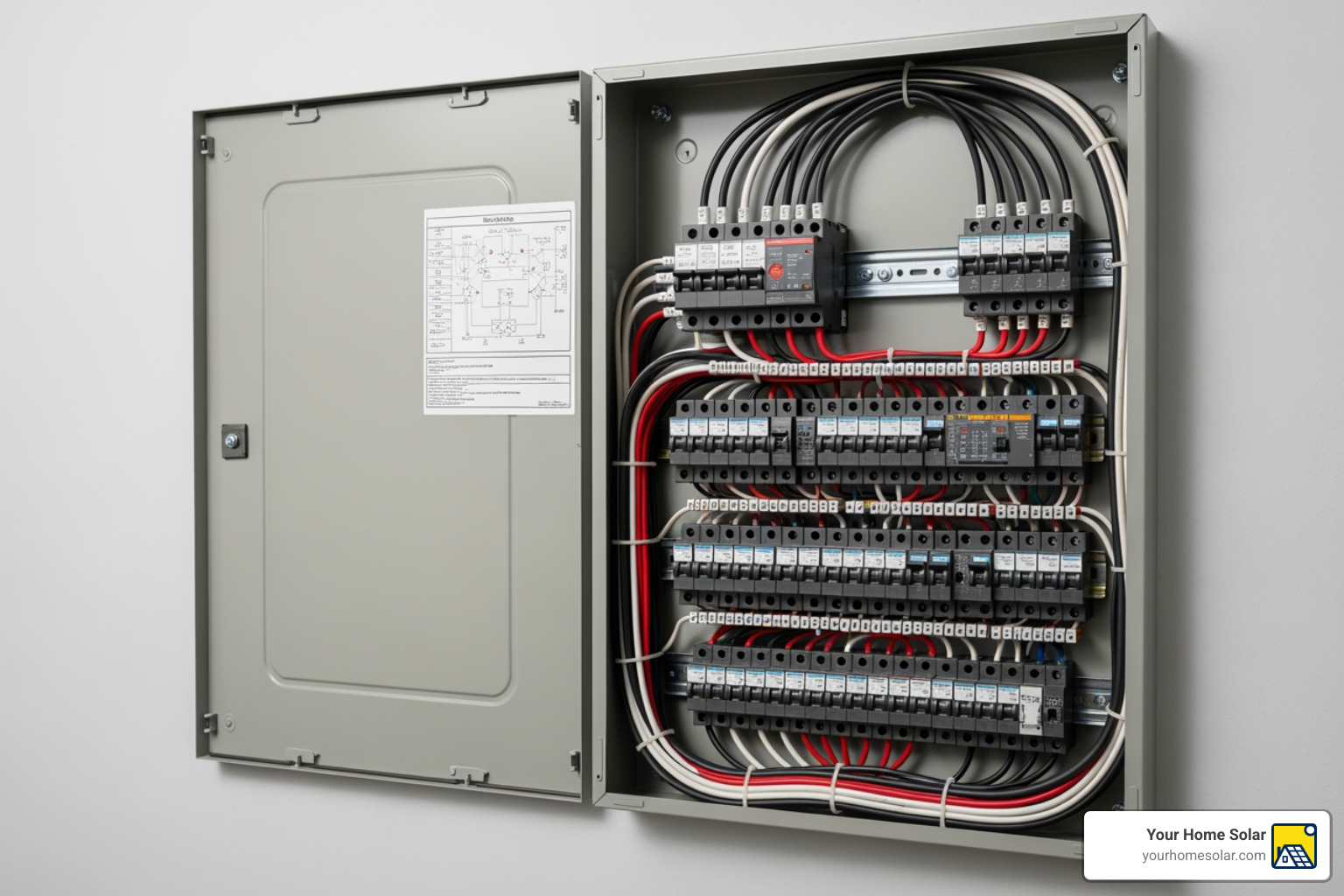
First and foremost is your electrical panel capacity. Your home’s main electrical panel is like a city’s power grid, distributing electricity to all your appliances. A Level 2 EV charger is a significant addition, demanding a dedicated 240-volt circuit. This typically means it needs its own double-pole circuit breaker, often rated at 40 or 50 amps. If your panel is older or already heavily loaded, it might not have the spare capacity (or even the physical space) for a new breaker. We’ll need to perform a load calculation to determine if your existing service can safely handle the additional demand without tripping breakers or, worse, creating a fire hazard.
For a 40-50 amp circuit, the wiring itself is crucial. We generally recommend #8 AWG or #6 AWG copper wires for safety and efficiency. Copper wiring is preferred for its conductivity and durability. If your panel is indeed at full capacity, don’t despair! You have options. We might consider installing a charge controller, also known as a load management device. This clever gadget allows your EV charger to share an existing circuit with another high-demand appliance (like a dryer or water heater) by intelligently managing power, ensuring you don’t exceed your panel’s limit. Alternatively, a panel upgrade might be necessary to increase your home’s overall electrical service capacity. This is a more involved process but ensures your home is future-proofed for all your electrical needs.
Choosing the Right 240V Charger
Selecting the right EV charger for your home is almost as exciting as picking out your EV itself! We’ll help you understand the options.
| Feature | Hardwired EV Chargers | Plug-in EV Chargers |
|---|---|---|
| Installation | Permanently connected to your home’s electrical system. | Plugs into a 240V outlet (typically NEMA 14-50 or 6-50). |
| Flexibility | Less flexible, fixed in place. | More flexible, can be unplugged and moved (though not easily for daily use). |
| Power Output | Often higher, up to 11.5 kW (48A). | Limited by the outlet’s amperage, typically up to 9.6 kW (40A). |
| Cost | Unit cost can be similar; installation may be slightly more complex. | Unit cost can be similar; installation includes outlet cost. |
| Aesthetics | Often sleeker, integrated look without visible outlet. | Visible outlet and plug. |
| Recommendation | Ideal for permanent installations, maximum power. | Good for renters or those wanting future flexibility, often simpler install. |
Most residential chargers fall into the 7.2 kW (30A) category, which will fully charge a 100% electric vehicle in about 6 to 11 hours. That’s perfect for overnight charging! However, if your EV has a larger battery or you need even faster charging, stations from 9.6 kW (40A) up to 11.5 kW (48A) are also available. That the actual charging speed is also limited by your vehicle’s onboard charger capacity. A charger can only deliver as much power as your car can accept.
When making your choice, consider the warranty considerations. Most manufacturers offer a warranty of 1 to 4 years. We also strongly recommend choosing chargers with recognized safety certifications like UL, cUL, or ETL. These certifications ensure the device has been rigorously tested for safety and compliance with electrical standards.
Budgeting for Your EV Charger
Let’s talk dollars and cents. The typical cost for a 240 volt charging station installation can vary, but we can give you a clear picture of what to expect in East Tennessee.
First, there’s the hardware cost. A typical Level 2 home charger unit costs between $400 and $800. This is just for the charger itself.
Then comes the typical installation cost range. For a straightforward installation, where your electrical panel has ample capacity and is conveniently located near your desired charging spot, you can expect to pay between $500 and $1,500 for the electrician’s services. However, the installation cost for a 240V terminal can vary significantly depending on the context, from $400 to $1,100 (before taxes) for simple jobs, to more if complex work is needed. On average, for the terminal and its installation, you might see a total cost around $1,500.
Several factors affecting cost can push this price up. The distance from your electrical panel to the charging station location is a major one. Longer wire runs mean more materials and labor. If the charging station is far from the panel and requires running conduit through walls, ceilings, or even underground (trenching), the cost will increase. Furthermore, if our initial electrical assessment reveals that your home’s panel is at full capacity, you’ll incur additional electrical upgrade costs. This could involve installing a load management device or, in more extensive cases, a full panel upgrade, which can add significant expense. We always provide transparent quotes so you know exactly what to expect.
The 240 Volt Charging Station Installation Process: DIY vs. Pro
Now that we’ve covered the planning, let’s look at the actual 240 volt charging station installation process. This is where safety, electrical codes, and professional expertise truly come into play.
The DIY Approach: For the Experienced Only
We understand the appeal of a DIY project, especially for homeowners who are handy. However, when it comes to high-voltage electrical work, like a 240 volt charging station installation, we emphasize extreme caution. This is absolutely not a beginner-level project, and improper installation can lead to serious hazards, including electrical fires, electrocution, and damage to your home and vehicle.
If you are an experienced electrician or highly competent with residential electrical systems, here are some essential safety precautions:
- De-energizing circuits: ALWAYS turn off the main breaker to your home’s electrical panel before starting any work. Verify power is off with a voltage tester.
- Voltage testing: Use a non-contact voltage tester and a multimeter to confirm that all circuits are dead before touching any wires.
- Required tools: Ensure you have the correct, insulated tools for electrical work, including wire strippers, screwdrivers, a torque wrench (for precise connections), a circuit breaker finder, and appropriate personal protective equipment (PPE).
- Mounting the unit: Securely mount the charger unit or NEMA 14-50 receptacle box to a stud or appropriate backing, ensuring it’s level and at a safe height (typically 36-48 inches off the ground for the unit, 18-48 inches for the cord connector).
- Running conduit: Plan your wire path carefully. Run appropriate conduit (if required by local code or for protection) from the electrical panel to the charger location.
- Pulling wires: Carefully pull the correct gauge (e.g., #8 or #6 AWG copper) hot, neutral (if needed for NEMA 14-50), and ground wires through the conduit.
- Connecting to the breaker: Install a new double-pole circuit breaker in your electrical panel, ensuring it’s the correct amperage for your charger (e.g., 40A or 50A). Connect the wires according to code and manufacturer instructions.
- Final testing: After all connections are made and the panel cover is reinstalled, turn the main breaker back on. Use a multimeter to verify correct voltage at the charger. Test with your EV.
The risks of DIY for this type of installation are substantial. Local electrical codes, like those derived from the National Electrical Code (NEC Article 625), are complex and constantly updated. Missing a crucial detail can render your installation unsafe and non-compliant, potentially voiding insurance or leading to inspection failures. We cannot stress enough that for most homeowners, the safest and most reliable route is professional installation.
Hiring a Professional for Your 240 volt charging station installation
For peace of mind and guaranteed safety, we wholeheartedly recommend hiring a professional for your 240 volt charging station installation. This is especially true in East Tennessee, where local codes and specific home electrical configurations can vary.
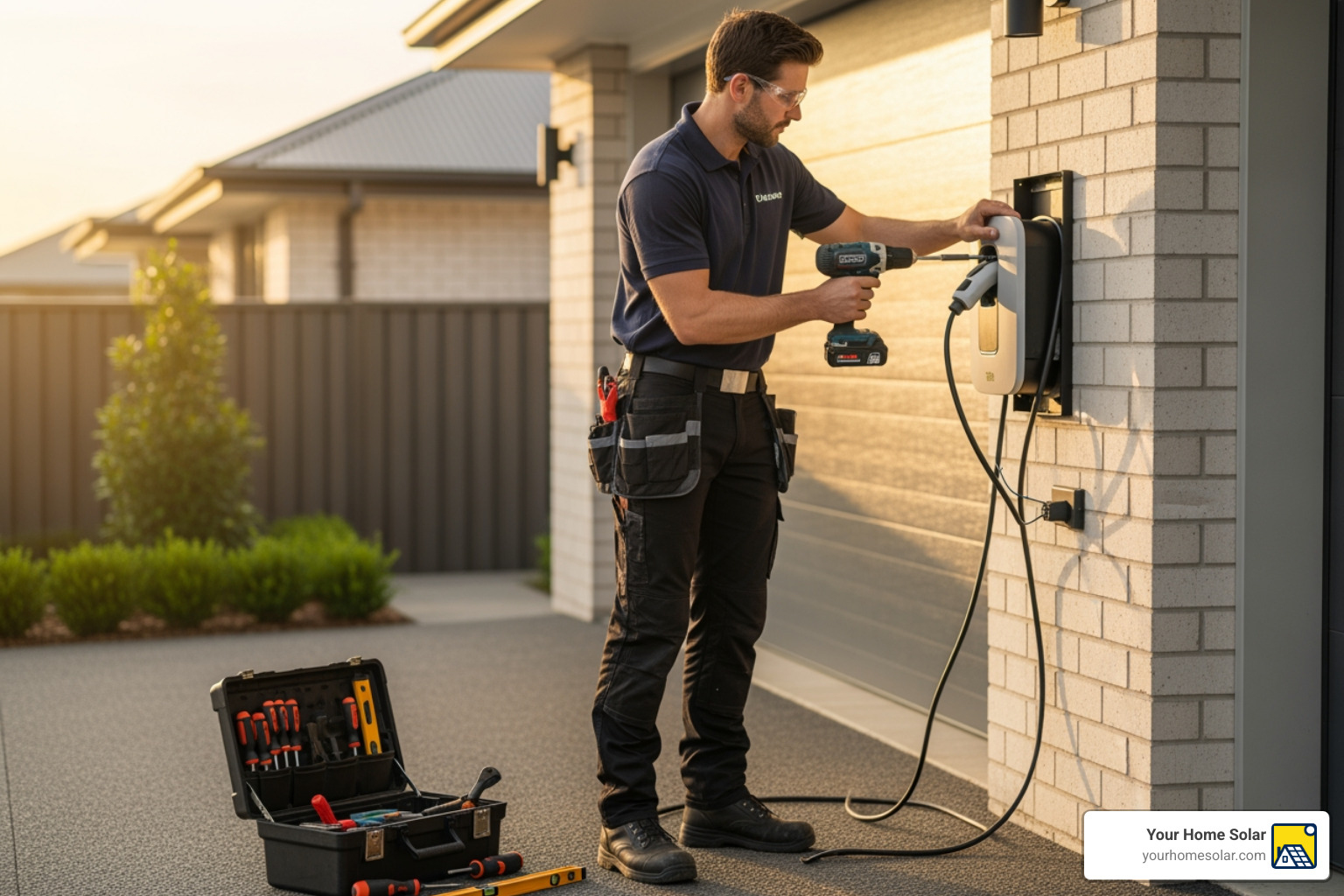
A qualified, licensed electrician from Your Home Solar brings expertise and experience to every installation. They will:
- Assess your electrical system: Perform a comprehensive load calculation and inspect your panel to determine the best approach.
- Handle permits and inspections: In most cities across East Tennessee, installing a new 240V circuit requires an electrical permit. We manage this entire process, ensuring compliance with local building codes and arranging for the final inspection. Skipping permits can void your homeowner’s insurance and pose serious hazards.
- Ensure code compliance: Our electricians are intimately familiar with the National Electrical Code (NEC), including Article 625 which specifically covers Electric Vehicle Supply Equipment (EVSE) installations. This includes requirements for overcurrent protection, wire sizing, grounding, and GFCI protection. For more technical details on these requirements, you can refer to resources like EV Equipment, based on the 2020 NEC.
- Install safely and efficiently: We use the correct tools, materials, and techniques, ensuring every connection is secure and every component is installed to manufacturer specifications.
- Provide a warranty: Our work is backed by our commitment to 100% customer satisfaction, giving you confidence in your investment.
When finding a licensed electrician, always obtain multiple quotes. This allows you to compare services and pricing. However, the cheapest option isn’t always the best, especially for something as critical as your home’s electrical system. Look for electricians with specific experience in EV charger installations and a strong reputation in the East Tennessee community.
The permit process is a crucial step. It ensures that a qualified inspector reviews the work to confirm it meets safety standards. After installation, a final inspection will be scheduled. Once approved, you’ll have the ultimate peace of mind knowing your EV charger is installed safely, correctly, and reliably.
Optimizing Your EV Charging Setup
Beyond the installation itself, there are smart choices you can make to optimize your EV charging experience, making it as convenient and cost-effective as possible.
Choosing the Best Location
Where you place your EV charger can significantly impact convenience and cost.
- Indoor vs. outdoor installation: Most homeowners opt for garage placement as it offers protection from the elements and is typically close to the main electrical panel. If you plan for an outdoor installation, you must choose a charger rated for outdoor use, specifically with a NEMA 3R (or higher) weatherproof enclosure. This protects the internal components from rain, snow, and dust.
- Cable length and management: Charging cables typically range from 2.5 meters (8 feet) to 7.5 meters (24 feet). We recommend measuring the distance from your chosen charger location to your vehicle’s charging port to ensure the cable can comfortably reach without stretching or creating a tripping hazard. Good cable management solutions, like hooks or retractable reels, can keep your space tidy and prevent cable damage.
- Proximity to parking spot: The closer the charger is to your regular parking spot, the more convenient it will be. Consider which side of your vehicle the charging port is located on.
- ADA height considerations: While primarily for public chargers, it’s good practice to consider accessibility. For home installations, the charging cord and connector should typically be mounted between 18 and 48 inches off the ground to be easily accessible and prevent contact with puddles or debris.
The Benefits of a ‘Smart’ Charger
In today’s connected world, why settle for a “dumb” charger? A ‘smart’ charger offers a host of advantages that can save you money and improve your charging experience.
- Wi-Fi connectivity and remote monitoring: Many smart chargers connect to your home Wi-Fi, allowing you to monitor charging status, energy consumption, and even initiate or stop charging sessions from your smartphone. Imagine checking your charging progress from your couch!
- Scheduled charging and off-peak electricity rates: This is where the real savings come in. Smart chargers allow you to schedule charging during off-peak hours when electricity rates are lower. Many utility companies in East Tennessee offer time-of-use (TOU) plans, making this a significant benefit.
- Load balancing for multiple EVs: If you’re a two-EV household, a smart charger with load balancing capabilities (or a separate charge controller) can manage power distribution between multiple vehicles, ensuring both get charged without overloading your home’s electrical panel. This can be a much more cost-effective solution than a full panel upgrade. To learn more about these advanced solutions, check out our guide on Smart EV Charger Installation in Knoxville.
- Potential for future subsidies: Some regions are beginning to require ‘smart’ features for EV chargers to be eligible for certain incentives, recognizing their role in grid management.
Rebates and Incentives
Driving electric is not just good for the planet; it can also be good for your wallet! While specific programs vary and are constantly evolving, there are often rebates and incentives available for EV charger installations.
- Federal tax credits: The U.S. federal government has historically offered tax credits for alternative fuel vehicle refueling property, which can include home EV charging equipment. These credits can change, so we always advise checking the latest information from the IRS or consulting with a tax professional.
- State and local rebates: While we focus on East Tennessee, it’s worth noting that many states and local municipalities across the country offer their own incentive programs. These could include rebates on the purchase of the charger itself or assistance with installation costs.
- Utility company programs: Your local utility provider might offer programs to encourage EV adoption, which could include rebates for charger installation or special electricity rates for EV owners. We encourage you to contact your specific utility company in East Tennessee to inquire about any current offerings.
It’s always a good idea to research available incentives in your specific area and understand the eligibility requirements before making a purchase or starting an installation. Exploring why people switch to zero-emission vehicles, including incentives, can be found in general resources like Why switch to a zero-emission vehicle?.
Frequently Asked Questions about 240V Charger Installation
We hear a lot of great questions from homeowners in East Tennessee considering a 240 volt charging station installation. Let’s tackle some of the most common ones.
What happens if my electrical panel is at full capacity?
This is a common concern, especially in older homes. If our initial electrical assessment reveals that your panel is at full capacity, meaning it doesn’t have enough spare amperage or physical space for a new 240V circuit, we have a few solutions:
- Load Calculation: The first step is always a detailed load calculation. This determines your home’s total electrical demand and identifies how much capacity, if any, is truly available.
- Install a Load Management Device (Charge Controller): This is often the most cost-effective solution. A charge controller intelligently monitors your home’s total electricity usage. When demand is low, it allows your EV charger to draw full power. When other high-demand appliances (like your oven or AC) kick on, it temporarily reduces the power to your EV charger, preventing an overload. This can save you from a costly panel upgrade.
- Upgrade the Panel: If a load management device isn’t sufficient or you anticipate future electrical needs, a full panel upgrade might be necessary. This involves replacing your existing electrical panel with a new one that has a higher amperage rating and more breaker slots.
- Upgrade Your Home’s Electrical Service: In some cases, the issue isn’t just the panel, but the entire incoming electrical service from your utility. This is the most extensive and costly option, but it ensures your home has ample power for all current and future electrical demands.
While there are options, these scenarios can add significant costs to your overall 240 volt charging station installation. We’ll always provide clear explanations and transparent pricing for any necessary electrical upgrades.
How much faster is a 240V Level 2 charger?
The difference is night and day! A 240V Level 2 charger is significantly faster than a standard 120V Level 1 charger.
- Level 1 (120V): This uses a standard wall outlet and typically adds about 3-5 miles of range per hour. For a fully electric vehicle, this means a complete charge could take anywhere from 20 to 50 hours or even more, making it suitable mostly for plug-in hybrids or very low daily mileage.
- Level 2 (240V): This is what we’re talking about with a 240 volt charging station installation. It typically adds 25-30 miles of range per hour. This allows most battery electric vehicles to be fully charged in 6 to 11 hours. For plug-in hybrids, it’s even faster, often just 3-4 hours. This speed makes Level 2 charging ideal for overnight charging, ensuring you wake up to a full “tank” every morning.
A Level 2 charger can charge an EV 3 to 7 times faster than a standard Level 1 charger, changing it from a slow trickle to a steady flow.
Do I need a permit to install an EV charger at home?
Yes, in almost all cases, you do need a permit to install an EV charger at home, especially for a 240 volt charging station installation. Since this involves adding a new, dedicated 240-volt circuit to your home’s electrical system, it falls under the purview of local building and electrical codes.
In East Tennessee, like many other regions, the city or county building department will require an electrical permit. This permit ensures that the installation work complies with the National Electrical Code (NEC) and local amendments, guaranteeing safety. Once the installation is complete, a licensed inspector will perform a final inspection to verify that everything is up to code.
Attempting to install an EV charger without a permit can lead to several problems:
- Safety Hazards: Uninspected electrical work can be dangerous.
- Code Violations: You might be forced to redo the work to meet code, incurring additional costs.
- Insurance Issues: Your homeowner’s insurance might not cover damages resulting from unpermitted work.
- Resale Problems: Unpermitted work can complicate the sale of your home.
We always handle the entire permit process for our clients, ensuring your 240 volt charging station installation is fully compliant and hassle-free.
Your Partner for a Safe and Reliable EV Charger Installation
Starting on a 240 volt charging station installation for your home is a significant step towards a greener, more convenient future. While the idea of a DIY project might be tempting, the complexities of high-voltage electrical work, combined with strict safety and code requirements, make professional installation the overwhelmingly superior choice for most homeowners.
Choosing professional installation with Your Home Solar brings numerous benefits:
- Safety Assurance: Our licensed electricians prioritize your family’s safety above all else, carefully adhering to all electrical codes and best practices.
- Code Compliance: We steer the permit process and ensure your installation passes all necessary inspections, protecting you from future headaches and potential liabilities.
- Future-Proofing: We assess your entire electrical system, offering solutions like load management or panel upgrades that not only support your current EV but also prepare your home for future electrical demands.
- Expertise and Peace of Mind: With Your Home Solar, you’re not just getting an installation; you’re getting the trusted expertise of East Tennessee’s leading energy solutions provider. We deliver custom, reliable, and rewarding installations with 100% customer satisfaction.
Don’t compromise on safety or reliability when it comes to powering your electric vehicle. For a seamless and professional 240 volt charging station installation in Knoxville, Oak Ridge, Maryville, Johnson City, Kingsport, Morristown, Sevierville, Farragut, Powell, and across Anderson, Bledsoe, Blount, Bradley, Campbell, Carter, Claiborne, Cocke, Cumberland, Grainger, Greene, Hamblen, Hamilton, Hancock, Hawkins, Jefferson, Johnson, Knox, Loudon, Marion, McMinn, Meigs, Monroe, Morgan, Polk, Rhea, Roane, Scott, Sevier, Sullivan, Unicoi, Union, and Washington Counties, trust the experts to power your journey. Contact us for your EV Charger Installation in Knoxville today!