Why Affordable Solar Panels for Home Use Matter More Than Ever
Affordable solar panels for home use are no longer a distant dream for East Tennessee homeowners. Solar technology is now far more accessible, with panel costs dropping roughly 10% year-over-year while electricity rates climb.
Quick Answer: Are Affordable Solar Panels Real?
- Average System Cost: $15,000-$25,000 before incentives
- After Federal Tax Credit (30%): Around $10,500-$17,500
- Cost Per Watt: $2.92-$3.03 for quality panels
- Budget-Friendly Brands: VSUN, Hyundai, JA Solar, Trina Solar
- Key to Affordability: Federal incentives, financing options, and choosing the right system size
Affordable solar exists–the real question is understanding what “affordable” means and how to avoid sacrificing quality for a lower price.
Solar panels were once prohibitively expensive, but that has changed dramatically. The average price of a solar installation in 2025 is about $21,816 before incentives. With the 30% federal solar tax credit, most homeowners receive around $6,500 back. For East Tennessee families facing power outages and rising energy bills, this is a genuine path to energy independence.
The challenge is navigating the difference between “cheap” panels that cause problems and truly affordable, quality systems that deliver long-term value. Some manufacturers offer panels at $0.68 per watt, while others charge $0.94 per watt–but the lowest price isn’t always the best deal. Panel costs are now less than 30% of your total installation cost, so a slightly cheaper panel might save a few hundred dollars now but cost thousands in lost efficiency and reliability over 25 years.
I’m Ernie Bussell, CEO of Your Home Solar, and with my background in nuclear systems and operations management, I’ve led East Tennessee’s #1 solar energy contractor for three years–helping hundreds of families find affordable solar panels for home use that deliver real value. My mission is to cut through the confusion and help you make a confident decision based on facts, not pressure.
Decoding the True Cost of a Home Solar System
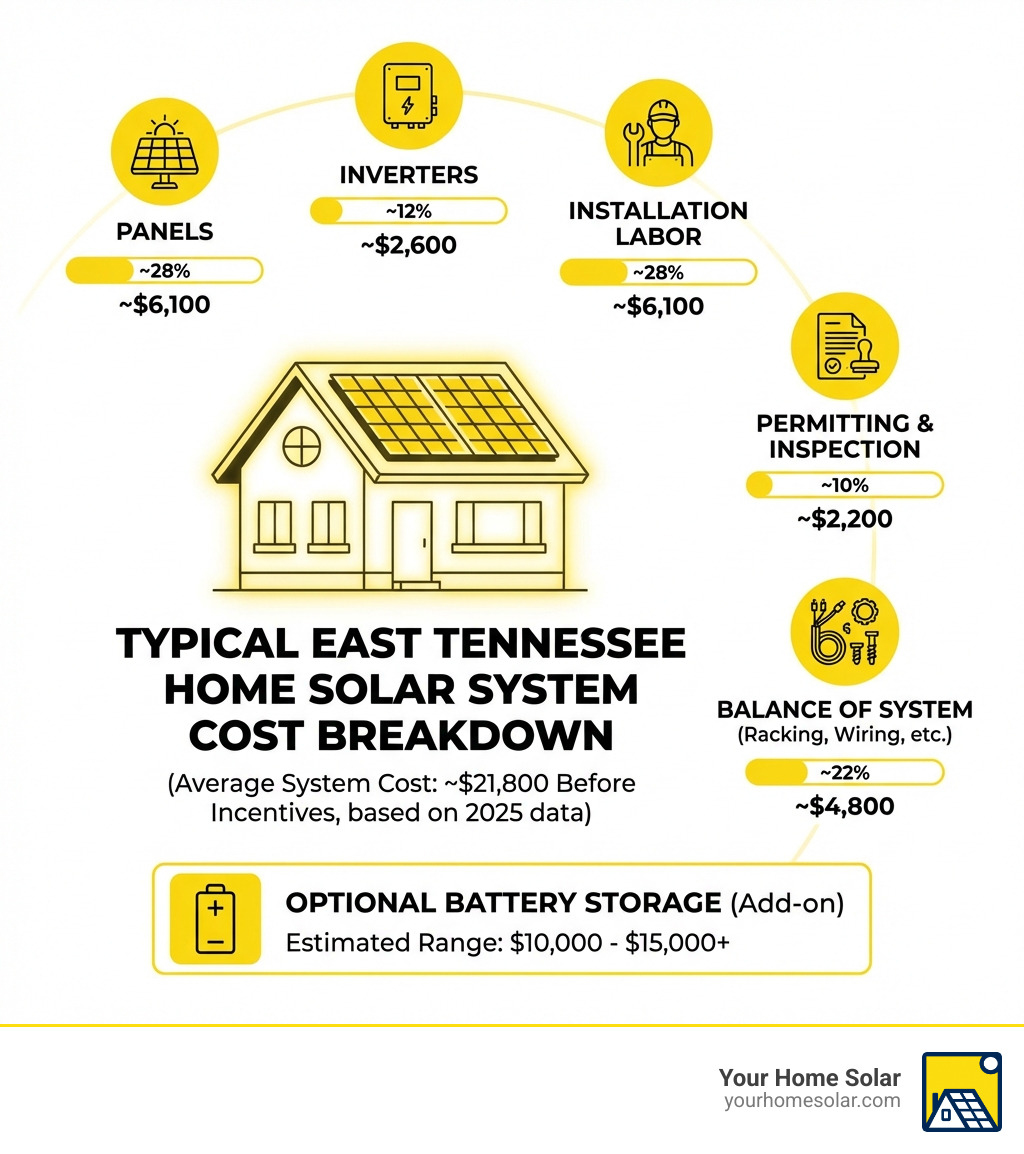
When considering affordable solar panels for home use, it’s crucial to understand the panels are just one piece of the puzzle. The total cost of a solar energy system involves several components. In East Tennessee, the average system costs between $15,000 and $25,000 before incentives. This translates to an average cost per watt of $3.03, though affordable quality brands like VSUN ($2.92/watt), Hyundai ($2.93/watt), JA Solar ($2.94/watt), Trina Solar ($2.95/watt), and Mission Solar ($2.97/watt) can lower that slightly.
The average price of a solar installation in 2025 is projected to be around $21,816 before incentives. While this seems like a large upfront investment, various factors and financing options make solar affordable. For a detailed cost breakdown in our area, check our guide on Solar Panel Installation Knoxville Cost.
What’s Included in the Price Tag?
A complete solar energy system requires several key components and services to ensure a robust, reliable system.
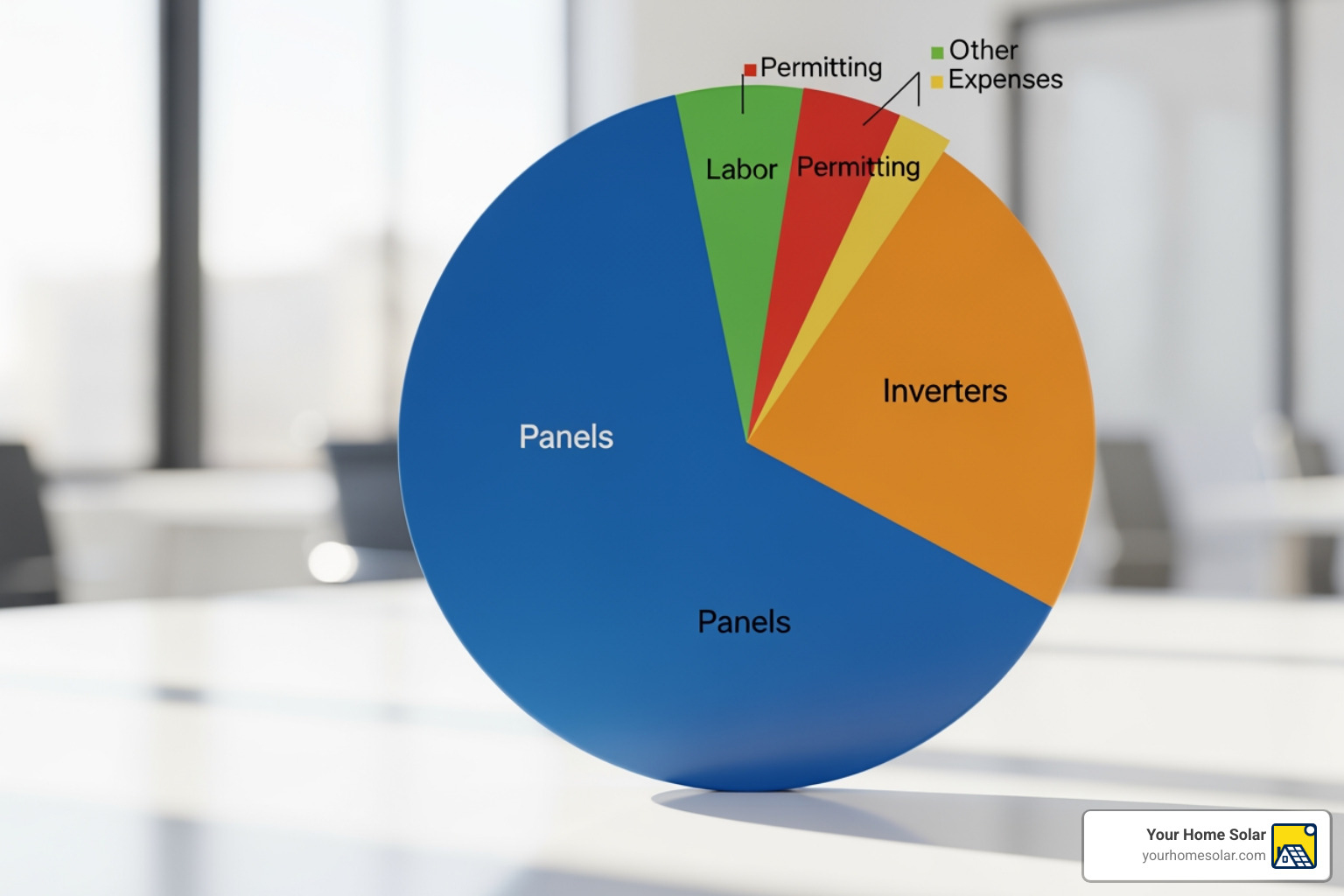
- Solar Panels: These convert sunlight into electricity and account for about 12% of the total installation cost. Today’s panels range from 250 to over 420 watts, costing between $300 to $400 each.
- Inverters: These crucial components convert the direct current (DC) from panels to the alternating current (AC) your home uses.
- Racking & Mounting Hardware: This framework secures your panels to your roof or the ground and must be durable and weather-resistant.
- Labor & Installation: This includes system design, electrical work, mounting, and wiring. This is a significant cost where expert installers prove their value.
- Balance of System (BOS): This term covers all other components like wiring, conduits, and monitoring systems that ensure safe, efficient operation.
- Optional Battery Storage: Many East Tennessee homeowners add battery storage (like a Powerwall) for backup power during outages. This adds energy independence but can increase the cost by $5,000-$10,000.
We dig deeper into these aspects in our Cost and Financing of Solar Systems guide.
Factors That Influence Your Final Cost
Several factors unique to your property determine the final cost of your affordable solar panels for home use:
- System Size (kW): This is the biggest cost driver. Larger systems require more panels and equipment, increasing the price.
- Home Energy Consumption: We review your past 12 months of electricity bills to determine your average kilowatt-hour (kWh) usage. A family of four in a 1200 sq. ft. house might need 20-30 panels.
- Geographic Location: Local regulations, permitting fees, and installer costs can vary slightly across East Tennessee.
- Sunlight Availability: Areas with more direct sunlight require fewer panels than shaded properties.
- Roof Suitability: We consider:
- Orientation: South-facing roofs are ideal.
- Angle: Roof angles between 15 and 40 degrees are optimal.
- Shading: Shadows from trees or chimneys can reduce efficiency.
- Condition & Age: Solar panels have 20-25 year warranties. If your roof is over 5-10 years old, it’s best to make repairs before installation to avoid removing and reinstalling panels later.
- Space: If you lack sufficient roof space, a ground-mount system is an alternative.
Understanding these variables is key to designing a system that meets your energy needs and budget. Learn more in our article on the Advantages of Installing Solar Panels in Tennessee.
The Efficiency vs. Affordability Equation
When evaluating affordable solar panels for home use, don’t just focus on the lowest price. A truly affordable system delivers long-term value through efficiency. Solar panel efficiency, typically 15% to 22%, indicates how effectively a panel converts sunlight into electricity. Higher efficiency panels often cost more upfront but can lead to greater long-term savings and a better return on investment, especially with limited roof space.
Our experts emphasize that skipping quality for a lower upfront cost is a mistake. As we discuss in Why Skipping Solar Panels Could Be Costing You, initial savings can be overshadowed by reduced energy production.
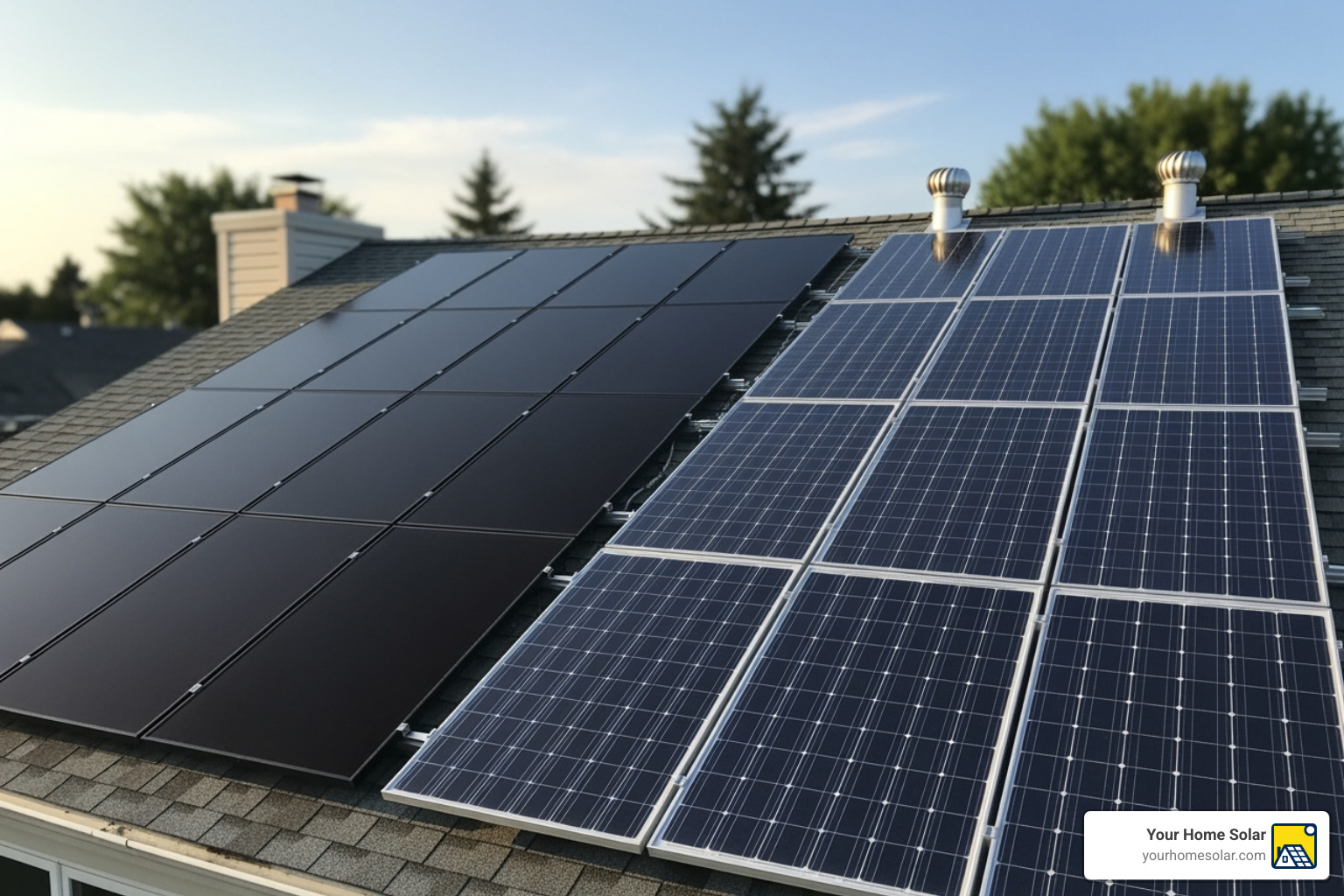
Understanding Different Types of Solar Panels
The market offers several panel types, each balancing cost and efficiency:
- Monocrystalline Panels: These are the most efficient, with levels between 18% and 23% (for brands like JA Solar). Made from a single silicon crystal, they have a uniform, dark look. Though more expensive per panel, their higher output means you need fewer panels, ideal for smaller East Tennessee roofs.
- Polycrystalline Panels: Made from multiple silicon crystals, these are less efficient (15-17%) and have a speckled, blue appearance. They are more affordable, making them a good option for larger roofs and tighter budgets.
- Thin-Film Panels: These are the least efficient and rarely used for residential rooftops because they require much more space. They are typically reserved for large-scale projects.
At Your Home Solar, we often recommend monocrystalline panels for their superior performance and durability, ensuring our customers get the most from their investment. Innovations like half-cut solar cells further improve performance and value.
How Efficiency Impacts Your Long-Term Savings
A more efficient panel produces more electricity from the same amount of sunlight, or the same amount from a smaller footprint.
- Required Roof Space: With limited roof space, higher-efficiency panels are invaluable, maximizing power generation in the available area.
- Energy Production Over 25 Years: Most quality panels have a 25-year performance warranty. A higher-efficiency panel produces more electricity over its lifespan, leading to greater savings.
- Return on Investment (ROI): The additional electricity generated by efficient panels translates into more money saved. This accelerates your payback period and boosts your ROI, making the investment affordable in the long run.
- Increased Home Value: Solar panels can increase your home’s value. Higher efficiency systems often contribute more to this value, as buyers recognize the improved energy independence. We explore this in How Solar Energy Can Increase Your Property Value.
How to Find Genuinely Affordable Solar Panels for Home Use
Finding affordable solar panels for home use is about strategically lowering your net costs, maximizing incentives, and choosing the right financing. For East Tennessee homeowners, several pathways make solar a smart, accessible investment.
Tapping into Government Incentives and Rebates
The federal government’s support is the biggest game-changer for solar affordability.
- Federal Solar Tax Credit (30%): This is the most significant incentive. For systems installed post-2021, you get a 30% tax credit on the total cost. For an installation costing $21,816, you could get a tax credit of about $6,500, directly reducing your federal income tax liability and significantly lowering the net cost. Learn more in our Incentives and Tax Credits for Solar Systems.
- State & Local Rebates: East Tennessee homeowners should also look for state or local programs from governments or utility companies, which offer more rebates that reduce upfront costs.
- Net Metering Policies: Many Tennessee utilities offer net metering. This policy lets you send excess electricity to the grid for credits on your bill, significantly improving the economics of solar.
These incentives are crucial for making affordable solar panels for home use a reality for our neighbors in Knoxville, Maryville, and Johnson City.
Exploring Your Financing Options for affordable solar panels for home use
How you pay for your system also impacts its affordability. Since a large upfront payment isn’t feasible for everyone, we guide you through flexible options. For a comprehensive overview, check out Home Solar Energy Financing in East Tennessee.
- Solar Loans: This popular option works like a home improvement loan. You borrow money to purchase the system and own it outright. Often, your monthly loan payment is less than your typical energy bill, creating immediate savings. Loans from institutions like the Federal Housing Administration and Fannie Mae can even be included in your mortgage.
- Cash Purchase Benefits: A cash purchase offers the lowest total cost. You own the system, get the tax credit, and maximize long-term savings.
- Solar Leases or Power Purchase Agreements (PPAs): These options require little to no upfront cost. With a lease, you pay a fixed monthly rate. With a PPA, you buy the generated power at a set rate. You don’t own the system or get the tax credit, but you save on electricity bills without the responsibility of ownership.
- Community Solar Programs: For those who can’t install panels (e.g., renters, shaded roofs), community solar is an excellent alternative. You subscribe to a local solar farm and receive bill credits, allowing you to save money without an installation on your property.
Navigating these options can be complex, but we’re here to help. The Clean Energy States Alliance has an excellent guide that can help you understand the advantages and disadvantages of each. For specific incentives available in our service areas of East Tennessee, including Johnson City, Kingsport, and Morristown, consult our Solar Incentives Tennessee 2026 Guide.
Beyond the Price Tag: Ensuring Long-Term Value
True solar affordability extends beyond the purchase price to long-term performance, durability, and reliability. Choosing affordable solar panels for home use means selecting quality components installed by seasoned professionals who stand behind their work. In East Tennessee, we pride ourselves on being Expert Solar Installers in Knoxville, TN, ensuring every installation is built for lasting value.
The Importance of Warranties and Lifespan
Solar is a significant investment, so warranties provide peace of mind.
- Product Warranty: This covers physical defects in the panels, typically for 10 to 12 years. It covers repairs or replacement for manufacturing issues.
- Performance Warranty: This is arguably more important, guaranteeing a specific power output over 25 years. A standard warranty guarantees at least 80% of the rated power, protecting you against excessive degradation.
- Degradation Rate: All panels slowly decrease in output over time. A good performance warranty ensures this degradation stays within acceptable limits (typically 10-20% over 25 years).
- Expected Lifespan: With proper installation, quality solar panels last 25+ years, producing clean energy long after they’ve paid for themselves. This long lifespan is key to their affordability. For more insights on this, read our guide on Solar Panel Warranties Explained.
Risks of “Cheap” Panels and How to Choose a Trusted Installer
While affordability is a priority, the cheapest option can lead to higher costs later.
- Hidden Defects and Lower-than-Rated Output: Cheaper panels may have invisible flaws, producing less power than advertised or failing prematurely, which reduces your energy savings.
- Safety Issues: Substandard equipment or improper installation can pose electrical hazards. Choosing a certified and licensed installer is non-negotiable.
- Lack of Warranty Coverage: “Cheap” panels may have short or non-existent warranties. Used solar panels might seem like a bargain but often lack a warranty and have unpredictable performance. We don’t recommend them for home rooftop installations.
- Comparing Quotes: Always get multiple quotes to compare price, components, warranties, and installer reputation. Be wary of quotes that seem too good to be true.
- Vetting Installers: This is a critical step. Look for installers with:
- NABCEP Certification: This nationally recognized credential indicates a high level of expertise and ethical standards. Our own Ian Huddleston, founder of GTRE (a trusted partner for Your Home Solar), holds NABCEP Certification # PV-041115-010730.
- Licensed Electricians: Ensure the company employs licensed electricians. A trade license (like Ian Huddleston’s TN LLE Electrician’s License # 00060873) proves their skill and allows them to pull permits and pass inspections, ensuring your system is installed safely and legally.
- Strong Local Reputation: Check reviews on platforms like SolarReviews.com and Google. A company with many 5-star reviews and a long history of customer satisfaction (like Your Home Solar, operating since 2008) is a good indicator of reliability.
- Transparency: A trustworthy installer clearly explains all costs, components, and warranties without pressure.
Solar panels are only about 12% of the total installation cost. A good installer’s expertise is invaluable for a system that will reliably power your home for decades. Don’t be afraid to ask tough questions; our guide on Knoxville Solar Installers: Questions to Ask can help you prepare.
Frequently Asked Questions about affordable solar panels for home use
Here are common questions we hear from East Tennessee homeowners about affordable solar panels for home use.
How many solar panels do I need for my house?
The number of panels you need isn’t a one-size-fits-all answer; it depends on three key factors:
- Your Home’s Energy Consumption: We review your last 12 months of electricity bills to find your average kWh usage. Higher usage requires more panels.
- Solar Panel Efficiency and Wattage: Higher efficiency and wattage panels (e.g., 400W vs. 300W) produce more power, so you may need fewer of them.
- Sunlight Availability: Your location gets great sun, but roof orientation, angle, and shading affect how much sun your panels receive.
As a guideline, a family of four in a 1200 sq. ft. house might need 20-30 panels. Our experts will conduct a thorough assessment to give you a precise, custom estimate for your home in Knoxville, Maryville, or any of our service areas.
Do solar panels increase my home’s value?
Yes. Installing solar panels is an investment in clean energy, lower bills, and your property. Studies consistently show that homes with solar panel installations:
- Increase Property Value: Realtors note a significant increase in home values, especially when the system is owned outright.
- Sell Faster: Homes with solar panels often sell faster as buyers seek energy-efficient features that offer long-term savings.
By installing affordable solar panels for home use, you’re making a smart investment that pays off in savings and market appeal. We cover this in more detail in Solar Energy and Home Resale Value: A Win-Win for East Tennessee Homeowners.
Can I go completely off-grid with affordable solar panels?
Going off-grid means disconnecting from the utility grid. It’s possible with solar but requires a more robust, expensive system, impacting affordability.
- Battery Storage Necessity: Off-grid systems require a substantial battery storage system to store energy for night or cloudy days. This adds $5,000-$10,000 to the cost.
- Increased System Size: Off-grid systems must be oversized to ensure enough power during periods of low sunlight.
- Hybrid Systems as an Alternative: For many, a hybrid system is a great balance. It combines grid-tied solar with battery storage for backup power during outages. This is often a more affordable solar panels for home use solution than a full off-grid setup.
While off-grid living is exciting, a grid-tied system with battery backup is often the most practical and cost-effective solution, offering energy independence without the full cost of an isolated system.
Conclusion: Making an Affordable Solar Investment in East Tennessee
Are affordable solar panels for home use a myth or reality? As we’ve explored, they are a reality for East Tennessee homeowners. The key is understanding that “affordable” means more than a low upfront price; it includes long-term value, efficiency, durability, and available financial incentives.
By leveraging the 30% federal tax credit, exploring financing, and choosing high-quality panels from certified experts, you can make a solar investment that pays off for decades. Avoid “cheap” panels that lead to poor performance. Instead, focus on reputable brands and trusted installers who optimize your system for your home and our local climate.
At Your Home Solar, we are dedicated to bringing reliable and rewarding energy solutions to our neighbors across East Tennessee. We believe in transparent pricing, quality components, and 100% customer satisfaction. Our trusted expertise means we’ll tailor a system to your needs and budget, ensuring you get genuinely affordable solar panels for home use that deliver lasting value.
Ready to take the next step toward energy independence and significant savings? Explore your residential solar options today! We’re here to help you steer the process with confidence and clarity.