Why Understanding Solar Panels Cost Matters for East Tennessee Homeowners
Solar panels cost between $15,000 and $25,000 for a typical residential installation in the United States before incentives. Here’s what you need to know:
| System Size | Pre-Incentive Cost | After 30% Tax Credit |
|---|---|---|
| Small (4 kW) | $12,000 | $8,400 |
| Medium (7.5 kW) | $22,500 | $15,750 |
| Large (10 kW) | $30,000 | $21,000 |
Cost per watt: Most systems run $2.50 to $3.50 per watt installed.
Payback period: 5-10 years on average.
System lifespan: 25-30 years with minimal degradation.
If you’ve been watching your electric bill climb month after month, you’re not alone. Rising utility rates hit East Tennessee families hard, especially when summer air conditioning or winter heating kicks in. Add frequent power outages to the mix, and it’s clear why so many homeowners are asking: What does it actually cost to go solar?
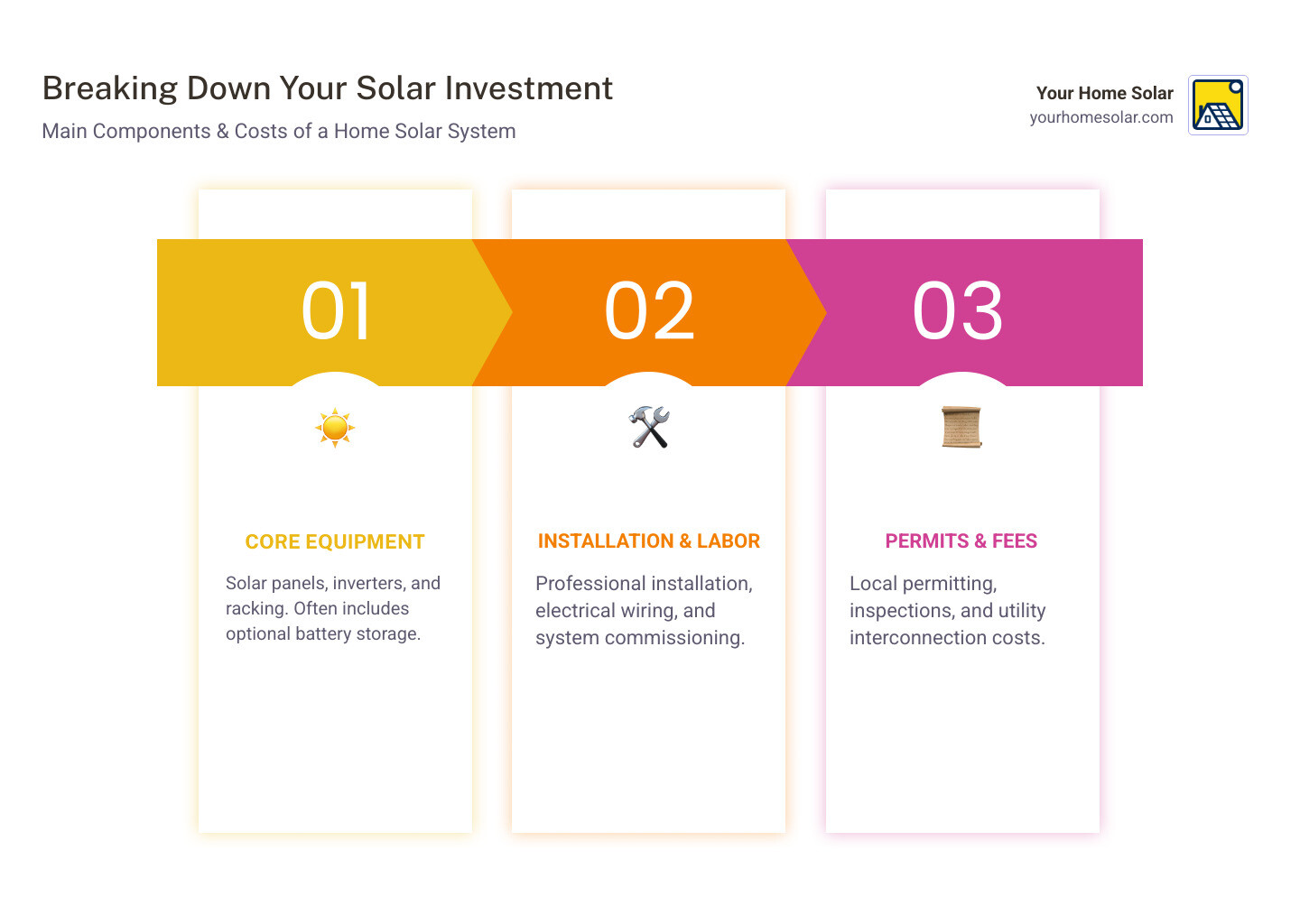
The answer isn’t as simple as a single price tag. Solar panels cost depends on your home’s energy needs, your roof’s condition, the type of equipment you choose, and the incentives available in your area. It’s not just about buying panels. You’re investing in a complete system that includes inverters, mounting hardware, professional installation, permitting, and often battery storage for backup power.
But here’s the good news: solar has become more affordable than ever. Prices have dropped roughly 50% since 2010, and today’s systems deliver better performance with longer warranties. Federal tax credits and Tennessee incentives can cut your upfront costs significantly. More importantly, a well-designed solar system can eliminate or drastically reduce your monthly electric bills for decades.
This guide breaks down everything you need to know about solar panels cost in plain language. We’ll cover average pricing by system size, the factors that drive your final installation price, and how to calculate your return on investment. You’ll also learn about financing options, maintenance expenses, and the ongoing savings that make solar a smart financial move for many East Tennessee families.
I’m Ernie Bussell, founder and CEO of Your Home Solar, and I’ve spent years helping homeowners steer the solar panels cost question with transparency and real-world expertise. My goal is to help you make a confident decision about your energy future without pressure or confusion.
Understanding the Average Solar Panels Cost in the U.S.
When we talk about the solar panels cost, it’s essential to understand that we’re looking at an average. As of 2026, the average cost for residential solar panels in the U.S. typically falls between $15,000 and $25,000 before incentives. This translates to a price of about $2.50 to $3.50 per watt of installed capacity. However, East Tennessee homeowners should know that state averages and local factors matter far more than national numbers. What applies in California, for instance, might not reflect the specific conditions, labor costs, and incentives available right here in Knoxville, Maryville, or Johnson City.
Understanding the price per watt ($/W) is a crucial metric. It helps us compare different solar systems on an apples-to-apples basis. For example, a 6,000-watt (6 kW) solar system might have a gross cost between $15,000 and $21,000 before any incentives are applied. This gives us a clearer picture of the investment than a simple total price.
To make solar an accessible option for more homeowners, we offer More info about solar financing solutions designed to fit various budgets. We believe that everyone should have the opportunity to take control of their energy future.

Breaking Down the Total Solar Panels Cost by System Size
The total solar panels cost is heavily influenced by the size of the system you need, measured in kilowatts (kW). The larger your household’s electricity consumption, the larger the system required to offset it, and generally, the higher the upfront cost. However, larger systems often benefit from economies of scale, meaning the cost per watt might decrease slightly.
Here’s a general breakdown of costs for different system sizes before incentives:
- Small System (4 kW): This size might be suitable for smaller homes or those with lower energy needs. The approximate cost is around $12,000.
- Medium System (7.5 kW): This is a common size for many average U.S. households, which consume about 10,000 kWh of electricity per year. A 7.5 kW system typically costs around $22,500.
- Large System (10 kW): For homes with higher energy consumption, or those looking to cover future electricity needs (like EV charging or heat pumps), a 10 kW system could be ideal, with an estimated cost of $30,000.
It’s important to match your system size to your household’s actual electricity usage, not just the square footage of your home. We’ll help you analyze your past 12 months of utility bills to determine precisely how much power you consume and design a system that effectively meets your needs. This ensures you’re not overpaying for more capacity than you require, nor under-sizing a system that won’t deliver the savings you expect.
How Panel Technology Influences Price
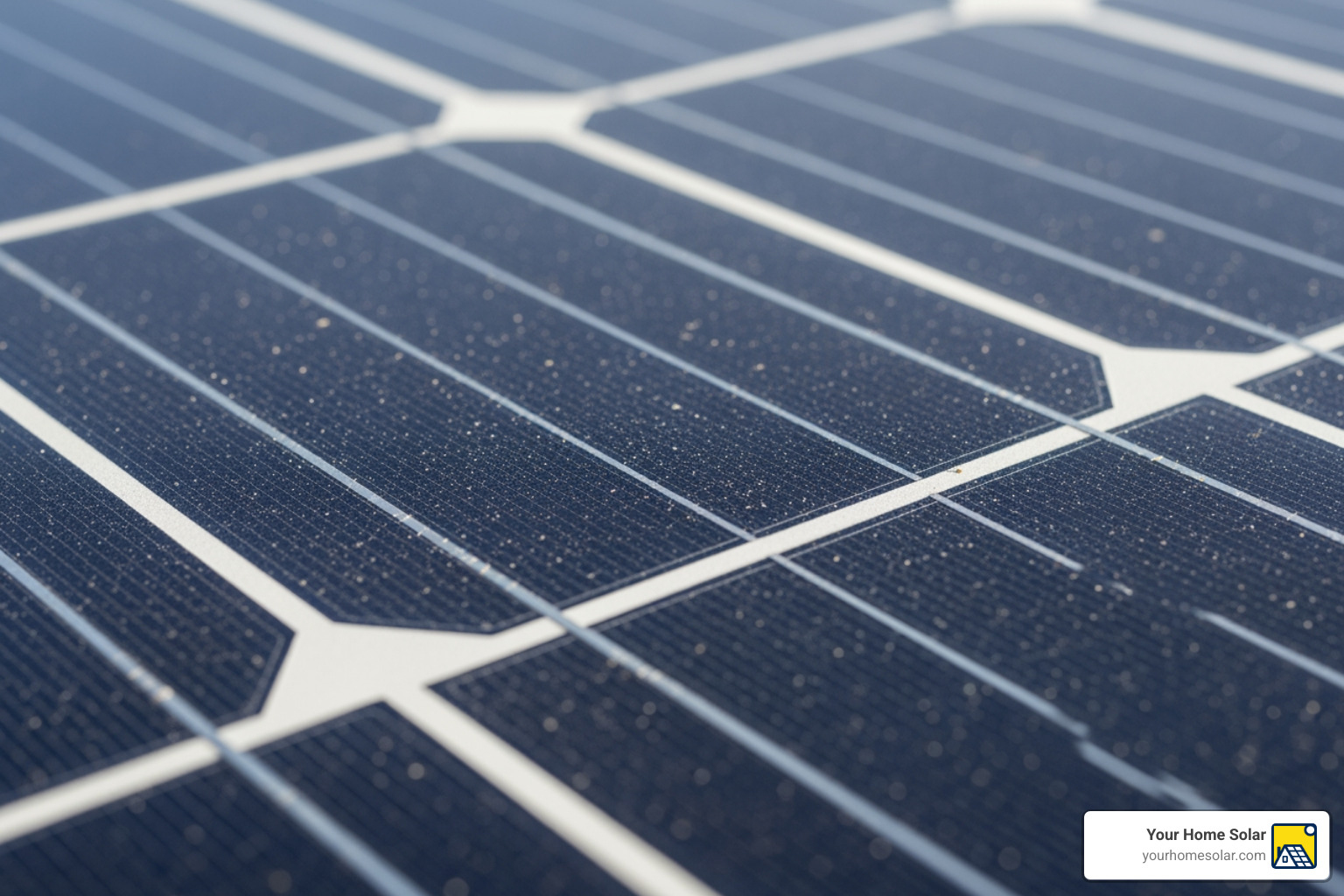
Not all solar panels are created equal, and the type of panel technology you choose directly impacts the overall solar panels cost. The market offers a few primary types, each with its own balance of efficiency, durability, and price point:
- Monocrystalline Panels: These are the most common and highest-efficiency panels available. Made from a single, pure silicon crystal, they have a sleek, uniform black appearance and perform exceptionally well, especially in limited roof space. Today’s premium monocrystalline panels typically cost between $0.30 and $0.50 per watt. They come with excellent 25- to 30-year performance warranties.
- Polycrystalline Panels: These panels are made from multiple silicon fragments melted together, giving them a blue, speckled appearance. They are generally less efficient than monocrystalline panels but also less expensive, typically costing around $0.25 per watt. While they might require more roof space to achieve the same energy output, they offer a good balance of cost and performance.
- Thin-Film Panels: If you’re just looking for the lowest solar panels cost, thin-film panels would be it. They’re cheaper because they use less material and have a more straightforward manufacturing process. However, they are also the least efficient and have shorter lifespans, meaning you’d need a much larger surface area to generate the same amount of electricity as mono- or polycrystalline panels. For most residential applications in East Tennessee, these are less common due to their lower efficiency.
The choice depends on your budget, available roof space, and energy goals. We’ll walk you through the pros and cons of each, ensuring you pick the best fit for your home.
The Role of Inverters and Battery Storage
Beyond the panels themselves, other critical components contribute to the total solar panels cost. Chief among these are inverters and, increasingly, battery storage systems.
Inverters are the brains of your solar system, converting the direct current (DC) electricity generated by your panels into alternating current (AC) electricity that your home appliances use and that the grid accepts. There are several types, including string inverters, microinverters, and power optimizers, each with different costs and benefits regarding efficiency, monitoring, and performance in shaded conditions.
Solar battery cost is another significant factor, but one that offers immense value, especially in regions like East Tennessee where power outages can occur. While not strictly necessary for every solar installation (many systems are grid-tied without batteries), battery storage provides crucial benefits:
- Backup Power: If you have a battery storage system, you can use solar power during a blackout. Without a battery, your grid-tied solar system will shut off for safety reasons when the grid goes down. A small solar system with 10 kWh of battery storage can power the essential electrical systems of a home for three days in most months of the year, providing peace of mind during storms.
- Energy Independence: Batteries allow you to store excess solar energy generated during the day and use it at night, reducing your reliance on grid electricity.
- Grid Support: Residential solar and battery systems can even help support the broader grid during peak demand. For example, in September 2022, customer-sited solar batteries in California provided around 340 MW of power during a heatwave to help prevent power outages.
The cost of battery storage varies widely depending on capacity, brand, and technology, but it’s an investment many East Tennessee homeowners find worthwhile for the added security and self-sufficiency.
Key Factors That Influence Your Final Installation Price
The sticker price of solar panels is just one piece of the puzzle. The final solar panels cost you pay for a complete, installed system involves a variety of “soft costs” – expenses beyond the physical hardware. These soft costs, including permitting, inspection, and interconnection fees, can make up a significant portion of the total project. In fact, non-labor soft costs often account for around half of the cost of home solar.
When we provide you with a quote, we ensure it’s comprehensive, covering every aspect from design to activation, so there are no surprises. This includes navigating local regulations in places like Knox County, Blount County, or Sevier County, ensuring all necessary permits are secured.
Calculating the cost of installing solar panels isn’t just about adding up equipment prices. It involves understanding the price per watt ($/W) for the overall system and, for long-term comparison, the cost per kilowatt-hour (cents/kWh) that your system will produce. A kilowatt-hour (kWh) is the standard unit of energy consumption, representing 1,000 watts used for one hour. Comparing the cents/kWh your solar system generates to your utility’s cents/kWh rate gives you a true sense of your savings.
Installation Labor and Site Complexity
One of the most variable components of the solar panels cost is professional installation labor and the complexity of your specific site. While solar modules typically make up less than 20% of the overall cost of a home installation, labor accounts for a much larger chunk. According to a report from the National Renewable Energy Laboratory, installation labor alone can account for around 5.5% of the total cost of a residential solar project.
Factors that influence labor costs and site complexity include:
- Roof Condition: If your roof is old or damaged, it might need repairs or even a full replacement before solar panels can be installed. Our team will assess your roof’s age and condition, as solar panels have 20-year warranties, and if your roof needs to be repaired within that time, the entire system would need to be temporarily removed.
- Roof Pitch and Material: Steeper roofs or those made of specialized materials (like slate or tile) require more time, specialized equipment, and skilled labor, increasing installation costs.
- Roof Complexity: Multiple angles, dormers, or obstructions (like chimneys or skylights) can add to the installation time and complexity.
- Ground-Mount vs. Rooftop Systems: While rooftop installations are most common, some homeowners opt for ground-mount systems, especially if their roof isn’t ideal or if they have ample land. Ground-mounts typically involve more civil work but can sometimes be easier to install and maintain, and can be optimally angled for maximum sun exposure.
- Location Complexity: Access to your property, local permitting requirements, and even the availability of qualified installers in areas like Morristown or Kingsport can affect pricing.
We pride ourselves on using local, highly skilled installers who understand the unique aspects of East Tennessee homes. This commitment to local expertise ensures quality workmanship and efficient project completion.
Market Conditions and Supply Chain
Just like any other major purchase, the solar panels cost is also subject to broader market conditions and global supply chain dynamics. What happens on the international stage can ripple down to your local installation in Farragut or Oak Ridge.
For instance, the solar industry has seen dramatic price reductions over the last decade, with costs falling roughly 50% since 2010. However, there have been periods of fluctuation. Costs rose slightly from 2020-2023 due to global supply chain issues and increased demand. Looking ahead to 2025, some prices have ticked upward due to factors like tariffs on imported solar components and a rush to install before certain incentives expire.
Tariffs, which are taxes on imported goods, can increase the cost of solar panels and related equipment. Supply and demand also play a role; if demand for solar outstrips the supply of components, prices can rise. Conversely, technological advancements continually lead to more efficient and affordable panels, helping to drive down long-term costs.
Choosing a reputable installer who has strong relationships with suppliers and can steer these market fluctuations is key. We work with trusted manufacturers to ensure we can offer competitive pricing and reliable equipment, minimizing the impact of external market pressures on your project.
Maximizing Your Return: Savings, Incentives, and Lifespan
Investing in solar is not just about the initial solar panels cost; it’s about the long-term financial benefits and the peace of mind it brings. For East Tennessee homeowners, going solar is a smart way to hedge against rising utility electricity prices, which have climbed from 5 cents per kWh to nearly 18 cents per kWh over the last 45 years.
Solar panels can significantly increase your property value. Studies show that homes with solar energy systems often sell faster and for more money. To learn more about how this works, check out our guide on How Solar Energy Can Increase Your Property Value.
Opening up Savings with Solar Incentives
One of the best ways to reduce your upfront solar panels cost is by taking advantage of available incentives. These programs, offered at federal, state, and sometimes local levels, are designed to make solar more accessible and affordable.
The most significant incentive for U.S. homeowners is the Federal Solar Tax Credit, also known as the Residential Clean Energy Credit. This credit allows you to deduct 30% of the cost of installing a new solar energy system from your federal taxes. This is a direct reduction of your tax liability, not just a deduction, making it incredibly valuable. For example, if your system costs $22,500, you could receive a $6,750 tax credit!
While Tennessee doesn’t have as many statewide solar incentives as some other states, local utility programs and property tax exemptions can still offer significant savings. For a comprehensive overview of what’s available, we recommend our A guide to solar incentives in Tennessee. You can also find More on tax credits on our website.
Additionally, net metering policies play a crucial role in maximizing your savings. Net metering allows you to send any excess electricity your solar panels generate back to the utility grid. In return, you receive credits on your electricity bill, effectively reducing or even eliminating your monthly charges. This system ensures that you’re compensated for the clean energy you produce, further enhancing your return on investment.
Calculating Your Long-Term ROI: Payback and Lifespan
When considering the solar panels cost, look beyond the initial investment and calculate your long-term return on investment (ROI). This involves understanding the payback period and the impressive lifespan of modern solar panels.
The payback period for solar panels, or the time it takes for your energy savings to offset your initial investment, is typically between 5 to 10 years. This period can vary based on your system size, local electricity rates, and the incentives you receive. After this period, the electricity your system generates is essentially free, leading to decades of pure savings.
Modern solar panels are built to last. The average solar panel lifespan is about 25 to 30 years, but many systems continue to produce power well beyond that. For example, a solar panel installed in 1980 on a rooftop in Vermont is still producing at 92% of its original capacity over 40 years later! The first modern solar cells, created in 1954, are still producing power from their museum display case.
Solar panels do experience a slight efficiency degradation rate, typically around 0.5% per year. This means a panel might produce 0.5% less energy each year than the previous one. However, this degradation is gradual and factored into the long warranties offered by manufacturers.
When you compare these long lifespans and steady performance to the rising utility electricity prices, the financial benefits become clear. With utility rates consistently increasing, your solar system acts as a shield against energy inflation, locking in your electricity costs for the foreseeable future. The average cost of solar energy is 6-8 cents per kWh, significantly lower than the grid’s escalating prices.
Ongoing Costs: Maintenance, Insurance, and Your Solar Panels Cost Over Time
One of the pleasant surprises for new solar owners in East Tennessee is how minimal the ongoing solar panels cost for maintenance truly is. Solar energy systems are designed to be robust and require very little upkeep, especially compared to other home systems.
- Maintenance Needs: For most residential systems, maintenance primarily involves keeping the panels clean. Rain often does the job, but occasional cleaning to remove dust, pollen, or leaves can optimize performance. We’ll show you how to safely clean your panels, or we can arrange professional cleaning if you prefer. Beyond that, modern systems often include monitoring software that alerts us (and you) to any performance issues, allowing for proactive troubleshooting.
- Insurance Adjustments: Your homeowner’s insurance policy typically needs to be updated to cover your new solar array. While this might lead to a slight increase in your premium, the added value and protection for your investment are well worth it. We can help you understand what questions to ask your insurance provider.
When you consider the decades of free electricity and minimal maintenance, the long-term solar panels cost is remarkably low, making it an incredibly cost-effective energy solution for your home in areas like Loudon County, Rhea County, or Washington County.
Frequently Asked Questions about Solar Panel Costs
We hear a lot of questions about the cost of solar panels, and we’re always happy to provide clear, straightforward answers. Here are some of the most common ones:
How much can I really save with solar panels?
The savings potential with solar panels is substantial. Many East Tennessee homeowners can expect to save up to 90% on their monthly electricity bills. The average U.S. household consumes about 10,000 kWh annually. If your current electricity bill is around $150 per month, that’s $1,800 per year. Over a 30-year lifespan, you’re looking at $54,000 in electricity costs if rates remain stagnant – and we know they won’t!
With a properly sized solar system, you can dramatically reduce or even eliminate that monthly expense. Your actual savings will depend on your current electricity rates, your energy consumption habits, the size and efficiency of your system, and the incentives you receive. We’ll conduct a detailed energy audit for your home in places like Campbell County or Grainger County to give you a precise savings estimate.
Can I install solar panels myself to save money?
While the idea of a DIY solar installation might seem appealing for reducing the upfront solar panels cost, we strongly advise against it for several critical reasons:
- Safety Risks: Working on roofs and with high-voltage electrical systems is inherently dangerous. Professional installers are trained, certified, and equipped to handle these risks safely.
- Voiding Warranties: Many solar panel and inverter manufacturers’ warranties are contingent upon professional installation. A DIY job could void these valuable warranties, leaving you unprotected if something goes wrong.
- Permitting and Code Compliance: Solar installations require complex permits and must adhere to strict local and national electrical codes. Navigating this bureaucratic maze and ensuring compliance is a job for experts. Incorrect installations can lead to fines, system failures, or even electrical fires.
- Efficiency and Performance: Professional installers ensure your system is optimally designed and installed for maximum energy production and efficiency, something that’s difficult to achieve without specialized knowledge and tools.
While professional installation adds to the initial solar panels cost, it ensures safety, compliance, optimal performance, and preserves your warranties, ultimately protecting your investment.
How many solar panels does a typical house need?
This is a great question, and the answer isn’t based on the size of your house in square feet or the number of bedrooms. Instead, the number of solar panels a typical house needs is primarily determined by its electricity usage in kilowatt-hours (kWh).
As we mentioned, the average U.S. household consumes about 10,000 kWh of electricity per year. To offset this usage, a typical home in East Tennessee might need a system between 7 kW and 10 kW, which translates to roughly 18-28 solar panels, depending on the panel’s wattage (e.g., 350-400 watts per panel) and your home’s specific sun exposure.
Here’s why it’s not about square footage: a small, energy-inefficient house might use more electricity than a larger, energy-efficient one. Our first step is always to look at your past 12 months of electricity bills. This data tells us exactly how much energy your home consumes, allowing us to design a solar system that perfectly matches your needs. We’ll help you determine the ideal system size to maximize your savings without overproducing beyond what net metering allows. No, one solar panel is definitely not enough to power a house! Solar systems are custom-designed to meet your unique energy demands.
Conclusion: Is Going Solar the Right Financial Move for You?
Understanding the solar panels cost is the first step toward a more sustainable and financially secure future for your home in East Tennessee. While the upfront investment is a significant consideration, we’ve seen time and again that the long-term savings, increased property value, and energy independence make solar an incredibly rewarding decision for many homeowners.
The cost isn’t a one-size-fits-all number. It’s a personalized calculation based on your home’s unique energy needs, the type of equipment you choose, the complexity of your installation, and the powerful federal and local incentives available. We believe in complete transparency and helping you understand every aspect of your investment.
At Your Home Solar, we’re not just selling solar panels; we’re providing comprehensive home energy solutions, from solar to backup generators and EV chargers. Our trusted expertise and commitment to 100% customer satisfaction mean you’ll receive a custom, reliable, and rewarding installation. Take control of your energy future, hedge against rising utility costs, and accept the clean energy revolution.
To get started on your journey to energy independence and find the true solar panels cost for your East Tennessee home, we invite you to Explore your options with our guide to the cost and financing of solar systems.