Is the Generator Installation Price Worth It? Here’s What to Expect in 2026
Understanding the generator installation price before you call a contractor can save you thousands — and prevent sticker shock when the quote arrives.
Quick Answer: What Does Generator Installation Cost in 2026?
| Coverage Level | Typical Installed Price Range |
|---|---|
| Portable hookup (partial circuits) | $1,500 – $4,500 |
| Essential standby (10-14 kW) | $10,000 – $15,000 |
| Whole-home standby (17-22 kW) | $13,000 – $19,000 |
| Full whole-home (24-26 kW+) | $19,000 – $23,000+ |
These ranges include the generator unit, labor, transfer switch, concrete pad, fuel connection, and permits.
Most homeowners in East Tennessee and Southern California are surprised by the total bill — not because installers are overcharging, but because a whole-house standby system involves a lot more than just the equipment. You’re paying for licensed electrical work, a concrete pad, a transfer switch, fuel line connections, permits, and inspections. Each one adds to the final number.
The equipment itself typically accounts for around 47% of the total project cost. Labor covers another 30-50%. The rest goes to site prep, fuel setup, and local permit fees.
That means even a “basic” whole-house installation rarely comes in under $10,000 — and complex projects in high-labor-cost regions like Southern California can push well past $23,000.
This guide breaks down every cost so you know exactly what you’re paying for.
I’m Ernie Bussell, founder and CEO of Your Home Solar, and my background in home energy systems — including helping homeowners evaluate generator installation price as part of a complete backup power strategy — gives me a practical, numbers-first perspective on what these projects actually cost. Let’s walk through the full picture together.
Average Generator Installation Price in 2026: What Homeowners Should Expect
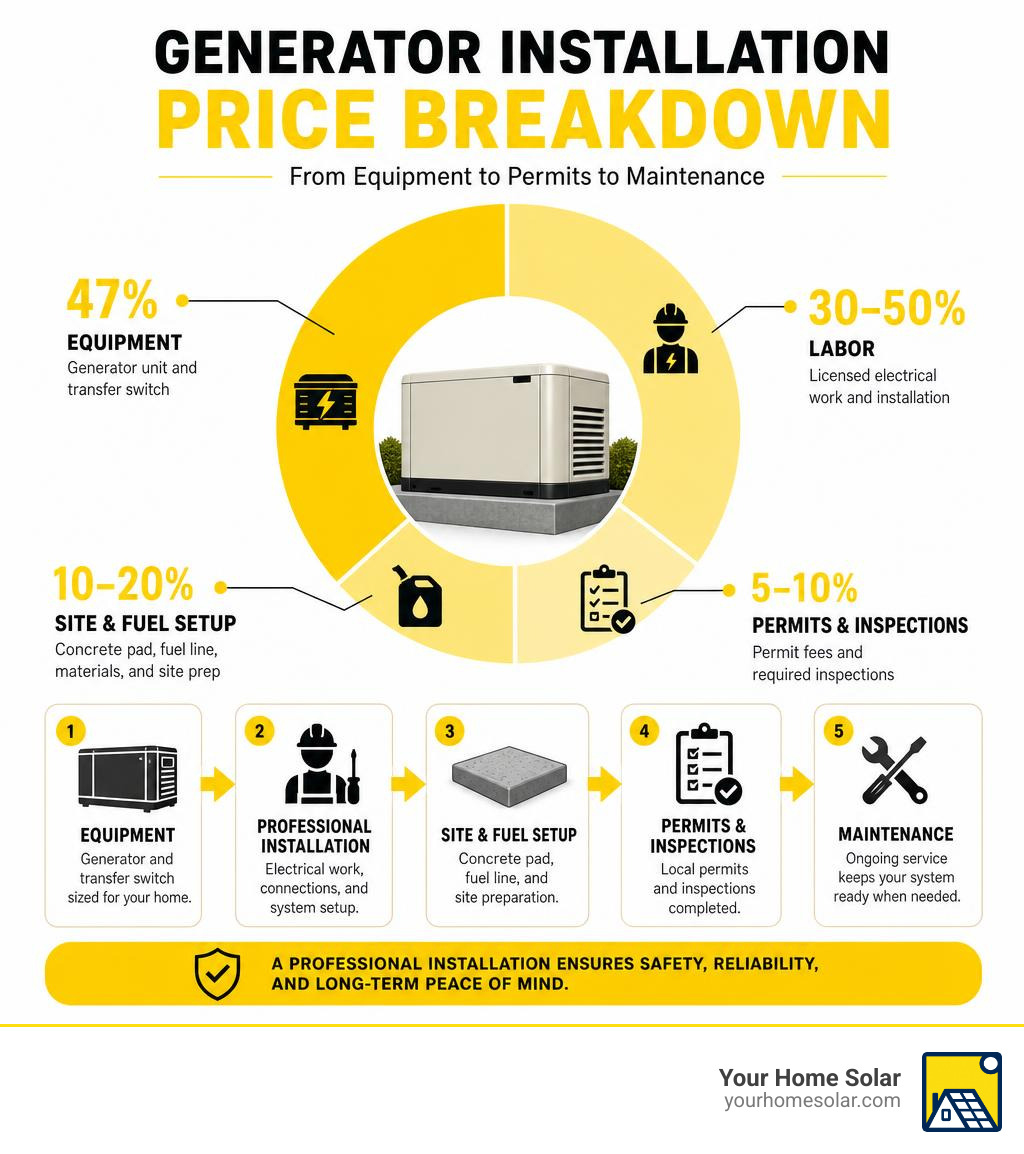
For a professionally installed standby generator in 2026, most homeowners should budget somewhere between $7,000 and $23,000+, depending on the size of the generator, the complexity of the installation, and whether the system backs up part of the home or nearly everything.
A smaller essential-load system can land near the lower end. A large whole-house generator with multiple HVAC loads, long fuel-line runs, panel upgrades, and complicated permitting can climb much higher.
For a deeper cost overview, we also recommend reading our guide on generator installation costs and what affects them.
In general, a full generator installation price includes:
- Generator equipment
- Automatic or manual transfer switch
- Licensed electrical labor
- Fuel connection or fuel storage setup
- Concrete pad or approved base
- Permits and inspections
- Electrical panel work, if needed
- Startup testing and homeowner walkthrough
A generator is not a toaster. You cannot simply buy it, plug it in, and hope the lights come back on during a storm. Well, you can hope, but hope is not code-compliant.
The Short Answer: Typical Installed Cost for a Whole-House Generator
Here is a practical 2026 pricing snapshot:
| Generator Size | Typical Use | Typical Installed Price |
|---|---|---|
| 7-10 kW | Basic essentials | $6,200 – $10,000+ |
| 10-14 kW | Essentials, fridge, lights, small loads | $10,000 – $15,000 |
| 17-20 kW | Larger partial-home backup | $10,500 – $16,500 |
| 22-25 kW | Most whole-home needs | $12,200 – $19,000 |
| 24-26 kW+ | Larger homes, multiple HVAC loads | $19,000 – $23,000+ |
| 30-48 kW | Large homes or high electrical demand | $18,500 – $29,500+ |
For many East Tennessee homes, a 17-24 kW standby generator is a common range for whole-home or managed whole-home backup. Homes with electric heat, multiple heat pumps, well pumps, EV chargers, or large central air systems may require a larger unit or smart load management.
Why Southern California Generator Installation Often Costs More
Although Your Home Solar serves East Tennessee, many homeowners compare their quotes with national or high-cost-market pricing. Southern California is often at the higher end because of:
- Higher labor rates
- More involved permitting and inspection requirements
- HOA review in many neighborhoods
- Tight side yards and access limitations
- Seismic anchoring rules in some jurisdictions
- Wildfire, emissions, or air-quality considerations
- Utility coordination and gas meter assessments
Those same categories matter in East Tennessee too, but the cost pressure is usually different. In Knoxville, Maryville, Oak Ridge, Johnson City, Kingsport, Sevierville, and surrounding counties, pricing is more likely to be affected by fuel access, panel condition, trenching distance, site slope, rural travel distance, and whether the home needs electrical upgrades.
Generator Installation Price by Backup Coverage Level
Not every home needs a generator big enough to run everything at once. In fact, oversizing can waste money. The smarter question is: What do you truly need powered during an outage?
| Backup Level | What It Usually Powers | Typical Installed Cost | Best For |
|---|---|---|---|
| Essential backup | Refrigerator, lights, outlets, internet, medical device, furnace blower | $10,000 – $15,000 | Budget-conscious homeowners |
| Managed whole-home | Most major loads with smart load shedding | $13,000 – $19,000 | Most full-size homes |
| Full whole-home | HVAC, kitchen, laundry, well pump, most circuits | $19,000 – $23,000+ | Larger homes or high-comfort needs |
Load management can be a major money saver. Smart modules can temporarily pause high-demand appliances so a smaller generator can support more of the home. That means you may not need to buy the biggest unit on the shelf.
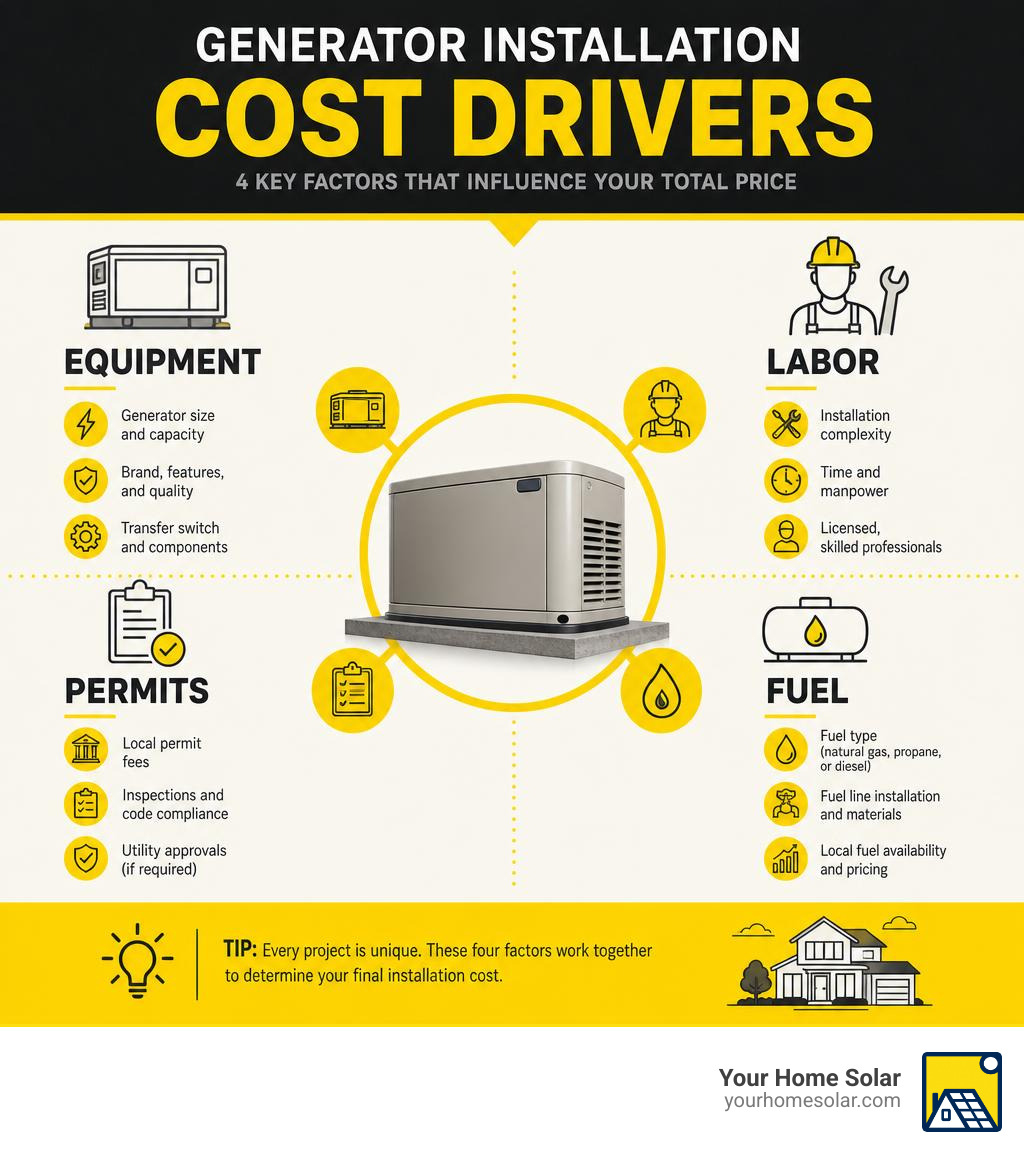
What Drives the Final Cost: Size, Fuel Type, Location, and Brand Tier

The final generator installation price comes down to a few big decisions:
- How much power you need
- What fuel source you will use
- Where the generator can be placed
- Whether the electrical panel needs upgrades
- What type of transfer switch is required
- Whether you choose entry-level, premium, new, used, or surplus equipment
- How much trenching, piping, or utility coordination is involved
A good installer should not guess. We look at loads, layout, safety clearances, fuel access, and the homeowner’s outage priorities before recommending a system.
How Generator Size Changes the Generator Installation Price
Generator size is measured in kilowatts, or kW. But sizing is not just about square footage. A 2,000 sq ft home with gas heat may need less generator capacity than a 1,600 sq ft home with electric heat, a well pump, and two HVAC units.
Installers consider:
- Running watts for appliances already operating
- Starting watts or starting kVA for motors and compressors
- Central AC size
- Heat pump or electric furnace demand
- Water heater type
- Well pump size
- Refrigerator and freezer loads
- Medical equipment
- Home office equipment
- EV charger needs
- Whether load shedding will be used
Typical installed ranges by size:
| Size Range | Common Application | Installed Cost Range |
|---|---|---|
| 7-10 kW | Essentials only | $6,200 – $10,000+ |
| 13-16 kW | Partial home | $8,800 – $15,000 |
| 17-20 kW | Managed larger backup | $10,500 – $16,500 |
| 22-25 kW | Common whole-home range | $12,200 – $19,000 |
| 30-48 kW | Large homes, high loads | $18,500 – $29,500+ |
The larger the generator, the higher the equipment cost. However, price per kW often decreases as size increases. The trick is finding the sweet spot: big enough to do the job, not so big that you overpay for capacity you rarely use.
Natural Gas vs Propane vs Diesel Installation Costs
Fuel type affects both the upfront cost and the long-term operating cost.
Natural gas is popular where utility gas is available. It avoids on-site refueling and can run as long as the gas utility is operating. The installation may require a gas meter assessment, fuel-line upsizing, or new piping.
Propane works well for rural East Tennessee homes without natural gas. It stores on-site and has a long shelf life, but it requires a tank, proper placement, and refills. A new large propane tank can add thousands to the project depending on size and site conditions.
Diesel is more common for larger or commercial-style standby applications. Diesel generators can be durable and efficient under heavy load, but tanks, emissions rules, fuel storage, and maintenance can make them more expensive for typical homes.
For more backup-power planning tips, see our guide to emergency home power options.
| Fuel Type | Upfront Cost Impact | Ongoing Considerations |
|---|---|---|
| Natural gas | Often lower if service is nearby | Utility supply, gas meter capacity |
| Propane | Tank and piping can add cost | Refills, tank sizing, storage |
| Diesel | Often higher upfront | Fuel storage, maintenance, emissions |
New vs Used or Surplus Units: Where Savings Can Backfire
Used or surplus generators can look tempting. Some used or certified equipment may cost 30-50% less than new. That sounds great until the hidden risks show up.
Before buying used, verify:
- Runtime hours
- Maintenance records
- Warranty status
- Transfer switch compatibility
- Fuel type compatibility
- Parts availability
- Code compliance
- Whether a licensed installer will install it
- Whether the manufacturer will support it
A used generator with unknown history can turn into a very expensive lawn ornament. And unlike garden gnomes, generators are not charming when they fail during an outage.
Brand and Equipment Tier Pricing Without Overpaying
Popular standby generator brands vary in cost, warranty coverage, noise level, enclosure quality, monitoring options, and service network support. Premium units may add 25-35% to the equipment cost, but they may also offer longer lifespan, stronger components, quieter operation, or better warranty support.
When comparing brands, look beyond the sticker price:
- Warranty length and exclusions
- Availability of local service
- Noise rating
- Corrosion-resistant enclosure
- Load management capability
- Remote monitoring
- Parts availability
- Expected service life
With proper maintenance, many standby generators can last up to 20 years, and some premium systems may last longer. The best value is not always the cheapest unit. It is the system that works reliably when the grid does not.
Line-Item Generator Installation Price Breakdown
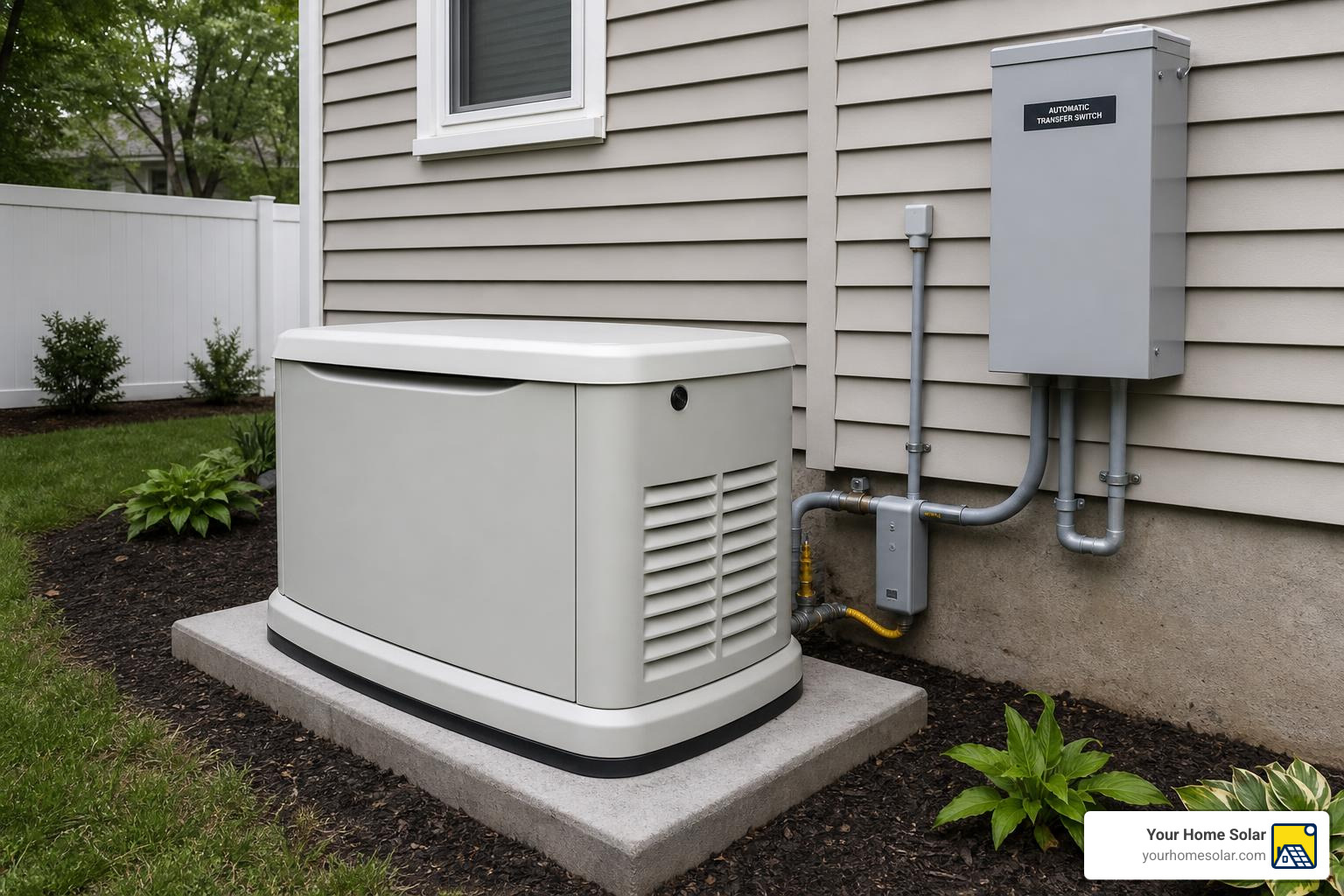
A complete installation has several moving parts. Here is what homeowners should expect to see in a detailed quote.
Generator Installation Price for Labor and Electrical Work
Labor is one of the biggest parts of the project. In 2026, residential generator labor commonly ranges from $1,500 to $8,000, with whole-house standby labor often falling between $3,000 and $7,500 depending on complexity.
Labor often accounts for 30-50% of the total project cost.
Electrical work can include:
- Mounting and wiring the transfer switch
- Connecting the generator to the main panel
- Installing load management modules
- Adding or modifying circuits
- Coordinating utility disconnects when required
- Startup testing
- Load testing
- Simulated outage testing
Most professional installations take 2-3 days, though simple jobs may be faster and complex projects can take longer.
Concrete Pad, Gravel Base, and Site Preparation Costs
Standby generators need a stable, level base. Depending on the system and local requirements, that may be a concrete pad, composite pad, or prepared gravel base.
Concrete pads commonly cost $50-$75 per square foot. A typical 3×6 ft pad may cost around $1,000, depending on access, grading, and materials.
Site preparation may include:
- Grading
- Drainage improvements
- Vegetation removal
- Gravel base installation
- Concrete pad installation
- Clearance from doors, windows, and vents
- Access path preparation
- Vibration control
- Weatherproofing considerations
Generator placement matters. Putting the unit close to the gas meter and electrical panel can reduce trenching, piping, and wiring costs, as long as safety clearances and local code requirements are met.
Transfer Switch, Subpanel, and Load Management Costs
The transfer switch is the safety brain of the system. It prevents generator power from backfeeding into utility lines, which can endanger utility workers and damage equipment.
Typical transfer switch costs vary:
| Transfer Switch Type | Typical Cost Range |
|---|---|
| Manual transfer switch | $700 – $1,550 |
| Automatic transfer switch | Around $1,200+ |
| Whole-home ATS | $2,000 – $5,000 |
| Smart/load-management switch | Varies by system and modules |
An automatic transfer switch starts the generator when utility power fails and transfers selected loads automatically. A manual switch costs less but requires homeowner action.
Load management modules can sometimes reduce the generator size needed by controlling large loads like HVAC, water heaters, or EV chargers.
Electrical Panel Upgrades, Fuel Lines, and Permits
Older homes may need electrical work before a generator can be safely connected. Panel upgrades can add $500 to $4,000, depending on the scope. Some homes may need a service upgrade, subpanel, or circuit reconfiguration.
Fuel-related costs may include:
- Gas line extension at roughly $15-$30 per foot
- Gas meter assessment or upgrade
- Propane tank installation
- Trenching
- Pressure testing
- Fuel shutoff valves
- Inspection coordination
Permits and inspections commonly range from $50 to $800, depending on the local authority, project scope, and required trades.
Before signing a quote, verify these line items:
- Generator model and kW rating
- Transfer switch type and amperage
- Load management modules included
- Concrete pad or base included
- Fuel-line work included
- Permit fees included
- Electrical panel upgrades included or excluded
- Utility coordination included
- Startup and testing included
- Warranty registration included
- Maintenance plan options listed
For national cost context, this generator installation cost overview is also useful, but your actual quote should always be based on your home, your panel, your fuel source, and your local requirements.
Regional Rules, Professional Installation, and Quote Accuracy
Local rules can change the final price. That is true in East Tennessee and in high-cost regions elsewhere. The local authority having jurisdiction, or AHJ, determines what permits, inspections, and placement rules apply.
Southern California Pricing Factors Installers Check First
For homeowners comparing high-cost-market pricing, Southern California projects often include extra review for:
- City or county permit requirements
- HOA approval
- Fire clearance
- Noise limits
- Emissions rules
- Seismic anchoring
- Wind exposure
- Coastal corrosion concerns
- Hillside access
- Tight side yards
- Utility coordination
In East Tennessee, installers still check setbacks, fuel access, utility location, safe clearances, and local inspection requirements. The exact rules vary by city and county, which is why a site visit matters.
When Professional Installation Is Required—and Why DIY Is Risky
Whole-home standby generator installation is not a casual DIY project. In most cases, it requires licensed electrical work, fuel-line work, permits, and inspections.
Professional installation protects against:
- Carbon monoxide hazards
- Gas leaks
- Electrical fire
- Backfeeding utility lines
- Overloaded circuits
- Voided warranties
- Failed inspections
- Insurance claim issues
A portable generator with a properly installed inlet and manual transfer switch may be simpler, but the transfer equipment should still be installed by a qualified professional. Never connect a generator directly to a home panel without an approved transfer device.
If you are choosing an installer, start with our guide to finding the right local generator professional.
How to Get an Accurate Personalized Quote
The best quote starts with good information. Before your installer visit, gather:
- Recent electric bills
- List of must-run appliances
- Photos of your electrical panel
- Photos of your gas meter or propane tank
- Preferred generator location
- AC tonnage and HVAC details
- Well pump information, if applicable
- Medical equipment needs
- Home office or internet backup needs
- HOA documents, if applicable
- Budget range
- Desired installation timeline
We use this information to size the system properly, identify hidden cost factors, and help you avoid overbuying.
If you are in Knoxville or nearby, start with our generator installation Knoxville guide.
Ongoing Costs, Financing, Incentives, and Smart Ways to Save
The installed price is only the first part of generator ownership. You should also budget for maintenance, fuel, monitoring, and possible warranty extensions.
Annual Maintenance and Fuel Costs After Installation
Annual generator maintenance commonly ranges from $80 to $600, depending on the system, service plan, and usage. Many homeowners should expect roughly $150 to $300+ per year for basic maintenance, while more comprehensive plans may cost more.
Maintenance can include:
- Oil changes
- Filter replacement
- Spark plug inspection
- Battery testing or replacement
- Valve checks on some units
- Exercise cycle review
- Firmware or monitoring checks
- Load testing
Fuel cost depends on fuel type, generator size, load, and outage duration. A 15-20 kW generator running for a full day can use a noticeable amount of fuel. Natural gas will show up on the utility bill. Propane requires tank refills. Diesel requires stored fuel management.
Warranties, Monitoring, and Add-Ons Worth Budgeting For
Add-ons can improve reliability and convenience, but they should be priced clearly.
Common extras include:
- Extended warranties: $300-$1,500
- Remote monitoring: $200-$400
- Smart load modules
- Whole-house surge protection
- Cold-weather accessories where needed
- Maintenance plans
- Emergency service priority
Remote monitoring can be especially helpful because it alerts you or your service provider if the generator has a fault. That is much better than discovering a problem during a thunderstorm while holding a flashlight in your teeth.
Financing, Rebates, Tax Incentives, and Seasonal Discounts
Financing can spread the cost into monthly payments, depending on credit approval and available programs. Some manufacturers and installers offer promotional financing or seasonal discounts during slower installation periods.
Potential savings options to ask about:
- Contractor financing
- Manufacturer promotions
- Off-season scheduling
- Bundled electrical work
- Solar and battery alternatives
- Medical necessity tax considerations
- Local or utility programs, when available
Tax rules are specific, and incentives change. Always confirm with a tax professional before assuming a generator qualifies for a deduction or credit. In limited cases, backup power for medically necessary equipment may have tax implications, but it depends on the situation.
If you are comparing generator backup with battery backup, read our battery generator backup guide.
How to Reduce Cost Without Sacrificing Safety
You do not need to cut corners to save money. You need to cut waste.
Smart ways to reduce cost include:
- Choose essential-circuit backup instead of full whole-home backup
- Use smart load shedding to reduce generator size
- Place the unit near the electrical panel and fuel source when code allows
- Avoid long trenching runs
- Prepare the site before installation
- Compare detailed quotes, not vague totals
- Schedule during less busy seasons
- Bundle needed electrical upgrades
- Maintain the generator to avoid expensive repairs
- Avoid underqualified labor
The cheapest quote can become the most expensive one if it skips permits, uses improper transfer equipment, or voids the warranty. For a bigger-picture look at outage protection value, see the real price of never losing power again.
Frequently Asked Questions About Generator Installation Price
What is the average total cost to install a whole-house generator in Southern California?
In Southern California, a whole-house standby generator commonly falls around $10,000 to $23,000+ installed, with higher-end projects exceeding that range when permitting, access, utility coordination, seismic anchoring, or major electrical upgrades are involved.
A 20-24 kW system is a common whole-home size range, but the final cost depends on the home’s electrical loads, fuel source, transfer switch, installation distance, and local requirements.
For East Tennessee homeowners, the same cost categories apply, but local labor rates, fuel availability, site access, and county or city inspection requirements drive the actual quote.
How much does a generator for a 2,000 sq ft home cost installed?
A 2,000 sq ft home often needs a 17-24 kW generator, with 20 kW being a common starting point for many managed whole-home systems.
Typical installed cost: $10,500 to $16,500+
The price may be higher if the home has:
- Multiple HVAC systems
- Electric heat
- Electric water heating
- Well pump
- EV charger
- Long fuel-line run
- Old electrical panel
- Full whole-home transfer switch
- Propane tank installation
Load management can sometimes allow a smaller generator to serve the home safely, which may save thousands.
Is a whole-house generator worth the price?
For many homeowners, yes. A whole-house generator can be worth it if you:
- Experience frequent outages
- Work from home
- Depend on medical equipment
- Need refrigeration for food or medicine
- Have a well pump
- Need heating or cooling for comfort and safety
- Want automatic backup without dragging out a portable generator
- Value peace of mind and resale appeal
A standby generator is a long-term investment. With proper maintenance, many units can last up to 20 years. The value is not only in the equipment; it is in keeping your home safe, comfortable, and functional when the grid goes down.
Conclusion
The real generator installation price is not just the cost of the generator. It is the full installed system: equipment, labor, transfer switch, fuel setup, permits, inspections, startup testing, and long-term maintenance.
For most homeowners, a realistic 2026 budget is:
- $1,500 – $4,500 for a portable generator hookup
- $10,000 – $15,000 for essential standby backup
- $13,000 – $19,000 for managed whole-home backup
- $19,000 – $23,000+ for larger full whole-home systems
At Your Home Solar, we help homeowners across Knoxville, Oak Ridge, Maryville, Johnson City, Kingsport, Morristown, Sevierville, Farragut, Powell, and surrounding East Tennessee communities choose backup power that fits their home, budget, and goals. Our focus is trusted expertise, tailored recommendations, reliable installation, and 100% customer satisfaction.
If you want a clear, line-item estimate without the mystery math, start here: Explore generator installation costs and options.