Why Every Homeowner Needs a Home Backup Generator Plan
A home backup generator can be the difference between riding out a power outage in comfort and dealing with spoiled food, frozen pipes, and days without heat or light.
Here’s a quick overview of your main options:
| Type | Best For | Auto-Start | Typical Cost |
|---|---|---|---|
| Standby Generator | Whole-home backup | Yes | $3,400–$7,000+ |
| Portable Generator | Essential circuits | No | $800–$2,000 |
| Inverter Generator | Sensitive electronics | No | $500–$3,000 |
| Battery Backup System | Silent, clean power | Yes | $5,000–$20,000+ |
Power outages aren’t just an inconvenience. They can mean lost income, spoiled groceries, failed medical equipment, and real property damage from burst pipes or flooding. In East Tennessee, where severe storms can knock out power for days at a time, having a reliable backup power plan isn’t optional — it’s essential.
This guide covers everything you need to choose, size, install, and maintain the right backup power solution for your home.
I’m Ernie Bussell, founder and CEO of Your Home Solar — East Tennessee’s #1 solar energy contractor — and my background in energy systems and home power solutions means I can walk you through every home backup generator option with honest, clear guidance. Let’s get into it.
Understanding the Main Types of Home Backup Generator Systems

When it comes to keeping the lights on in Knoxville or Johnson City, not all systems are created equal. Choosing the right home backup generator depends on your budget, your home’s size, and how much work you want to do when the grid fails.
Standby vs. Portable Home Backup Generator
The biggest decision you’ll make is between a permanent standby unit and a portable model.
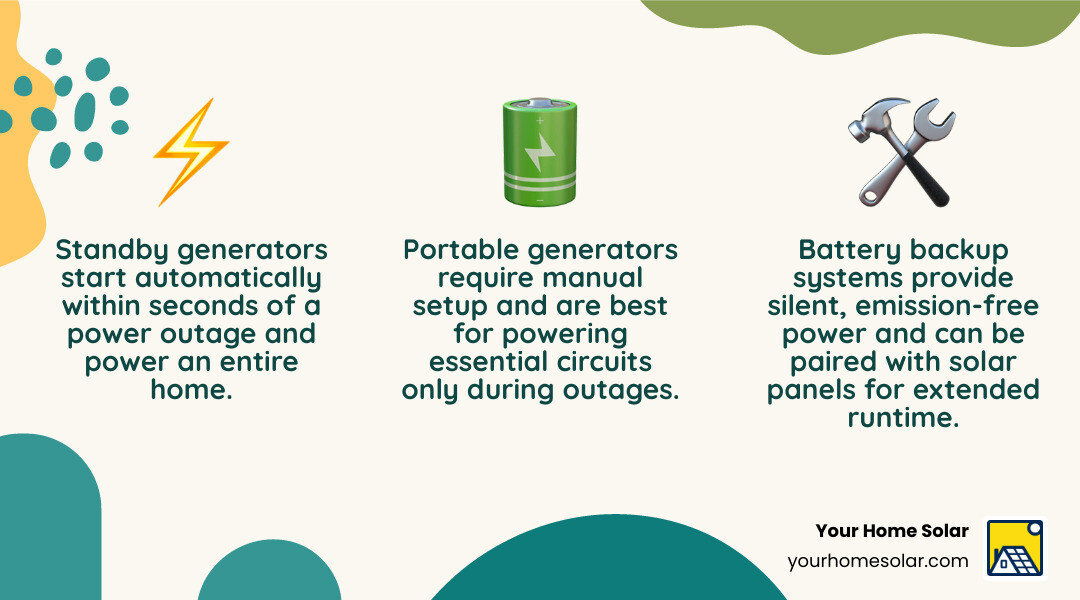
Standby Generators: These are the “set it and forget it” champions of the power world. A standby home backup generator is permanently installed on a concrete or composite pad outside your home, much like a central air conditioning unit. It is hardwired into your home’s electrical system and connected to a fuel source like natural gas or liquid propane.
The magic happens via an automatic transfer switch (ATS). When the power goes out, the ATS detects the loss, starts the generator, and switches your home’s electrical load over—usually in less than 30 seconds. For a deep dive into how these systems keep you safe, check out The Ultimate Guide to Staying Powered When the Grid Goes Down.
Portable Generators: These are more affordable but require “sweat equity.” When the power fails, you have to wheel the unit out of the garage (at least 20 feet from the house!), fuel it up, start it manually, and run heavy-duty extension cords to your appliances. While great for camping or running a few lights, they lack the seamless automation of standby units.
Inverter and Battery-Based Solutions
If you have sensitive electronics—like high-end computers, medical devices, or smart home hubs—standard portable generators can be a bit “noisy” electrically.
Inverter Generators: These units use advanced electronics to throttle the engine up and down based on demand. This results in “clean” power with less than 3% Total Harmonic Distortion (THD), which is safe for your most delicate gear. They are also significantly quieter; some models, like the Pulsar 7,250-Watt, operate at just 62 dB, roughly the volume of a normal conversation.
Battery-Based Systems: For those who want silent, emission-free power, battery backups are the future. Systems like the EcoFlow Delta Pro Ultra can switch to backup power in a lightning-fast 20 milliseconds—so fast your desktop computer won’t even reboot. These are ideal for urban areas in Farragut or Maryville where noise ordinances might make gas engines a nuisance. You can learn more about these “silent sentinels” in our guide: Don’t Be Powerless: Top Home Battery Backup Solutions and explore the benefits of Power to the People with a Battery Generator Backup.
Sizing and Fuel Considerations for Your Home
Getting the size right is critical. If your home backup generator is too small, you’ll trip the breaker the moment the AC kicks on. If it’s too large, you’re wasting money and fuel.
Calculating Wattage for a Home Backup Generator
To size your system, you need to understand two numbers: Running Watts and Starting (Surge) Watts.
- Running Watts: The continuous power needed to keep an appliance going.
- Starting Watts: The extra “oomph” needed to start a motor (like your refrigerator compressor or HVAC fan). This can be 2–3 times the running wattage.
Typical Appliance Loads:
- Refrigerator: 700W running / 2,200W starting
- Window AC (10,000 BTU): 1,200W running / 3,600W starting
- Sump Pump: 800W running / 2,300W starting
- LED Light Bulb: 10W running / 10W starting
For basic essentials, a 5,000-watt generator is usually the minimum. However, for a 2,500-square-foot home in Tennessee with central air and a well pump, you’ll likely need a large whole-house generator delivering 15,000 to 24,000 watts. For a step-by-step walkthrough, see Don’t Get Caught Off Guard: The Ultimate Guide to Emergency Home Power.
Comparing Fuel Sources: Natural Gas, Propane, and Solar
Your fuel choice determines how long you can stay powered during a long-term outage.
- Natural Gas: The gold standard for standby units. It’s piped directly to the house, so you never have to refuel. It’s “unlimited” power as long as the gas lines are intact.
- Liquid Propane (LP): Excellent for rural properties in Sevier or Blount County. Propane doesn’t degrade over time like gasoline. A large standby generator can run for 120 to 250 hours on a standard 500-gallon propane tank.
- Gasoline: Common for portables but has a short shelf life (about 6–12 months). In a major storm, gas stations often lose power too, making refueling difficult.
- Solar/Battery: The ultimate in self-sufficiency. By pairing batteries with solar panels, you can recharge your “fuel” every time the sun comes out. We often help clients weigh these options in our guide Comparing Solar with Traditional Gas Generators for East Tennessee Homes.
Installation, Costs, and Safety Requirements

Installing a home backup generator isn’t a weekend DIY project. It involves high-voltage electricity and, often, explosive gas lines. Proper installation also means following manufacturer guidance and local code requirements, including safe placement, ventilation, and the use of a properly rated transfer switch.
Essential Features for Safety and Convenience
Modern generators come packed with tech to keep you safe and informed:
- Automatic Transfer Switch (ATS): This is the brain of the system. It prevents “backfeeding,” which is when your generator sends electricity back into the utility lines-a deadly hazard for line workers.
- CO Detection: Many portable models now include automatic carbon monoxide shutoffs. This is a literal lifesaver, as it kills the engine if dangerous gas levels build up.
- Wi-Fi/App Connectivity: Brands like Generac (with Mobile Link) and Champion (with aXis technology) allow you to check your generator’s status from your phone. You can see if it is running, how much fuel is left, and even receive maintenance alerts while you’re at work.
- Noise Levels: While older generators sounded like a freight train, modern units are much quieter. For example, the Generac Guardian 22-kW operates at about 66 dB, while some inverter models like the DuroMax 11,000-Watt run at 61 dB-roughly the sound of a dishwasher.
Budgeting for Your Home Backup Generator
Let’s talk numbers. The “sticker price” of the generator is only part of the story.
- The Hardware: A whole-house standby generator typically costs between $3,400 and $7,000.
- The Installation: This is where it gets variable. Professional installation-which includes electrical work, gas plumbing, and site prep-can range from $2,000 to over $20,000 depending on the complexity of your home’s layout.
- Ongoing Costs: You’ll need to budget for annual maintenance (oil and filters) and the fuel itself.
For a transparent breakdown of what to expect, read Generator Installation Decoding the Dollars and Cents and The Real Price of Never Losing Power Again.
Maintenance and Maximizing Generator Lifespan
A home backup generator is like a car that sits in the driveway for months but must start perfectly at 70 mph the moment you turn the key.
Maintenance Schedule:
- Self-Test Mode: Most standby units are programmed to run for 5–12 minutes once a week. This keeps the battery charged and the engine parts lubricated.
- 6-Month Service: We recommend a professional check-up every six months. This includes checking the battery, spark plugs, and coolant levels.
- Oil Changes: Just like your car, generators need oil changes. For standby units, this is usually every 100–200 hours of runtime or once a year.
- Lifespan: A well-maintained standby generator can last 25–30 years. Even a consumer-grade portable generator can provide 1,000 to 3,000 hours of service. If you only use it for 100 hours a year during storms, that’s 10 to 30 years of protection!
If you’re in the Maryville area, we have specific tips for you here: Don’t Get Left in the Dark with Maryville Generator Installation.
Frequently Asked Questions about Home Backup Power
How long can a generator run continuously?
Portable gas generators typically run for 10–14 hours on a full tank depending on the load. Standby units running on natural gas can run for weeks, though they should be shut down every 24 hours to check the oil level. On a standard propane tank, a large standby unit usually offers 120 to 250 hours of continuous runtime.
What is the difference between running watts and starting watts?
Running watts are what an appliance needs to stay powered. Starting watts are the temporary “surge” of power required to get a motor or compressor moving. When sizing your home backup generator, you must account for the highest starting wattage of your largest appliance (like your AC or well pump).
Do I need a permit to install a standby generator?
Yes. In most parts of East Tennessee, including Knoxville and Oak Ridge, a standby generator requires both electrical and plumbing permits. This ensures the unit is safely distanced from windows (to prevent CO poisoning) and that the gas lines are sized correctly. Professional installation handles this paperwork for you.
Conclusion
At Your Home Solar, we’ve seen how a well-planned backup system can turn a terrifying storm into a minor inconvenience. Whether you’re looking for a high-output standby unit in Knoxville or a clean battery backup solution in Sevierville, our goal is to provide a tailored, reliable installation that gives you 100% peace of mind.
Don’t wait for the next “Big One” to hit the Tennessee Valley. Don’t Be Powerless Against Tennessee Storms-take control of your energy security today.
Ready to see which system fits your home and budget? Request a professional home backup generator installation in Knoxville and let us help you keep the lights on, no matter what the weather does.