What Does an On-Grid Solar System Actually Cost in 2026?
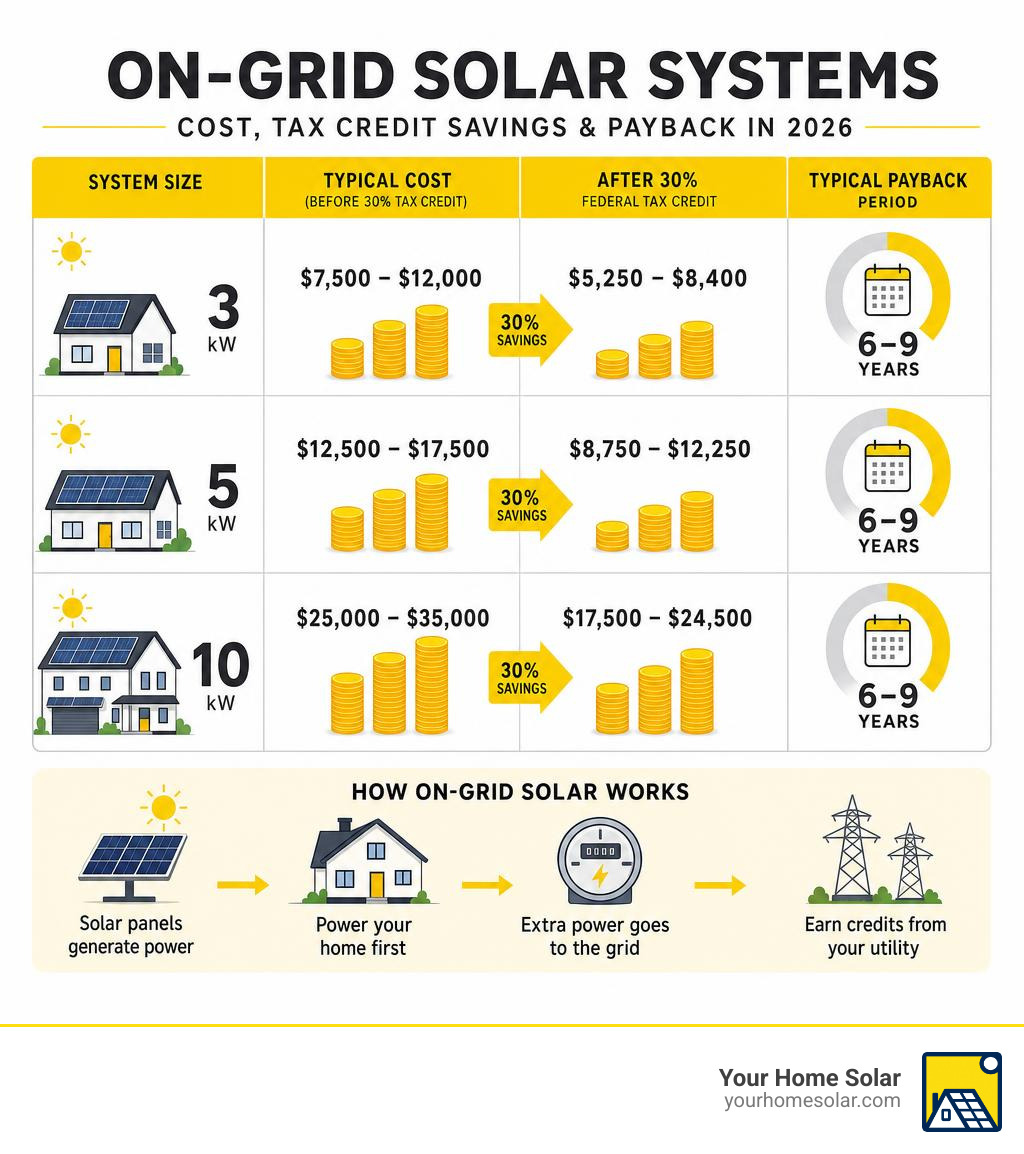
Understanding the cost of on grid solar system installations is the first step toward making a smart energy decision for your home. Here’s a quick look at what most homeowners pay in 2026:
| System Size | Typical US Cost (Before Incentives) | After 30% Federal Tax Credit |
|---|---|---|
| 3 kW | ~$7,500–$12,000 | ~$5,250–$8,400 |
| 5 kW | ~$12,500–$17,500 | ~$8,750–$12,250 |
| 10 kW | ~$25,000–$35,000 | ~$17,500–$24,500 |
Costs vary by location, equipment choice, and installer. Prices above reflect US residential grid-tied systems.
Electricity bills are climbing. Power outages are becoming more common. And more East Tennessee homeowners are asking the same question: is solar worth it, and what will it actually cost me?
Grid-tied solar — also called on-grid solar — is by far the most popular and cost-effective way to go solar today. It connects your home to the utility grid while your panels offset what you pull from it. No expensive battery bank required.
But pricing isn’t always simple. A 10 kW system in one state can cost thousands more than the same system two states over. Incentives, labor rates, and equipment choices all move the number.
This guide breaks it all down clearly, so you can walk into any solar conversation knowing exactly what to expect.
I’m Ernie Bussell, founder and CEO of Your Home Solar — East Tennessee’s #1 solar contractor — and I’ve spent years helping homeowners cut through the noise around the cost of on grid solar system installations, drawing on my background in nuclear-grade quality assurance, a decade in education, and leading a $40 million per year solar operation. That experience shapes every piece of guidance you’ll find in this article.
Cost of on grid solar system terms to learn:
Breaking Down the Cost of On Grid Solar System Installations

When you look at a quote for a solar installation, it is easy to get overwhelmed by the numbers. However, understanding the basic pricing unit—the cost per watt ($/W)—makes comparing different quotes simple. In 2026, the gross cost per watt for a residential on-grid system in the United States typically ranges from $2.50 to $3.50.
To put this into perspective, a larger system benefits from economies of scale. Much like buying your favorite snacks in bulk, the per-unit cost of solar equipment and labor decreases as the overall system size increases. A small 3 kW system might sit on the higher end of the per-watt spectrum, whereas a 10 kW system will usually hover closer to the lower $2.50/W mark.
To learn more about how system size impacts your initial quote, check out The Kilowatt Crunch: Your Guide to Average Solar Panel Costs.
Average Cost of On Grid Solar System by Capacity
To help you visualize how capacity translates to cost, let’s look at the standard system sizes installed across the United States, Canada, Ireland, and India in 2026.
| Capacity | Average Gross Cost (US) | Average Gross Cost (Canada) | Average Gross Cost (Ireland) | Average Gross Cost (India) | Typical Household Size |
|---|---|---|---|---|---|
| 1 kW | N/A (Too small for US homes) | N/A | N/A | ~Rs 79,000 | Very small cottage / Basic lighting |
| 3 kW | $7,500 – $12,000 | $9,000 – $15,000 CAD | €6,100 – €7,350 (3.5 kWp) | ~Rs 1.2 – 1.7 Lakhs | 1–2 People (Low consumption) |
| 5 kW | $12,500 – $17,500 | $15,000 – $22,000 CAD | €8,500 – €10,500 (5.7 kWp) | ~Rs 3.10 – 3.47 Lakhs | 3–4 People (Average family) |
| 10 kW | $25,000 – $35,000 | $25,000 – $38,000 CAD | €13,000 – €16,000 | ~Rs 5.21 – 6.00 Lakhs | 4+ People (High energy users / EV) |
As shown in the table, a 10kW system in the US has a gross installed price between $25,000 and $35,000 before incentives. In Canada, the national average for grid-tied residential systems sits at $2.50–$3.80/W installed, meaning a typical grid-tied solar installation in Canada costs between $15,000 and $40,000 before incentives.
Meanwhile, in Ireland, a 3.5 kWp solar system costs €6,100–€7,350 before grants, and a 10kW system costs €13,000–€16,000 before grants. In India, a 1kW on-grid solar system costs approximately Rs 79,000, while a 5kW system ranges between Rs 3.10 Lakhs and 3.47 Lakhs.
What is Included in the Total Installed Price?
When you pay for a professional grid-tied solar installation, you aren’t just buying the blue-and-black silicon squares on your roof. You are paying for a complete, turnkey engineering project. A standard on-grid system price includes:
- Solar PV Panels: Typically 20 to 30 high-efficiency panels for a standard residential home.
- Inverter System: Either a centralized string inverter or individual microinverters mounted under each panel.
- Racking and Mounting: Robust, weather-resistant mounting hardware to secure panels to your roof.
- Electrical Wiring and Safety Equipment: Conduit, DC/AC disconnects, and protective earthing systems.
- Permitting, Engineering, and Utility Interconnection: The administrative legwork required to secure local building permits, HOA approvals, and utility grid connection agreements.
- Professional Labor: Skilled, certified installers handling high-voltage electrical work safely.
To dive deeper into the hardware and administrative steps that go into your quote, explore Beyond the Panels: Understanding Your Complete Home Solar System Investment.
Regional Pricing and Financial Incentives
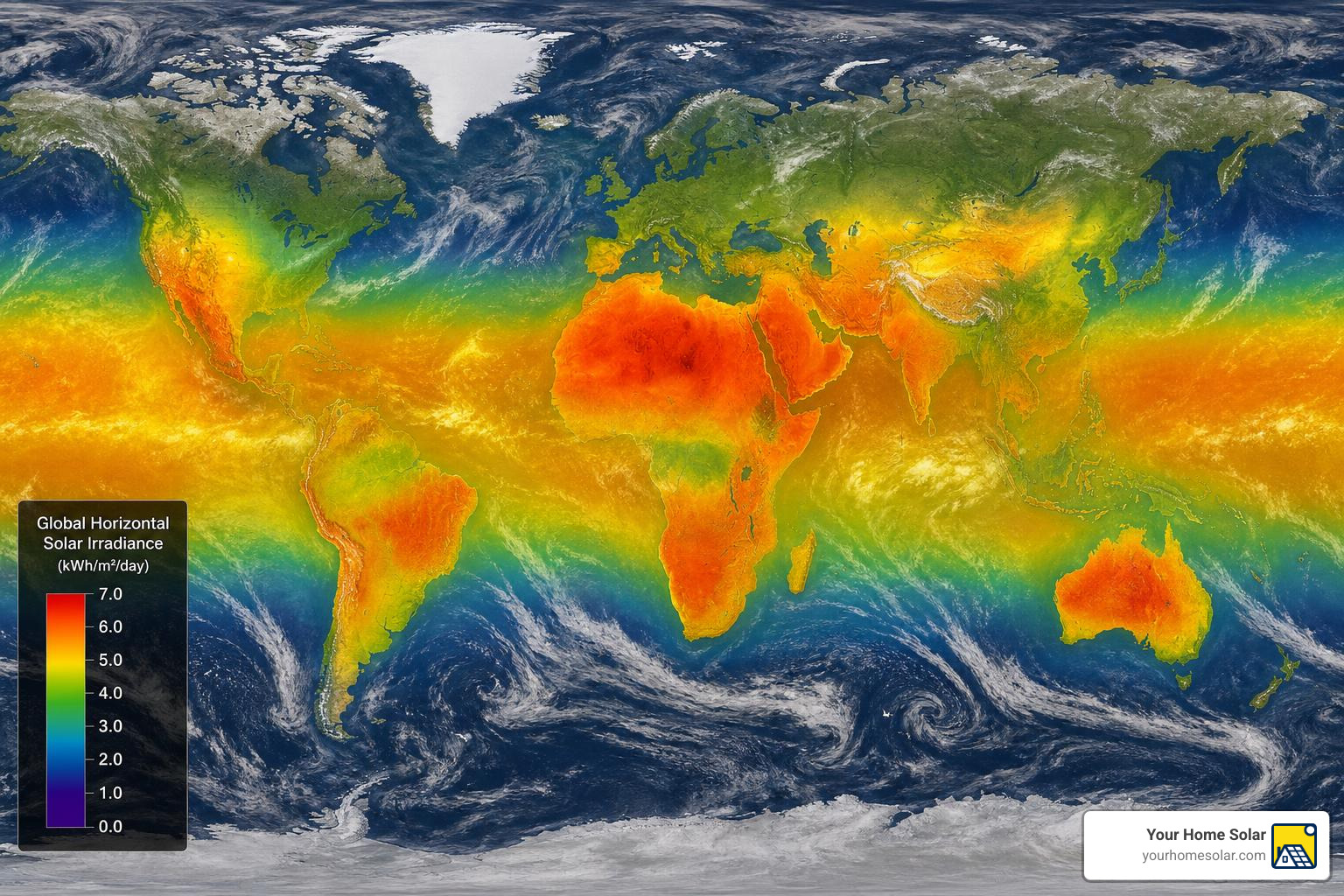
The cost of on grid solar system units is highly sensitive to geography. Local labor markets, permitting complexities, and regional utility connection fees fluctuate significantly from one region to another.
How Location Impacts the Cost of On Grid Solar System
Let’s look at how pricing behaves across different global regions in 2026:
United States: The U.S. market is highly developed, with a strong focus on high-efficiency equipment like microinverters. For a comprehensive look at how pricing shifts across the country, check out How Much Does a 10kW Solar System Cost in 2026? State-by-State Pricing | OhmSnap.
If we look closer to home in Tennessee, local conditions make solar highly appealing. You can evaluate the overall state landscape via the Tennessee Solar Panel Cost: Savings and Payback (May 2026) guide.
In local East Tennessee communities, costs are highly competitive. Homeowners in Anderson County can view specific rates through Oak Ridge, TN Solar Panel Cost: 2026 Prices and Savings. If you are located in Blount County, check out Solar Solutions in Maryville | Chroma Energy Group. For Washington County, view the Johnson City, Tennessee Solar Panel Cost – PowerOutage.us resources. Residents in Sullivan County can explore Solar Solutions in Kingsport | Chroma Energy Group, while those in Knox County can reference the Solar Panel Cost Guide in Farragut, TN (2025 Update) – EcoWatch.
Canada: The Canadian market experiences varying provincial labor rates and shipping costs. You can explore a detailed province-by-province breakdown in the Solar Panel Cost in Canada 2026 | Complete Price Guide by Province.
India: Thanks to robust local manufacturing and aggressive national programs like the PM Surya Ghar Yojana, India boasts some of the lowest solar costs globally. You can study these unique market dynamics in On-Grid Solar System Cost in India 2026 | Price, Subsidy & ROI.
Ireland: In Ireland, the Sustainable Energy Authority of Ireland (SEAI) heavily influences the market through structured grants. A 3.5 kWp system costs €4,400–€5,650 after the SEAI grant, while a larger 10 kW system drops to €11,200–€14,200 net.
Tax Credits, Subsidies, and Payback Periods
Incentives are the secret weapon that makes solar financially irresistible. In the United States, the federal Investment Tax Credit (ITC) remains at a powerful 30% in 2026. This means if your 10kW system costs $30,000 to install, you receive a direct $9,000 dollar-for-dollar tax credit, bringing your net system cost down to $21,000.
To learn how to maximize this incentive, read Harness the Sun, Save on Taxes: Everything About the Federal Solar Credit.
With these incentives factored in, typical payback periods in East Tennessee range from 7 to 11 years. Once the system pays for itself, the electricity generated for the remaining lifespan of your panels (which often exceeds 25 to 30 years) is essentially pure profit.
Comparing Grid-Tied, Off-Grid, and Hybrid Systems
When deciding on a solar installation, you have three primary architectural choices:
- Grid-Tied (On-Grid): Your system is connected directly to the utility grid. It is by far the most cost-effective option because the utility grid acts as a “free” virtual battery. When you produce excess energy, you feed it to the grid; when you need more, you pull it back. The downside? If the grid goes down, your solar system shuts off automatically for safety reasons.
- Off-Grid: You are completely severed from the utility grid. This requires a massive battery bank and a backup generator to ensure you have power during consecutive cloudy days. Off-grid systems are incredibly expensive—often starting around $40,000 for a typical home. To see a detailed comparison of off-grid pricing, check out the Off-Grid Solar System Cost Canada 2026 | Complete Price Breakdown.
- Hybrid: The best of both worlds. You stay connected to the grid but maintain a modest battery backup. This allows you to keep your lights on during a power outage while still utilizing the grid for daily load balancing. However, adding a battery typically increases your total project cost by $10,000 to $15,000.
Frequently Asked Questions about Grid-Tied Solar
Is there a monthly cost to remain connected to the grid?
Yes. Virtually all utility companies charge a basic monthly service fee (usually between $10 and $25) to remain connected to the grid, even if your solar panels produce 100% of your energy. This fee covers grid maintenance, billing administration, and infrastructure costs.
What happens to my grid-tied system during a power outage?
For safety reasons, standard grid-tied systems automatically shut down during a power outage. This prevents your system from sending electricity back into the power lines, which could severely injure utility linemen working to restore power. If backup power during outages is a priority for you, we can easily integrate a home standby generator or a battery storage solution into your system design.
How Long Do On-Grid Solar Systems Last?
Modern solar panels are incredibly durable and typically come with a 25-year to 30-year warranty. They degrade slowly, losing only about 0.5% of their efficiency per year. The central inverter is the only major component that will likely need to be replaced once during the system’s lifetime, usually around year 12 to 15, at a cost of roughly $1,500 to $3,000.
Conclusion
Investing in a grid-tied solar system is one of the smartest financial and environmental decisions you can make for your home in 2026. By understanding the cost of on grid solar system designs, equipment inclusions, and regional tax incentives, you can confidently take control of your monthly utility bills.
At Your Home Solar, we pride ourselves on delivering trusted expertise and 100% customer satisfaction across East Tennessee. Whether you are in Knoxville, Oak Ridge, Maryville, or anywhere in our beautiful region, we are here to design a system tailored to your unique energy needs.
Ready to see how much you can save? Schedule a consultation for residential solar solutions with our team today!