
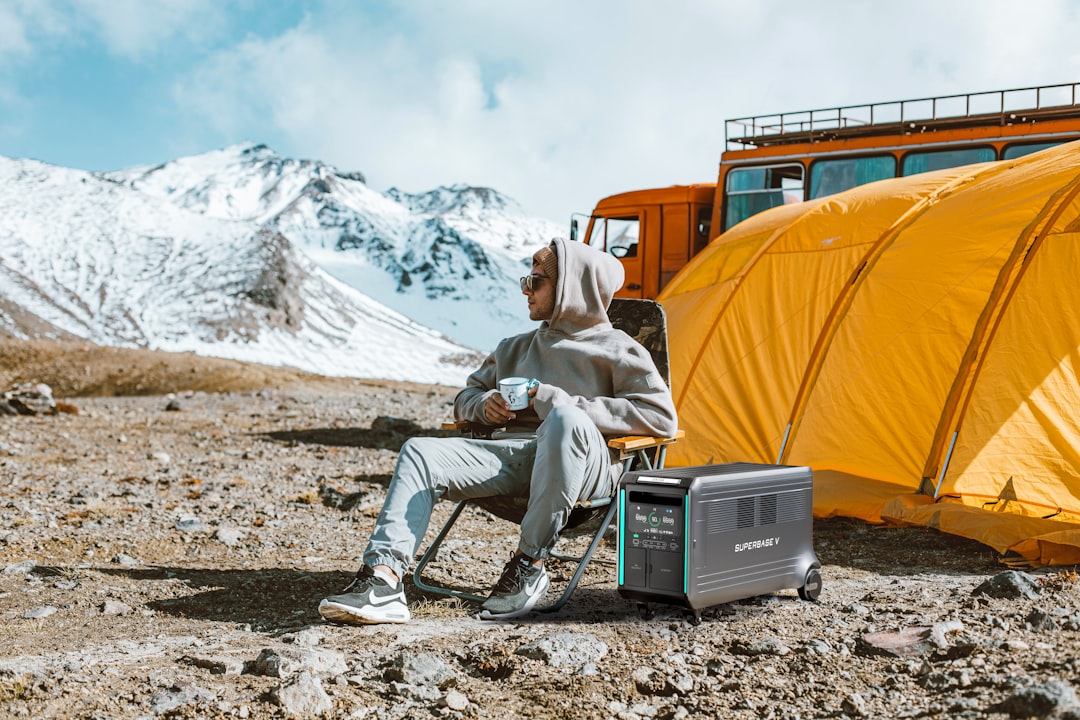
What a 1kW Portable Power Station Can Actually Do for You
A 1kW portable power station is one of the most practical tools you can own — whether you’re camping in the Smoky Mountains, dealing with a storm outage, or just want a reliable backup for essential devices.
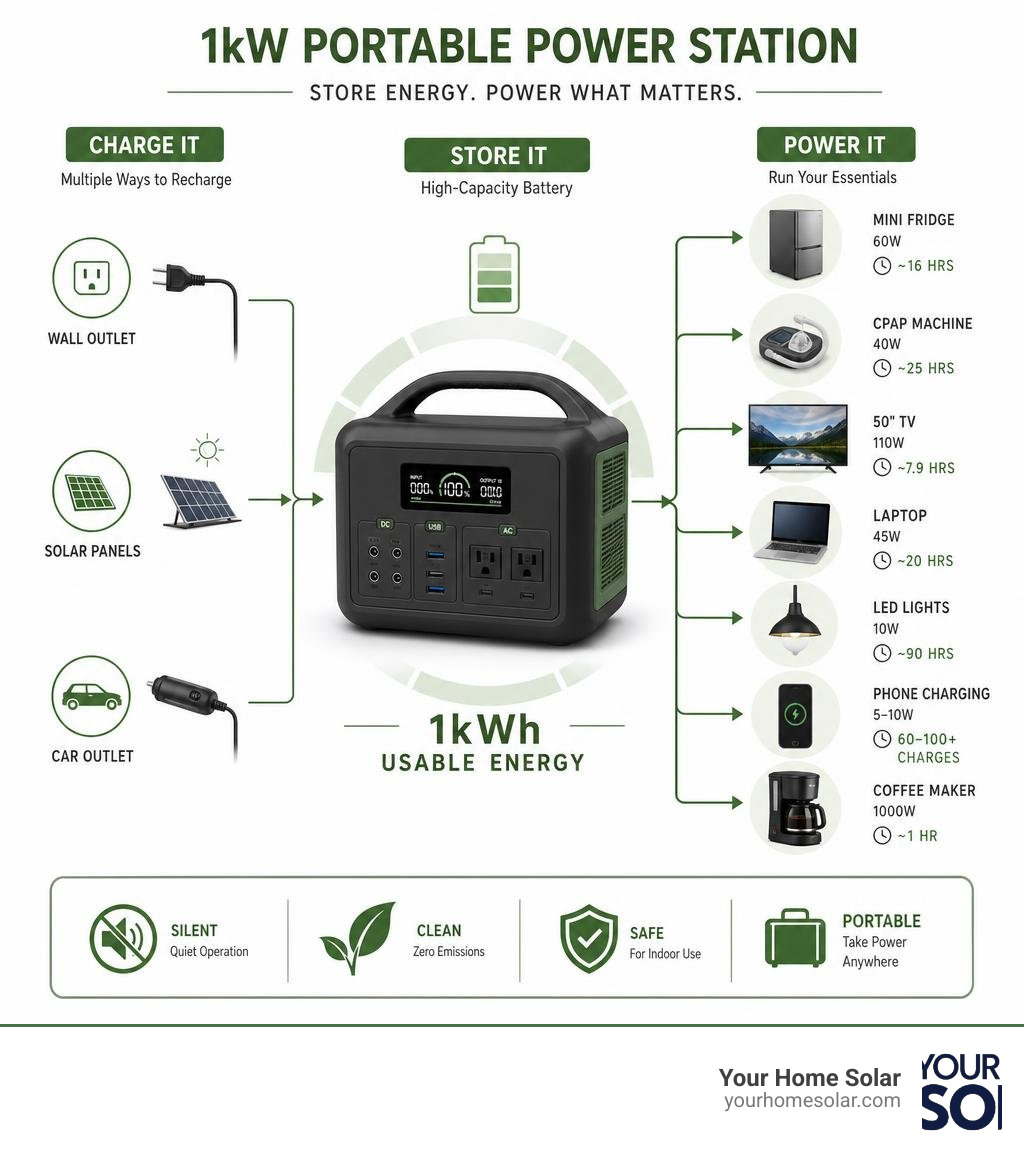
Here’s a quick snapshot of what a 1kW power station can do:
| Device | Typical Power Draw | Estimated Runtime (1kWh) |
|---|---|---|
| Mini fridge | 60W | ~16 hours |
| CPAP machine | 40W | ~25 hours |
| 50-inch TV | 110W | ~7.9 hours |
| Laptop | 45W | ~20 hours |
| LED lights | 10W | ~90 hours |
| Phone charging | 5–10W | 60–100+ charges |
| Coffee maker | 1000W | ~1 hour |
Runtime estimates assume ~90% inverter efficiency. Actual results vary by device and conditions.
Most 1kW power stations hold between 992Wh and 1056Wh of usable energy — enough to handle the essentials through a short outage or a weekend trip without hookups.
They work by storing electricity in a lithium battery pack, then converting it to usable AC or DC power through a built-in inverter. You can recharge them from a wall outlet, solar panels, or your car — making them genuinely flexible.
They’re silent, emission-free, and safe to use indoors — which puts them in a completely different category from gas generators.
I’m Ernie Bussell, founder and CEO of Your Home Solar, East Tennessee’s top solar energy contractor, and my background in energy systems — from solar installation to home backup solutions — gives me a clear, hands-on perspective on where a 1kW portable power station fits into a smart energy plan. In the sections below, I’ll walk you through exactly what these units can and can’t do, so you can make a confident decision.
Understanding the Basics of Portable Power
When we talk about portable energy, we are looking at a modern marvel of engineering. Gone are the days when off-grid power required a loud, smelly pull-start engine that kept the whole campground awake. Today, compact battery storage units have revolutionized how we access power on the go.
At its core, a 1kw portable power station serves as a bridge between stored DC (direct current) electricity and the AC (alternating current) electricity your household appliances require. This conversion is handled by an internal inverter. To protect your sensitive electronics, quality power stations utilize a pure sine wave inverter, which mimics the clean, stable electricity that flows from your home’s wall outlets.
Having this kind of reliable backup is a game-changer. If you want to dive deeper into preparing your household for unexpected blackouts, check out The Ultimate Guide to Staying Powered When the Grid Goes Down.
What is a 1kW Portable Power Station and How Does It Work?
A 1kw portable power station is a fully integrated, all-in-one energy system. It contains three primary components:
- A Lithium Battery Pack: Usually Lithium Iron Phosphate (LiFePO4) in modern units, which serves as the storage tank for your electricity.
- A Built-In Inverter: Converts the stored DC battery power into the AC power used by standard household plugs.
- A Charge Controller: Typically an MPPT (Maximum Power Point Tracking) controller that safely regulates incoming power from solar panels or a wall charger.
When you plug a device into the station, the battery discharges energy through the inverter to power your gear. Leading models on the market today, such as the Anker SOLIX C1000 (1056Wh capacity), the EcoFlow DELTA 3 Classic (1024Wh capacity), or the ultra-portable DJI Power 1000 Mini (1008Wh capacity), are built around this exact architecture.
For those looking at off-grid setups, specialized packages like the Namkoo All-in-One 1kW + 1kWh Portable Solar Power Kit or other 1kWh Portable Solar Generators bundle the power station directly with compatible solar panels for a plug-and-play solar solution.
Battery Capacity vs. Inverter Output
One of the most common points of confusion we encounter in East Tennessee is the difference between kilowatts (kW) and kilowatt-hours (kWh). Think of it like a water bucket:
- Inverter Output (Watts/kW): This is the size of the bucket’s spout. It determines how fast water can pour out. A 1000W (1kW) inverter can power appliances that draw up to 1000 watts of continuous power. Many units offer “surge” or peak capacity (often up to 1500W or 2400W) to handle the brief spike of energy needed to start up motorized appliances.
- Battery Capacity (Watt-hours/Wh or kWh): This is the size of the bucket itself. A 1kWh (1000Wh) battery capacity tells you how much total energy is stored inside.
To calculate how long a power station will run a specific device, you can use a simple industry formula:
Runtime = (Battery Capacity in Wh × 0.9 efficiency buffer) / Device Power Draw in Watts
For example, if you are running a 60W portable freezer on a 1000Wh station:
1000Wh × 0.9 / 60W = 15 hours of runtime
This simple calculation helps you plan your energy usage whether you are spending a weekend at a campsite in Townsend or keeping the essentials running during a winter storm in Oak Ridge. You can find more detailed technical breakdowns of these systems on specialized product pages like the 1KWH 2KWh Portable Power Station for Home Backup Outdoor guide.
Choosing the Right 1kW Portable Power Station: Key Features to Look For
Not all portable power stations are built equal. When shopping for a 1kw portable power station, you need to look beyond the flashy marketing and focus on the core specifications that dictate safety, lifespan, and usability.
Understanding battery chemistry is the first step to making a smart investment. For a comprehensive look at the batteries driving modern energy systems, read our guide on Everything You Need to Know About Residential Solar Battery Types: What’s Best?.
Battery Chemistry and Lifespan
The heart of any power station is its battery chemistry. Historically, portable power stations relied on standard lithium-ion (NMC) chemistry, which is lightweight but has a shorter lifespan. Today, the industry standard has shifted heavily toward LiFePO4 (Lithium Iron Phosphate) cells.
LiFePO4 batteries offer several massive advantages:
- Extended Cycle Life: A high-quality LiFePO4 battery, like the one in the GoSun Power 992 or the Anker SOLIX C1000, can easily handle 3,000 to 4,000 complete charge-and-discharge cycles before dropping to 80% of its original capacity. That translates to over 10 years of daily use!
- Thermal Stability: LiFePO4 chemistry is incredibly stable and highly resistant to thermal runaway, making it the safest battery technology for indoor use.
- Slow Degradation: Even when left in storage, these batteries degrade at a fraction of the rate of older lead-acid or standard lithium options.
Port Selection and Pure Sine Wave Inverters
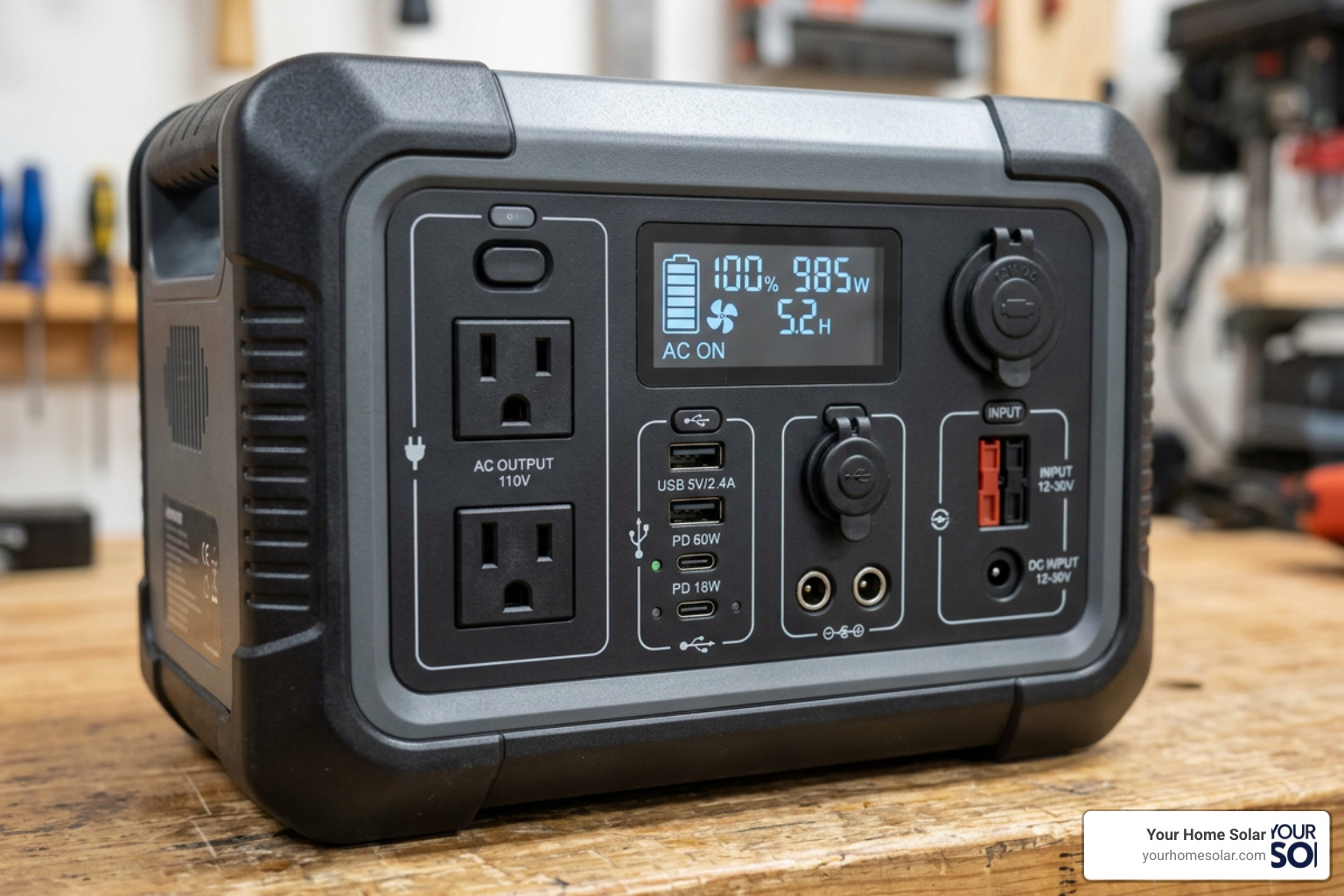
A great battery is useless if you can’t plug your devices into it. Look for a power station that offers a diverse and generous selection of output ports:
- AC Outlets: Ensure the station has at least 2 to 3 standard wall plugs. Crucially, verify that the unit uses a pure sine wave inverter. Modified sine wave inverters are cheaper but can damage or cause interference in sensitive electronics like CPAP machines, laptops, and audio gear.
- USB-C Power Delivery (PD): Look for high-speed USB-C ports (ideally 100W to 140W) that can charge modern laptops directly without needing their bulky AC wall adapters.
- DC Ports & Car Outlets: Essential for running high-efficiency 12V travel fridges and camping accessories.
Brands like EcoFlow Portable Power Stations and Power Ridge® design their interfaces with these diverse port configurations to ensure you can charge your drone, laptop, and portable cooler all at the same time.
Real-World Capabilities: Runtimes and Device Compatibility
Let’s get practical. What does a 1kw portable power station actually look like in action? To give you a clear picture, we have compiled a detailed breakdown of common household and recreational devices, showing how a standard 1kWh unit performs.
What Can a 1kW Portable Power Station Run?
A 1kW unit sits in the “sweet spot” of portable power. It is large enough to run actual appliances, yet lightweight enough (usually weighing between 22 and 28 lbs) to carry with one hand.
Here is what you can realistically expect to run:
- The Essentials: It will easily handle laptops (approx. 20 full charges), smartphones (60 to 100+ charges), and LED lanterns.
- Medical Equipment: If you rely on a CPAP machine (average 40W draw), a 1kWh station will keep it running for around 25 hours. That is 3 full nights of safe, worry-free sleep during an outage.
- Kitchen & Cooling: It can run a 60W mini-fridge for roughly 16 hours. For larger appliances, a standard Energy Star kitchen refrigerator can run for 10 to 12 hours on a single charge of an Anker SOLIX C1000.
- High-Draw Appliances: Devices with heating elements, like coffee makers or hair dryers, draw a massive amount of power (often 1000W to 1500W). A 1kW power station can run a 1000W coffee maker, but it will drain the battery in about an hour. Some units feature smart voltage-reduction technologies (like EcoFlow’s X-Boost or Anker’s SurgePad) that allow them to run high-draw appliances up to 2400W by lowering the voltage, preventing the station from tripping.
Home Backup vs. Outdoor Adventures
How you use your power station depends entirely on your situation.
For home backup in East Tennessee — whether you live in Knoxville, Maryville, or Sevierville — a 1kW unit acts as an emergency bridge. It won’t power your central HVAC system or your electric water heater, but it will keep your Wi-Fi router running, charge your phones, keep your food cold, and power a few lamps until the utility crews restore the grid.
For outdoor adventures, a 1kW unit is pure luxury. It fits perfectly in the trunk of a car or the back of an SUV for camping trips in the Great Smoky Mountains. It provides silent power during RV “quiet hours” when gas generators are banned, and it is a favorite tool for tailgating, backyard movie nights, or running power tools on remote properties where utility lines don’t reach. If you are interested in a more permanent off-grid setup, you can even learn How To Build Your OWN Power Station & Save Money on YouTube, though commercial units offer plug-and-play convenience out of the box.
Recharging Methods and Off-Grid Efficiency
A power station is only useful if you can easily top it off. Modern 1kW units offer incredible flexibility when it comes to recharging, allowing you to harvest power from almost any available energy source.

To maximize your off-grid independence, pairing your station with portable solar panels is highly recommended. To learn more about selecting the right panels, explore our comprehensive guide: Portable Solar Panels: Your Ultimate Guide to Off-Grid Power.
Solar, AC, and Car Charging Options
When it comes to putting power back into your station, you have three primary paths:
- AC Wall Charging (The Fast Way): Modern stations have incredibly fast AC charging speeds. For example, the Anker SOLIX C1000 can charge from 0% to 80% in just 43 minutes under ideal conditions (and 100% in 58 minutes). The EcoFlow DELTA 3 Classic achieves a similar 0-80% charge in about 45 minutes. This is perfect for quickly topping off before a predicted storm hits Knox County.
- Solar Charging (The Off-Grid Way): By connecting portable solar panels, your station becomes a true solar generator. Most 1kW stations support between 200W and 600W of solar input. With an efficient built-in MPPT controller, a 400W solar array can fully recharge a 1kWh battery in 2.5 to 4 hours of direct Tennessee sunlight.
- Car Charging (The On-The-Go Way): If you are driving between campsites or evacuating during an emergency, you can plug the station into your vehicle’s 12V accessory port. While slower (typically taking 8 to 10 hours for a full charge), some advanced units like the DJI Power 1000 Mini feature specialized car chargers that can pull up to 400W directly, significantly speeding up the process.
Frequently Asked Questions about 1kW Power Stations
To help you make the best decision for your home or next adventure, we have answered some of the most common questions we hear from folks in East Tennessee.
Are 1kW power stations safe for indoor use?
Yes, absolutely! Unlike traditional gasoline or diesel generators, which produce deadly carbon monoxide emissions and must be kept at least 20 feet away from your home, portable power stations are 100% safe for indoor use. They produce zero emissions, operate almost silently, and use advanced Battery Management Systems (BMS) to monitor temperature, voltage, and current in real-time to prevent overheating.
How long will a 1kW power station last on a single charge?
It entirely depends on what you plug into it. If you are only charging smartphones and running a few LED lights, a 1kW station can easily last for 4 to 5 days. However, if you are running a high-draw appliance like a portable heater or a hot plate, it may only last for 45 to 60 minutes. To maximize your runtime, always turn off the AC outlets when they are not in use, as the internal inverter draws a small amount of “idle” power just by being turned on.
Can a 1kW power station run a full-sized refrigerator?
Yes, but with limitations. A modern, energy-efficient refrigerator typically draws between 100W and 200W while the compressor is actively running, but it requires a brief “startup surge” of up to 1200W to get started. A quality 1kw portable power station with a strong surge rating (like the GoSun Power 992 or Anker C1000) can easily handle this startup spike. On a full charge, you can expect to run a standard kitchen refrigerator for 10 to 12 hours, which is usually more than enough to keep your food safe during typical local utility outages.
Conclusion
A 1kw portable power station is one of the most versatile, safe, and reliable investments you can make for both outdoor recreation and emergency preparedness. It bridges the gap between bulky, loud gas generators and small, low-capacity power banks, offering the perfect balance of portability and power.
At Your Home Solar, we are dedicated to helping families throughout East Tennessee — from Knoxville and Oak Ridge to Maryville and Sevierville — find the perfect energy solutions to fit their lifestyles. Whether you are looking for a compact backup battery for camping trips or want to explore a robust, whole-home solar and battery storage system, our team is here to provide trusted expertise and 100% customer satisfaction.
Ready to take your energy independence to the next level? Explore off-grid solar panel systems with us today and discover how we can help you keep the lights on, no matter what.