
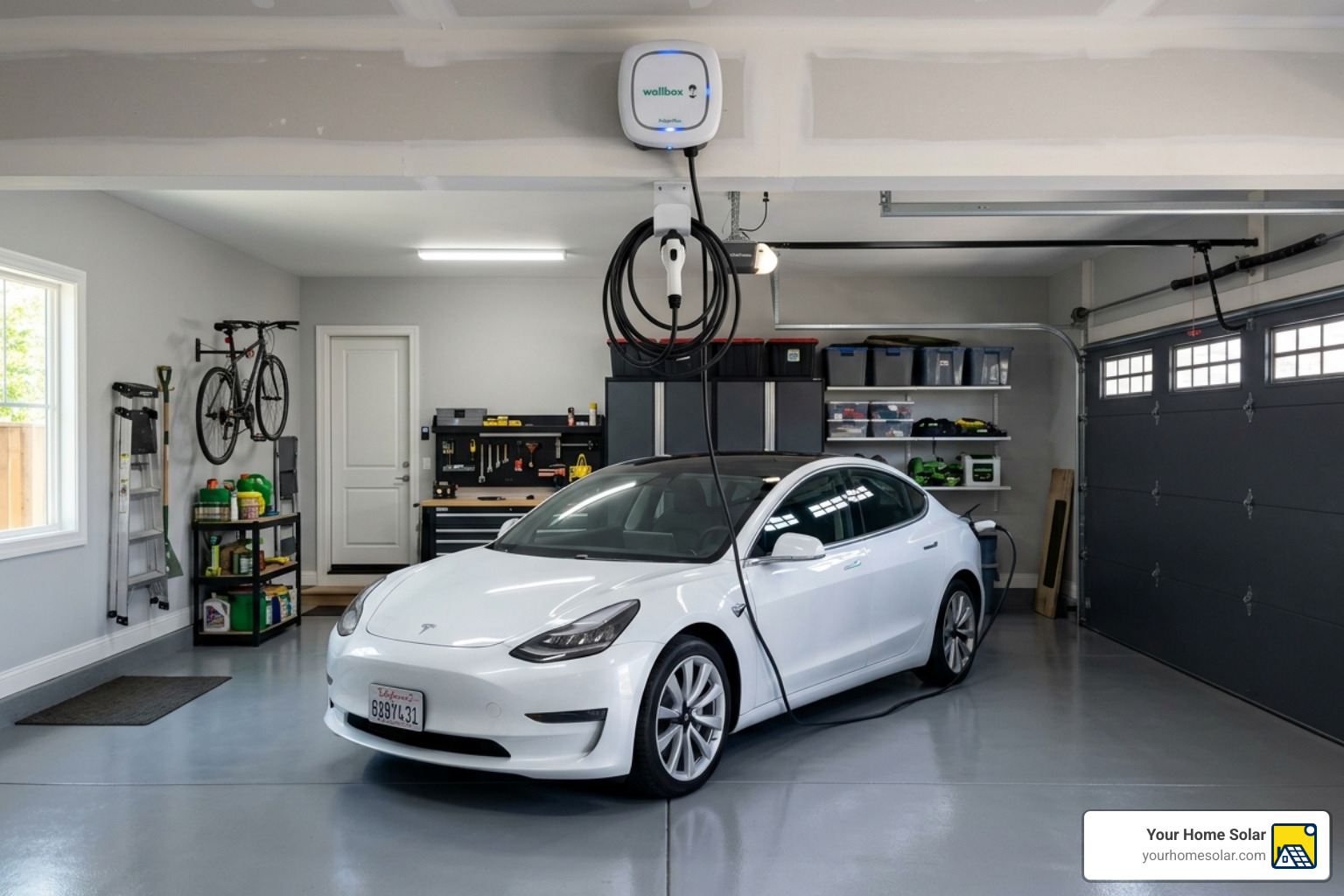
Why a Ceiling Mounted EV Charger Belongs in Your Garage
A ceiling mounted EV charger cable management system is one of the smartest ways to organize your garage, eliminate tripping hazards, and keep your charging cable off the floor — without sacrificing reach or convenience.
Here are the most popular ceiling-mounted EV cable management options available in April 2026:
| Product | Type | Key Feature | Price |
|---|---|---|---|
| DEWALT DXPAEV55CMR | Retractable reel | 13-ft retractable cable, wall or ceiling mount | $199.99 |
| Eaton Green Motion Ceiling Kit | Overhead track | 25-ft J1772 cord, shared charging between spots | Varies |
| EV Hover | Extendable arm | Reaches 6.5 ft, installs with 5 screws | Contact seller |
| CECLE Hanging Bracket | Adjustable suspension | 7-gear height adjustment, 1m–2.1m reach | From $439.00 |
These systems work with both Level 1 and Level 2 chargers and are designed to mount directly to ceiling joists in residential garages, basements, and commercial parking areas.
If you’ve ever stumbled over a charging cable in a dark garage, you already understand the problem. EV charging cables are long, heavy, and awkward to store. Left on the floor, they create real fall risks — especially for children and older adults. Coiled up, they can actually overheat, which is why many EV manufacturers advise against it.
The solution isn’t complicated. Getting that cable up and out of the way — overhead, where it belongs — solves multiple problems at once: safety, space, and organization.
I’m Ernie Bussell, founder and CEO of Your Home Solar, and through years of hands-on work helping East Tennessee homeowners build smarter, safer energy systems — including dozens of ceiling mounted EV charger installations — I’ve seen how much difference the right mounting setup makes. In this guide, I’ll walk you through everything you need to know to choose, install, and maintain an overhead EV cable system for your home.
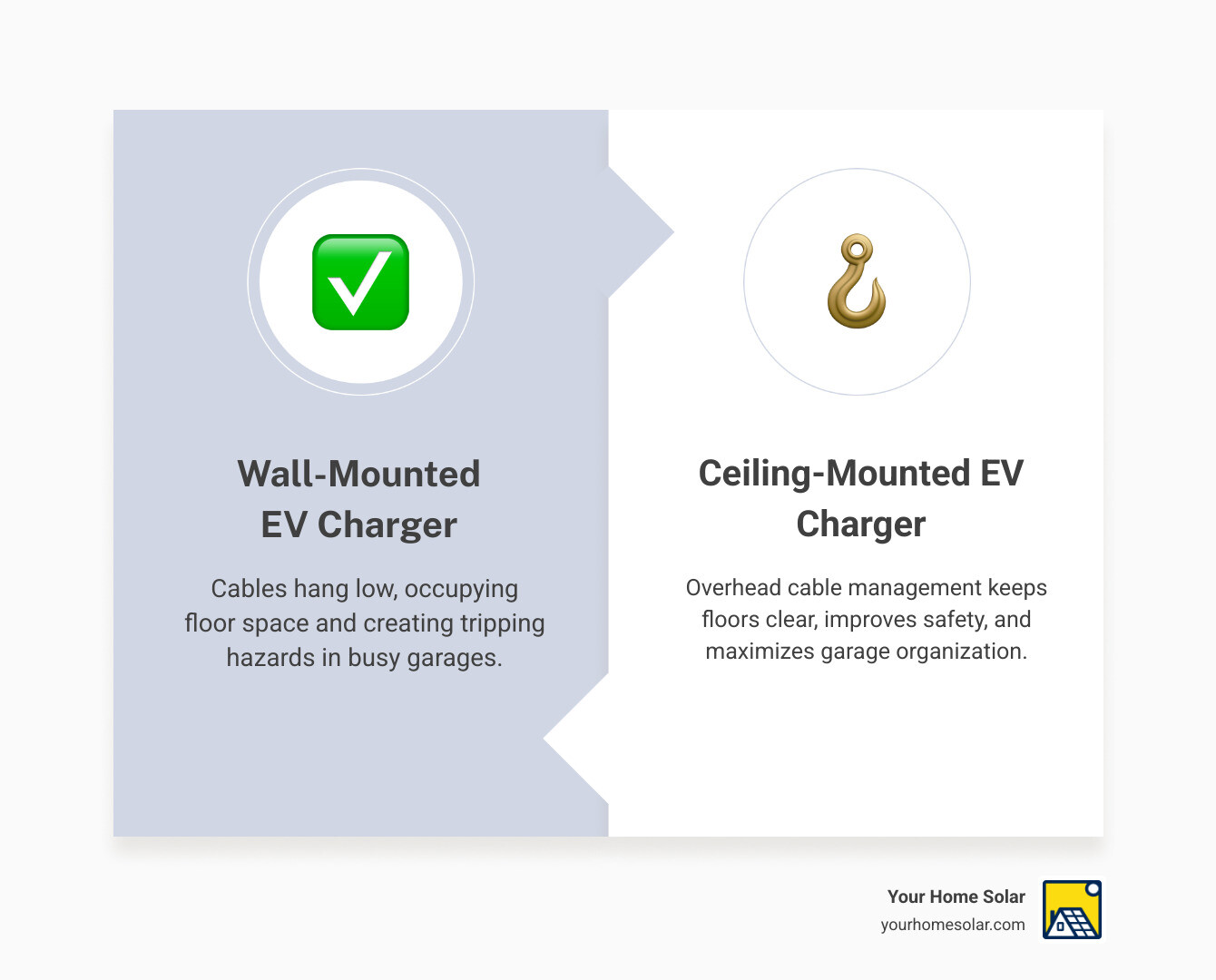
Simple guide to ceiling mounted ev charger:
Understanding Ceiling Mounted EV Charger Systems vs. Traditional Mounts
When we talk about a ceiling mounted ev charger, we are usually discussing two distinct components: the electrical charging unit itself (the EVSE) and the cable management system. Traditional wall-mounted chargers are the “standard” for most East Tennessee homes, but they often leave several feet of heavy cable snaking across the floor. Floor-standing pedestals are common in commercial lots but take up valuable square footage in a residential garage.
Ceiling-mounted systems take a different approach. By moving the cable management to the “fifth wall” (the ceiling), you free up floor space and eliminate the clutter against your walls. These systems typically fall into three categories:
- Retractable Reels: Like a heavy-duty version of a retractable shop light, these pull down when you need them and zip back up when you’re done.
- Overhead Tracks and Trolleys: These use a rail system that allows the cable to slide back and forth, perfect for reaching multiple parking spots.
- Suspension Brackets: Products like the EV Charger Hanging Bracket For Basement – CECLE Machine provide a fixed or height-adjustable drop point from the ceiling, which is ideal for middle-parking scenarios where no wall is nearby.
Compatibility with Ceiling Mounted EV Charger Hardware
One of the most common questions we get at Your Home Solar is whether these overhead systems work with existing chargers. The good news is that most are “universal.” For instance, the DEWALT retractable system is specifically designed to work with both Level 1 and Level 2 charging cables.
Whether you are using a standard J1772 connector (common for most EVs) or a specialized Tesla NACS connector, overhead systems like the EV Charger Hanging Bracket – CECLE Machine act as a holster and support system. They don’t care about the voltage; they care about the weight and thickness of the cord. Most residential ceiling kits are built to support cables up to 25 feet in length, ensuring you can reach the charging port regardless of how you pull into the garage.
Limitations and Reach Considerations
While overhead systems are for garage organization, they do have a few “reach” limits you should know about.
- Ceiling Height: If you have ultra-high ceilings (think 12+ feet), you may need a suspension bracket like the EV Charger Hanging Bracket For Basement – CECLE Machine which offers adjustable lengths (up to 2.1 meters) to bring the connector down to a reachable height.
- Vehicle Reach: Most extendable arms, like the EV Hover, reach about 6.5 feet from their mounting point. If your vehicle’s port is on the far front or rear, you’ll need to position the mount strategically.
- Basement and Middle Parking: In underground or basement parking common in parts of Knoxville or Johnson City, ceiling mounts are often the only way to provide charging to “middle” spots that don’t have a convenient wall.
Key Benefits of a Ceiling Mounted EV Charger
The most immediate benefit is the “clean” look. No more tangled cords hanging off the wall like a giant orange snake. But beyond aesthetics, there are practical wins for every homeowner.
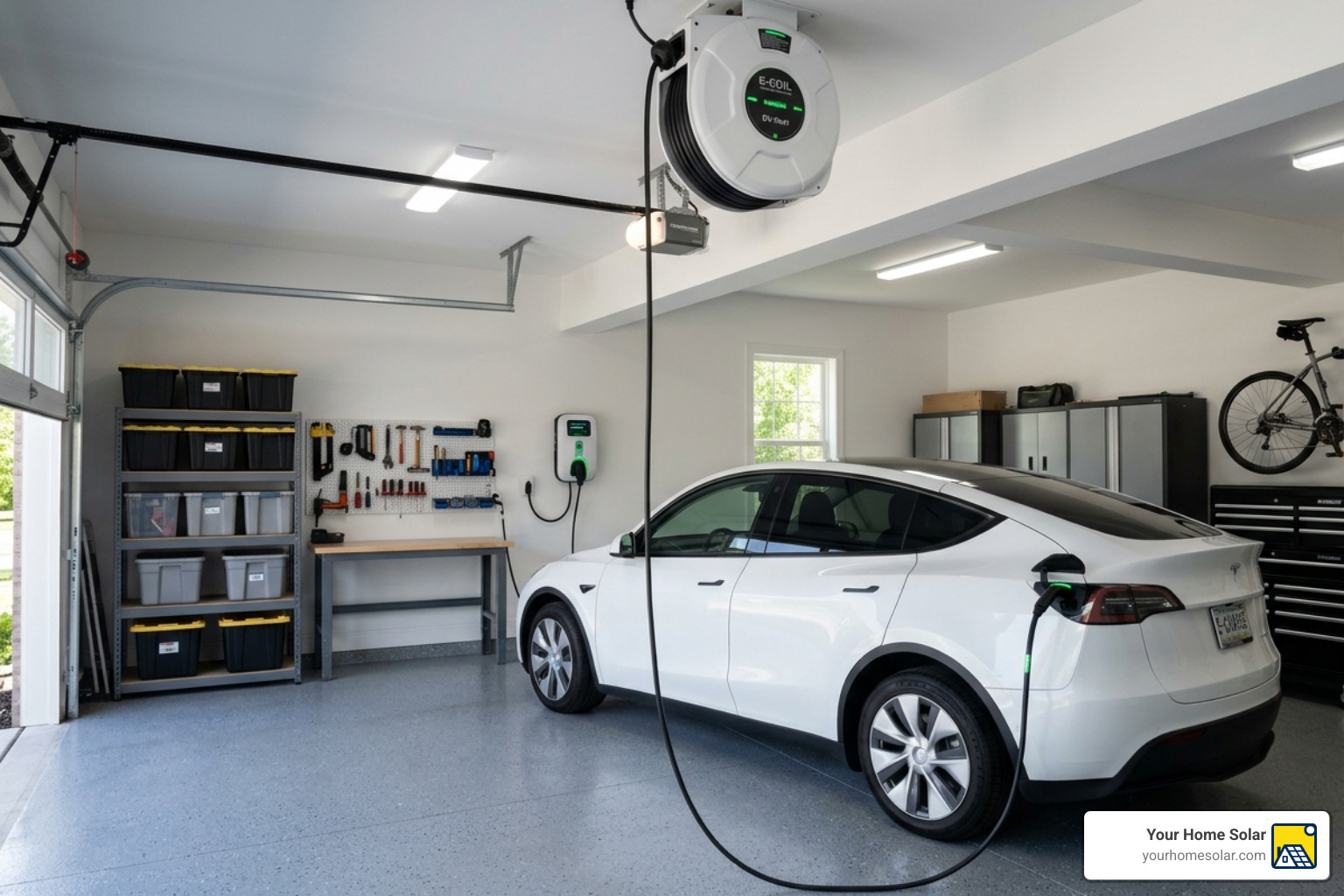
Improving Safety for Families and Seniors
Safety is where the ceiling mounted ev charger really shines. In our experience across East Tennessee, we’ve seen many “near misses” with floor cables.
- Fall Prevention: For elderly family members or those with mobility issues, a cable on the floor is a major tripping hazard. Keeping the cable overhead eliminates this risk entirely.
- Overheating Prevention: It’s a little-known fact that EV cables can run hot. Manufacturers often warn against coiling them tightly while charging because the heat can build up between the loops. Overhead systems, especially those with trolleys or extendable arms, keep the cable extended and allow for better airflow.
- Child Safety: Keeping the “business end” of a high-voltage charger out of the reach of curious toddlers is a huge relief for parents.
Maximizing Space in Multi-Vehicle Garages
If you have a two-car garage but only one charger, an overhead track system (like the Eaton Green Motion kit) is a game-changer. It allows you to slide the charger cable along a ceiling rail to serve adjacent parking spots. This “shared charging” approach is much cheaper than installing two separate chargers and much more convenient than constantly swapping cars in the driveway.
How to Install and Maintain an Overhead Cable System
Installing a basic cable management arm can sometimes be a DIY project, but when high-voltage electricity is involved, we always recommend a professional touch.
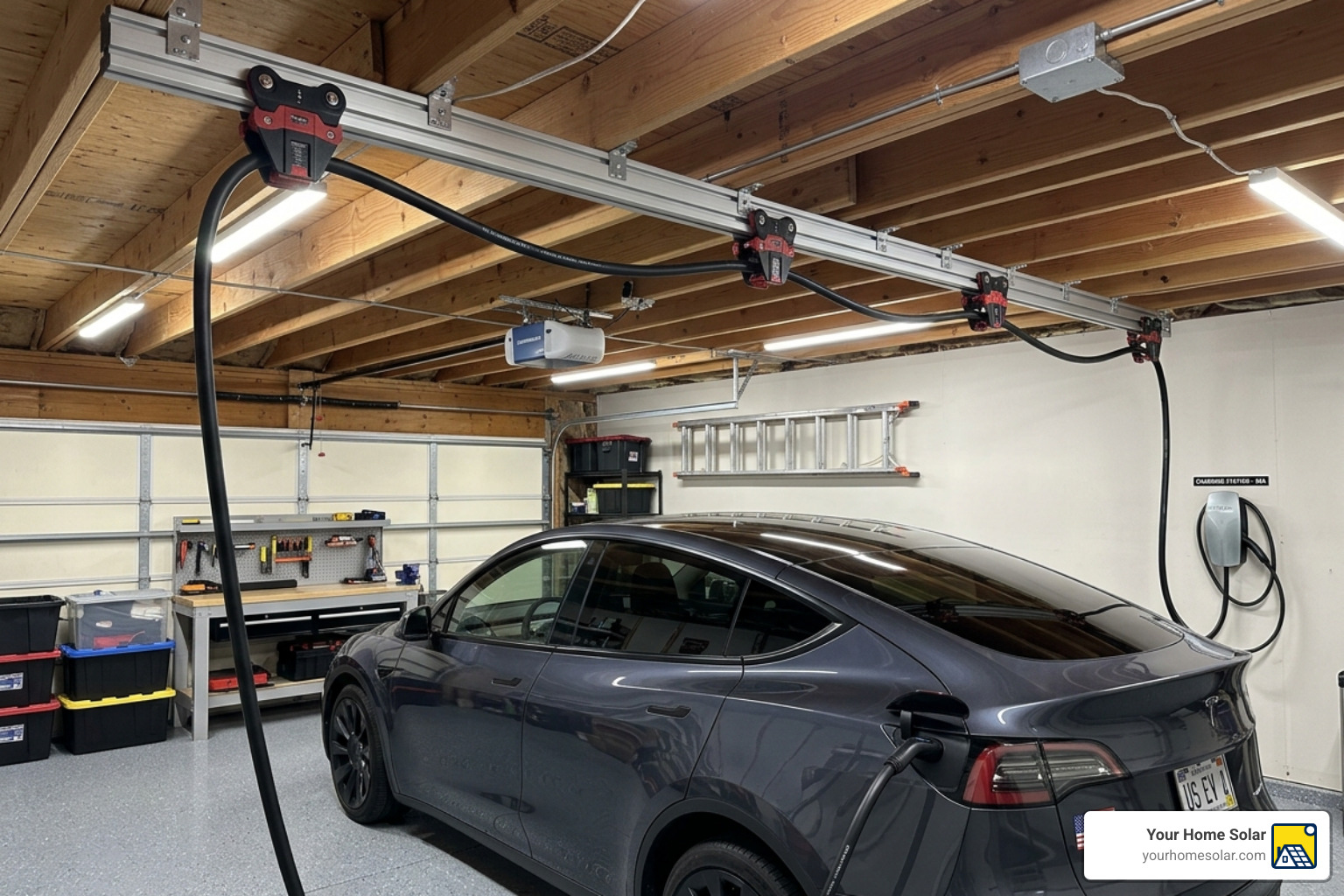
Professional Installation for your Ceiling Mounted EV Charger
For a full setup—where the actual charging unit is mounted to the ceiling—you need a qualified electrician. In Knoxville, Sevierville, or Maryville, our team at Your Home Solar follows a strict process:
- Panel Assessment: We check your electrical panel to ensure it can handle the 40-60 amp load required for Level 2 charging.
- Joist Mounting: We secure the tracks or reels directly into the ceiling joists using heavy-duty wood screws.
- Junction Box Installation: We install a ceiling-mounted junction box to hide the wiring and meet local codes.
- Permits and Inspection: We handle the paperwork to ensure your installation is fully legal and safe.
For those looking for a Smart Ev Charger Installation In Knoxville, we can integrate these overhead systems with your home’s solar array or backup battery. You can learn more about our local services on our Ev Charger Installation Knoxville page.
Maintenance and Overheating Prevention
Maintaining your system is simple. Once or twice a year, perform a visual inspection:
- Check the Cord Grips: Ensure the cable isn’t slipping out of its hangers.
- Trolley Spacing: If using a track, make sure the trolleys are spaced evenly so the cable forms gentle loops rather than tight twists.
- Smooth Operation: For retractable reels, ensure the spring mechanism is still pulling back smoothly without snagging.
Safety Standards, Electrical Codes, and Emerging Tech
When we install a ceiling mounted ev charger, we adhere to NEC Article 625. This code requires that the “coupling means” (the plug) be stored between 18 inches and 4 feet above the floor for indoor installations. Overhead systems must be adjusted so that the connector hangs at a height that is both reachable and code-compliant.
Comparing Retractable Reels and Extendable Arms
Which one is right for your Tennessee home? Here is a quick comparison:
| Feature | Retractable Reel | Extendable Arm | Robotic Rail |
|---|---|---|---|
| Mechanism | Spring-loaded recoil | Swiveling steel arm | Motorized robot |
| Reach | Up to 15-20 feet | Usually 6.5 feet | Entire length of rail |
| Best For | Single-car garages | Small spaces | Multi-car/Commercial |
| DIY Ease | Moderate | High | Professional Only |
Retractable systems like DEWALT’s are great for keeping things compact. Extendable arms like EV Hover are often made of powder-coated steel and offer a “floating” feel that many homeowners prefer for ease of use.
The Future of Overhead Charging: Robotic Rails
As we look toward the end of 2026, we are seeing incredible innovations from overseas that are starting to hit the US market. In China, overhead rail robots are already solving massive parking garage bottlenecks. These “charging robots” travel along a ceiling track, locate your car’s charging port using vision sensors, and lower the connector automatically.
While these systems currently hold a large market share in Asia, they represent a global trend toward “on-demand” charging. By 2030, it’s projected that 20% of new energy vehicles will be charged by some form of mobile or robotic system. For now, residential overhead tracks are the closest we can get to this futuristic convenience in our own garages.
Frequently Asked Questions about Ceiling Mounted EV Chargers
What is the typical cost for a ceiling-mounted cable management system?
For a high-quality manual system like the DEWALT retractable reel, you’re looking at about $199.99. Custom suspension brackets for basements, like those from CECLE, start around $439.00. If you require a full professional installation including the electrical circuit, costs typically range from $800 to $1,500 depending on your home’s wiring.
Can I install a ceiling-mounted system on a finished garage ceiling?
Yes! We do this all the time in East Tennessee. We use a stud finder to locate the joists behind the drywall. As long as the system is securely anchored into the wood framing, a finished ceiling is no obstacle.
Are these systems compatible with all Level 2 chargers?
Most cable management systems are “universal,” meaning they can hold any standard EV charging cable. Whether you have a ChargePoint, JuiceBox, or a Tesla Wall Connector, these overhead arms and reels will support the weight and girth of the cord.
Conclusion
A ceiling mounted ev charger system isn’t just about looking cool—it’s about making your daily routine safer and more efficient. By getting those heavy cables off the floor, you protect your family from trips, protect your equipment from damage, and make the best possible use of your garage space.
At Your Home Solar, we take pride in being East Tennessee’s trusted experts for comprehensive energy solutions. From the initial panel assessment to the final safety check, our team ensures your installation is tailored to your home and built to last. Whether you’re in Knoxville, Kingsport, or anywhere in the Tennessee Valley, we’re here to help you power your ride.
Ready to clear the clutter? Schedule your professional EV charger installation in Knoxville with us today and experience the convenience of overhead charging.