Why Home EV Charging Is the Smart Choice for Your Electric Vehicle
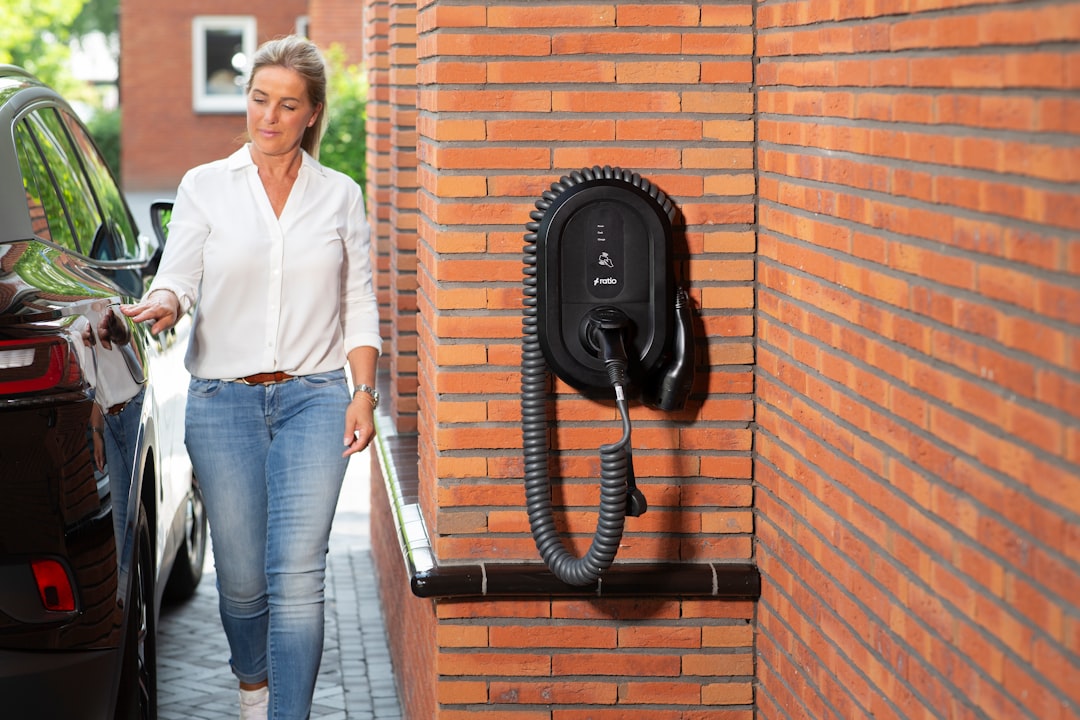
Residential EV charging solutions give you the freedom to charge your electric vehicle at home, overnight, while you sleep. It’s as simple as plugging in your phone, but it eliminates the need to plan trips around public charging stations.
Here’s what you need to know:
- Level 1 charging: Uses a standard 120V outlet (slow, no installation needed).
- Level 2 charging: Uses a 240V outlet (much faster, requires professional installation).
- Professional installation: Ensures safety and includes panel assessment, permitting, and a dedicated circuit.
- Solar integration: Lets you charge with clean energy, lowering costs and increasing energy independence.
Most homeowners choose Level 2 charging because it fully charges an EV in 4-8 hours, compared to 20+ hours with Level 1. For EV owners, home charging is essential for saving time and money. When paired with solar panels, you can power your car with energy from the sun, protecting you from rising fuel costs and reducing your carbon footprint.
In this guide, we’ll cover charging levels, equipment selection, professional installation, and integrating EV charging with solar and battery systems.
I’m Ernie Bussell, founder and CEO of Your Home Solar. With years of experience in home energy systems, I’ve helped hundreds of East Tennessee homeowners integrate Residential EV charging solutions into a complete, reliable energy strategy.
Understanding EV Charging Levels
When considering Residential EV charging solutions, it’s crucial to understand the different charging levels, which dictate how quickly your EV charges.
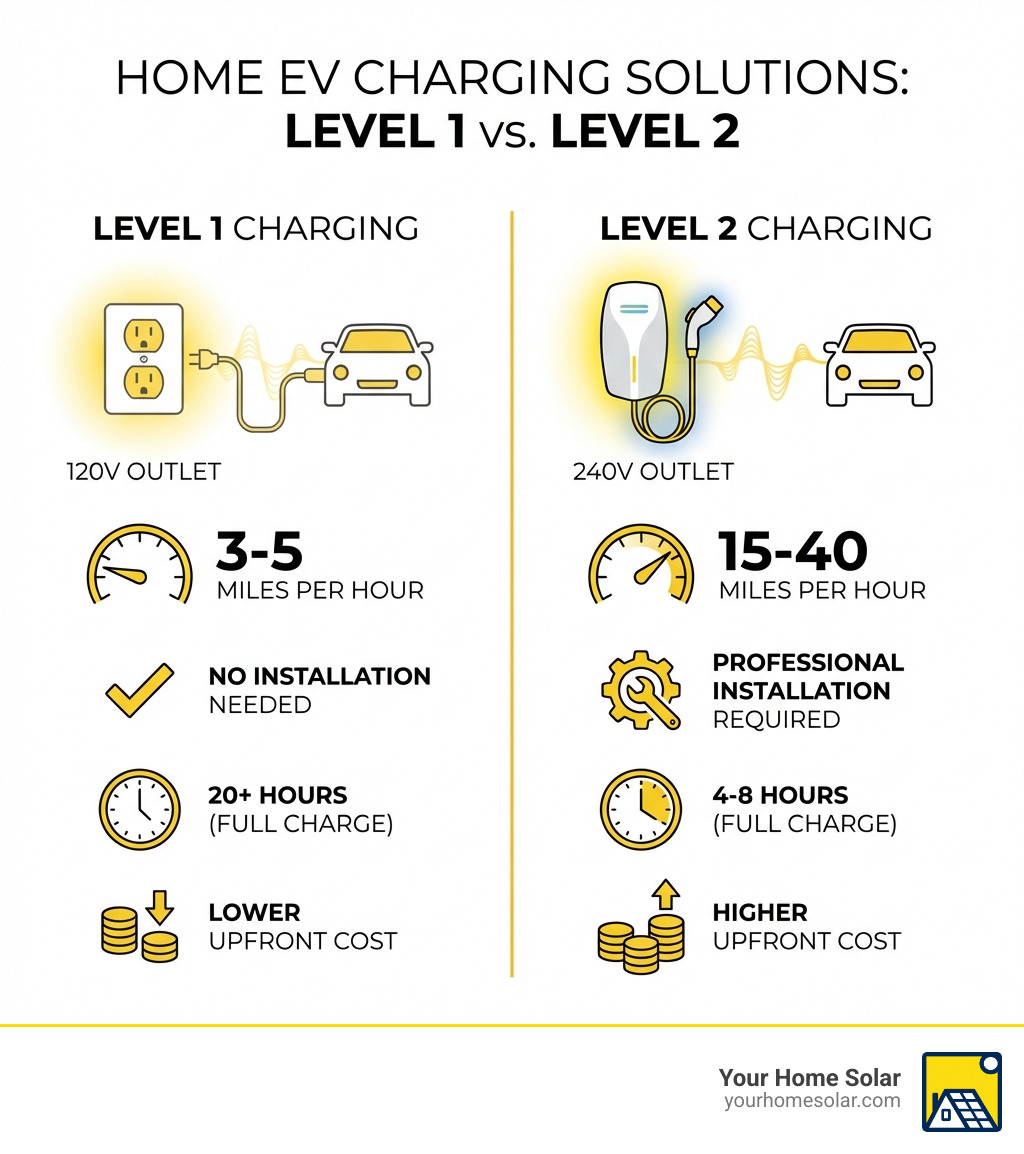
Here’s a quick comparison:
| Feature | Level 1 Charging | Level 2 Charging |
|---|---|---|
| Power Output | 1.4 – 2.4 kW | 3.3 – 19.2 kW |
| Voltage | 120V (Standard household outlet) | 240V (Appliance outlet) |
| Miles per Hour | 3-5 miles | 15-40 miles |
| Full Charge Time | 20+ hours (for most EVs) | 4-8 hours (for most EVs) |
| Installation | Plug-and-play, no installation | Professional electrical installation required |
| Cost | Low (charger often included) | Moderate (charger + installation) |
| Ideal Use | Overnight trickle charge, low-mileage drivers | Daily charging for all EV owners |
Level 1 Charging: The Simple Start
Level 1 charging is the most basic option, using a standard 120-volt AC outlet. Most EVs include a Level 1 cable, making it a plug-and-play solution with no installation cost. The downside is its speed; it only adds about 3 to 5 miles of range per hour. This makes it suitable for low-mileage drivers or as a backup, but a full charge can take over 20 hours.
Level 2 Charging: The Homeowner’s Choice
For most EV owners in East Tennessee, Level 2 is the preferred Residential EV charging solution. It uses a 240-volt AC outlet, like one for an electric dryer, and delivers 15 to 40 miles of range per hour. This means you can get a full charge in just 4 to 8 hours, perfect for overnight charging.
While Level 2 chargers require professional installation for a dedicated 240-volt circuit, the speed and convenience are worth it. A wall-mounted unit in your garage ensures your EV is ready every morning, whether you’re driving around Knoxville or Johnson City. We recommend Level 2 charging as the foundation for any home EV setup.
DC Fast Charging: The Commercial Powerhouse
DC Fast Charging (or Level 3) is the fastest option available, adding hundreds of miles of range in under an hour. However, it is not a residential solution. These units require powerful, specialized infrastructure found only at public charging stations. They are designed for quick top-ups on long trips, so your home strategy will focus on Level 1 or, more practically, Level 2 charging.
Key Factors in Choosing Your Home EV Charger
Selecting the right equipment is the next step in your Residential EV charging solutions. Consider these factors to find a charger that meets your current and future needs.

Charging Speed and Power Output
A charger’s speed is measured in kilowatts (kW)—higher kW means faster charging. The actual speed depends on your home’s electrical capacity and your vehicle’s maximum charging rate.
- Home Electrical Capacity: A dedicated circuit’s amperage (e.g., 40-amp or 50-amp) determines the charger’s maximum output. Our electricians will assess your panel to find the safest capacity for your East Tennessee home.
- Vehicle’s Max Rate: Your EV has an onboard charger that limits how much power it can accept. It’s wise to install a charger that meets or exceeds your current car’s needs to “future-proof” your setup for your next EV.
Smart Features and Connectivity
Modern Residential EV charging solutions offer smart features for greater control and efficiency. Look for Wi-Fi-enabled chargers with mobile apps that allow you to:
- Start and stop charging remotely.
- Schedule charging for off-peak hours to save money.
- Monitor energy consumption.
- Receive notifications about your charging status.
These features turn your charger into an intelligent part of your home’s energy ecosystem.
Connectors, Cables, and Safety for your Residential EV charging solutions
The physical hardware and safety certifications are critical for a reliable system.
- Connectors: The J1772 is the standard for most EVs in North America. Tesla vehicles use the NACS connector but can use a J1772 charger with an adapter.
- Cable Length: Most cables are 18-25 feet long. Choose a length that offers flexibility for your parking situation.
- Safety Certifications: Always choose a UL-certified charger. This non-negotiable feature ensures the product has passed rigorous safety testing.
- Weatherproofing: For outdoor installations in East Tennessee, ensure your charger has a NEMA 3R or 4 rating to protect it from the elements.
Finally, don’t forget about potential financial incentives. The federal government offers tax credits for EV chargers that can help offset the cost of both the charger and its installation, making your Residential EV charging solutions even more affordable.
The Professional Installation Process for Residential EV Charging Solutions
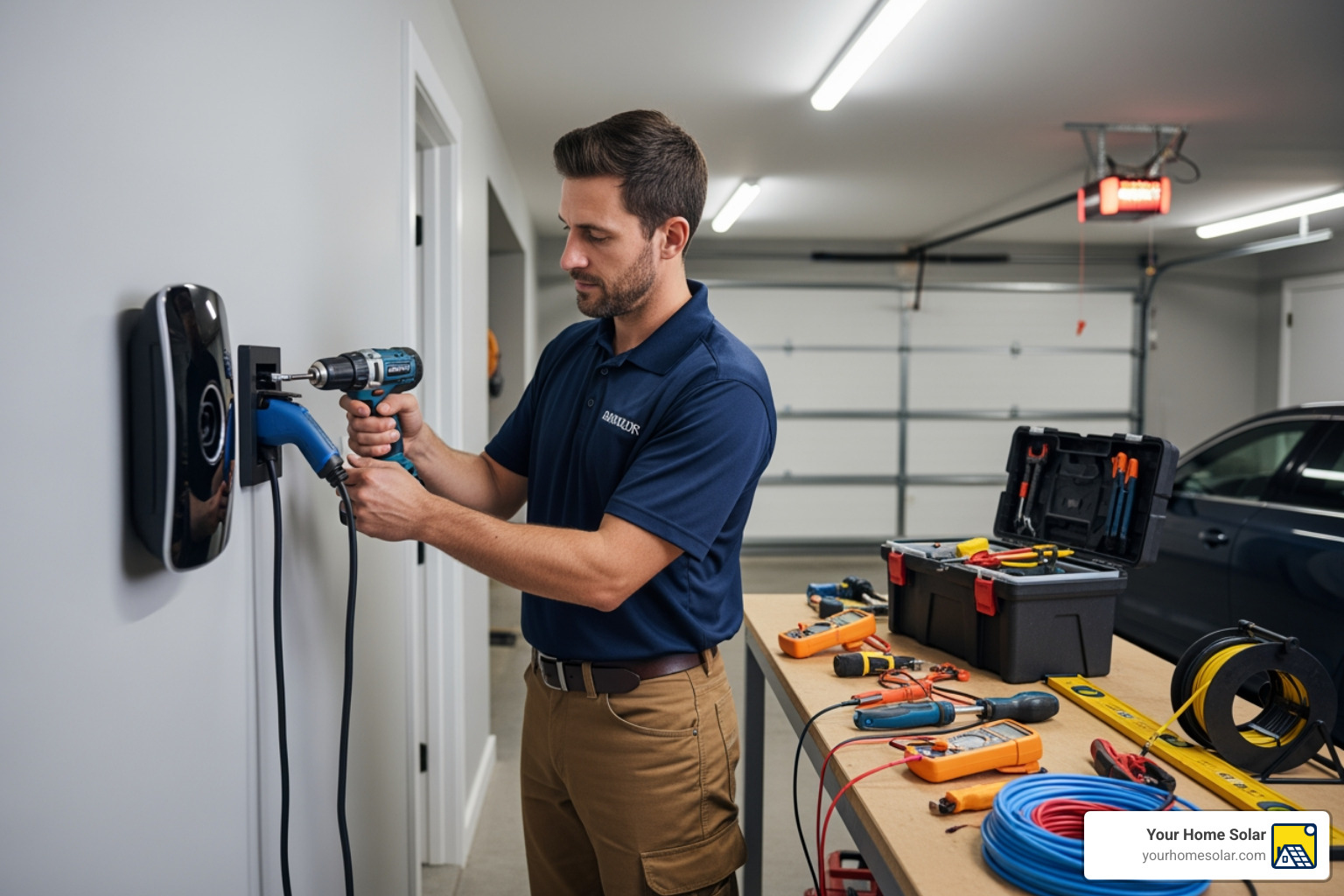
Installing a Level 2 charger is a professional job that involves high-voltage electricity and must adhere to local codes. At Your Home Solar, we provide trusted expertise for a safe and reliable installation for our East Tennessee neighbors.
Step 1: Consultation and Site Assessment
The process begins with a thorough site assessment. A certified electrician from Your Home Solar will visit your home to:
- Review Your Electrical Panel: We check your panel’s capacity to see if it can handle the new load or if an upgrade is needed.
- Perform a Load Calculation: We calculate your home’s total electrical demand to prevent overloads.
- Discuss Charger Placement: We work with you to find the best location for the charger.
- Provide a Detailed Quote: You’ll receive a transparent quote covering the charger, installation, permits, and any necessary upgrades.
Step 2: Permitting and Equipment Selection
After you approve the quote, we handle the logistics for your Residential EV charging solutions.
- Permitting: Our team manages all the necessary paperwork and coordination with local authorities in Knoxville, Maryville, and surrounding counties to ensure your installation is fully compliant with the National Electrical Code (NEC).
- Equipment Selection: We help you finalize your choice of charger, confirming its specifications match the installation plan.
Step 3: Professional Installation and Inspection
With permits and equipment ready, our licensed electricians get to work.
- Installation: A certified electrician installs a dedicated 240-volt circuit from your panel to the charger location, ensuring a safe and reliable power supply.
- Inspection: We coordinate with the local electrical inspector to verify the work meets all code requirements.
- Testing and Walkthrough: After passing inspection, we test the system and walk you through how to use your new charger and its smart features.
Integrating EV Charging with Solar and Home Energy
For East Tennessee homeowners, integrating Residential EV charging solutions with solar panels is a smart, sustainable, and economical choice. At Your Home Solar, we specialize in creating these comprehensive home energy solutions.
Power Your EV with the Sun
Imagine driving on sunshine. Combining solar panels with your EV charger makes it possible.
- Reduced Electricity Bills: Generate your own power to significantly cut your reliance on the grid for EV charging, leading to substantial savings.
- Clean Energy: Charging with solar makes your EV truly zero-emissions, contributing to a healthier environment across East Tennessee.
- Energy Independence: Protect yourself from fluctuating electricity prices and grid instability by using a free, abundant resource to fuel your car.
We offer a full range of More info about solar panel services that integrate seamlessly with your EV charging setup.
The Role of Battery Storage
To maximize the benefits of your solar-powered Residential EV charging solutions, a home battery is key.
- Store Solar Energy: A battery stores excess solar energy produced during the day, so you can charge your EV at night with clean power.
- Backup Power: During power outages, a home battery can keep your essential appliances running and even charge your EV, providing critical resilience.
- Avoid Peak Rates: Use stored energy to charge your EV during expensive peak utility hours, further optimizing your energy costs.
Smart Home Energy Management for your Residential EV charging solutions
The final step is a smart home energy management system, which orchestrates the flow of energy in your home.
- Load Balancing: The system dynamically manages power distribution, preventing overloads by prioritizing energy flow to your EV or other appliances as needed.
- Cost Optimization: It can automatically schedule EV charging and battery usage during the cheapest electricity periods, saving you money effortlessly.
- Total Home Energy Ecosystem: Combining solar, battery storage, and a smart EV charger creates an integrated system that provides unparalleled control, efficiency, and resilience. At Your Home Solar, we design custom solutions to build the perfect energy ecosystem for your home.
Frequently Asked Questions about Home EV Charging
Here are answers to common questions we hear from East Tennessee homeowners about Residential EV charging solutions.
How much does it cost to install a Level 2 EV charger?
The total cost for a Level 2 charger installation typically ranges from $800 to $2,500 or more. This price depends on:
- Charger Cost: The unit itself costs between $400 and $1,000.
- Installation Complexity: Factors include the distance from your electrical panel and whether the panel needs an upgrade, which is sometimes necessary for older homes.
- Permit Fees: Local permits are required and usually cost a few hundred dollars.
We provide a detailed, transparent quote during our initial consultation so you know the exact cost upfront.
Can I install a home EV charger myself?
We strongly advise against DIY installation for Level 2 chargers. It is a job for a licensed electrician due to:
- Safety Risks: Working with a 240-volt circuit is dangerous and can cause serious injury or electrical fires if done incorrectly.
- Code Compliance: A professional ensures the installation meets all local and national electrical codes, avoiding fines and rework.
- Warranty Protection: Many charger and vehicle warranties require professional installation.
For your safety and peace of mind, always use a licensed electrician. Our team at Your Home Solar is fully certified for these specialized installations.
Do I need a permit to install an EV charger in East Tennessee?
Yes. A permit is required in all East Tennessee counties and municipalities (including Knoxville, Chattanooga, and Kingsport) to install a new 240-volt circuit for an EV charger. This ensures the installation is safe and compliant with the National Electrical Code (NEC). The process includes a final inspection by a local official. As part of our service, Your Home Solar handles the entire permitting and inspection process for you, ensuring your Residential EV charging solutions are installed correctly and legally.
Conclusion: Your Trusted Partner for Home EV Charging
As we’ve explored, embracing Residential EV charging solutions is a pivotal step towards a more convenient, cost-effective, and sustainable lifestyle for EV owners in East Tennessee. From understanding the nuances of Level 1 and Level 2 charging to navigating smart features, professional installation, and even integrating with solar, there’s a lot to consider.
The key takeaways are clear:
- Convenience is king: Home charging, especially Level 2, offers unparalleled ease and ensures your EV is always ready.
- Safety and reliability are paramount: Professional installation by licensed electricians is non-negotiable.
- Long-term value: Investing in the right home charging setup improves your EV ownership experience and can be seamlessly integrated with broader home energy solutions like solar.
- Energy independence: Pairing your EV charger with solar panels offers the ultimate in clean energy and protection against rising energy costs.
At Your Home Solar, we believe in empowering homeowners with reliable, rewarding, and custom energy solutions. We’re not just installing chargers; we’re building a foundation for your energy independence. Our trusted expertise and unwavering commitment to 100% customer satisfaction mean you can rest assured that your Residential EV charging solutions will be installed correctly, safely, and efficiently.
Ready to take the next step and power your EV with confidence right from your home? We’re here to help you steer every decision, from choosing the right charger to integrating it seamlessly with your home’s energy system.
Get a free quote for your EV charger installation today and let Your Home Solar be your trusted partner in charging ahead!