What is a Solar Panel Performance Warranty?
When we talk about a solar panel performance warranty, we are referring to a specific promise regarding the “juice” your panels produce. Think of it like a fuel efficiency guarantee for a car; while the car might still run (the product), the manufacturer is also promising it won’t suddenly start guzzling twice as much gas as it should.
In the solar world, every panel is assigned a “rated capacity” (for example, 400 watts). However, solar panels are like any other electronic device—they don’t stay brand new forever. They naturally lose a tiny bit of their ability to convert sunlight into electricity every year. A performance warranty sets a legal floor for that decline. It guarantees that after 25 years, your panels will still be producing a specific percentage of that original 400-watt rating.
Understanding these protections is vital for homeowners in Knoxville, Sevierville, or Johnson City who want to ensure their residential solar warranties actually provide long-term value.
Performance Warranty vs. Product Workmanship Warranty
It is a common mistake to think a “25-year warranty” covers everything. In reality, most manufacturers split their protection into two distinct categories.
- Product Workmanship Warranty: This covers physical defects. If a frame corrodes, the glass shatters due to a manufacturing flaw, or the internal wiring fails because of poor factory soldering, the product warranty kicks in. Historically, these lasted 10 to 12 years, though many “Tier-1” manufacturers have recently increased this to 25 years to match the performance side.
- Performance Warranty: This is strictly about power output. If your panel looks perfect on the outside but is only producing 60% of the power it should be after 15 years, that is a performance warranty issue.
| Feature | Product Workmanship Warranty | Solar Panel Performance Warranty |
|---|---|---|
| What is protected? | The physical equipment/materials | The electricity production (output) |
| Common Issues | Faulty wiring, corrosion, glass defects | Excessive power degradation |
| Standard Length | 10–25 years | 25–40 years |
| Focus | “Does it work?” | “How well does it work?” |
Linear vs. Stepped Solar Panel Performance Warranty
How a manufacturer tracks your panel’s decline matters. There are two main types of “curves” used in a solar panel performance warranty:
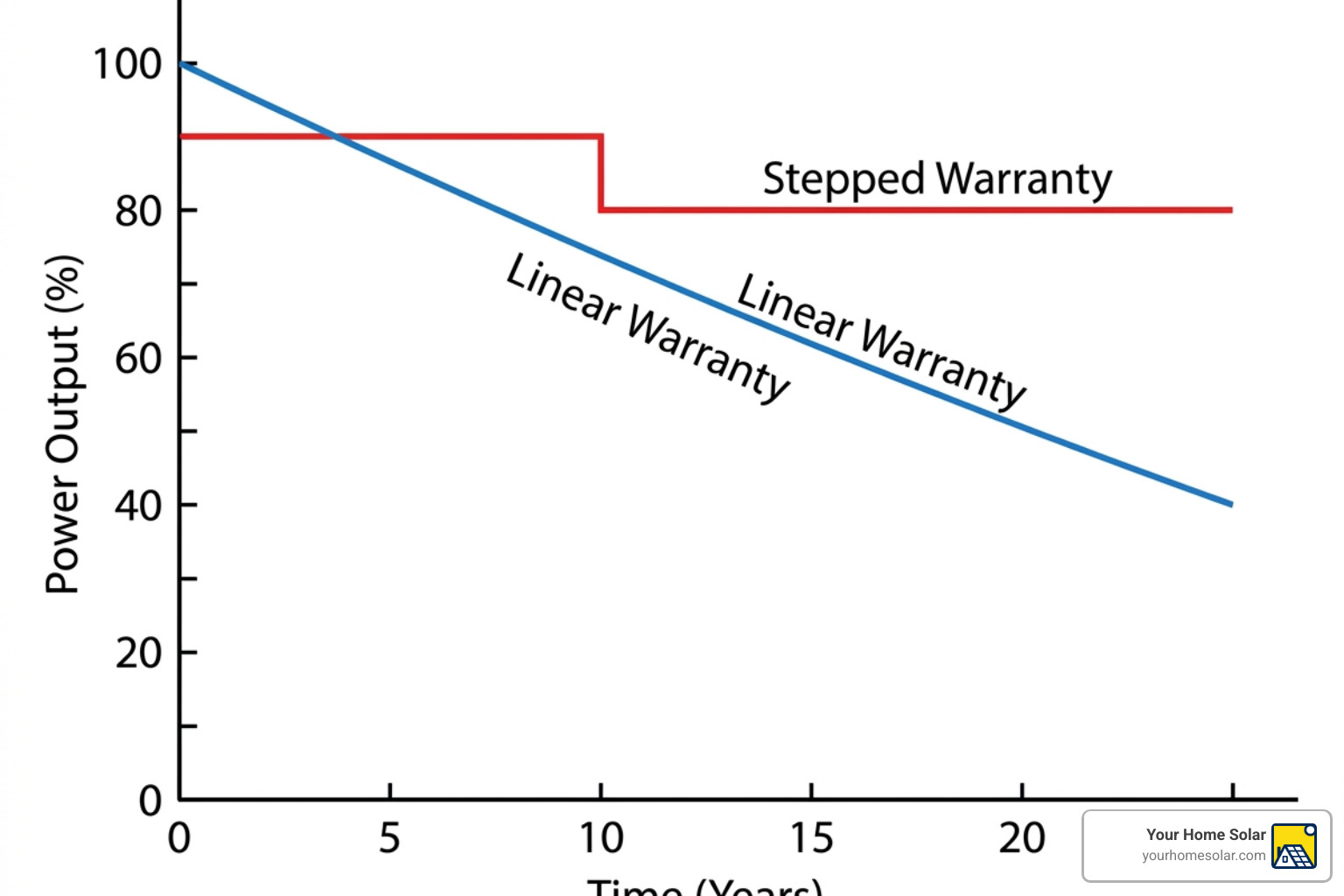
- Stepped Warranties: These are the older industry standard. A manufacturer might guarantee 90% production for the first 10 years and then 80% for the remaining 15 years. The problem? If your panels drop to 81% in year 11, you have no claim because you haven’t hit the 80% “step” yet.
- Linear Warranties: This is the modern, consumer-friendly gold standard. Instead of big “steps,” the manufacturer guarantees that the panel won’t lose more than a tiny, fixed percentage (like 0.5%) each year. This provides much more comprehensive coverage because you are protected against underperformance at every single point in the system’s life.
Understanding Degradation and Output Guarantees
Every solar panel on a roof in East Tennessee—from Kingsport to Maryville—undergoes a process called degradation. It’s not a sign of a “broken” panel; it’s just the physics of silicon sitting in the sun.
One of the primary causes is Light Induced Degradation (LID). This typically happens in the very first few hours or days a panel is exposed to sunlight, often resulting in an initial 2% to 3% drop in efficiency. After that initial “break-in” period, the degradation stabilizes into a slow, annual decline.
Manufacturers test these rates under Standard Test Conditions (STC), which involves a controlled laboratory environment with specific light intensity and temperature. Of course, your roof in Oak Ridge isn’t a lab, which is why having a robust solar panel durability guarantee is so important.
Typical Industry Standards for a Solar Panel Performance Warranty
So, what should you look for when comparing quotes?
- The Industry Standard: Most reputable Tier-1 manufacturers offer a 25-year performance warranty. The standard expectation is that the panels will retain 80% to 84% of their original power output by the end of that term.
- The Premium Standard: High-end brands like REC or Panasonic have pushed the envelope. They often guarantee 88% to 92% power retention after 25 years. Their annual degradation rates are often as low as 0.25%, compared to the 0.5% or 0.7% found in budget panels.
- The “Marathon” Options: Some manufacturers, such as Maxeon, now offer a staggering 40-year solar panel performance warranty, guaranteeing 88.3% output even after four decades.
Factors That Impact Long-Term Performance
While a warranty protects you against manufacturing-related decline, several real-world factors in Tennessee can influence how your panels age:
- Thermal Cycling: The constant expansion and contraction of materials as they heat up during a hot Tennessee summer day and cool down at night can eventually cause micro-cracks in the cells.
- UV Exposure: Intense sunlight eventually breaks down the chemicals in the panel’s backsheet or the sealants used in the frame.
- Humidity: In our humid climate, moisture ingress can be a concern if the panels aren’t high-quality and well-sealed.
What Can Void Your Coverage?
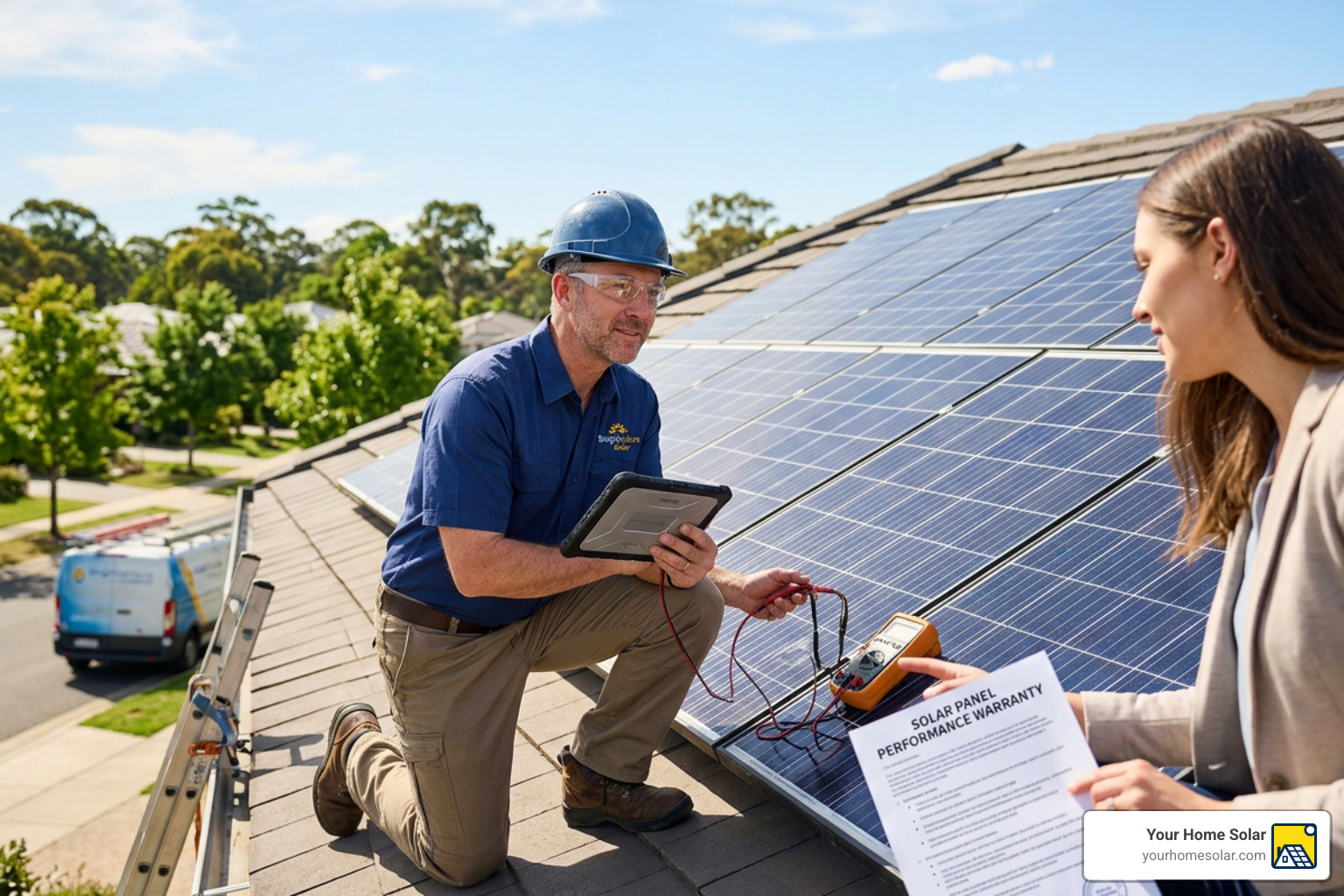
A solar panel performance warranty is a two-way street. The manufacturer promises to back the product, but you (and your installer) must follow the rules. At Your Home Solar, we’ve seen homeowners inadvertently jeopardize their coverage because they didn’t understand the fine print.
The Role of Certified Installers and Maintenance
The single most important step you can take to protect your warranty is choosing a certified professional. Many manufacturers, such as Silfab or Panasonic, actually extend their warranties if you use a registered or “authorized” installer.
- NABCEP Certification: We highly recommend looking for installers with North American Board of Certified Energy Practitioners (NABCEP) certification. This ensures the system is sized and installed according to strict electrical and structural standards.
- Maintenance and Sun Exposure: Believe it or not, letting your trees grow to the point where they shade your panels can complicate a warranty claim. While shading doesn’t “void” the warranty in the sense that the warranty disappears, a manufacturer will likely reject a claim if they can prove the “underperformance” is actually just a giant oak tree blocking the sun.
Common Exclusions in Performance Coverage
It’s important to remember that a performance warranty is not “no-questions-asked” insurance. Common exclusions include:
- Soiling: If your panels are covered in a thick layer of pollen, dust, or bird droppings, that is considered a maintenance issue, not a warranty issue.
- Unauthorized Repairs: If you hire a local handyman who isn’t solar-certified to “fix” a panel and they damage the seal, your warranty is likely gone.
- Natural Disasters: Performance warranties don’t cover a tornado or a massive hailstone the size of a baseball. For those events, you’ll need to rely on your homeowners insurance.
Managing Claims and Transfers
If you suspect your system is underperforming, you don’t just call the manufacturer and ask for a check. There is a process involved, and documentation is your best friend.
How to Process a Solar Panel Performance Warranty Claim
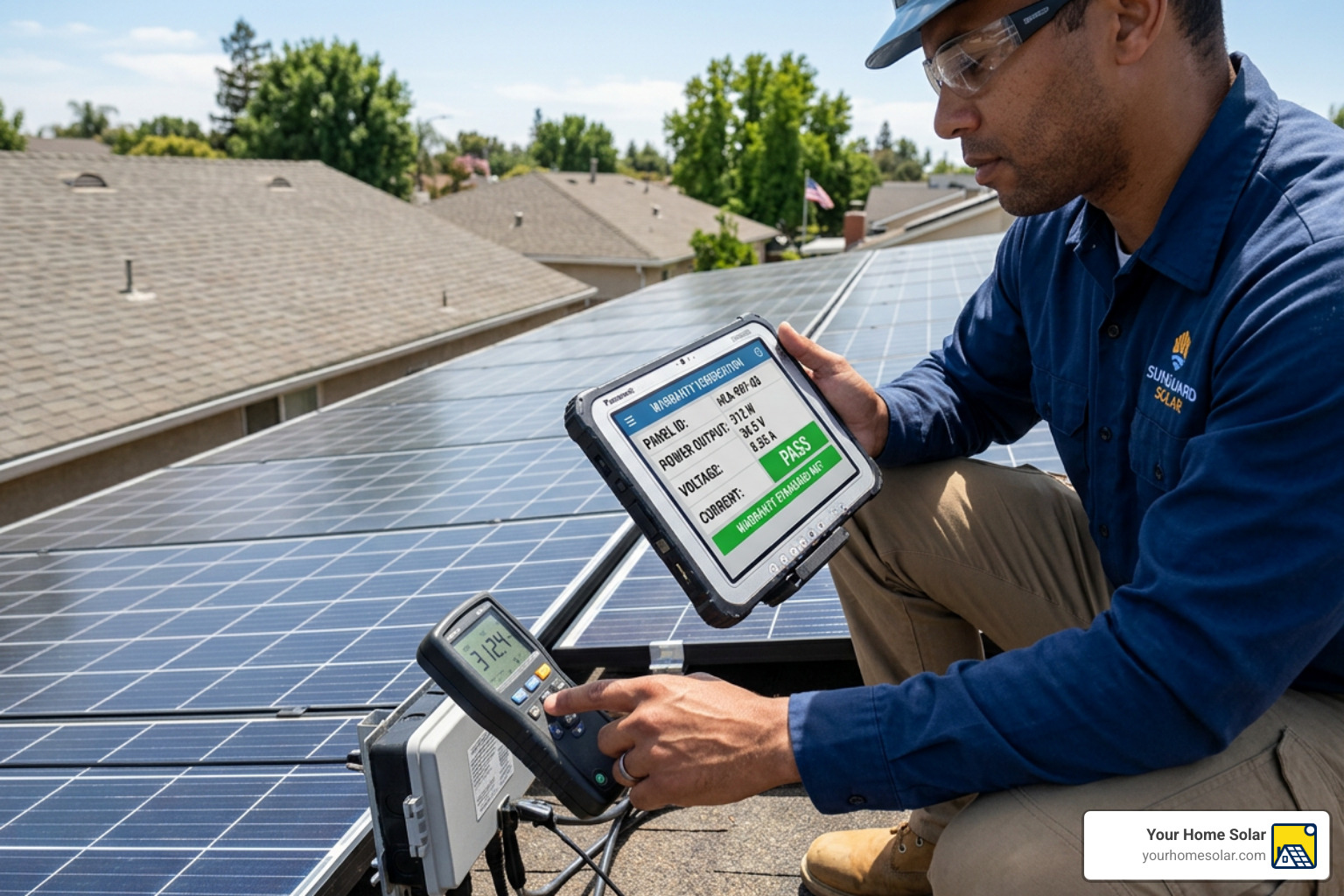
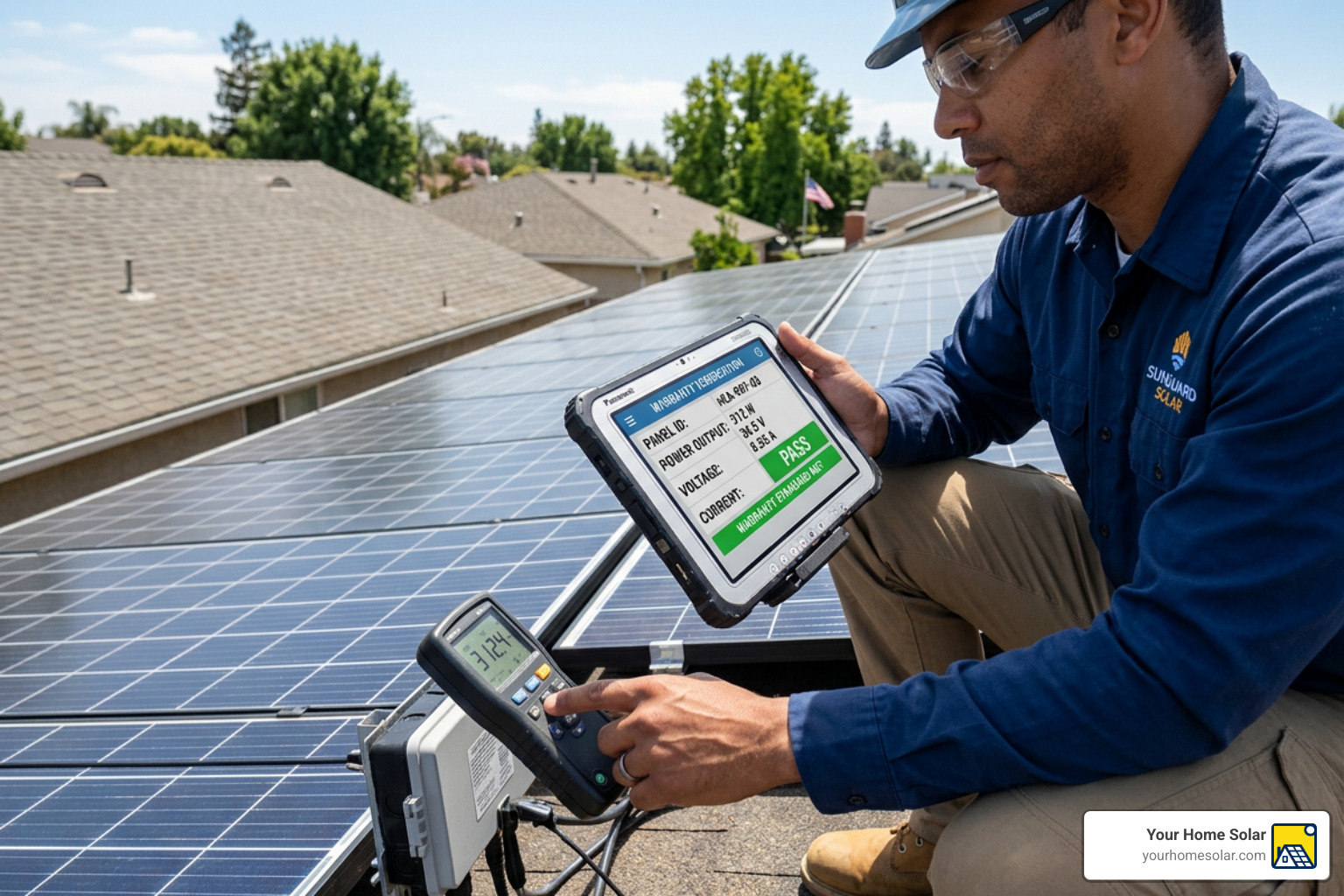
Most modern systems come with monitoring software (like Enphase or SolarEdge). This is your “black box” flight recorder. If you notice a specific panel is producing significantly less than its neighbors, that data is the first thing a manufacturer will ask for.
- Verification: We usually start by checking for “external” causes like shading or dirt.
- Documentation: You’ll need your original proof of purchase, the serial numbers of the affected modules, and clear photos of the installation.
- The RMA: A Return Merchandise Authorization (RMA) is filed. The manufacturer may require a certified technician to perform an on-site test or ship the panel back to a lab for flash testing.
- The Catch: Many warranties cover the cost of the panel but do not cover the labor to remove the old one and install the new one, nor the shipping costs. This is why a workmanship warranty from a local installer is so critical.
What Happens if a Manufacturer Goes Out of Business?
This is a valid concern. If a company goes bankrupt, their warranty often goes with them. However, the solar industry has developed some safety nets:
- Third-Party Insurance: Some premium manufacturers have their warranties backed by massive third-party insurance companies. Even if the manufacturer disappears, the insurance entity still holds the funds to pay out claims.
- Component Reliability: Using microinverters from companies like Enphase can provide peace of mind. Even if a panel manufacturer has issues, programs like Enphase Care can help manage the service and monitoring aspects of your system.
Frequently Asked Questions about Solar Warranties
Do performance warranties cover labor and shipping?
In most cases, no. The standard manufacturer’s solar panel performance warranty covers the replacement of the hardware itself. The “truck roll” (sending a technician to your house), the labor to climb on the roof, and the freight to ship a 50-pound panel back to the factory are often the homeowner’s responsibility.
However, some premium brands—and some high-quality installers—offer “all-in” warranties that include labor for the first 10 to 25 years. Always ask your installer if they provide a separate workmanship warranty to cover these “hidden” costs.
Are solar warranties transferable to new homeowners?
Yes, almost always! This is one of the biggest selling points for solar in East Tennessee. If you sell your home in Farragut or Powell, the warranty stays with the panels, not the person.
The new homeowner usually just needs to notify the manufacturer of the transfer of ownership. This protects the home’s resale value and gives the buyer confidence that they aren’t “buying a headache.” Just ensure you keep all your original paperwork and activate your warranty properly at the start.
How does homeowners insurance interact with solar warranties?
Think of it this way: the warranty covers internal failures (it died on its own), while insurance covers external failures (something killed it).
If a fire, a falling tree limb, or a lightning strike damages your panels, that is a homeowners insurance claim. Most insurance companies view solar panels as a permanent home addition. It is always a good idea to call your agent and let them know you’ve installed solar to ensure your coverage limits are adjusted accordingly.
Conclusion
A solar panel performance warranty is more than just a piece of paper; it is the financial backbone of your clean energy journey. By guaranteeing that your panels will continue to produce power for 25, 30, or even 40 years, manufacturers give you the security needed to make the switch to solar.
At Your Home Solar, we pride ourselves on being the local experts for East Tennessee. Whether you are in Knoxville, Morristown, or the Tri-Cities, we don’t just install panels—we install peace of mind. We carefully select equipment with the strongest performance guarantees in the industry because we want your system to be just as rewarding in year 25 as it is on day one.
Ready to see how much you can save with a protected, high-performance system? Contact us for a warranty-backed installation and let’s start your journey toward energy independence today.