Why Tennessee Homeowners Are Going Solar Right Now
Tennessee solar panels are one of the smartest investments you can make as a homeowner in the Volunteer State — but only if you go in with the right information.
Here’s a quick snapshot of what you need to know:
| Topic | Key Facts |
|---|---|
| Average system cost | ~$41,394 before incentives ($3.02/watt) |
| Federal tax credit | 30% off total cost (~$9,000 average savings) |
| Average payback period | 13 years (range: 10-16 years) |
| Annual electricity savings | ~$1,728/year |
| 25-year utility cost avoided | ~$39,124 |
| Home value increase | ~4.1% (~$12,706 on average) |
| Net metering | No statewide policy; TVA has its own program |
| Sunny days per year | ~205 (matches national average) |
Tennessee homeowners use more electricity than almost any other state — averaging 1,168 kWh per month. That’s more than double the typical solar viability benchmark of 500 kWh. So while Tennessee’s electricity rates aren’t the highest in the country, the sheer volume of energy most households consume makes solar a compelling option for most families.
But there’s a catch: Tennessee’s solar landscape has some real quirks. There’s no statewide net metering. TVA has its own rules. And the market has its share of high-pressure sales tactics and inflated promises that can leave homeowners worse off.
This guide walks you through everything — costs, incentives, payback periods, installers, and what to watch out for — so you can make a confident, informed decision.
I’m Ernie Bussell, founder and CEO of Your Home Solar and the #1 solar energy contractor in East Tennessee, and I’ve spent years helping homeowners navigate the real numbers behind Tennessee solar panels — from military-grade attention to detail in my Navy days to leading a $40 million solar operation before starting this company. Let’s make sure you get this right.
The Real Cost of Tennessee Solar Panels
When we talk about the price of tennessee solar panels, we have to look at the “all-in” number. As of early 2026, the average cost for solar in Tennessee is roughly $3.02 per watt. For a standard residential installation, we often see system sizes around 13.73 kW.
Doing the math, that brings the average total cost to about $41,394 before you apply any tax credits or local incentives. While that sticker price might give you a moment of “Rocky Top” shock, it’s important to break down where that money actually goes. According to Tennessee solar panels: The complete guide in 2026, prices can range from $35,185 to over $47,603 depending on the complexity of the job.
Breaking Down the Equipment and Labor
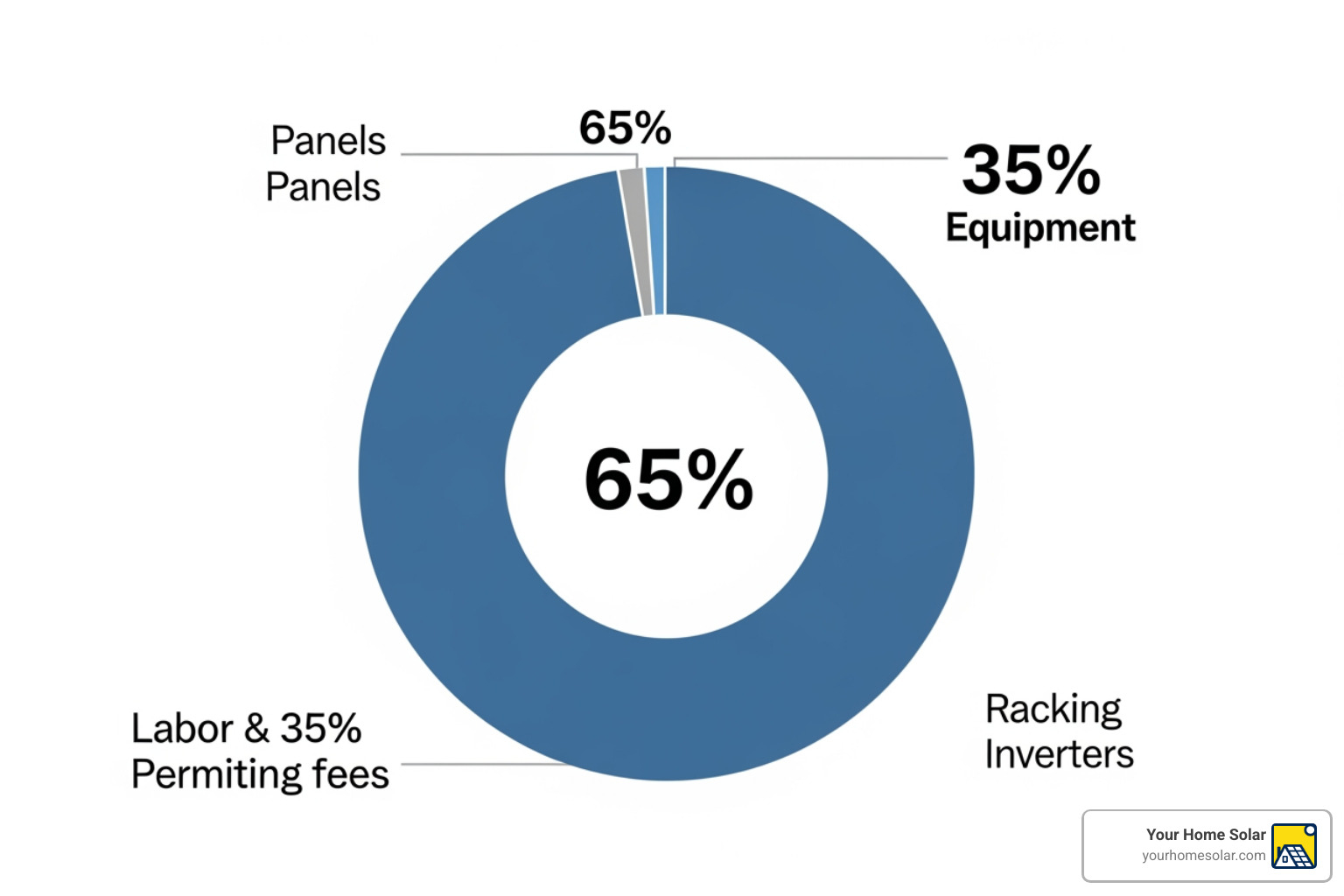
Typically, the physical equipment — the panels, inverters, and racking — makes up about 60% to 70% of your total investment. The remaining 30% to 40% covers labor, permitting, and “soft costs.”
- Panels: The stars of the show. High-efficiency monocrystalline panels are usually preferred here in East Tennessee because they produce more power in less space.
- Inverters: These convert the DC power from your roof into the AC power your fridge and TV actually use.
- Racking and Mounting: This is what keeps your panels attached to your roof during those unpredictable Tennessee summer storms.
- Labor and Permitting: This includes the skilled professionals who climb on your roof and the administrative work required to make sure your system meets local electrical codes.
Determining the Right Size for Tennessee Solar Panels
One size definitely does not fit all. Because Tennessee homes use an average of 1,168 kWh per month (the second-highest consumption rate in the U.S.!), we often need larger systems than folks in other states.
Most homes we work with require between 20 and 30 panels. A 6kW system might be enough for a very energy-efficient cottage, but many families in places like Knoxville or Johnson City find that a 12kW system is the “sweet spot” to truly wipe out their utility bills. You can find more detail on this in our Residential Solar Solutions Guide Comprehensive Guide to Understanding Solar Panels.
Factors Influencing Installation Pricing
Several variables can nudge your price up or down:
- Roof Condition: If your shingles are nearing the end of their life, we always recommend replacing the roof first. It’s much cheaper to do it now than to pay to have panels removed and reinstalled in five years.
- Shading: If your backyard looks like a state park with massive oak trees, you might need more panels or specialized “micro-inverters” to compensate for the shade.
- Equipment Quality: Just like buying a truck, you can go for the base model or the premium trim. Premium panels often come with 25-year warranties and better degradation rates.
- Soft Costs: These are the “invisible” costs like inspections and interconnection fees with your local power company.
For a deeper dive into these variables, check out our page with More info about residential solar.
Incentives and Tax Credits: Reducing the Upfront Burden
This is where the news gets much better. You aren’t actually paying that full $41,000 out of pocket. The single biggest helper is the federal Solar Investment Tax Credit.
Currently, the federal government offers a 30% tax credit on the total cost of your solar system. If your system costs $30,000, you get a $9,000 credit on your federal taxes. This isn’t just a deduction; it’s a dollar-for-dollar reduction in what you owe the IRS. If you don’t owe enough in taxes this year to use the whole credit, you can usually “roll it over” to next year. We recommend reading our Solar Incentives Tennessee 2026 Guide for the latest updates on these figures.
State-Specific Financial Benefits
While Tennessee doesn’t have a state-level rebate check, we do have two very important “hidden” incentives:
- Sales Tax Exemption: In Tennessee, solar energy equipment is exempt from state sales tax. On a $30,000 system, that’s over $2,000 in immediate savings that stays in your pocket.
- Property Tax Protection: Adding solar increases your home’s value (by about 4.1% on average). Normally, that would mean higher property taxes. However, Tennessee law dictates that for property tax purposes, the solar system is only assessed at 12.5% of its value. This means you get the equity boost without the massive tax hike. You can see how this works on our Tax Credits Incentives page.
The Tennessee Solar for All Program
There is a massive new initiative called the Tennessee Solar for All Program. The Tennessee Department of Environment and Conservation (TDEC) was awarded over $156 million to help bring solar to low-income and disadvantaged communities.
While the program is still in its planning and implementation phase, it aims to make solar accessible to those who might not have the upfront cash. A word of caution: because this program is in the news, scammers are out in full force promising “free solar panels from the government.” Always verify through official channels. You can Sign up for Solar for All updates directly through TDEC to stay informed.
Is Solar Worth It? Payback Periods and Energy Savings
The question we get asked most in Maryville and Oak Ridge is: “When does this thing pay for itself?”
In Tennessee, the average payback period is 13 years. Most homeowners fall somewhere between 10 and 16 years. Given that a quality system lasts 25 to 30 years, you’re looking at 12 to 17 years of essentially “free” electricity.
When you consider that the average Tennessee household spends about $144 a month on power, you’re looking at potential savings of $1,728 every single year. Over 25 years, that adds up to nearly $40,000 in avoided utility costs! Plus, Zillow studies show that homes with solar sell for about 4.1% more than those without. On a $310,000 home, that’s an extra $12,700 in your pocket when you sell. You can learn more about these metrics at Solar Panel Viability in Tennessee.
25-Year Cost Comparison
| Year | Cumulative Utility Cost (Estimated) | Cumulative Solar Cost (After ITC) |
|---|---|---|
| Year 1 | $1,728 | $28,975 (Initial Investment) |
| Year 10 | $20,500 | $28,975 |
| Year 13 | $27,800 | $28,975 (Break-Even Point) |
| Year 25 | $68,000 (with rate hikes) | $28,975 |
Navigating the Grid Without Net Metering
Here is the “burned” part of “not getting burned.” Tennessee does not have a statewide “net metering” law. In states like California, if you send 1kWh to the grid, they give you 1kWh back for free later. In Tennessee, it’s different.
The Tennessee Valley Authority (TVA) offers the Dispersed Power Production program. This allows you to sell excess power back to TVA, but they typically pay you the “avoided cost” (the wholesale rate), which is lower than the retail rate you pay them.
The Pro Tip: Because of this, we suggest sizing your system to cover your daytime needs or, better yet, adding a battery backup system. By storing your own excess energy in a battery, you can use it at night instead of buying it back from the utility. This maximizes your ROI. Check out the Advantages of Installing Solar Panels in Tennessee for more on storage.
Planning and Maintaining Your System
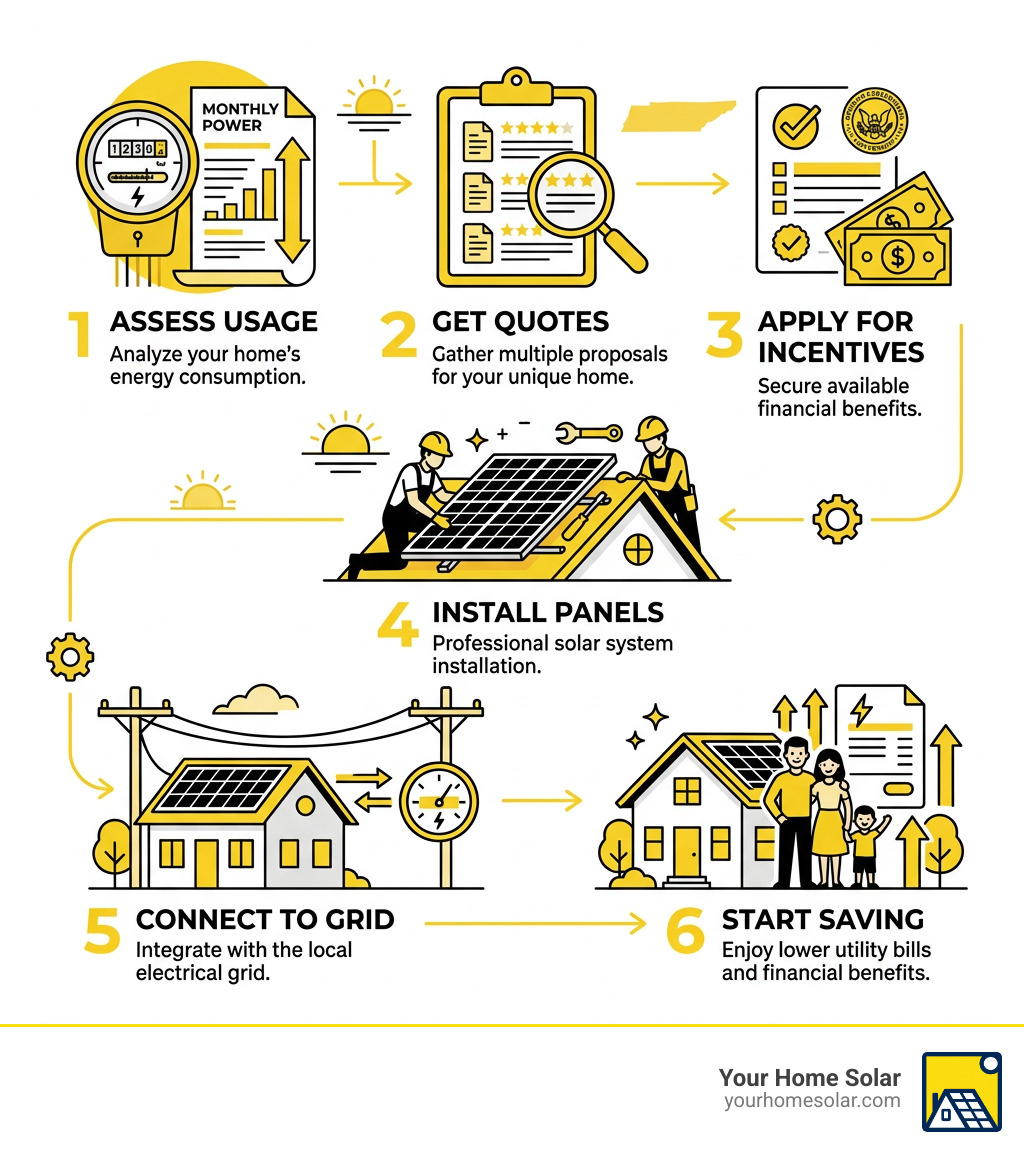
Going solar isn’t just about throwing panels on a roof; it’s an engineering project. The most important thing you can do is ensure your installer is NABCEP certified. The North American Board of Certified Energy Practitioners is the gold standard. It means the person designing your system actually knows how electricity and roofing work together.
Roof Orientation and Sunlight
In the Volunteer State, south-facing roofs are the gold mine. They get the most consistent sunlight throughout the day. West-facing roofs are the second best, as they catch the strong afternoon sun. If your only available roof space faces north, solar might not be the best fit for you — and a reputable installer will tell you that upfront. We have about 205 sunny days a year here, which is plenty to make the math work, provided your roof isn’t stuck in the dark.
Long-Term Care for Tennessee Solar Panels
One of the best things about solar is that it has no moving parts. It’s basically a silent, stationary power plant.
- Lifespan: Most panels are warrantied for 25 years but can easily last 30 or more.
- Cleaning: You don’t need to be out there with a squeegee every week. Usually, a good Tennessee rainstorm does the cleaning for you. We recommend a light professional cleaning once a year to remove pollen, dust, or the occasional bird “gift.”
- Efficiency: Most panels come with a guarantee that they will still produce at least 80% of their original power after 25 years.
For more on what to expect over the decades, see Solar Panel Durability: How Long Do They Last?.
Professional vs. DIY Installation
We get it — Tennesseans are handy. We like to fix our own trucks and build our own decks. But solar is one area where DIY can be dangerous.
- Safety: You’re dealing with high-voltage DC electricity and heights. It’s a risky combination.
- Permits: Getting a system approved by local utilities and codes can be an administrative nightmare for an individual.
- Warranties: Many panel manufacturers will only honor their 25-year warranty if the system was installed by a licensed professional.
- Roof Leaks: If you DIY and your roof leaks, that’s on you. If we install it, we stand behind our work.
If you have more questions about the process, our FAQ about solar installation is a great resource.
Frequently Asked Questions about Tennessee Solar
How many solar panels are needed to power an average Tennessee home?
Because our energy usage is so high (1,168 kWh/month), the average home usually needs between 20 and 30 panels. This creates a system size between 8kW and 12kW. The exact number depends on your roof’s orientation and how much shade you have. We calculate this by looking at your last 12 months of utility bills to see your peak usage months (usually July and January in TN).
Does Tennessee offer net metering for residential solar?
Technically, no statewide mandate exists. However, through the TVA Dispersed Power Production program, you can interconnect with the grid. You won’t get a 1-for-1 credit on your bill like in some other states, which is why we often recommend adding a battery or sizing the system to “self-consume” as much power as possible during the day.
What is the average payback period for solar in Tennessee?
The average is 13 years. Factors that speed this up include rising utility rates (which seem to happen every year) and taking full advantage of the 30% federal tax credit. Once you hit that break-even point, every cent your panels produce is pure profit.
Conclusion
At Your Home Solar, we’ve made it our mission to provide East Tennessee with energy solutions that actually make sense. Whether you are in Knoxville, Sevierville, or Kingsport, our goal is to ensure you don’t “get burned” by bad advice or poor installations.
We don’t just do solar; we provide comprehensive home energy solutions, including backup generators for when the grid goes down and EV chargers for your new electric ride. We pride ourselves on 100% customer satisfaction and tailored designs that fit the unique needs of the Volunteer State.
Ready to see if your roof is a good candidate? Learn About Solar in East Tennessee and let’s start the conversation. We’re here to help you take control of your power bill, once and for all.