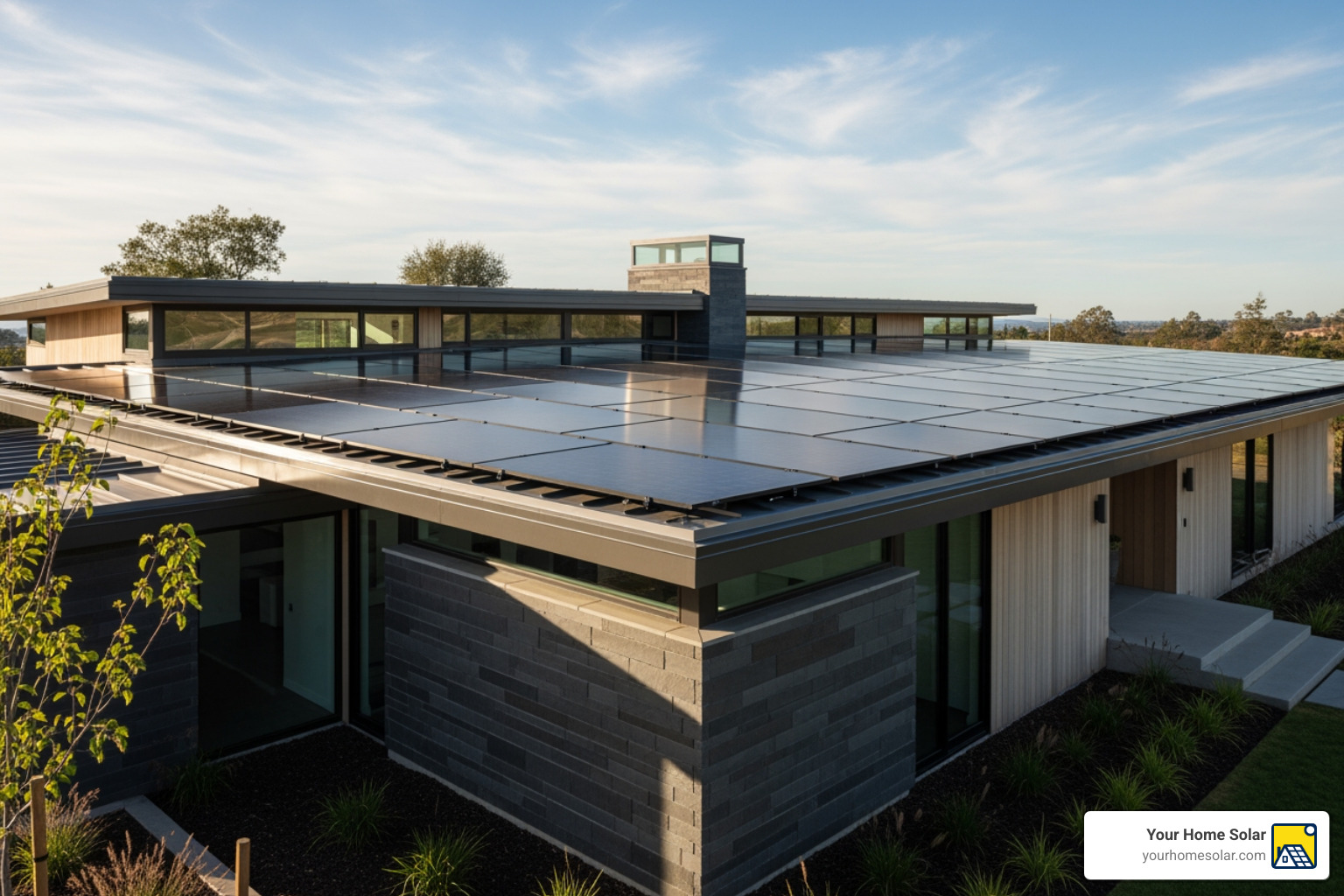
Why Understanding Solar Panel Installed Cost Matters for Your Home
Solar panel installed cost is the total price you’ll pay to get a complete solar energy system up and running on your home. This includes everything from the panels themselves to labor, permits, and equipment.
Quick Answer: What to Expect
- Average cost per watt: $2.50 – $3.50
- Typical 6 kW system: $15,000 – $21,000 before incentives
- After federal tax credit (30%): $10,500 – $14,700
- Payback period: 8-15 years in most cases
- System lifespan: 25-30 years
For most potential solar customers, the motivations for considering the purchase of a solar array break down into a combination of personal priorities. Many people have environmental aspirations—they want to reduce their carbon footprint. Others like the idea of being more self-reliant. One thing they all share is a desire to save money by generating their power independently.
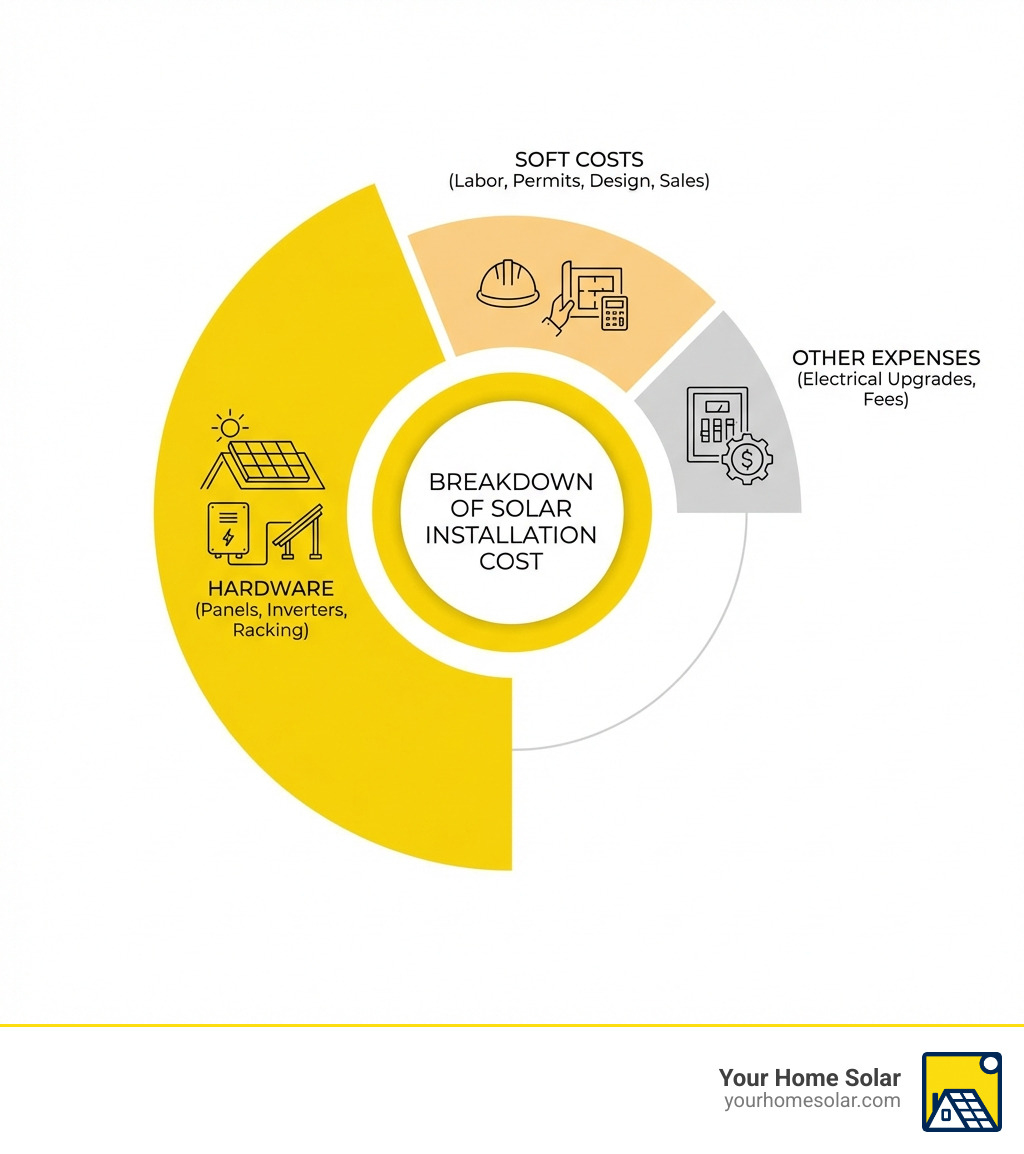
But before you can calculate your savings, you need to understand what you’re actually paying for. The solar panel installed cost isn’t just about the panels on your roof. It includes inverters, wiring, mounting equipment, labor, permits, inspections, and other “soft costs” that make up a significant portion of your total investment.
The truth is, solar costs have dropped dramatically over the past decade—by about 80% in some markets. At the same time, electricity rates keep climbing. That means solar is more affordable and more valuable than ever before.
In East Tennessee, homeowners face unique considerations. Power outages from storms are common. Energy bills fluctuate with seasonal heating and cooling demands. And the desire for energy independence has never been stronger. Understanding your solar panel installed cost upfront helps you make a confident decision about whether solar is right for your home.
I’m Ernie Bussell, founder and CEO of Your Home Solar, and I’ve spent years helping East Tennessee homeowners steer the complexities of solar panel installed cost and energy independence. My background in operations, sales, and technical leadership has taught me that transparent pricing and clear education are the foundation of a good solar investment.
This guide will walk you through every factor that affects your solar installation price—from system size and equipment quality to roof characteristics and available incentives. By the end, you’ll know exactly what to expect and how to maximize your return on investment.
Understanding the Average Solar Panel Installed Cost
When we talk about the solar panel installed cost, we often refer to it in terms of “cost per watt.” This metric helps us compare systems of different sizes on an equal footing. In East Tennessee, the average cost per watt for solar panel installation is around $2.85. This means for every watt of power your system can generate, you’ll pay approximately $2.85.
While national averages can be a starting point, like the general range of $2.50 to $3.50 per watt, it’s more helpful to look at local data. For instance, the average system cost in Tennessee before incentives is about $40,195. This figure, combined with the average cost per watt, gives us a clearer picture of what homeowners in our service areas like Knoxville, Oak Ridge, and Maryville can expect.
The total cost of your solar system is highly dependent on its size, measured in kilowatts (kW). Larger systems generally benefit from economies of scale, meaning the cost per watt might slightly decrease as the system size increases.
Here’s a general idea of estimated total costs and cost per watt for various system sizes in East Tennessee, based on the average cost per watt of $2.85, though larger systems might see a slightly lower per-watt rate:
| System Size (kW) | Estimated Total Cost (before incentives) | Estimated Cost per Watt |
|---|---|---|
| 4 kW | $11,400 | $2.85 |
| 5 kW | $14,250 | $2.85 |
| 8 kW | $22,800 | $2.85 |
| 10 kW | $28,500 | $2.85 |
| 12 kW | $29,649 | $2.47 |
Note: The 12 kW figure is based on EnergySage national data for a typical installation, reflecting the economies of scale where larger systems often have a lower cost per watt.
How to Calculate Your Estimated Solar Panel Installed Cost
Calculating your estimated solar panel installed cost starts with understanding your energy needs. We need to know how much electricity your home consumes annually. We’ll typically look at your electricity bills for the past 12 months to get an accurate average of your kilowatt-hour (kWh) usage.
Beyond historical usage, we also consider:
- Future changes to kWh usage: Are you planning to get an electric vehicle (EV) or install a heat pump? These additions will increase your energy needs, requiring a larger solar system.
- Local sunlight hours: East Tennessee is blessed with ample sunshine, but the exact number of peak sun hours affects how much energy your panels can produce. This influences the number of panels needed to meet your demand.
- Panel wattage and system efficiency: Higher wattage and more efficient panels mean you need fewer panels to achieve your energy goals, potentially reducing installation footprint and costs.
Our goal is to accurately determine the energy you need to consume to size a system that perfectly offsets your electricity bill without being excessive. This optimization is key to making your solar investment as efficient and cost-effective as possible.
Key Factors That Influence Your Solar Panel Installed Cost
The final solar panel installed cost is a dynamic figure, shaped by several interconnected factors. Understanding these helps us explain the price tag.
- System Size: As we discussed, larger systems generally have a lower cost per watt due to economies of scale. However, the overall price will be higher for a 10 kW system compared to a 5 kW system.
- Equipment Quality: The type and brand of solar panels, inverters, and mounting hardware you choose significantly impact the cost. Premium, high-efficiency equipment often comes with a higher price tag but can offer better performance and longer warranties.
- Roof Complexity: The design, pitch, and condition of your roof play a major role. A simple, south-facing roof is easier and cheaper to install on than a complex roof with multiple angles, dormers, or skylights.
- Installer Choice: Different solar installation companies have varying pricing structures, levels of expertise, and warranty offerings. A reputable installer with a strong track record and comprehensive warranties might have slightly higher upfront costs but offers peace of mind and quality assurance.
At Your Home Solar, we pride ourselves on transparency and tailoring solutions to your unique home and needs. We’ll walk you through all these considerations during our initial consultation. You can learn more about how we approach each project on our More info about our process page.
What Determines Your Final Solar Price?
The sticker price for a solar system can seem daunting at first glance. But when we break it down, it’s clear that the final price reflects a combination of tangible hardware, essential “soft costs,” and the unique challenges of your specific installation.
Solar Equipment: Panels, Inverters, and Batteries
The core of your solar system is its equipment. This typically accounts for about 46% of the total installation cost.
Panel Types:
- Monocrystalline panels are the most common and efficient choice for residential systems today. They are made from a single crystal of silicon, giving them a uniform dark appearance and higher power output per square foot. This makes them ideal if you have limited roof space. They tend to be more expensive than polycrystalline panels.
- Polycrystalline panels are made from multiple silicon crystals, giving them a bluish, speckled appearance. They are slightly less efficient than monocrystalline panels but also more affordable.
- While thin-film solar panels exist and are cheaper, they generally have lower efficiency and shorter lifespans, making them less common for residential rooftop installations.
Inverter Types: Inverters convert the direct current (DC) electricity produced by your solar panels into alternating current (AC) that your home appliances use.
- String inverters are the most affordable and common. They connect a “string” of panels to a single inverter. If one panel underperforms (due to shade or dirt), it can affect the output of the entire string.
- Microinverters are more expensive but offer individual optimization. Each panel has its own microinverter, allowing it to perform independently. This is great for roofs with partial shading.
- Power optimizers offer a middle ground. They are installed on each panel but send optimized DC power to a central string inverter. They tend to cost less than microinverters while providing similar benefits.
Battery Storage Options: If energy independence during outages is a priority, adding a battery storage system is a smart move. We offer options like the EcoFlow DELTA Pro Portable Power Station that can seamlessly integrate with your solar panels to create a hybrid system, providing critical backup power. While adding a battery will increase your upfront solar panel installed cost, it offers unparalleled peace of mind and energy security.
Your Home’s Characteristics
Your home itself plays a starring role in determining your solar panel installed cost.
- Roof Condition and Age: Solar panels are designed to last 25-30 years. If your roof is older and nearing the end of its lifespan, we might recommend replacing it before installing solar. This ensures your roof lasts as long as your panels, preventing costly removal and reinstallation down the road.
- Roof Orientation and Pitch: A south-facing roof with an optimal pitch (around 30 degrees) receives the most direct sunlight, maximizing energy production. If your roof faces another direction or has a very shallow/steep pitch, we might need more panels or specialized mounting, which can affect the cost.
- Shading from Trees: Ideally, you don’t want any trees to create too much shade near your roof. If you have trees in the way, you may need to factor in the additional cost of trimming the branches or cutting them down. This ensures your panels get maximum sun exposure.
- Electrical Panel: Your home’s electrical panel needs to be able to handle the new solar input. We generally recommend an electrical panel with at least 200 amps. If your current panel isn’t up to snuff, an upgrade will add to the overall cost.
Labor, Permits, and Installer Choice
Beyond the physical equipment, a significant portion of your solar panel installed cost comes from what we call “soft costs.” These include design, permitting, inspection, interconnection, and, of course, labor. Soft costs can make up a substantial part of the total investment. For instance, EnergySage data suggests installer costs (labor, sales, marketing, overhead, profit) account for about 46% of the total cost, and permitting/interconnection costs add another 8%.
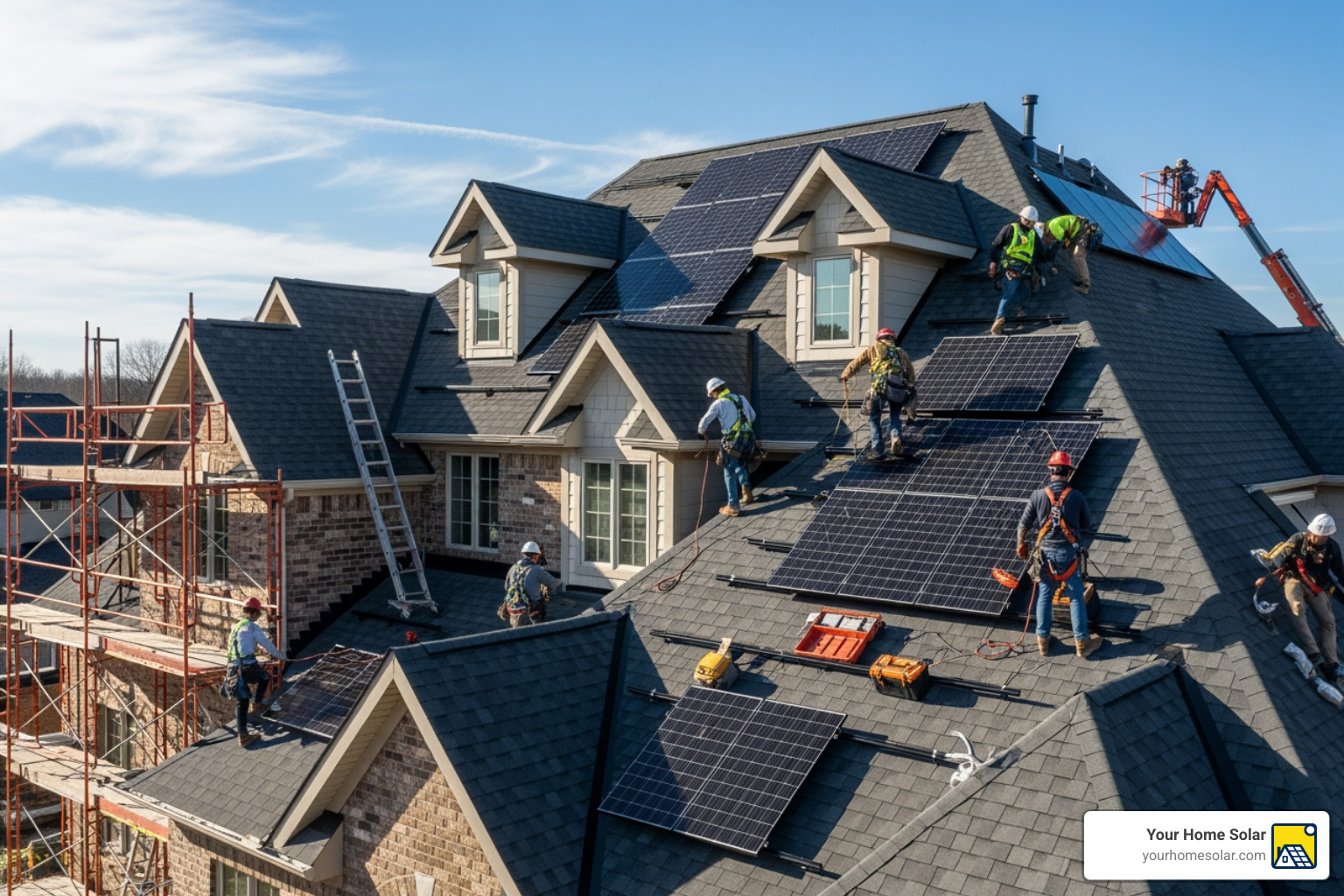
- Installation Labor: Professional installation labor is crucial for a safe and efficient system. While it only accounts for around 7% of total solar panel installation costs directly, the expertise involved in designing, mounting, wiring, and connecting your system is invaluable. Labor costs can range from $2.50 to $3.50 per watt, depending on the complexity of the job.
- Permit Fees: Before any work begins, we need to secure the necessary permits from your local municipality and utility company. This ensures your system meets all safety and building codes. Permit fees and inspections add an average of $450 to the total cost.
- Installer Reputation and Warranties: Choosing the right installer is paramount. A well-regarded solar installer, like Your Home Solar, with premium warranty offerings and a proven track record, might have a slightly higher upfront cost. However, this investment ensures quality, reliability, and excellent customer service for the lifetime of your system. We are proud to be Expert Solar Installers in Knoxville, TN, committed to 100% customer satisfaction.
Maximizing Your Return: Incentives and Long-Term Value
Investing in solar is not just about the upfront solar panel installed cost; it’s about the long-term financial benefits and environmental impact. We want to ensure you maximize your return.

Available Solar Rebates and Incentives
While there aren’t specific state-level solar tax credits in Tennessee at this time, several federal and local programs can significantly reduce your solar panel installed cost.
- Federal Solar Tax Credit (ITC): The most impactful incentive is the federal residential solar energy credit. This allows homeowners to claim a percentage of the total system and installation costs as a dollar-for-dollar credit against their federal income taxes.
- For systems installed between 2022 and 2032, you can claim 30% of the cost.
- For systems installed between 2033 and 2035, the credit is 26%. This credit is a direct reduction of your tax liability, not just a deduction, making it incredibly valuable.
- Net Metering Programs: Many utility companies in East Tennessee offer net metering. This is an agreement where you get compensated in utility bill credits for any excess solar power your system generates and sends back to the electricity grid. This effectively turns your meter backward when you produce more than you consume, further reducing your electricity bills and shortening your payback period.
- Local Incentives: While less common than federal incentives, it’s always worth checking for local cash rebates or programs offered by your city or county. Resources like the Database of State Incentives for Renewables & Efficiency (DSIREUSA.org) can help you find any available incentives in your specific area.
Financing Your Solar Panel System
Once you understand your solar panel installed cost, the next step is figuring out how to pay for it. We offer several financing options to make solar accessible for every homeowner:
- Cash Purchase: If you have the funds available, paying cash typically offers the shortest payback period and maximizes your lifetime savings by avoiding interest payments.
- Solar Loans: These are specifically designed for solar installations. They allow you to spread the cost over time, often with competitive interest rates. Many homeowners find solar loans an excellent way to go solar without a large upfront investment, while still owning their system and benefiting from incentives.
- Solar Leases and Power Purchase Agreements (PPAs): With a lease or PPA, a third party owns and maintains the solar system on your roof, and you pay them a fixed monthly fee (lease) or purchase the electricity they generate at a set rate (PPA). While these options often require no upfront cost, they typically offer fewer long-term financial benefits compared to owning your system, as you don’t qualify for the federal tax credit or increase your home’s value as much.
We understand that financing can be complex, and we’re here to help you explore the best options for your budget and goals. Learn more about Solar Home Energy Financing in East Tennessee.
How Solar Panels Impact Your Home’s Value
Beyond the significant savings on your electricity bills, installing solar panels is a smart investment that can significantly increase your home’s market value. According to research done by Zillow, the average home value increases by about 4.1% with a solar installation.
This increase in home value is particularly true if you own your solar system (either through a cash purchase or a solar loan) rather than opting for a lease or PPA. Potential buyers are often willing to pay more for a home that comes with lower energy bills and the environmental benefits of solar. In a competitive housing market like East Tennessee, this can give your property a distinct advantage, making it more attractive and easier to sell.
Frequently Asked Questions about Solar Costs
We get a lot of great questions about the solar panel installed cost and the long-term implications. Here are some of the most common ones:
How long do solar panels last?
Modern solar panels are incredibly durable and built to last. The life expectancy of solar panels is typically 25 to 30 years. Most manufacturers offer performance warranties guaranteeing that their panels will still produce at least 80% of their original output after 25 years. While the panels themselves can last even longer, their efficiency does degrade by a small amount (around 0.8%) each year. This means that after a few decades, they might produce slightly less power, but they’ll still be generating clean energy for your home.
What is the typical payback period for a solar panel system?
The payback period is the time it takes for your energy savings to equal your initial solar panel installed cost. In the US, the average payback period for solar panels is about 10.5 years. This timeframe can vary based on several factors:
- Your total system cost (after incentives): A lower net cost means a faster payback.
- Your electricity rates: The higher your local electricity rates, the more you save by generating your own power, leading to a quicker payback.
- Sunlight exposure: Homes with more direct sunlight will generate more electricity, accelerating savings.
- Net metering policies: Favorable net metering rules can also shorten your payback period by crediting you fairly for excess energy.
Even after the payback period, your panels continue to generate free electricity for decades, leading to significant lifetime savings that often far exceed the initial investment.
Is a DIY solar panel installation cheaper?
While the idea of saving on labor costs with a DIY solar panel installation might be tempting, we strongly advise against it for home solar systems. For most homeowners, it’s best to enlist a professional. Here’s why:
- Complexity and Safety: Solar panel installation involves working with high-voltage electricity and on rooftops, which can be dangerous. Proper wiring and connections are critical for safety and system performance.
- Permits and Codes: Due to municipal zoning laws and electrical codes, you may even be breaking the law if you install solar panels yourself without proper permits and inspections. A professional installer handles all this red tape for you.
- Warranty and Incentives: Many solar panel manufacturers and inverter companies will void their warranties if the system isn’t installed by a certified professional. Furthermore, to be eligible for valuable incentives like the federal tax credit, professional installation is often a requirement.
- Expertise: A professional installer ensures your system is optimally designed, sized, and installed for maximum efficiency and longevity, something that’s difficult to achieve without specialized training and experience.
While some DIY solar panel systems are available, most are designed for off-grid purposes, like powering an RV. For your home, the peace of mind, safety, and long-term performance benefits of professional installation far outweigh any perceived upfront savings from a DIY approach.
Get Your Personalized Solar Estimate
Understanding the average solar panel installed cost is a fantastic first step, but remember, every home in East Tennessee is unique, and so is its solar potential. From the specific angles of your roof in Farragut to the shading from mature trees in Knoxville, or the unique energy demands of your business in Johnson City, these details all influence your final cost and long-term savings.
That’s where Your Home Solar comes in. Our team of trusted experts provides custom, reliable, and rewarding solar installations across East Tennessee, including Knoxville, Oak Ridge, Maryville, and surrounding counties like Blount, Loudon, and Sevier. We take the time to conduct a comprehensive assessment of your property, analyze your energy needs, and design a system that maximizes your savings and delivers true energy independence.
Don’t let general figures leave you in the dark. We invite you to experience our 100% customer satisfaction commitment firsthand. Let us provide you with a detailed, no-obligation estimate that reflects your home’s unique characteristics and your personal energy goals.
Ready to find out how much your home’s solar investment will cost and how much you can save? Learn more about our residential solar solutions and get started on your journey to a brighter, more sustainable future today.