Why the Federal Solar Tax Credit Matters for East Tennessee Homeowners
The Federal solar tax credit is one of the most powerful financial incentives available to homeowners who install solar energy systems. Also known as the Residential Clean Energy Credit, this tax credit allows you to reduce your federal income taxes by 30% of your total solar installation costs—a dollar-for-dollar reduction in what you owe.
Quick Answer: Federal Solar Tax Credit Basics
- Credit Amount: 30% of total system cost (2022-2032)
- Type: Nonrefundable tax credit that reduces your tax liability
- Eligibility: Homeowners who own their solar system (not leasing)
- No Cap: No maximum dollar limit on the credit
- Carry Forward: Unused credit can be applied to future tax years
- Property Types: Primary residence, second homes, new construction
- Form Required: IRS Form 5695 filed with your tax return
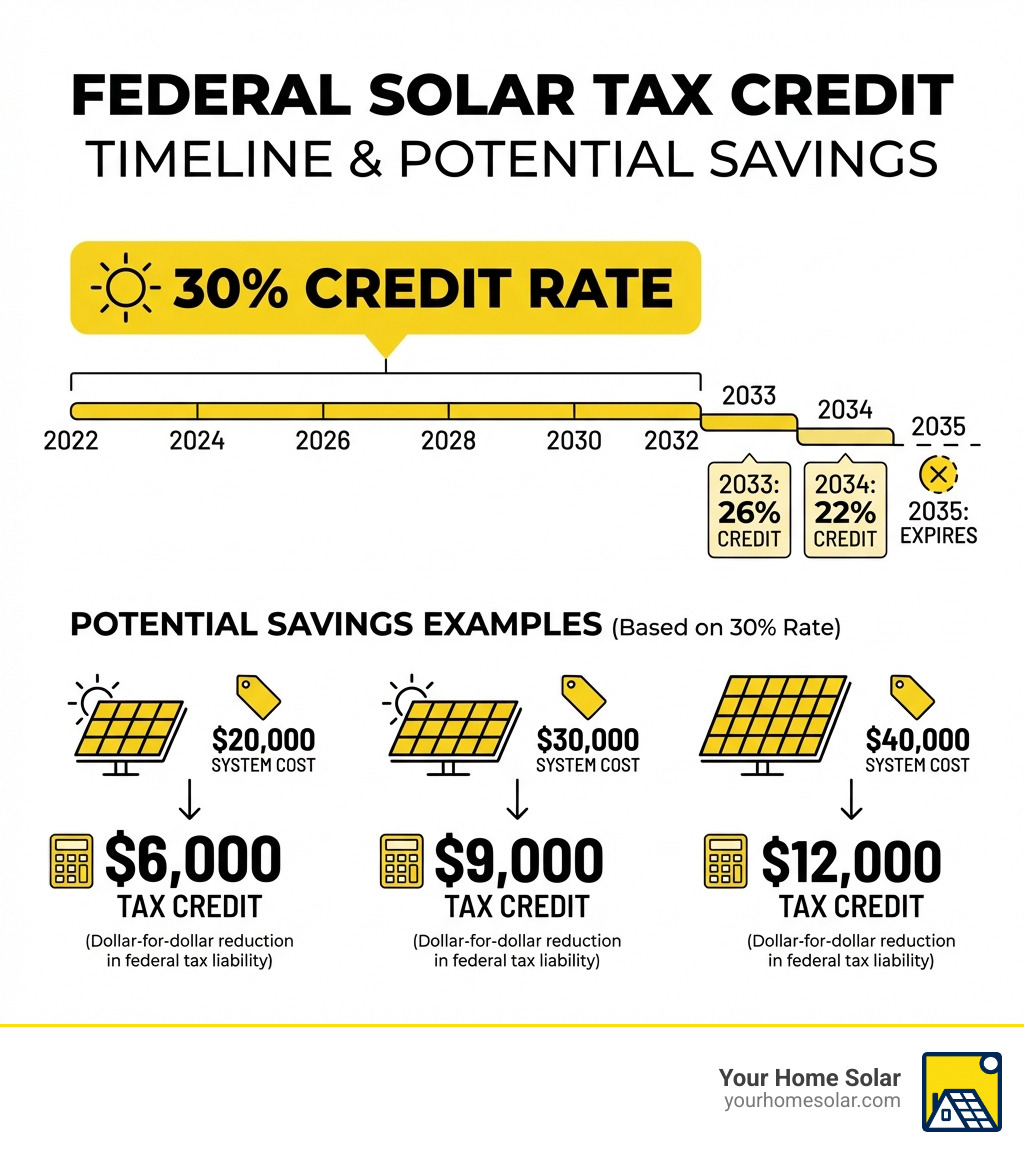
The Inflation Reduction Act extended and improved this credit, making solar energy more affordable than ever for families across the country. Unlike a tax deduction (which reduces your taxable income), this credit directly reduces the amount of tax you owe. If your system costs $20,000, you get a $6,000 credit that comes straight off your tax bill.
For East Tennessee homeowners dealing with rising utility costs and frequent power outages, understanding this credit is essential. It can make the difference between solar being a distant goal and an affordable reality that delivers energy independence and long-term savings.
I’m Ernie Bussell, founder and CEO of Your Home Solar, and over the past several years I’ve helped hundreds of East Tennessee families steer the Federal solar tax credit process while building solar systems that deliver real value. My background in operations management within the solar industry and my commitment to transparent education means I’ve seen how this incentive transforms solar from expensive to accessible.
What is the Federal Solar Tax Credit?
At its heart, the Federal solar tax credit is a powerful incentive designed to encourage homeowners to invest in renewable energy for their residences. Officially known as the Residential Clean Energy Credit, it’s a nonrefundable tax credit that directly reduces your federal income tax liability. This means if you owe the IRS money, this credit can lower that amount significantly. We’re talking about a dollar-for-dollar reduction, which is much more impactful than a tax deduction.

One of the most appealing aspects of this credit is that there’s no overall dollar limit for most types of eligible property. So, whether your system is modest or extensive, you can claim 30% of its total cost. And don’t worry if the credit amount is more than your tax bill in a given year! Since it’s a nonrefundable credit, any unused portion can be carried forward to future tax years, allowing you to continue benefiting until the credit is fully used or expires. This flexibility makes it an incredibly valuable tool for long-term financial planning and investment in your home’s energy future.
For more official information, you can always refer to the Residential Clean Energy Credit page on the IRS website.
Understanding the Federal Solar Tax Credit Timeline
The Federal solar tax credit isn’t a static benefit; its rate changes over time, so understanding the timeline is crucial for planning your solar investment. Thanks to the Inflation Reduction Act, the credit received a significant boost and extension, making now an excellent time to go solar.
- 30% Credit Rate: For systems placed in service after December 31, 2021, and before January 1, 2033, you can claim a generous 30% of the total cost. This rate offers the most substantial savings and is available for a good window of time, allowing East Tennessee homeowners to plan their installations effectively.
- Step-down to 26% in 2033: The credit rate is scheduled to decrease to 26% for systems placed in service after December 31, 2032, and before January 1, 2034. While still a significant saving, it’s a slight reduction from the current rate.
- Step-down to 22% in 2034: It will further decrease to 22% for systems placed in service after December 31, 2033, and before January 1, 2035.
- Credit Expiration in 2035: After December 31, 2034, the Federal solar tax credit is set to expire unless Congress takes further action to extend it.
This timeline highlights the importance of acting sooner rather than later to maximize your savings. The longer you wait, the smaller the potential credit becomes. We encourage our East Tennessee neighbors to consider these dates when planning their transition to solar.
What’s the Difference Between a Tax Credit and a Rebate?
When we talk about financial incentives for solar, you’ll often hear terms like “tax credit” and “rebate.” While both can save you money, they function very differently. Understanding these distinctions is key to accurately calculating your savings and making informed decisions.
A tax credit, like the Federal solar tax credit, is a direct reduction in the amount of income tax you owe. If you have a tax liability of $5,000 and qualify for a $3,000 tax credit, your new tax bill is $2,000. It’s a dollar-for-dollar reduction, making it incredibly valuable. As we mentioned, if the credit exceeds your tax liability, you can often carry the unused portion forward to future tax years.
A tax deduction, on the other hand, reduces your taxable income, not your tax bill directly. For example, a $1,000 deduction for someone in a 20% tax bracket would save them $200 (20% of $1,000). While helpful, it’s generally less impactful than a credit.
Rebates, typically offered by utility companies or state and local governments, are direct payments or reductions in the upfront cost of your solar system. These are usually applied at the time of purchase or installation. For example, a utility rebate might give you $1,000 back after your system is installed. The crucial difference here is how rebates impact your cost basis for the Federal solar tax credit. Utility rebates are generally subtracted from your system’s total cost before you calculate your 30% federal credit. State rebates, however, usually do not reduce your federal tax credit basis.
Navigating these differences can feel a bit like decoding a secret language, but understanding them ensures you maximize every possible saving. For more insights into the financial advantages, check out our guide on Why Solar Panels for Homes Are a Smart Investment.
Are You and Your Solar Project Eligible?
Before we dive into how to claim the Federal solar tax credit, let’s make sure you and your solar project tick all the right boxes. Eligibility is straightforward but crucial, ensuring that your investment qualifies for this significant financial boost.
The credit is primarily for homeowners who own their solar system, rather than leasing it or participating in a power purchase agreement (PPA). It applies to systems installed on your primary residence, second homes, and even new construction. However, used equipment generally doesn’t qualify. We’re here to help East Tennessee homeowners understand these nuances to ensure their solar journey is smooth and rewarding.
Homeowner and Property Eligibility
Let’s break down who can claim this fantastic credit:
- You Must Own the System: This is a big one. To claim the Federal solar tax credit, you must either purchase your solar energy system outright or finance it with a loan. If you lease your system or have a power purchase agreement, the third-party owner typically claims the credit. This is why we at Your Home Solar focus on ownership models that empower you to take full advantage of this incentive.
- Primary or Secondary U.S. Residence: The solar system must be installed on a home located in the United States. This includes your primary residence (where you live most of the time) or a secondary home (like a vacation home in the beautiful mountains of East Tennessee) that you use as a residence.
- Renters and Landlords Exclusion: Unfortunately, if you are a renter, you cannot claim the credit if your landlord installs the system. Similarly, landlords who do not live in the home (i.e., it’s purely a rental property) generally cannot claim the residential credit, though they might be eligible for a business investment tax credit.
- Cooperative and Condominium Eligibility: Even if you’re not a traditional homeowner, you might still qualify! Tenant-stockholders in cooperative housing corporations and members of condominiums are eligible if they contribute to the costs of an eligible solar PV system. This opens up opportunities for more East Tennessee residents to go solar.
These rules ensure the credit benefits those directly investing in and living with clean energy.
Qualified Clean Energy Property and Expenses
So, you’re eligible, but what exactly qualifies for the Federal solar tax credit? The good news is that the credit covers a wide range of clean energy property and associated costs. We want to ensure our East Tennessee customers know exactly what they can include in their calculations.
Here’s a list of eligible expenses:
- Solar PV Panels and Cells: This is the core of your solar system! The cost of the photovoltaic (PV) panels themselves is fully eligible.
- Labor and Installation Costs: Good news! The costs for onsite preparation, assembly, and the original installation of your system are included. This means the hard work our team puts in is part of your credit calculation.
- Permitting and Inspection Fees: The necessary fees for permits and inspections, which ensure your system is safe and up to code, are also eligible expenses.
- Balance-of-System Equipment: This includes all the essential components that make your solar system work, such as wiring, inverters (which convert solar energy into usable electricity), and mounting equipment.
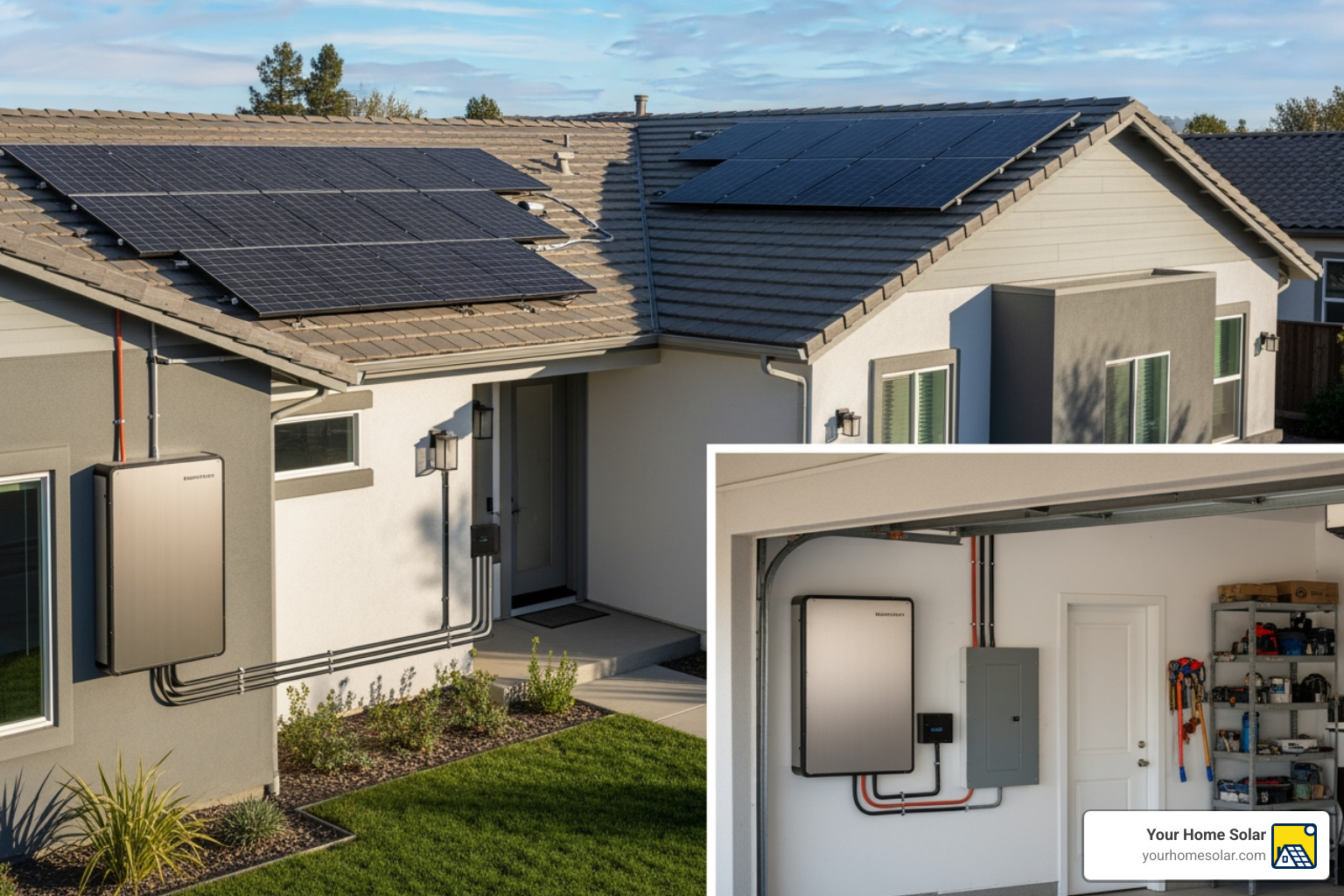
- Battery Storage Technology (3 kWh minimum): If you’re looking to add energy independence and backup power, battery storage systems are now eligible for the credit. However, to qualify, the battery must have a capacity of at least 3 kilowatt-hours (kWh). This is a fantastic addition for East Tennessee homes that want to be prepared for power outages.
- Sales Tax: Any sales tax you pay on eligible expenses can also be included in your total cost for the credit calculation.
The property must be new and placed in service during the tax year you claim the credit. Used clean energy property is not eligible. Also, traditional building components that primarily serve a structural or roofing function (like roof trusses or standard shingles) do not qualify. However, solar roofing tiles and shingles that also function as solar electric collectors do qualify.
For a deeper dive into the incentives available, check out our Residential Solar Solutions Guide: Incentives and Tax Credits for Solar Systems.
How to Claim the Federal Solar Tax Credit: A Step-by-Step Guide
Claiming the Federal solar tax credit might seem daunting, but we’re here to simplify the process for our East Tennessee homeowners. It essentially boils down to a few key steps, from choosing the right installer to filing the correct paperwork.
The general process involves verifying your eligibility, installing a qualified system, gathering all your documentation, and then filing the appropriate forms with your tax return. We’ll walk you through it, ensuring you have all the information you need to confidently claim your savings. You can find more detailed guidance in the Homeowner’s Guide to the Federal Tax Credit for Solar Photovoltaics.
Step 1: Choose a Reputable Installer and Complete Your Project
Your solar journey begins with selecting the right partner. This is perhaps the most critical step, as a reliable installer ensures your system is properly designed, installed, and ready to meet the credit’s requirements. For East Tennessee residents, choosing a local, experienced company like Your Home Solar means peace of mind.
Here’s what to look for when vetting installers:
- NABCEP Certification: Look for installers with certifications from the North American Board of Certified Energy Practitioners (NABCEP). This nationally recognized program ensures installers have met rigorous standards, including work experience, passing a comprehensive exam, adhering to a code of ethics, and completing continuing education. This certification goes beyond a basic electrical license, indicating specialized expertise in photovoltaic (PV) systems.
- Local Expertise: Choosing a local company means they understand East Tennessee’s unique climate, permitting processes, and utility regulations. They’re also more invested in their community and reputation, often relying on local referrals. We pride ourselves on being deeply rooted in the East Tennessee community, from Knoxville to Johnson City, and everywhere in between.
- Getting Project Completion in Writing: Ensure your contract specifies the expected completion date. The tax credit is claimed for the year the system is placed in service (installed and producing electricity), not just when purchased. You’ll want to ensure your panels are operational by the end of the tax year you intend to claim the credit. If there are delays, knowing your recourse options is important.
Working with experienced professionals like us minimizes headaches and maximizes your chances of a smooth installation and successful credit claim. To learn more about selecting the right solar partner, check out our insights on Learn About Solar in East Tennessee.
Step 2: Complete and File IRS Form 5695
Once your system is installed and producing clean energy, it’s time to claim your Federal solar tax credit. This is done using IRS Form 5695, “Residential Energy Credits,” which you’ll file alongside your federal income tax return (Form 1040).
Here’s a general overview:
- Gather Your Documentation: You’ll need records of all eligible expenses, including the cost of your solar panels, installation labor, permitting fees, and any qualifying battery storage. While you don’t typically submit these documents with your tax return, it’s crucial to keep them for your records in case of an IRS inquiry.
- Fill Out Form 5695: This form will guide you through calculating your credit. You’ll enter the total eligible costs of your system, and the form will help you determine the 30% credit amount.
- Transfer to Form 1040: The calculated credit from Form 5695 is then transferred to your main Form 1040, where it directly reduces your tax liability.
- Professional Tax Advice Disclaimer: While we provide general information, we are not tax professionals. We strongly recommend consulting with a qualified tax advisor or accountant to ensure you accurately complete your forms and maximize your eligible credit. They can provide personalized advice based on your specific financial situation.
You can download IRS Form 5695 and its instructions directly from the IRS website. Taking this step correctly ensures you open up the full financial benefit of your solar investment.
Maximizing Your Savings: Other Incentives and Key Considerations
While the Federal solar tax credit is a cornerstone of solar savings, it’s often just one piece of a larger financial puzzle. East Tennessee homeowners can explore other incentives and smart financial strategies to further improve their investment.
Financing options, for example, can make going solar more accessible without requiring a large upfront payment. Many homeowners opt for loans to cover the cost of their solar system. While the system itself qualifies for the federal credit, associated costs like interest and loan origination fees are not eligible expenses for the Federal solar tax credit. For more information on making solar affordable, explore Solar Home Energy Financing in East Tennessee.
How Other Incentives Affect the Federal Solar Tax Credit
The interplay between different solar incentives can sometimes be confusing, but understanding it is key to maximizing your overall financial benefit. Here’s how common incentives interact with your Federal solar tax credit:
- Utility Rebates: These are often offered by your local utility company (like TVA partner utilities in East Tennessee) and are typically a direct payment or credit for installing solar. For the purpose of the Federal solar tax credit, these rebates are generally subtracted from your system’s total cost before you calculate your 30% credit. This is because utility rebates are usually excluded from your taxable income. For example, if your system costs $20,000 and you receive a $1,000 utility rebate, your federal credit would be calculated on $19,000.
- State Tax Credits: Some states offer their own solar tax credits. These generally do not reduce the amount you can claim for the Federal solar tax credit. You can claim both! However, it’s worth noting that claiming a state tax credit might indirectly affect your federal tax liability by altering your state tax deduction (if you itemize deductions).
- Renewable Energy Certificates (RECs): If you sell RECs generated by your solar system, the payments you receive are typically considered taxable income. These payments do not reduce your eligible expenses for the Federal solar tax credit.
It’s like assembling a financial dream team for your home energy. By understanding each player’s role, you can ensure every dollar works hard for you. For a comprehensive look at incentives available in our area, check out our Solar Incentives Tennessee 2026 Guide.
TABLE comparing how different incentives impact your federal tax credit calculation
To make this even clearer, here’s a quick comparison of how various incentives typically interact with your Federal solar tax credit calculation:
| Incentive Type | Impact on Federal Tax Credit Calculation | Example (assuming $20,000 system cost, 30% federal credit) |
|---|---|---|
| Utility Rebates | Reduces cost basis. Amount of rebate is subtracted from total system cost before calculating the 30% federal credit. | $1,000 utility rebate: Credit on ($20,000 – $1,000) = $19,000 * 30% = $5,700 |
| State Rebates | Generally do not reduce cost basis. The federal credit is calculated on the full system cost. | $1,000 state rebate: Credit on $20,000 * 30% = $6,000 |
| State Tax Credits | Do not reduce federal credit. You can claim both. May affect federal tax deductions if you itemize. | $1,000 state tax credit: Federal credit on $20,000 * 30% = $6,000. State credit claimed separately. |
| Renewable Energy Certificates (RECs) | No impact on federal credit calculation. Payments for RECs are typically taxable income, not a cost reduction. | Federal credit on $20,000 * 30% = $6,000. REC payments taxed as income. |
This table provides a snapshot, but always remember that tax laws can be complex. Consulting with a tax professional is the best way to get personalized advice for your unique situation.
Frequently Asked Questions about the Solar Tax Credit
We hear a lot of great questions from East Tennessee homeowners curious about going solar. Here are some of the most common ones we encounter regarding the Federal solar tax credit:
If the tax credit exceeds my tax liability, do I get a refund?
This is a very common and important question! The Federal solar tax credit is a nonrefundable credit. This means it can reduce your tax liability down to $0, but you won’t receive a refund for any amount of the credit that exceeds your tax bill.
However, there’s excellent news: any unused portion of the credit can be carried forward to future tax years. Let’s say you qualify for a $7,000 Federal solar tax credit, but your tax liability for the year is only $5,000. You would use $5,000 of the credit to eliminate your tax bill, and the remaining $2,000 would roll over to the next tax year, where you could use it to reduce that year’s tax liability. This carry-forward provision ensures you get to use the full value of your credit, even if your tax bill is lower than your credit amount in a single year.
Is the cost of a new roof eligible for the credit?
Generally, no, the cost of a new roof itself is not eligible for the Federal solar tax credit. Traditional roofing materials and general roof replacements are considered home improvements, not clean energy property.
However, there’s a cool exception! If you install solar roofing tiles or solar shingles that function as both a roofing material and a solar electric generator, then the cost of those integrated solar roofing products does qualify for the credit. These innovative products serve a dual purpose, making them eligible. If your existing roof needs repair or replacement before solar installation, we often recommend addressing that first. Our solar panels come with 20-year warranties, and if your roof needs repair down the line, the whole system might have to come down temporarily, which can be an added expense. Planning ahead saves you both money and headaches!
Can I claim the credit for a system on my vacation home?
Yes, absolutely! The Federal solar tax credit does not require the solar PV system to be installed on your primary residence. You can claim the credit for a system installed on a secondary home, such such as a cabin in the Great Smoky Mountains or a lake house on Norris Lake, as long as that property is located in the United States and you use it as a residence.
However, there’s a key distinction: the credit cannot be claimed for a property that is used solely as a rental unit. If you rent out your second home for part of the year, the credit calculation can get a bit more complex, often requiring you to allocate the system’s cost based on the percentage of time it’s used for residential versus rental purposes. For properties used primarily for business (like a dedicated rental), different tax rules and business credits might apply. If you have a mixed-use property, we always recommend speaking with a tax professional to ensure you’re claiming the credit correctly.
Take Control of Your Energy Future
The Federal solar tax credit represents an incredible opportunity for East Tennessee homeowners to accept clean energy while significantly reducing their tax burden. With a generous 30% credit available for installations through 2032, there has never been a better time to consider going solar. This incentive not only provides substantial savings but also accelerates your journey toward energy independence, increases your home’s value, and contributes to a cleaner environment for our communities in Knoxville, Johnson City, Maryville, and beyond.
At Your Home Solar, we’re dedicated to helping our neighbors harness the power of the sun. Our team of trusted experts provides custom, reliable, and rewarding solar installations, ensuring you maximize every available incentive. We handle everything from system design and permitting to installation and guidance on navigating the tax credit process.
Don’t let this opportunity pass you by. Take control of your energy future and explore the benefits of solar for your home.
Learn more about how you can save and go green by visiting our Solar Incentives Tennessee 2026 Guide.